Results by title
4155 books match the query 'State & Local' and 107 start with g
Galveston Island, or, A Few Months off the Coast of Texas
The Journal of Francis C. Sheridan, 1839–1840Edited by Willis W. Pratt
University of Texas Press, 1954
On the last Sunday of the year 1839, Francis Sheridan, an elegant young Irishman in the British diplomatic service, sailed from Barbados for the Republic of Texas. His mission in the new nation was to contribute the opinion of an eyewitness to the deliberations going on in London concerning proposed recognition of Texas.
This jounal contains some of the material that Sheridan used for his official report and much colorful detail that he did not use. First published by the University of Texas Press in 1956, it is the travel diary of a sophisticated and discerning student of human nature.
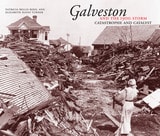
Galveston and the 1900 Storm
Catastrophe and CatalystBy Patricia Bellis Bixel and Elizabeth Hayes Turner
University of Texas Press, 2000
Runner-up, Spur Award for Best Western Nonfiction—Contemporary, Western Writers Of America, 2001
The Galveston storm of 1900 reduced a cosmopolitan and economically vibrant city to a wreckage-strewn wasteland where survivors struggled without shelter, power, potable water, or even the means to summon help. At least 6,000 of the city's 38,000 residents died in the hurricane. Many observers predicted that Galveston would never recover and urged that the island be abandoned. Instead, the citizens of Galveston seized the opportunity, not just to rebuild, but to reinvent the city in a thoughtful, intentional way that reformed its government, gave women a larger role in its public life, and made it less vulnerable to future storms and flooding.
This extensively illustrated history tells the full story of the 1900 Storm and its long-term effects. The authors draw on survivors' accounts to vividly recreate the storm and its aftermath. They describe the work of local relief agencies, aided by Clara Barton and the American Red Cross, and show how their short-term efforts grew into lasting reforms. At the same time, the authors reveal that not all Galvestonians benefited from the city's rebirth, as African Americans found themselves increasingly shut out from civic participation by Jim Crow segregation laws. As the centennial of the 1900 Storm prompts remembrance and reassessment, this complete account will be essential and fascinating reading for all who seek to understand Galveston's destruction and rebirth.
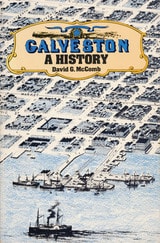
Galveston
A HistoryBy David G. McComb
University of Texas Press, 1986
On the Gulf edge of Texas between land and sea stands Galveston Island. Shaped continually by wind and water, it is one of earth's ongoing creations—time is forever new. Here, on the shoreline, embraced by the waves, a person can still feel the heartbeat of nature. And yet, for all the idyllic possibilities, Galveston's history has been anything but tranquil. Across Galveston's sands have walked Indians, pirates, revolutionaries, the richest men of nineteenth-century Texas, soldiers, sailors, bootleggers, gamblers, prostitutes, physicians, entertainers, engineers, and preservationists. Major events in the island's past include hurricanes, yellow fever, smuggling, vice, the Civil War, the building of a medical school and port, raids by the Texas Rangers, and, always, the struggle to live in a precarious location.
Galveston: A History is at the forefront of a trend in writing urban biographies emphasizing technology as the dynamic force in urban development. David McComb explores this often contradictory relationship between technology and the city, and provides a guide to both Galveston history and the dynamics of urban development.

Gambling With Lives
A History of Occupational Health in Greater Las VegasMichelle Follette Turk
University of Nevada Press, 2020
A History of Occupational Health and Safety examines the work, hazards, and health and safety programs from the early building of the railroad through the construction of the Hoover Dam, chemical manufacturing during World War II, nuclear testing, and dense megaresort construction on the Las Vegas Strip. In doing so, this comprehensive chronicle reveals the long and unfortunate history of exposing workers, residents, tourists, and the environment to dangerous work—all while exposing the present and future to crises in the region. Complex interactions and beliefs among the actors involved are emphasized, as well as how the medical community interpreted and responded to the risks posed.
Few places in the United States contain this mixture of industrial and postindustrial sites, the Las Vegas area offers unique opportunities to evaluate American occupational health during the twentieth century, and reminds us all about the relevancy of protecting our workers.
Gambling on Ore
The Nature of Metal Mining in the United States, 1860–1910Kent Curtis
University Press of Colorado, 2013
In Montana, legal issues and politics—such as unexpected consequences of federal mining law and the electrification of the United States—further complicated the mining industry’s already complex relationship to geology, while government policy, legal frameworks, dominant understandings of nature, and the exigencies of profit and production drove the industry in momentous and surprising directions. Despite its many uncertainties, mining became an important part of American culture and daily life.
Gambling on Ore unpacks the tangled relationships between mining and the natural world that gave material possibility to the age of electricity. Metal mining has had a profound influence on the human ecology and the social relationships of North America through the twentieth century and throughout the world after World War II. Understanding how we forged these relationships is central to understanding the environmental history of the United States after 1850.

Ganado Mucho / Tótsohnii Hastiin
Navajo Peace Chief in Times of War and ChangeTodd M. Compton
University of Utah Press, 2027

Garbage in the Garden State
Jordan P. Howell
Rutgers University Press, 2023
Howell acknowledges that New Jersey is sometimes imagined, particularly by non-New Jerseyans, as a giant garbage dump for New York and Philadelphia. But every place has had to struggle with the challenges of waste management. New Jersey's trash history is in fact more interesting and more important than most. New Jersey’s waste history includes intensive planning, deep-seated political conflict, organized crime, and literally every level of state and federal judiciary. It is a colorful history, to say the least, and one that includes a number of firsts with regard to recycling, comprehensive planning, and the challenging economics of trash.

Garbage
The Saga of a Boss Scavenger in San FranciscoLeonard Dominic Stefanelli
University of Nevada Press, 2017
Stefanelli was trained to be a scavenger by his uncles in the 1940s and 50s at a time when rampant discrimination prevented Italian immigrants and their families from pursuing any other career. From there, he became a ‘boss scavenger’, married a garbage man’s daughter, and climbed the ranks of the Sunset Scavenger Company where he eventually took part in a corporate shakeup that made him the company’s president at only 31 years old. As one of the men at the helm of this booming industry, he became the chief advocate for increasingly innovative recycling and waste management practices in the Bay Area, and a foremost leader of environmentally-conscious business in the world.
Stefanelli’s lively memoir will enlighten readers to the waste management business, an industry that was once considered the lowest rung on the social ladder, but will also show his unparalleled capacity for transformation and vision.

Gardeners of Eden
Rediscovering Our Importance to NatureDan Dagget
University of Nevada Press, 2005
Dagget recommends a new kind of environmentalism based on management, science, evolution, and holism, and served by humans who enrich the environment even as they benefit from it. His new environmentalism offers hopeful solutions to the current ecological crisis and a new purpose for our human energies and ideals. This book is essential reading for anyone concerned with the earth and anyone seeking a viable way for our burgeoning human population to continue to live upon it.

Gasa Gasa Girl Goes to Camp
A Nisei Youth Behind A World War II FenceLily Yuriko Nakai Havey
University of Utah Press, 2014
In this creative memoir, Lily Havey combines storytelling, watercolor, and personal photographs to recount her youth in two Japanese-American internment camps during World War II. In short vignettes snapshots of people, recreated scenes and events a ten-year-old girl develops into a teenager while confined. Vintage photographs reveal the historical, cultural, and familial contexts of that growth and of the Nakais’ dislocation. The paintings and her animated writing together pull us into a turbulent era when America disgracefully incarcerated, without due process, thousands of American citizens because of their race.
These stories of love, loss, and discovery recall a girl balancing precariously between childhood and adolescence. In turn wrenching, funny, touching, and biting but consistently engrossing, they elucidate the daily challenges of life in the camp and the internees’ many adaptations.
Winner of the Evans Biography Award.
Selected by the American Library Association as one the Best of the Best from University Presses.
Finalist in the cover design category in the Southwest Book Design and Production Awards.

Gateway to Vacationland
The Making of Portland, MaineJohn F. Bauman
University of Massachusetts Press, 2012
Situated on a peninsula jutting into picturesque Casco Bay, Portland has long been admired for its geographical setting—the “beautiful city by the sea,” as native son Henry Wadsworth Longfellow called it. At the same time, Portland's deep, ice-free port has made it an ideal site for the development of coastal commerce and industry. Much of the city's history, John F. Bauman shows, has been defined by the effort to reconcile the competing interests generated by these attributes—to balance the imperatives of economic growth with a desire to preserve Portland's natural beauty.
Caught in the crossfire of British and French imperial ambitions throughout the colonial era, Portland emerged as a prosperous shipbuilding center and locus of trade in the decades following the American Revolution. During the nineteenth century it became a busy railroad hub and winter port for Canadian grain until a devastating fire in 1866 reduced much of the city to ruins. Civic leaders responded by reinventing Portland as a tourist destination, building new hotels, parks, and promenades, and proclaiming it the “Gateway to Vacationland.”
After losing its grain trade in the 1920s and suffering through the Great Depression, Portland withered in the years following World War II as it wrestled with the problems of deindustrialization, suburbanization, and an aging downtown. Efforts at urban renewal met with limited success until the 1980s, when a concerted plan of historic preservation and the restoration of the Old Port not only revived the tourist trade but eventually established Portland as one of America's “most livable cities.”

Gateways to the Southwest
The Story of Arizona State ParksJay M. Price
University of Arizona Press, 2004
Gathered into a Church
Indigenous-English Congregationalism in Woodland New EnglandLori Rogers-Stokes
University of Massachusetts Press, 2025
Uncovering how and where Indigenous and settler communities found common ground using newly public church records
Puritans in the American colonies created Congregationalism, a Protestant denomination where power rested in each congregation rather than a larger central body. As has often been told, the official Puritan mission included outreach to Indigenous people. This may appear as nothing more than forced conversion under colonization, but church records from Massachusetts—digitized and made public for the first time—reveal the authenticity of this Indigenous religious experience, as evidenced by commonalities between the Congregational way and some aspects of local Native American cultures. The records also show how the decentralized churches stood in contrast to a growing civil government in the colonies.
Lori Rogers-Stokes focuses on the Massachusetts Bay Colony during the decades around the turn of the eighteenth century, a period bookended by King Philip’s War and the First Great Awakening. She uses as her primary source the many records kept by individual Congregational churches of the time. These records, accumulated over generations, have been missing from the historical record, allowing overly simplistic accounts of this religious community to circulate. With church records now available, Rogers-Stokes reveals a more realistic picture of diverse congregations and contrasts their internal workings—which show inherent flexibility and a focus on a shared creation of community—with a developing civil government focused on consolidating power around white landowners. The result is a story that can expand how scholars write about this period, this region, and these communities, both settler and Indigenous.

Gay as a Grig
Memories of a North Texas GirlhoodBy Ellen Bowie Holland
University of Texas Press, 1963
Ellen Bowie Holland grew up in a house at Weatherford, Texas, that had the "motherly look of a large and gallant hen hovering over too many chicks" and that was inhabited by a "lively, warm-hearted family." This book is her record of the "whole world of little things which enriched young lives" in her small town.
Blessed with a discerning and sympathetic eye, she had much happiness to remember and record, and she employs a charming combination of nostalgia and comedy as she brings to life again these bygone days. Her childhood experiences are illuminated by the wisdom of maturity, and the whole is infused with a deft humor, developed through her skilled use of fantasy and through her ability to laugh at the pretensions of the Victorian life she saw.
Holland's book also is memorable as a record of her unforgettable parents:
"Mother was born on Columbus Day, and she and Columbus had a lot in common. She liked to discover things for herself and nothing pleased her more than to nicely finish off a job that she had been told could not be done" . . . "She wasn't geared for solitary musing. Like a salmon at spawning time she liked to swim upstream against rushing waters and bash into boulders" . . . "Mother's pattern of neatness reached out in all directions" . . . "Mother, sheathed like an armadillo" . . .
"Father, silk-hatted, or swallow-tailed, distinguished almost beyond belief" . . . "I never heard him raise his voice or laugh aloud" . . . "Father was not witty but he had an absolutely delightful sense of nonsense. His humor came smoothly upon the scene" . . .
Throughout the book the reader shares the author's consciousness of the vast distance between her own childhood and that of the grandchildren to whom the book is dedicated—a distance created by rapid technological change.
"From my window I look over an air-conditioned city and I see jets streaking across the sky and occasionally I hear one of them breaking the sound barrier" . . . "When I really want to awe myself I think about the fact that only one generation ago Mother saw friendly or marauding Indians roaming these same acres" . . . "Those of my age have come into a span of years where living conditions of all kinds have changed so abruptly, where obsolescence sets in so rapidly, that there is little in common between our infancy and our present."
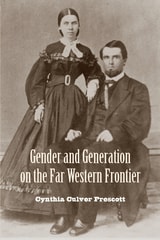
Gender and Generation on the Far Western Frontier
Cynthia Culver Prescott
University of Arizona Press, 2007
In Gender and Generation on the Far Western Frontier, Cynthia Culver Prescott expertly explores the shifting gender roles and ideologies that countless Anglo-American settlers struggled with in Oregon’s Willamette Valley between 1845 and 1900. Drawing on traditional social history sources as well as divorce records, married women’s property records, period photographs, and material culture, Prescott reveals that Oregon settlers pursued a moving target of middle-class identity in the second half of the nineteenth century.
Prescott traces long-term ideological changes, arguing that favorable farming conditions enabled Oregon families to progress from accepting flexible frontier roles to participating in a national consumer culture in only one generation. As settlers’ children came of age, participation in this new culture of consumption and refined leisure became the marker of the middle class. Middle-class culture shifted from the first generation’s emphasis on genteel behavior to a newer genteel consumption.
This absorbing volume reveals the shifting boundaries of traditional women’s spheres, the complicated relationships between fathers and sons, and the second generation’s struggle to balance their parents’ ideology with a changing national sense of class consciousness.
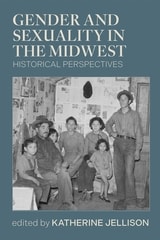
Gender and Sexuality in the Midwest
Historical PerspectivesKatherine Jellison
Ohio University Press, 2027
This book is a collection of eleven essays, an introduction, and a conclusion that discuss issues of gender and sexuality in the twelve states of the Midwest. The book covers 200 years of midwestern history—from the early nineteenth century to the early twenty-first century—and includes the experiences of midwesterners of diverse races, religions, and sexualities. The essays are arranged according to three topical categories. Essays in the first section of the book deal with some aspect of Memory and Methodology, those in the second section engage matters of Community and Belief, and the chapters in the final third of the manuscript address intersections of Biography and Politics. The authors of all eleven essays firmly ground their analyses within the categories of gender and/or sexuality. Essayists include discussion of men and masculinity as well as women and femininity. In addition, several of the essays address situations outside the realm of heterosexual monogamy: plural marriage, celibacy, LGBTQ+ relationships. In other words, the book engages with developments in subject matter and methodology that have changed the gender studies field over the past 15-30 years.
Authors have written their essays with an eye toward a broad audience. The book is appropriate reading for historians of women, gender, and sexuality; scholars of midwestern history and midwestern studies; undergraduate and graduate students in women’s and gender history courses; undergraduate and graduate students in women’s, gender, and sexuality studies courses; and non-academic readers with a particular interest in the Midwest or gender history.
Contributors
Kristin Mapel Bloomberg
Nikki Berg Burin
Stewart Davenport
Kara M. French
Barbara Handy-Marchello
Birgit Hans
Dean J. Kotlowski
David Mislin
Cynthia C. Prescott
Ashley Rattner
Jordan Zdinak
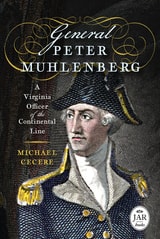
General Peter Muhlenberg
A Virginia Officer of the Continental LineMichael Cecere
Westholme Publishing, 2020
Standing at the pulpit in his church in the Shenandoah Valley, the preacher borrowed from Ecclesiastes, declaring in a firm voice that “To every thing there is a season . . . .” He then announced, “that there is a time to fight, and that time had now come,” and abruptly removed his clerical robe to reveal his colonel’s uniform. There is little doubt that this clergyman-turned-soldier uttered words to this effect, but whether he threw off his robe to reveal a gleaming uniform may be embellishment. In General Peter Muhlenberg: A Virginia Officer of the Continental Line, historian Michael Cecere cuts away the romanticism surrounding this fascinating character to present him as a highly capable and dedicated officer who served for seven long years in America’s War for Independence; a man of faith who held the high ideals of that office in his conduct with fellow officers and regular soldiers alike.
First appointed to lead the 8th Virginia Regiment of the Continental Army, Muhlenberg and his troops served under General Charles Lee in the defense of Charleston in 1776. Sent north and promoted to brigadier-general, Muhlenberg participated in the ensuing battles of Brandywine, Germantown, the winter at Valley Forge, and the major clash at Monmouth Courthouse. In 1780, he returned to Virginia and stood at the forefront of Virginia’s defense when the British invaded in 1781. At Yorktown, Muhlenberg commanded the continental light infantry troops that stormed Redoubt No. 10, sealing Cornwallis’s fate. Focusing on the military career of Muhlenberg, and relying on a judicious amount of primary source material, the author follows Muhlenberg and his troops as they battled some of the most storied adversaries of the war, including John Graves Simcoe’s Queen’s Rangers, Captain Johann Ewald’s German Jaegers, and Banastre Tarleton’s British Legion.
Admired by George Washington and his fellow officers and men, Muhlenberg was an American patriot who sacrificed much for his country’s cause, and truly “lived respected and died regretted by all good men.”
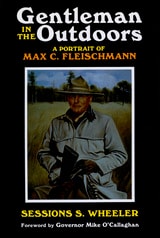
Gentleman in the Outdoors
Sessions S Wheeler
University of Nevada Press, 1985
The material which Wheeler collected for his book, Gentleman in the Outdoors : A Portrait of Max C. Fleischmann is particularly rich and complete; Mrs. Sarah H. Fleischmann gave Wheeler several boxes of her husband's files and photographs related to his outdoor activities such as fishing, hunting, sailing, and scientific expeditions. In addition, the Fleischmann materials included a thick binder, the contents of which Wheeler used extensively in his book. The binder included some material duplicated in the other Fleischmann files as well as correspondence between Wheeler and Fleischmann.
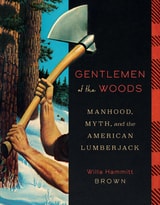
Gentlemen of the Woods
Manhood, Myth, and the American LumberjackWilla Hammitt Brown
University of Minnesota Press, 2025
Lumberjacks: the men, the myth, and the making of an American legend
The folk hero Paul Bunyan, burly, bearded, wielding his big ax, stands astride the story of the upper Midwest—a manly symbol of the labor that cleared the vast north woods for the march of industrialization while somehow also maintaining an aura of pristine nature. This idea, celebrated in popular culture with songs and folktales, receives a long overdue and thoroughly revealing correction in Gentlemen of the Woods, a cultural history of the life and lore of the real lumberjack and his true place in American history.
Now recalled as heroes of wilderness and masculinity, lumberjacks in their own time were despised as amoral transients. Willa Hammitt Brown shows that nineteenth-century jacks defined their communities of itinerant workers by metrics of manhood that were abhorrent to the residents of the nearby Northwoods boomtowns, valuing risk-taking and skill rather than restraint and control. Reviewing songs, stories, and firsthand accounts from loggers, Brown brings to life the activities and experiences of the lumberjacks as they moved from camp to camp. She contrasts this view with the popular image cultivated by retreating lumber companies that had to sell off utterly barren land. This mythologized image glorified the lumberjack and evoked a kindly, flannel-wearing, naturalist hero.
Along with its portrait of lumberjack life and its analysis of the creation of lumberjack myth, Gentlemen of the Woods offers new insight into the intersections of race and social class in the logging enterprise, considering the actual and perceived roles of outsider lumberjacks and Native inhabitants of the northern forests. Anchored in the dual forces of capitalism and colonization, this lively and compulsively readable account offers a new way to understand a myth and history that has long captured our collective imagination.
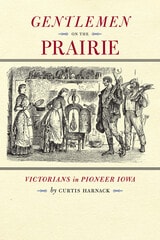
Gentlemen on the Prairie
Victorians in Pioneer IowaHarnack, Curtis
University of Iowa Press, 1985
@font-face { font-family: "Palatino";}@font-face { font-family: "?????? Pro W3";}p.MsoNormal, li.MsoNormal, div.MsoNormal { margin: 0in 0in 0.0001pt; font-size: 12pt; font-family: "Times New Roman"; }p.FreeForm, li.FreeForm, div.FreeForm { margin: 0in 0in 0.0001pt; font-size: 12pt; font-family: "Times New Roman"; color: black; }div.Section1 { page: Section1; }
In the 1880s, the well-connected young Englishman William B. Close and his three brothers, having bought thousands of acres of northwest Iowa prairie, conceived the idea of enticing sons of Britain’s upper classes to pursue the life of the landed gentry on these fertile acres. “Yesterday a wilderness, today an empire”: their bizarre experiment, which created a colony for people “of the better class” who were not in line to inherit land but whose fathers would set them up in farming, flourished in Le Mars, Iowa (and later in Pipestone, Minnesota), with over five hundred youths having a go at farming. In Gentlemen on the Prairie, Curtis Harnack tells the remarkable story of this quite unusual chapter in the settling of the Midwest.
Many of these immigrants had no interest in American citizenship but enjoyed or endured the challenging adventure of remaining part of the empire while stranded on the plains. They didn’t mix socially with other Le Mars area residents but enjoyed such sports as horse racing, fox hunts, polo, and an annual derby followed by a glittering grand ball. Their pubs were named the House of Lords, the House of Commons, and Windsor Castle; the Prairie Club was a replica of a London gentlemen’s club, an opera house attracted traveling shows, and their principal hotel was Albion House. In St. George’s Episcopal Church, prayers were offered for the well-being of Queen Victoria.
Problems soon surfaced, however, even for these well-heeled aristocrats. The chief problem was farm labor; there was no native population to exploit, and immigrant workers soon bought their own land. Although sisters might visit the colonists and sometimes marry one of them, appropriate female companionship was scarce. The climate was brutal in its extremes, and many colonists soon sold their acres at a profit and moved to countries affiliated with Britain. When the financial depression in the early 1890s lowered land values and made agriculture less profitable, the colony collapsed. Harnack skillfully draws upon the founder’s “Prairie Journal,” company ledgers, and other records to create an engaging, engrossing story of this quixotic pioneering experiment.
Geological Sciences in the Antebellum South
Edited by James X. Corgan
University of Alabama Press, 1982
Tracing the roots of earth science before the Civil War.
Geological Sciences in the Antebellum South by James Corgan offers a rich and revealing examination of the origins and development of geological inquiry in the American South during the decades (1796-1850s) leading up to the Civil War. At a time when scientific disciplines in the United States were still taking shape, Southern scholars, educators, and naturalists played a critical—if often overlooked—role in advancing geological knowledge. Corgan brings this history to life through a careful exploration of the people, institutions, and ideas that defined early earth science in the region.
From the study of mineral resources and soil composition to the broader effort to understand the region’s unique landscapes, geology intersected with agriculture, industry, and economic development in powerful ways. Corgan demonstrates how these scientific endeavors were shaped by—and in turn helped shape—the cultural and intellectual environment of the South. This book also highlights the contributions of key figures and institutions that fostered scientific inquiry, including early universities, state surveys, and learned societies. These networks connected Southern researchers to national and international scientific communities, positioning the region as an active participant in the broader expansion of 19th-century science. At the same time, the book addresses the challenges and limitations faced by Southern scientists, offering a nuanced perspective on how regional identity, resources, and social structures influenced the trajectory of scientific progress.
By situating geology within the broader context of antebellum history, Corgan provides readers with a deeper understanding of how scientific thought developed alongside—and in dialogue with—the political, economic, and cultural forces of the period. The result is a compelling interdisciplinary study that bridges the history of science and Southern history, shedding new light on a formative era in American intellectual life. Geological Sciences in the Antebellum South will appeal to historians, geologists, and scholars of American studies. It is an essential resource for anyone interested in the foundations of scientific inquiry in the United States and the enduring impact of geology on the development of the American South.
Geology and Politics in Frontier Texas, 1845–1909
By Walter Keene Ferguson
University of Texas Press, 1969
Conservation and development of natural resources are issues of critical importance throughout the world. These issues have been matters of public concern in Texas since legislators first adopted the state-sponsored geological survey as a means of extending government funds to private citizens who would help develop and advertise the mineral and agricultural wealth of Texas.
Walter Keene Ferguson examines the relation of politics to geological exploration during a critical period in Texas history—the first half-century of statehood. Although Texas shared its frontier experience with many other areas, it could not rely on federal aid in the form of land grants because the state government controlled the destiny of the public domain at all times. Acrimonious debate between farmers and urbanites of East Texas and pioneer ranchers of arid West Texas rendered the disposition of public lands even more difficult.
As tools for developing and advertising resources, the geological and agricultural surveys of 1858 and 1867 fulfilled the demands of expectant capitalism made by politicians, speculators, and railroad entrepreneurs. Reconnaissance geologists publicized the wealth of Texas.
Drought in 1886 and popular agitation against squandering of state land caused the emergence of a new concept of the geological survey as an instrument of land reform and public assistance. Lobbying by reformers and scientific organizations led to the formation of the Dumble Survey in 1888 and the University of Texas Mineral Survey in 1901. Stratigraphic analysis of the “individualities” of Texas geology helped the state realize its full economic potential and led to legislation to protect public mineral land from exploitation.
The youthful oil industry finally removed geological exploration from the political arena. As part of the University, a permanent Bureau of Economic Geology was established in 1909 to extend the benefits of scientific research to private citizens and state organizations on a nonpartisan basis.
Ferguson’s analysis of geological surveys in Texas contributes to an understanding not only of the geology and history of the state but of the urgent problem of evaluating the natural resources of underdeveloped regions.
Geology of the Great Basin
Bill Fiero
University of Nevada Press, 2009
Geology, Ecology, and Human History of the San Luis Valley
Jared Maxwell Beeton
University Press of Colorado, 2020
The first section, “The Geology and Ecology of the San Luis Valley,” surveys the geomorphology, hydrology, animal and plant life, conservation, management, and mining of the valley’s varied terrain. The second section, “Human History of the San Luis Valley,” recounts the valley’s human visitation and settlement, from early indigenous life to Spanish exploration to Hispanic and Japanese settlements. This section introduces readers to the region’s wide range of religious identities—Catholic, Latter-day Saint, Buddhist, Jehovah’s Witness, Amish, and Mennonite—and diverse linguistic traditions, including Spanish, English, Dutch, Danish, Japanese, and Mayan. The final section, “Travel Itineraries,” addresses recreation, specifically fly-fishing and rock climbing.
The book provides a comprehensive overview of the endemic flora and fauna, human history of indigenous lifeways, and diverse settlement patterns that have shaped the region. The Geology, Ecology, and Human History of the San Luis Valley will appeal to students and scholars of geology, ecology, environmental history, and cultural history, as well as residents and tourists seeking to know more about this fascinating and integral part of Colorado and New Mexico.
Contributors:
Benjamin Armstrong, Timothy Armstrong, Deacon Aspinwall, Robert Benson, Lorrie Crawford, Kristy Duran, Jeff Elison, Eric Harmon, Devin Jenkins, Bradley G. Johnson, Robert M. Kirkham, Bessie Konishi, Angie Krall, Richard D. Loosbrock, Richard Madole, A. W. Magee, Victoria Martinez, James McCalpin, Mark Mitchell, R. Nathan Pipitone, Andrew Valdez, Rio de la Vista, Damián Vergara Wilson
George Galphin's Intimate Empire
The Creek Indians, Family, and Colonialism in Early AmericaBryan C. Rindfleisch
University of Alabama Press, 2019
A native of Ireland, George Galphin arrived in South Carolina in 1737 and quickly emerged as one of the most proficient deerskin traders in the South. This was due in large part to his marriage to Metawney, a Creek Indian woman from the town of Coweta, who incorporated Galphin into her family and clan, allowing him to establish one of the most profitable merchant companies in North America. As part of his trade operations, Galphin cemented connections with Indigenous and European peoples across the South, while simultaneously securing links to merchants and traders in the British Empire, continental Europe, and beyond.
In George Galphin’s Intimate Empire: The Creek Indians, Family, and Colonialism in Early America, Bryan C. Rindfleisch presents a complex narrative about eighteenth-century cross-cultural relationships. Reconstructing the multilayered bonds forged by Galphin and challenging scholarly understandings of life in the Native South, the American South more broadly, and the Atlantic World, Rindfleisch looks simultaneously at familial, cultural, political, geographical, and commercial ties—examining how eighteenth-century people organized their world, both mentally and physically. He demonstrates how Galphin’s importance emerged through the people with whom he bonded. At their most intimate, Galphin’s multilayered relationships revolved around the Creek, Anglo-French, and African children who comprised his North American family, as well as family and friends on the other side of the Atlantic.
Through extensive research in primary sources, Rindfleisch reconstructs an expansive imperial world that stretches across the American South and reaches into London and includes Indians, Europeans, and Africans who were intimately interconnected and mutually dependent. As a whole, George Galphin’s Intimate Empire provides critical insights into the intensely personal dimensions and cross-cultural contours of the eighteenth-century South and how empire-building and colonialism were, by their very nature, intimate and familial affairs.
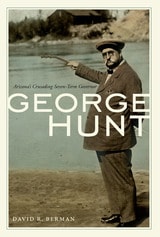
George Hunt
Arizona's Crusading Seven-Term GovernorDavid R. Berman
University of Arizona Press, 2015
Hunt was proof that style and physical appearance neither guarantee nor preclude political success, for the three-hundred-pound man of odd dress and bumbling speech had a political career that spanned the state’s Populism of the 1890s to the 1930s New Deal. Driven by causes, he was very active in public office but took little pleasure in doing the job. Called names by opponents and embarrassed by his lack of formal education, Hunt sometimes showed rage, self-pity, and bitterness at what he saw as betrayals and conspiracies against him.
The author assesses Hunt’s successes and failings as a political leader and take-charge governor struggling to produce results in a political system hostile to executive authority. Berman offers a nuanced look at Arizona’s first governor, providing an important new understanding of Arizona’s complex political history.
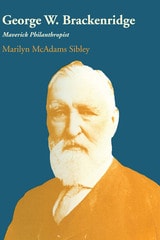
George W. Brackenridge
Maverick PhilanthropistBy Marilyn McAdams Sibley
University of Texas Press, 1973
George W. Brackenridge (1832–1920) was a paradox to his fellow Texans. A Republican in a solidly Democratic state, a financier in a cattleman's country, a Prohibitionist in the goodtime town of San Antonio, he devoted his energies to making a fortune only to give it to philanthropic causes.
Indiana born, Brackenridge came to Texas in 1853, but left the state during the Civil War to serve as U.S. Treasury agent and engage in the wartime cotton trade. Later he settled in San Antonio, where he founded a bank and invested in railroads, utilities, and other enterprises.
Some of Brackenridge's contemporaries never forgave him for his Civil War career, but others knew him as a public-spirited citizen, educator, and advocate of civil rights. He cared little for what others thought of him. Yet, he confided once in a rare interview that his fondest ambition was to leave the world a better place for his having lived in it. To this end, he gave generously of himself and his means.
His best-known benefaction is Brackenridge Park, which he gave to the city of San Antonio, but most of his contributions were in the field of education. As regent of the University of Texas for more than twenty-five years, he gave the institution its first dormitory, a large tract of land in Austin, and innumerable smaller gifts. He also offered to underwrite the expenses of the University when Governor James E. Ferguson vetoed the appropriation bill for 1917–1919.
Other educational institutions to benefit from his largess were the public schools of San Antonio, a Negro college in Seguin, and the University of Texas Medical Branch at Galveston. In addition, he assisted individual students, especially women, through scholarships and loans.
Believing that the betterment of humanity lay in education, Brackenridge arranged for the continuation of his philanthropies. By his will he created the George W. Brackenridge Foundation, the first of its kind in Texas and one of the first in the United States.
Marilyn McAdams Sibley's study of George W. Brackenridge is the first biography of an important and, for his time, unusual Texan. It presents new material concerning the Mexican cotton trade during the Civil War, on the beginnings of banking in Texas, and on higher education in Texas.
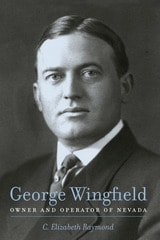
George Wingfield
Owner And Operator Of NevadaC. Elizabeth Raymond
University of Nevada Press, 2013
Banker, hotel owner, and political powerhouse George Wingfield was a significant figure in Nevada history. He was influential in developing Reno's gambling-and-divorce-related tourism. Raymond's biography depicts the man and his times, from his birth in Arkansas in 1876 until his death in Reno in 1959. Wilbur S. Shepperson Series in History and Humanities.
German Americans on the Middle Border
From Antislavery to Reconciliation, 1830–1877Zachary Stuart Garrison
Southern Illinois University Press, 2020
Liberal German immigrants, having escaped the European aristocracy who undermined their revolution and the formation of a free nation, viewed slaveholders as a specter of European feudalism. During the antebellum years, many liberal German Americans feared slavery would inhibit westward progress, and so they embraced the Free Soil and Free Labor movements and the new Republican Party. Most joined the Union ranks during the Civil War.
After the war, in a region largely opposed to black citizenship and Radical Republican rule, German Americans were seen as dangerous outsiders. Facing a conservative resurgence, liberal German Republicans employed the same line of reasoning they had once used to justify emancipation: A united nation required the end of both federal occupation in the South and special protections for African Americans. Having played a role in securing the Union, Germans largely abandoned the freedmen and freedwomen. They adopted reconciliation in order to secure their place in the reunified nation. Garrison’s unique transnational perspective to the sectional crisis, the Civil War, and the postwar era complicates our understanding of German Americans on the middle border.
German Settlement in Missouri
New Land, Old WaysRobyn Burnett & Ken Luebbering
University of Missouri Press, 1996
German immigrants came to America for two main reasons: to seek opportunities in the New World, and to avoid political and economic problems in Europe. In German Settlement in Missouri, Robyn Burnett and Ken Luebbering demonstrate the crucial role that the German immigrants and their descendants played in the settlement and development of Missouri's architectural, political, religious, economic, and social landscape. Relying heavily on unpublished memoirs, letters, diaries, and official records, the authors provide important new narratives and firsthand commentary from the immigrants themselves.
Between 1800 and 1919, more than 7 million people came to the United States from German-speaking lands. The German immigrants established towns as they moved up the Missouri River into the frontier, resuming their traditional ways as they settled. As a result, the culture of the frontier changed dramatically. The Germans farmed differently from their American neighbors. They started vineyards and wineries, published German-language newspapers, and entered Missouri politics.
The decades following the Civil War brought the golden age of German culture in the state. The populations of many small towns were entirely German, and traditions from the homeland thrived. German-language schools, publications, and church services were common. As the German businesses in St. Louis and other towns flourished, the immigrants and their descendants prospered. The loyalty of the Missouri Germans was tested in World War I, and the anti-immigrant sentiment during the war and the period of prohibition after it dealt serious blows to their culture. However, German traditions had already found their way into mainstream American life.
Informative and clearly written, German Settlement in Missouri will be of interest to all readers, especially those interested in ethnic history.
Germans in Illinois
Miranda E. Wilkerson and Heather Richmond
Southern Illinois University Press, 2019
The promise of cheap land and fertile soil in rural areas and emerging industries in cities attracted three major waves of German-speaking immigrants to Illinois in search of freedom and economic opportunities. Before long the state was dotted with German churches, schools, cultural institutions, and place names. German churches served not only as meeting places but also as a means of keeping language and culture alive. Names of Illinois cities and towns of German origin include New Baden, Darmstadt, Bismarck, and Hamburg. In Chicago, many streets, parks, and buildings bear German names, including Altgeld Street, Germania Place, Humboldt Park, and Goethe Elementary School. Some of the most lively and ubiquitous organizations, such as Sängerbunde, or singer societies, and the Turnverein, or Turner Society, also preserved a bit of the Fatherland.
Exploring the complex and ever-evolving German American identity in the growing diversity of Illinois’s linguistic and ethnic landscape, this book contextualizes their experiences and corrects widely held assumptions about assimilation and cultural identity. Federal census data, photographs, lively biographical sketches, and newly created maps bring the complex story of German immigration to life. The generously illustrated volume also features detailed notes, suggestions for further reading, and an annotated list of books, journal articles, and other sources of information.
Germans in Michigan
Jeremy W. Kilar
Michigan State University Press, 2002
Germans are the largest ancestral group in Michigan, representing over 2.6 million descendants or 22% of the state’s population. Yet, unlike other immigrant groups, Germans have not retained their linguistic and cultural traditions as part of a distinct ethnic identity. The Bavarian villages of Frankenmuth and Gaylord stand as testaments to the once proud and vigorous German communities that dotted both rural and urban Michigan landscapes. Jeremy W. Kilar explores the social forces that transformed Germans from inward-looking immigrants to citizens in the cultural mainstream. Germans in Michigan is a story of assimilation and renewal and as such reveals the complexities of Americanization and immigration as social forces.
Germans in Wisconsin
Richard H. Zeitlin
Wisconsin Historical Society Press, 2001
Between 1820 and 1910, nearly five and a half million German-speaking immigrants came to the United States in search of new homes, new opportunities, and freedom from European tyrannies. Most settled in the Midwest, and many came to Wisconsin, whose rich farmlands and rising cities attracted three major waves of immigrants. By 1900, German farmers, merchants, manufacturers, editors, and educators—to say nothing of German churches (both Catholic and Lutheran), cultural institutions, food, and folkways—had all set their mark upon Wisconsin. In the most recent census (1990), more than 53 percent of the state's residents considered themselves "German"—the highest of any state in the Union.
In this best-selling book, now with updated text and additional historical photographs, Richard H. Zeitlin describes the values and ideas the Germans brought with them from the Old Country; highlights their achievements on the farm, in the workplace, and in the academy over the course of 150 years; and explains why their impact has been so profound and pervasive.

Get Plum Island!
Place and Politics in Massachusetts's Ten-Year Fight Over the Parker River National Wildlife RefugeKarin A. Martin
University of Massachusetts Press, 2026
An environmental history of resistance, negotiation, and conservation on the Massachusetts coast
An hour north of Boston, Parker River National Wildlife Refuge occupies the southern three-quarters of Plum Island, a barrier island off the Massachusetts coast. Parker River is a nationally renowned birding destination and the second most-visited wildlife refuge in the Northeast, drawing over 300,000 visitors annually. Today, environmentally minded Massachusetts barely remembers the decade-long fight that reduced the refuge to half its original size. Get Plum Island! tells the forgotten story of how six small towns in Essex County (Newbury, West Newbury, Rowley, Ipswich, Groveland, and Georgetown) fought the establishment of the refuge in the 1940s. Through political organizing across local, state, and federal levels, the opposition nearly abolished the refuge and ultimately succeeded in making it smaller.
The conflict was deeply shaped by class, geography, and competing visions of land use. On one side were elite conservationists—sportsmen, ornithologists, and preservation advocates from Boston, Cambridge, and Newton—who envisioned a federally protected habitat. On the other side of the conflict, a group of mostly middle- and working-class men, farmers, and local hunters organized a resistance to the establishment of a refuge. Through protests, public hearings, and even aggression toward visiting federal officials, local opposition made the case that their communities had clammed, farmed, and hunted the disputed lands before there even was a United States government. They recounted a version of their history as founders of the nation that made them, in their view, entitled to the land that was given to them by the English Crown. In telling this story, Get Plum Island! reveals how ordinary citizens can challenge—and reshape—federal authority, and offers a timely case study in the politics of land, class, and conservation.
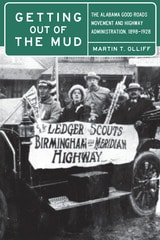
Getting Out of the Mud
The Alabama Good Roads Movement and Highway Administration, 1898–1928Martin T. Olliff, Foreword by David O. Whitten
University of Alabama Press, 2017
Recounts the history of the Good Roads Movement that arose in progressive-era Alabama, how it used the power of the state to achieve its objectives of improving market roads for farmers and highways for automobiles
Getting Out of the Mud: The Alabama Good Roads Movement and Highway Administration, 1898–1928 explores the history of the Good Roads Movement and investigates the nature of early twentieth-century progressivism in the state. Martin T. Olliff reveals how middle-class reformers secured political, economic, and social power not only by fighting against corporate domination and labor recalcitrance but also by proposing alternative projects like road improvement and identifying the interests of the rising middle class as being the most important to public interest.
With the development of national markets in the late nineteenth and early twentieth centuries, Americans began to regard the nation as a whole, rather than their state or region, as the most important political entity. Many Alabamians wished to travel beyond their local communities in all seasons without getting stuck in the mud of rudimentary rutted dirt roads. The onset of the automobile age bolstered the need for roadmaking, alerting both automobilists and good roads advocates to the possibility of a new transportation infrastructure. The Good Roads Movement began promoting farm-to-market roads, then highways that linked cities, then those that connected states. Federal matching funds for road construction after 1916 led state and federal governments to supplant the Good Roads Movement, building and administering the highway system that emerged by the late 1920s.
Olliff’s study of how Alabamians dealt with strained resources and overcame serious political obstacles in order to construct a road system that would accommodate economic growth in the twentieth century may offer clues to the resurrection of a similar strategy in our modern era. Many problems are unchanged over the hundred years between crises: Alabamians demand good roads and a government that has the capacity to build and maintain such an infrastructure while, at the same time, citizens are voting into office men and women who promise lower taxes and smaller government.

Getting Used to Being Shot At
Mark K. Christ
University of Arkansas Press, 2002
Getting around Brown
Desegregation, Development, and the Columbus Public SchoolsGregory S. Jacobs
The Ohio State University Press, 1998
Getting Around Brown is both the first history of school desegregation in Columbus, Ohio, and the first case study to explore the interplay of desegregation, business, and urban development in America.
Drawing on a broad range of sources, including over sixty interviews, the book details the causes and consequences of Penick v. Columbus Board of Education (1977). Gregory S. Jacobs argues that school desegregation in Columbus failed to produce equal educational opportunity, not because it was inherently detrimental to learning, but because it was incompatible with urban development. As a consequence, the long-term health of the city school district was sacrificed to preserve the growth of the city itself. The resulting middle-class abandonment of urban education in Columbus produced an increasingly poor, African-American city school system and a powerful form of defensive activism within the overwhelmingly white suburban systems.
The title of the book refers not only to the elaborate tools used to circumvent the spirit of the Supreme Court’s landmark 1954 Brown v. Board of Education decision but also to the need to move beyond the flawed dichotomies and failed policies that have come to define desegregation. The book calls for a reconsideration of the complicated relationship race, class, and housing patterns have with city school reform efforts, a relationship obscured by this country’s vitriolic and occasionally violent battle over busing. Jacobs concludes his study with a “modest proposal,” in which he recommends the abolition of the Columbus Public School District, the dispersal of its students throughout surrounding suburban systems, and the creation of a choice-based “experimental education zone” within the old city school district boundaries.
Readable and relevant, Getting around Brownis essential reading for scholars of recent American history, urban studies, civil rights and race relations, and educational policy, as well as anyone interested in public education and politics.

Ghost Ranch
Lesley Poling-Kempes
University of Arizona Press, 2005
Building on the history of the Abiquiu region that she told in Valley of Shining Stone, Ghost Ranch historian Lesley Poling-Kempes now unfolds the story of this celebrated retreat. She traces its transformation from el Rancho de los Brujos, a hideout for legendary outlaws, to a renowned cultural mecca and one of the Southwest’s premier conference centers.
First a dude ranch, Ghost Ranch became a magical sanctuary where the veil between heaven and earth seemed almost transparent. Focusing on those who visited from the 1920s and ’30s until the 1990s, Poling-Kempes tells how O’Keeffe and others—from Boston Brahmin Carol Bishop Stanley to paleontologist Edwin H. Colbert, Los Alamos physicists to movie stars—created a unique community that evolved into the institution that is Ghost Ranch today. For this book, Poling-Kempes has drawn on information not available when Valley of Shining Stone was written. The biography of Juan de Dios Gallegos has been enhanced and definitively corrected. The Robert Wood Johnson (of Johnson & Johnson) years at Ghost Ranch are recounted with reminiscences from family members. And the memories of David McAlpin Jr. shed light on how the Princeton circle that included the Packs, the Johnson brothers, the Rockefellers, and the McAlpins ended up as summer neighbors on the high desert of New Mexico.
After Arthur Pack’s gift of the ranch to the Presbyterian Church in 1955, Ghost Ranch became a spiritual home for thousands of people still awestruck by the landscape that O’Keeffe so lovingly committed to canvas; yet the care taken to protect Ghost Ranch’s land and character has preserved its sense of intimacy. By relating its remarkable story, Poling-Kempes invites all visitors to better appreciate its place as an honored wilderness—and to help safeguard its future.
Ghost Towns of the American West
Robert Silverberg
Ohio University Press, 1990
The story of the American mining frontier can be traced through the ghost towns that dot the western landscape to this day, from the camps of California’s forty-niners to the twentieth-century ruins in the Nevada desert. These abandoned towns mark an epoch of high adventure, of quick wealth and quicker poverty, of gambling and gunslinging and hell-raising. Those who have seen the Old West movies sometimes think that the legends of the Wild West were invented by screenwriters. The ghost towns remain, and their battered ruins testify that the legends are true. Behind the tall tales is a history where a fortune could be made in a week and lost over the course of an evening.
With a historian’s attention to fact and a novelist’s gift for dramatic storytelling, celebrated science fiction author Robert Silverberg brings these adventures back to life in the rowdy splendor of their heyday in Ghost Towns of the American West. History and travelers’ tales are woven together with clarity and wit to create a lively account of a fascinating era in our history. Lorence Bjorklund’s illustrations, rich in detail, portray the ghost towns in their glory and in their dusty decline.
Ghost of the Ozarks
Murder and Memory in the Upland SouthBrooks Blevins
University of Illinois Press, 2012
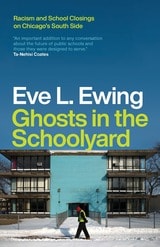
Ghosts in the Schoolyard
Racism and School Closings on Chicago's South SideEve L. Ewing
University of Chicago Press, 2018
That’s how Eve L. Ewing opens Ghosts in the Schoolyard: describing Chicago Public Schools from the outside. The way politicians and pundits and parents of kids who attend other schools talk about them, with a mix of pity and contempt.
But Ewing knows Chicago Public Schools from the inside: as a student, then a teacher, and now a scholar who studies them. And that perspective has shown her that public schools are not buildings full of failures—they’re an integral part of their neighborhoods, at the heart of their communities, storehouses of history and memory that bring people together.
Never was that role more apparent than in 2013 when Mayor Rahm Emanuel announced an unprecedented wave of school closings. Pitched simultaneously as a solution to a budget problem, a response to declining enrollments, and a chance to purge bad schools that were dragging down the whole system, the plan was met with a roar of protest from parents, students, and teachers. But if these schools were so bad, why did people care so much about keeping them open, to the point that some would even go on a hunger strike?
Ewing’s answer begins with a story of systemic racism, inequality, bad faith, and distrust that stretches deep into Chicago history. Rooting her exploration in the historic African American neighborhood of Bronzeville, Ewing reveals that this issue is about much more than just schools. Black communities see the closing of their schools—schools that are certainly less than perfect but that are theirs—as one more in a long line of racist policies. The fight to keep them open is yet another front in the ongoing struggle of black people in America to build successful lives and achieve true self-determination.
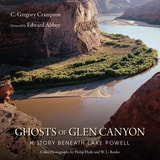
Ghosts of Glen Canyon
History beneath Lake PowellC Gregory Crampton
University of Utah Press, 2009
Author Gregory Crampton led the historical investigations of Glen and San Juan Canyons from 1957 to 1963 under contract with the National Park Service. The objective was to locate and record historical sites that would be lost to the rising waters of the reservoir. This book records that effort.
First published in 1986, this edition has been revised to include several new “ghosts” of Glen Canyon, including a never-before-published foreword by Edward Abbey. It also showcases stunning color photographs by Philip Hyde and includes hundreds of black-and-white photographs taken by the original salvage crews.
This informative guide to the historic treasures of Glen Canyon includes numbered maps keyed to each location. It is a book for both the armchair traveler and the lake enthusiast eager for a journey through the past to a place few had the privilege to know.
Ghosts of the Colorado Plains
Perry Eberhart
Ohio University Press, 1996
Since the second quarter of the nineteenth century, changing conditions have built and emptied small and large towns across the Colorado plain. At the time when Denver was little more than an overpopulated campsite along Cherry Creek there were numerous other settlements to the east and south, each with its own dreams of growth, gold or silver strikes, railroad connections, and rising influence over the surrounding territory. In Ghosts of the Colorado Plains, Eberhart traces some 150 of these ill-fated settlements, providing accounts of their birth, peak activity, and ultimate demise.
As early trapping, mining, cattle, farming, and transportation industries brought successive waves of “easterners” into the territory, they created some of the most colorful communities of their time. The trail towns Boston and Trail City were reputed to be two of the roughest towns in the entire west. Real estate schemers and promoters offered dreams of civilization and respectability in the “cow towns.” Elsewhere, the stage stations, side of the road settlements, and farm centers arose out of the basic necessities of commerce and from a simple desire of far-flung settlers, trappers, and others for a place to congregate, celebrate, trade, brawl, and receive news from the east. Though the personalities and events which animated these communities are all but forgotten, the towns themselves are the legacy of the competing forces that opened and developed the Colorado territory.
Readers of Guide to Colorado Ghost Towns and Mining Camps will welcome Ghosts of the Colorado Plains as an extension of Eberhart’s colorful blend of history and on-site information to a larger and much neglected area of the state. Through historical records, vignettes of personalities, and over 250 photos and 80 maps, Eberhart provides ready access to the towns and settlment sites of eastern Colorado’s past. For travelers, Ghosts of the Colorado Plains offers numerous pleasant excursions and investigations; for those less inclined to take to the field in search of artifacts and sites, the book offers fascinating glimpses of Colorado’s disappearing past.
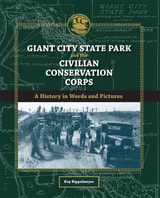
Giant City State Park and the Civilian Conservation Corps
A History in Words and PicturesKay Rippelmeyer
Southern Illinois University Press, 2010
Many recognize Giant City State Park as one of the premier recreation spots in southern Illinois, with its unspoiled forests, glorious rock formations, and famous sandstone lodge. But few know the park’s history or are aware of the remarkable men who struggled to build it. Giant City State Park and the Civilian Conservation Corps: A History in Words and Pictures provides the first in-depth portrait of the park’s creation, drawing on rarely seen photos, local and national archival research, and interviews to present an intriguing chapter in Illinois history.
Kay Rippelmeyer traces the geological history of the park, exploring the circumstances that led to the breathtaking scenery for which Giant City is so well known, and providing insightful background on and cultural history of the area surrounding the park. Rippelmeyer then outlines the effects of the Great Depression and the New Deal on southern Illinois, including relief efforts by the Civilian Conservation Corps, which began setting up camps at Giant City in 1933. The men of the CCC, most of them natives of southern and central Illinois, are brought to life through vividly detailed, descriptive prose and hundreds of black-and-white photographs that lavishly illustrate life in the two camps at the park. This fascinating book not only documents the men’s hard work—from the clearing of the first roads and building of stone bridges, park shelters, cabins, and hiking and bridle trails, to quarry work and the raising of the lodge’s famous columns—it also reveals the more personal side of life in the two camps at the park, covering topics ranging from education, sports, and recreation, to camp newspapers, and even misbehavior and discipline.
Supplementing the photographs and narrative are engaging conversations with alumni and family members of the CCC, which give readers a rich oral history of life at Giant City in the 1930s. The book is further enhanced by maps, rosters of enrollees and officers, and a list of CCC camps in southern Illinois. The culmination of three decades of research, Giant City State Park and the Civilian Conservation Corps provides the most intimate history ever of the park and its people, honoring one of Illinois’s most unforgettable places and the men who built it.

Glacier National Park
A Culmination of GiantsGeorge Bristol
University of Nevada Press, 2017
First there were tribes of Native Americans whose deep regard for nature left the landscape intact. They were followed by Euro-American explorers and settlers who may have been awed by the new lands, but began to move wildlife to near extinction. Fortunately for the area that would become Glacier, some began to recognize that laying siege to nature and its bounties would lead to wastelands.
Bristol recounts how a renewed conservation ethic fostered by such leaders as Emerson, Thoreau, Olmstead, Muir, and Teddy Roosevelt took hold. Their disciples were Grinnell, Hill, Mather, Albright, and Franklin Roosevelt, and they would not only take up the call but rally for the cause. These giants would create and preserve a park landscape to accommodate visitors and wilderness alike.
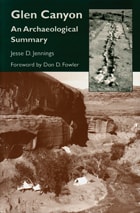
Glen Canyon
An Archaeological SummaryJesse D Jennings
University of Utah Press, 1998
In 1956, Congress passed legislation that provided authorization and funds for emergency research to be conducted in Glen Canyon in response to the threat of losses posted by the construction of the Glen Canyon Dam in northern Arizona. For eight years, scientists worked against the clock to record the archaeology, geology, history, and paleontology of the region before the waters of Lake Powell covered the area.
In this highly interpretive summary, Jesse Jennings preserves the achievements of the salvage team and explains how the finds affected previous conclusions. Maps and photographs capture archaeological artifacts as well as the landscape of the area. This book also highlights the larger consequences of the massive salvage project — among them the stimulation of additional Southwest research, the applications of techniques made in response to emergency situations, and a valuable perspective on the Pueblo culture. Because this area is becoming increasingly controversial, with a raging debate over whether Lake Powell should be drained, Glen Canyon: An Archaeological Summary stands as more than a model of salvage archaeology. It is also a record and testament of the rich history of Glen Canyon.

Global Heartland
Cultivating the American Century on the Midwestern FarmPeter Simons
University of Minnesota Press, 2025
Highlighting the critical role of midwestern farmers in the creation of the American Century
Though often left out of the story of the making of the American Century, the farmers of the Midwest were at its center, fueling the nation’s growing power in the midtwentieth century. In Global Heartland, Peter Simons explores how, after decades of slipping to the margins of an urbanizing economy, these farmers assumed renewed strategic and cultural importance as they produced essential sustenance for overseas troops and food rations for a domestic population.
During the mid-1900s, once-isolationist midwestern farmers came to see the continental interior not as an insulated space but as an environmentally rich landscape that mandated them to accept a larger stake in global affairs. Simons traces this transformation from an older agrarian internationalism rooted in religion and ties to family abroad to illuminate the increasing influence of the U.S. agricultural community during the Cold War. Examining regional political parties, Lend-Lease programs, wartime mass media, and farmer-led relief programs, and interspersing this history with vignettes revisiting the Mercy Wheat campaign of 1947, the postwar International Farm Youth Exchange, and the Flying Farmers organization, Simons offers an enlightening consideration of midwestern farmers’ involvement in America’s international ascent.
Unique in its focus on farmers and their work rather than the more common attention to food or agricultural commodities, Global Heartland complicates and expands ideas of the farm industry’s role in American history.

Global Philadelphia
Immigrant Communities Old and NewEdited by Ayumi Takenaka and Mary Johnson Osirim
Temple University Press, 2010
The racial and ethnic composition of Philadelphia continues to diversify as a new wave of immigrants—largely from Asia and Latin America—reshape the city’s demographic landscape. Moreover, in a globalized economy, immigration is the key to a city’s survival and competitiveness. The contributors to Global Philadelphia examine how Philadelphia has affected its immigrants’ lives, and how these immigrants, in turn, have shaped Philadelphia.
Providing a detailed historical, ethnographic, and sociological look at Philadelphia’s immigrant communities, this volume examines the social and economic dynamics of various ethnic populations. Significantly, the contributors make comparisons to and connections between the traditional immigrant groups—Germans, Italians, the Irish, Jews, Puerto Ricans, and Chinese—and newer arrivals, such as Cambodians, Haitians, Indians, Mexicans, and African immigrants of various nationalities.
While their experiences vary, Global Philadelphia focuses on some of the critical features that face all immigrant groups—intra-group diversity, the role of institutions, and ties to the homeland. Taken together, these essays provide a richer understanding of the processes and implications of contemporary immigration to the area.

Global Trade and Visual Arts in Federal New England
Patricia Johnston
University of New Hampshire Press, 2014
This book will appeal to a broad audience of historians and students of American visual art, as well as scholars and students of fine and decorative arts.
Hardcover is un-jacketed.