Results by title
1927 books match the query 'Technology & Engineering' and 84 start with g

GNSS-Enabled Autonomous Navigation
Principles, technologies and challengesSamieh Alissa
The Institution of Engineering and Technology, 2026

Gambling With Lives
A History of Occupational Health in Greater Las VegasMichelle Follette Turk
University of Nevada Press, 2020
A History of Occupational Health and Safety examines the work, hazards, and health and safety programs from the early building of the railroad through the construction of the Hoover Dam, chemical manufacturing during World War II, nuclear testing, and dense megaresort construction on the Las Vegas Strip. In doing so, this comprehensive chronicle reveals the long and unfortunate history of exposing workers, residents, tourists, and the environment to dangerous work—all while exposing the present and future to crises in the region. Complex interactions and beliefs among the actors involved are emphasized, as well as how the medical community interpreted and responded to the risks posed.
Few places in the United States contain this mixture of industrial and postindustrial sites, the Las Vegas area offers unique opportunities to evaluate American occupational health during the twentieth century, and reminds us all about the relevancy of protecting our workers.
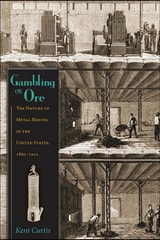
Gambling on Ore
The Nature of Metal Mining in the United States, 1860–1910Kent Curtis
University Press of Colorado, 2013
In Montana, legal issues and politics—such as unexpected consequences of federal mining law and the electrification of the United States—further complicated the mining industry’s already complex relationship to geology, while government policy, legal frameworks, dominant understandings of nature, and the exigencies of profit and production drove the industry in momentous and surprising directions. Despite its many uncertainties, mining became an important part of American culture and daily life.
Gambling on Ore unpacks the tangled relationships between mining and the natural world that gave material possibility to the age of electricity. Metal mining has had a profound influence on the human ecology and the social relationships of North America through the twentieth century and throughout the world after World War II. Understanding how we forged these relationships is central to understanding the environmental history of the United States after 1850.
Garbage in the Garden State
Jordan P. Howell
Rutgers University Press, 2023
Howell acknowledges that New Jersey is sometimes imagined, particularly by non-New Jerseyans, as a giant garbage dump for New York and Philadelphia. But every place has had to struggle with the challenges of waste management. New Jersey's trash history is in fact more interesting and more important than most. New Jersey’s waste history includes intensive planning, deep-seated political conflict, organized crime, and literally every level of state and federal judiciary. It is a colorful history, to say the least, and one that includes a number of firsts with regard to recycling, comprehensive planning, and the challenging economics of trash.
Gardens of Prehistory
The Archaeology of Settlement Agriculture in Greater MesoamericaThomas W. Killion
University of Alabama Press, 1992
The prehistoric agricultural systems of the New World provided the foundations for a diverse set of complex social developments ranging from the puebloan societies of the American Southwest to the archaic state polities of Mesoamerica and the Andean region. From the tropical forests of Central America to the arid environments or northern New Mexico, Native American farmers made use of a distinctive set of cultigens and cropping systems that supported—with varying degrees of success—growing populations and expanding economies. Lacking most domesticated animals, so important to the mixed agricultural systems of the Old World, Precolumbian farmers developed intensive and resilient systems of agricultural production. These systems supported large societies of people who altered the landscapes they inhabited and generated a unique archaeological record of the evolution of farming in the New World.

Genetic Algorithms in Engineering Systems
A.M.S. Zalzala
The Institution of Engineering and Technology, 1997

Genetic Improvement of Crops
Emergent TechniquesIrwin Rubenstein
University of Minnesota Press, 1980

Genetically Modified Food
A Short Guide For the ConfusedAndy Rees
Pluto Press, 2006
Geoengineering, Persuasion, and the Climate Crisis
A Geologic RhetoricEhren Helmut Pflugfelder
University of Alabama Press, 2023
A rhetorical exploration of an underexamined side of climate change—the ongoing research into and development of geoengineering strategies
Geoengineering, Persuasion, and the Climate Crisis: A Geologic Rhetoric exposes the deeply worrying state of discourse over geoengineering—the intentional manipulation of the earth’s climate as means to halt or reverse global warming. These climate-altering projects, which range from cloud-whitening to carbon dioxide removal and from stratospheric aerosol injection to enhanced weathering, are all technological solutions to more complex geosocial problems.
Geoengineering represents one of the most alarming forms of deliberative discourse in the twenty-first century. Yet geoengineering could easily generate as much harm as the environmental traumas it seeks to cure. Complicating these deliberations is the scarcity of public discussion. Most deliberations transpire within policy groups, behind the closed doors of climate-oriented startups, between subject-matter experts at scientific conferences, or in the disciplinary jargon of research journals. Further, much of this conversation occurs primarily in the West.
Ehren Helmut Pflugfelder makes clear how the deliberative rhetorical strategies coming from geoengineering advocates have been largely deceptive, hegemonic, deterministic, and exploitative. In this volume, he investigates how geoengineering proponents marshal geologic actors into their arguments—and how current discourse could lead to a greater exploitation of the earth in the future.
Pflugfelder’s goal is to understand the structure, content, purpose, and effect of these discourses, raise the alarm about their deliberative directions, and help us rethink our approach to the climate. In highlighting both the inherent problems of the discourses and the ways geologic rhetoric can be made productive, he attempts to give “the geologic” a place at the table to better understand the roles that all earth systems continue to play in our lives, now and for years to come.
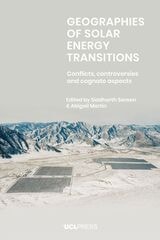
Geographies of Solar Energy Transitions
Conflicts, Controversies and Cognate AspectsEdited by Siddharth Sareen and Abigail Martin
University College London, 2024
Solar energy is the world’s largest growing source of power. Recently, this energy transition has produced a series of cognate challenges and conflicts in diverse geographies, yielding effects far beyond electricity generation. Geographies of Solar Energy Transitions illustrates how solar energy governance—both state-based and market-driven—is evolving to address these conflicts. Throughout the book, leading energy scholars examine relevant case studies, drawing necessary attention to the multitude of issues with solar power use, including formulating new place-specific solar energy visions and strategies, financing specific deployment scales, expanding and replacing electricity infrastructure, accessing land, resolving conflicts with competing land uses, incorporating charging technologies for transport and storage, adopting flexible energy production/consumption relationships, displacing fossil fuel energy production with renewables, enabling new energy ownership models, and addressing environmental and social injustices across the value chain of solar expansion.
Geography's Quantitative Revolutions
Edward A. Ackerman and the Cold War Origins of Big DataElvin Wyly
West Virginia University Press, 2019
Do you have a smartphone? Billions of people on the planet now navigate their daily lives with the kind of advanced Global Positioning System capabilities once reserved for the most secretive elements of America’s military-industrial complex. But when so many people have access to the most powerful technologies humanity has ever devised for the precise determination of geographical coordinates, do we still need a specialized field of knowledge called geography?
Just as big data and artificial intelligence promise to automate occupations ranging from customer service and truck driving to stock trading and financial analysis, our age of algorithmic efficiency seems to eliminate the need for humans who call themselves geographers—at the precise moment when engaging with information about the peoples, places, and environments of a diverse world is more popular than ever before. How did we get here? This book traces the recent history of geography, information, and technology through the biography of Edward A. Ackerman, an important but forgotten figure in geography’s “quantitative revolution.” It argues that Ackerman’s work helped encode the hidden logics of a distorted philosophical heritage—a dangerous, cybernetic form of thought known as militant neo-Kantianism—into the network architectures of today’s pervasive worlds of surveillance capitalism.
Geometrical Theory of Diffraction
V.A. Borovikov
The Institution of Engineering and Technology, 1994
Geometrical Theory of Diffraction for Electromagnetic Waves
Graeme L. James
The Institution of Engineering and Technology, 1986

Getting In
The Essential Guide to Finding a STEMM Undergrad Research ExperienceParis H. Grey and David G. Oppenheimer
University of Chicago Press, 2023
Conducting research is an important foundation for many undergraduates on STEMM career paths. But landing an extremely competitive research spot that is also an enriching experience involves knowing how to present yourself effectively and an awareness of your goals and expectations. In this book, an expert lab manager and a longtime principal investigator share their secrets for obtaining these coveted positions.
Offering advice to students in a wide variety of STEMM fields at both research-intensive universities and primarily undergraduate institutions, Getting In helps students navigate the hidden curriculum of academia, unofficial rules that disproportionately affect first-generation college students and those from low-income backgrounds and communities historically underrepresented in science. The authors provide not only an overview of STEMM research and lab opportunities but also specific strategies for the entire application process—including how to write emails that get noticed by busy professors, how to ask for a research position during office hours, and interview questions to prepare for—so students can claim their place in research settings.
With its emphasis on the many interpersonal and professional benefits of research experiences, Getting In equips all STEMM undergrads with the tools they need both to secure these valued positions and to develop habits that will build productive relationships with their future research mentors.
As an undergrad, Getting In will help you:
- determine how much time you can spend on research by evaluating your current activity level and goals.
- find the time to do research without giving up your social life or risking your GPA.
- avoid common mistakes in the search, application, or interview that make it harder to find a research experience.
- write emails that get you noticed by busy professors by customizing the included templates.
- prepare for tough interview questions so you’ll impress the interviewer with your answers, and be able to determine if the position is right for you.
As a research mentor, Getting In will help your students:
- navigate the hidden curriculum of finding a research experience in science, technology, engineering, math, and medicine (STEMM).
- set realistic expectations for their research experience.
- understand why conducting research requires effort and will include some failure and other challenges.
- be active participants in their success in the lab.
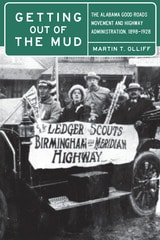
Getting Out of the Mud
The Alabama Good Roads Movement and Highway Administration, 1898–1928Martin T. Olliff, Foreword by David O. Whitten
University of Alabama Press, 2017
Recounts the history of the Good Roads Movement that arose in progressive-era Alabama, how it used the power of the state to achieve its objectives of improving market roads for farmers and highways for automobiles
Getting Out of the Mud: The Alabama Good Roads Movement and Highway Administration, 1898–1928 explores the history of the Good Roads Movement and investigates the nature of early twentieth-century progressivism in the state. Martin T. Olliff reveals how middle-class reformers secured political, economic, and social power not only by fighting against corporate domination and labor recalcitrance but also by proposing alternative projects like road improvement and identifying the interests of the rising middle class as being the most important to public interest.
With the development of national markets in the late nineteenth and early twentieth centuries, Americans began to regard the nation as a whole, rather than their state or region, as the most important political entity. Many Alabamians wished to travel beyond their local communities in all seasons without getting stuck in the mud of rudimentary rutted dirt roads. The onset of the automobile age bolstered the need for roadmaking, alerting both automobilists and good roads advocates to the possibility of a new transportation infrastructure. The Good Roads Movement began promoting farm-to-market roads, then highways that linked cities, then those that connected states. Federal matching funds for road construction after 1916 led state and federal governments to supplant the Good Roads Movement, building and administering the highway system that emerged by the late 1920s.
Olliff’s study of how Alabamians dealt with strained resources and overcame serious political obstacles in order to construct a road system that would accommodate economic growth in the twentieth century may offer clues to the resurrection of a similar strategy in our modern era. Many problems are unchanged over the hundred years between crises: Alabamians demand good roads and a government that has the capacity to build and maintain such an infrastructure while, at the same time, citizens are voting into office men and women who promise lower taxes and smaller government.
Glass
A World HistoryAlan Macfarlane and Gerry Martin
University of Chicago Press, 2002
In Glass: A World History, Alan Macfarlane and Gerry Martin tell the fascinating story of how glass has revolutionized the way we see ourselves and the world around us. Starting ten thousand years ago with its invention in the Near East, Macfarlane and Martin trace the history of glass and its uses from the ancient civilizations of India, China, and Rome through western Europe during the Renaissance, Enlightenment, and Industrial Revolution, and finally up to the present day. The authors argue that glass played a key role not just in transforming humanity's relationship with the natural world, but also in the divergent courses of Eastern and Western civilizations. While all the societies that used glass first focused on its beauty in jewelry and other ornaments, and some later made it into bottles and other containers, only western Europeans further developed the use of glass for precise optics, mirrors, and windows. These technological innovations in glass, in turn, provided the foundations for European domination of the world in the several centuries following the Scientific Revolution.
Clear, compelling, and quite provocative, Glass is an amazing biography of an equally amazing subject, a subject that has been central to every aspect of human history, from art and science to technology and medicine.
Global Digital Cultures
Perspectives from South AsiaAswin Punathambekar and Sriram Mohan, Editors
University of Michigan Press, 2019

Global Storytelling, vol. 2, no. 2
Journal of Digital and Moving ImagesSpecial Issue Editors: Kenneth Paul Tan & Dorothy Lau
Michigan Publishing Services, 2022
Special Issue Editors: Kenneth Paul Tan & Dorothy Lau
Letter from the Editor - YING ZHU
Cold War and New Cold War Narratives: Special Issue Editor’s Introduction - KENNETH PAUL TAN
Research Articles
Notes on Cold War Historiography - LOUIS MENAND
Tales from the Hot Cold War - MARTHA BAYLES
Bomb Archive: The Marshall Islands as Cold War Film Set - ILONA JURKONYTĖ
Das unsichtbare Visier—A 1970s Cold War Intelligence TV Series as a Fantasy of International and Intranational Empowerment; or, How East Germany Saved the World and West Germans Too - TARIK CYRIL AMAR
To Whom Have We Been Talking? Naeem Mohaiemen’s Fabulation of a People-to-Come - NOIT BANAI
The Man without a Country: British Imperial Nostalgia in Ferry to Hong Kong (1959) - KENNY K. K. NG
Imagining Cooperation: Cold War Aesthetics for a Hot Planet - MARINA KANETI
Book Reviews
Through Space and Time - Review of The Odyssey of Communism: Visual Narratives, Memory and Culture edited by Michaela Praisler and Oana-Celia Gheorghiu, Cambridge Scholars Publishing, 2021 - ISABEL GALWEY
Review of Hollywood in China: Behind the Scenes of the World’s Largest Movie Market by Ying Zhu, New Press, 2022 - YONGLI LI
The Cautionary Tale of Painting War Remembrance in China as a New Nationalism - Review of China’s Good War: How World War II Is Shaping a New Nationalism by Rana Mitter, Belknap Press, 2020 - FUWEI ZUO
Tracking American Political Currents - Review of White Identity Politics by Ashley Jardina, Cambridge University Press, 2019, and Fox Populism: Branding Conservatism as Working Class by Reece Peck, Cambridge University Press, 2019 - DAVID GURNEY

Global Storytelling, vol. 3, no. 1
East Asian Serial Dramas in the Era of Global Streaming Services: Journal of Digital and Moving ImagesSpecial Issue Editors: Tze-lan Sang, Lina Qu, and Ying Zhu
Michigan Publishing Services, 2023
Special Issue Editors Tze-lan Sang, Lina Qu, and Ying Zhu
IN THIS ISSUE
Tze-lan Sang, Lina Qu, and Ying Zhu - East Asian Serial Dramas in the Era of Global Streaming Services: Special Issue Editors’ Introduction
Research Articles
Ying Zhu - The Therapeutic and the Transgressive: Chinese Fansub Straddling between Hollywood IP Laws and Chinese State Censorship
David Humphrey - Japanese Dramas and the Streaming Success Story that Wasn’t: How Industry Practices and IP Shape Japan’s Access to Global Streaming
Yucong Hao - Transmedia Adaptation, Sonic Affect, and Multisensory Participation in Contemporary Chinese Danmei Radio Drama
Eunice Ying Ci Lim - The Nostalgic Negotiation of Post-TV Legibility in Mom, Don’t Do That!
Winnie Yanjing Wu - How Pachinko Mirrors Migrant Life: Rethinking the Temporal, Spatial, and Linguistic Dimensions of Migration
Drama Reviews
Mei Mingxue Nan - Squid Game: The Hall of Screens in the Age of Platform Cosmopolitanism
Shuwen Yang - Review of Light the Night
Short Essay
Sheng-mei Ma - Three Bad Kids, One Loving Killer: Red China Noir in Blakean Symmetry

Globes
400 Years of Exploration, Navigation, and PowerSylvia Sumira
University of Chicago Press, 2014
Showcasing the impressive collection of globes held by the British Library, Sumira traces the inception and progression of globes during the period in which they were most widely used—from the late fifteenth century to the late nineteenth century—shedding light on their purpose, function, influence, and manufacture, as well as the cartographers, printers, and instrument makers who created them. She takes readers on a chronological journey around the world to examine a wide variety of globes, from those of the Renaissance that demonstrated a renewed interest in classical thinkers; to those of James Wilson, the first successful commercial globe maker in America; to those mass-produced in Boston and New York beginning in the 1800s. Along the way, Sumira not only details the historical significance of each globe, but also pays special attention to their materials and methods of manufacture and how these evolved over the centuries.
A stunning and accessible guide to one of the great tools of human exploration, Globes will appeal to historians, collectors, and anyone who has ever examined this classroom accessory and wondered when, why, and how they came to be made.
Governing the Wind Energy Commons
Renewable Energy and Community DevelopmentKeith A. Taylor
West Virginia University Press, 2019
Wind energy is often framed as a factor in rural economic development, an element of the emerging “green economy” destined to upset the dominant greenhouse- gas-emitting energy industry and deliver conscious capitalism to host communities. The bulk of wind energy firms, however, are subsidiaries of the same fossil fuel companies that wrought havoc in shale-gas and coal-mining towns from rural Appalachia to the Great Plains. On its own, wind energy development does not automatically translate into community development.
In Governing the Wind Energy Commons, Keith Taylor asks whether revenue generated by wind power can be put to community well-being rather than corporate profit. He looks to the promising example of rural electric cooperatives, owned and governed by the 42 million Americans they serve, which generate $40 billion in annual revenue. Through case studies of a North Dakota wind energy cooperative and an investor-owned wind farm in Illinois, Taylor examines how regulatory and social forces are shaping this emerging energy sector. He draws on interviews with local residents to assess strategies for tipping the balance of power away from absentee-owned utilities.
Grain Storage
The Role of Fungi in Quality LossClyde M. Christensen and Henry H. Kaufmann
University of Minnesota Press, 1969
Grain Storage was first published in 1969. Minnesota Archive Editions uses digital technology to make long-unavailable books once again accessible, and are published unaltered from the original University of Minnesota Press editions.
The deterioration or spoilage of stored grain is a problem of serious dimension, both from the standpoint of the financial balance sheet of those engaged in commercial grain enterprises and as a formidable factor in the worldwide fight against hunger. In this useful book the authors present practical information, in non-technical language, about the causes and methods of preventing the deterioration of stored grains and seeds.
The emphasis is on the role of fungi but material also is included on problems with insects, mites, and rodents in connection with grain storage. The fungi are of prime importance since not until recently have they been recognized as a major cause of loss of quality in grains and seeds. Even today many of those who deal with grains, from warehouses to management personnel, fail to realize that fungi may play a decisive role in their operations.
The book will be of special interest and value to grain merchants and processors, grain elevator managers and operators, grain inspectors, agronomists and agricultural economists concerned with crop production, and many others in agricultural or food processing fields.

Great Lakes Fisheries Policy and Management
A Binational PerspectiveWilliam W. Taylor
Michigan State University Press, 2012
To maintain thriving, sustainable fisheries in the Laurentian Great Lakes, an understanding of the numerous and complex ecological, societal, economic, management, and policy issues surrounding them is critical. This incisive study provides a collaborative, interjurisdictional, and multi-use perspective that is shaped by the United states and Canada together as part of their shared governance of these waters. This book offers an informed look at the Great Lakes fisheries and their ecosystems, as the contributors examine both the threats they have faced and the valuable opportunities they provide for basin citizens and industries. Divided into four sections—the Great Lakes region, Great Lakes Fisheries, Fisheries case studies, and outlook for the Future—this is a valuable and up-to-date tool for students, researchers, policymakers, and managers alike.

Green Communications for Energy-Efficient Wireless Systems and Networks
Himal A. Suraweera
The Institution of Engineering and Technology, 2021

Green Gold
Alabama's Forests and Forest IndustriesJames E. Fickle
University of Alabama Press, 2014
Green Gold is a thorough and valuable compilation of information on Alabama’s timber and forest products industry, the largest manufacturing industry in the state.
Alabama has the third-largest commercial forest in the nation, after only Georgia and Oregon. Fully two-thirds of the state’s land supports the growth of over fifteen billion trees on twenty-two million acres, which explains why Alabama looks entirely green from space. Green Gold presents the story of human use of and impact on Alabama’s forests from pioneer days to the present, as James E. Fickle chronicles the history of the industry from unbridled greed and exploitation through virtual abandonment to revival, restoration, and enlightened stewardship.
As the state’s largest manufacturing industry, forest products have traditionally included naval stores such as tar, pitch, and turpentine, especially in the southern longleaf stands; sawmill lumber, both hardwood and pine; and pulp and paper milling. Green Gold documents all aspects of the industry, including the advent of “scientific forestry” and the development of reforestation practices with sustained yields. Also addressed are the historical impacts of Native Americans and of early settlers who used axes, saws, and water- and steam-powered sawmills to clear and utilize forests. Along with an account of railroad logging and the big mills of the lumber bonanza days of the late nineteenth and early twentieth centuries, the book also chronicles the arrival of professional foresters to the state, who began to deal with the devastating legacy of “cut out and get out” logging and to fight the perennial curse of woods arson. Finally, Green Gold examines the rise of the tree farm movement, the rebirth of large-scale lumbering, the advent of modern environmental concerns, and the movement toward the “Fourth Forest” in Alabama.
A Copublication with the Alabama Forestry Foundation
Green HV Switching Technologies for Modern Power Networks
Kaveh Niayesh
The Institution of Engineering and Technology, 2023
Grid-Forming Converters in Modern Power Systems
Modeling, control and integrationGhazala Shafique
The Institution of Engineering and Technology, 2027
Grit and Gold
The Death Valley Jayhawkers of 1849Jean Johnson
University of Nevada Press, 2018
After leaving Salt Lake City to break a road south to the Pacific Coast that would eliminate crossing the snowy Sierra Nevada, the party veered off the Old Spanish Trail in southern Utah to follow a mountaineer’s map portraying a bogus trail that claimed to cut months and hundreds of miles off their route to the gold country. With winter coming, however, they found themselves hopelessly lost in the mountains and dry valleys of southern Nevada and California. Abandoning everything but the shirts on their backs and the few oxen that became their pitiful meals, they turned their dreams of gold to hopes of survival.
Utilizing William Lorton’s 1849 diary of the trek from Illinois to southern Utah, the reminiscences of the Jayhawkers themselves, the keen memory of famed pioneer William Lewis Manly, and the almost daily diary of Sheldon Young, Johnson paints a lively but accurate portrait of guts, grit, and determination.
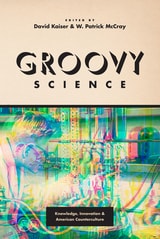
Groovy Science
Knowledge, Innovation, and American CountercultureEdited by David Kaiser and W. Patrick McCray
University of Chicago Press, 2016
Such a view is far too simple, ignoring the diverse ways in which the era’s countercultures expressed enthusiasm for and involved themselves in science—of a certain type. Rejecting hulking, militarized technical projects like Cold War missiles and mainframes, Boomers and hippies sought a science that was both small-scale and big-picture, as exemplified by the annual workshops on quantum physics at the Esalen Institute in Big Sur, or Timothy Leary’s championing of space exploration as the ultimate “high.” Groovy Science explores the experimentation and eclecticism that marked countercultural science and technology during one of the most colorful periods of American history.
Ground Penetrating Radar
David J. Daniels
The Institution of Engineering and Technology, 2004

Ground Penetrating Radar
Improving sensing and imaging through numerical modelingX. Lucas Travassos
The Institution of Engineering and Technology, 2021
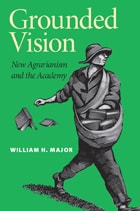
Grounded Vision
New Agrarianism and the AcademyWilliam H. Major
University of Alabama Press, 2011

Growing American Rubber
Strategic Plants and the Politics of National SecurityFinlay, Mark R
Rutgers University Press, 2009
Although synthetic rubber emerged from World War II as one solution, the issue of ever-diminishing natural resources and the question of how to meet twenty-first-century consumer, military, and business demands lingers today.

Growing American Rubber
Strategic Plants and the Politics of National SecurityFinlay, Mark R
Rutgers University Press, 2009
Although synthetic rubber emerged from World War II as one solution, the issue of ever-diminishing natural resources and the question of how to meet twenty-first-century consumer, military, and business demands lingers today.
Guidance Note 1
Selection & ErectionThe Institution of Engineering and Technology
The Institution of Engineering and Technology, 2015
Guidance Note 1
Selection & ErectionThe Institution of Engineering and Technology
The Institution of Engineering and Technology, 2018
Guidance Note 1
Selection & ErectionThe Institution of Engineering and Technology
The Institution of Engineering and Technology, 2022
Guidance Note 1
Selection & ErectionThe Institution of Engineering and Technology
The Institution of Engineering and Technology, 2026
Guidance Note 2
Isolation & SwitchingThe Institution of Engineering and Technology
The Institution of Engineering and Technology, 2015
Guidance Note 2
Isolation & SwitchingThe Institution of Engineering and Technology
The Institution of Engineering and Technology, 2019
Guidance Note 2
Isolation & SwitchingThe Institution of Engineering and Technology
The Institution of Engineering and Technology, 2022
Guidance Note 2
Isolation & SwitchingThe Institution of Engineering and Technology
The Institution of Engineering and Technology, 2026
Guidance Note 3
Inspection & TestingThe Institution of Engineering and Technology
The Institution of Engineering and Technology, 2015
Guidance Note 3
Inspection & TestingThe Institution of Engineering and Technology
The Institution of Engineering and Technology, 2018
Guidance Note 3
Inspection & TestingThe Institution of Engineering and Technology
The Institution of Engineering and Technology, 2022
Guidance Note 3
Inspection & TestingThe Institution of Engineering and Technology
The Institution of Engineering and Technology, 2026
Guidance Note 4
Protection Against FireThe Institution of Engineering and Technology
The Institution of Engineering and Technology, 2015
Guidance Note 4
Protection Against FireThe Institution of Engineering and Technology
The Institution of Engineering and Technology, 2018
Guidance Note 4
Protection Against FireThe Institution of Engineering and Technology
The Institution of Engineering and Technology, 2022
Guidance Note 4
Protection Against FireThe Institution of Engineering and Technology
The Institution of Engineering and Technology, 2026