Results by title
660 books match the query 'Texas' and 20 start with g
Galveston Island, or, A Few Months off the Coast of Texas
The Journal of Francis C. Sheridan, 1839–1840Edited by Willis W. Pratt
University of Texas Press, 1954
On the last Sunday of the year 1839, Francis Sheridan, an elegant young Irishman in the British diplomatic service, sailed from Barbados for the Republic of Texas. His mission in the new nation was to contribute the opinion of an eyewitness to the deliberations going on in London concerning proposed recognition of Texas.
This jounal contains some of the material that Sheridan used for his official report and much colorful detail that he did not use. First published by the University of Texas Press in 1956, it is the travel diary of a sophisticated and discerning student of human nature.
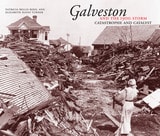
Galveston and the 1900 Storm
Catastrophe and CatalystBy Patricia Bellis Bixel and Elizabeth Hayes Turner
University of Texas Press, 2000
Runner-up, Spur Award for Best Western Nonfiction—Contemporary, Western Writers Of America, 2001
The Galveston storm of 1900 reduced a cosmopolitan and economically vibrant city to a wreckage-strewn wasteland where survivors struggled without shelter, power, potable water, or even the means to summon help. At least 6,000 of the city's 38,000 residents died in the hurricane. Many observers predicted that Galveston would never recover and urged that the island be abandoned. Instead, the citizens of Galveston seized the opportunity, not just to rebuild, but to reinvent the city in a thoughtful, intentional way that reformed its government, gave women a larger role in its public life, and made it less vulnerable to future storms and flooding.
This extensively illustrated history tells the full story of the 1900 Storm and its long-term effects. The authors draw on survivors' accounts to vividly recreate the storm and its aftermath. They describe the work of local relief agencies, aided by Clara Barton and the American Red Cross, and show how their short-term efforts grew into lasting reforms. At the same time, the authors reveal that not all Galvestonians benefited from the city's rebirth, as African Americans found themselves increasingly shut out from civic participation by Jim Crow segregation laws. As the centennial of the 1900 Storm prompts remembrance and reassessment, this complete account will be essential and fascinating reading for all who seek to understand Galveston's destruction and rebirth.
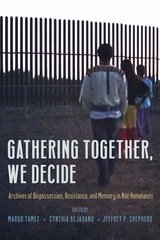
Gathering Together, We Decide
Archives of Dispossession, Resistance, and Memory in Ndé HomelandsEdited by Margo Tamez, Cynthia Bejarano, and Jeffrey P. Shepherd
University of Arizona Press, 2025
In response, Dr. Eloisa Tamez and her daughter, Dr. Margo Tamez, organized a gathering of Lipan tribal members, activists, lawyers, and allies to meet in El Calaboz, South Texas. This gathering was a response to the appropriation of the Tamez family land, but it also provided an international platform to dispute the militarization of Indigenous territory throughout the U.S.-Mexico bordered lands. The gathering and years of ensuing resistance and activism produced an archive of scholarly analyses, testimonios, artwork, legal briefs, poetry, and other cultural productions.
This unique collection spotlights powerful voices and perspectives from Ndé leaders, Indigenous elders, settler-allies, Native youth, and others associated with the Tamez family, the Ndé defiance, and the larger Indigenous rights movement to document their resistance; expose, confront, and end racism and militarization; and to foreground Indigenous women–led struggles for justice.
Gente Decente
A Borderlands Response to the Rhetoric of DominanceBy Leticia Magda Garza-Falcón
University of Texas Press, 1998
In his books The Great Plains, The Great Frontier, and The Texas Rangers, historian Walter Prescott Webb created an enduring image of fearless, white, Anglo male settlers and lawmen bringing civilization to an American Southwest plagued with "savage" Indians and Mexicans. So popular was Webb's vision that it influenced generations of historians and artists in all media and effectively silenced the counter-narratives that Mexican American writers and historians were concurrently producing to claim their standing as "gente decente," people of worth.
These counter-narratives form the subject of Leticia M. Garza-Falcón's study. She explores how prominent writers of Mexican descent-such as Jovita González, Américo Paredes, María Cristina Mena, Fermina Guerra, Beatriz de la Garza, and Helena María Viramontes -have used literature to respond to the dominative history of the United States, which offered retrospective justification for expansionist policies in the Southwest and South Texas. Garza-Falcón shows how these counter-narratives capture a body of knowledge and experience excluded from "official" histories, whose "facts" often emerged more from literary techniques than from objective analysis of historical data.
Geology and Politics in Frontier Texas, 1845–1909
By Walter Keene Ferguson
University of Texas Press, 1969
Conservation and development of natural resources are issues of critical importance throughout the world. These issues have been matters of public concern in Texas since legislators first adopted the state-sponsored geological survey as a means of extending government funds to private citizens who would help develop and advertise the mineral and agricultural wealth of Texas.
Walter Keene Ferguson examines the relation of politics to geological exploration during a critical period in Texas history—the first half-century of statehood. Although Texas shared its frontier experience with many other areas, it could not rely on federal aid in the form of land grants because the state government controlled the destiny of the public domain at all times. Acrimonious debate between farmers and urbanites of East Texas and pioneer ranchers of arid West Texas rendered the disposition of public lands even more difficult.
As tools for developing and advertising resources, the geological and agricultural surveys of 1858 and 1867 fulfilled the demands of expectant capitalism made by politicians, speculators, and railroad entrepreneurs. Reconnaissance geologists publicized the wealth of Texas.
Drought in 1886 and popular agitation against squandering of state land caused the emergence of a new concept of the geological survey as an instrument of land reform and public assistance. Lobbying by reformers and scientific organizations led to the formation of the Dumble Survey in 1888 and the University of Texas Mineral Survey in 1901. Stratigraphic analysis of the “individualities” of Texas geology helped the state realize its full economic potential and led to legislation to protect public mineral land from exploitation.
The youthful oil industry finally removed geological exploration from the political arena. As part of the University, a permanent Bureau of Economic Geology was established in 1909 to extend the benefits of scientific research to private citizens and state organizations on a nonpartisan basis.
Ferguson’s analysis of geological surveys in Texas contributes to an understanding not only of the geology and history of the state but of the urgent problem of evaluating the natural resources of underdeveloped regions.

Geometry in Architecture
Texas Buildings Yesterday and TodayBy Clovis Heimsath
University of Texas Press, 2002
Pioneer Texas Buildings opened people's eyes when it was first published in 1968. At a time when "progress" meant tearing down the weathered houses, barns, churches, and stores built by the original settlers of Central Texas, this book taught people to see the beauty, simplicity, and order expressed in the unadorned geometric forms of early Texas buildings. It inspired the preservation and restoration of many of the remaining pioneer buildings, as well as the design of modern buildings that employ the same simple geometries.
This revised edition of Pioneer Texas Buildings juxtaposes the historic structures with works by twenty contemporary architects who are inspired by the pioneer tradition to show how seamlessly the basic geometries translate from one era to another. As in the first edition, sketches and brief commentary by Clovis Heimsath explain how squares, triangles, and circles take shape in the cubic, triangular, and cylindrical forms that comprise houses and other buildings. Then black-and-white photographs, the heart of the book, illustrate these geometric forms in historic and modern buildings. The book also includes two essays in which Heimsath discusses the factors that led him and his wife Maryann to document early Texas buildings and the results in historic preservation and timeless architectural designs that have followed from their efforts.

George W. Bush
A Biography for Beginning HistoriansLouann Atkins Temple
University of Texas Press, 2025
A brief biography of George W. Bush for young readers.
Louann Temple is a lifelong Texan with a personal passion for arts and education who believes that biography, with its emphasis on personalities, is ideal for introducing young people to history, with its focus on events. Temple is uniquely situated to write this biography for young readers, as she has been personally acquainted with many important people in presidential history, President George W. Bush included, and she has mentored countless middle and high school students, preparing them for college admission.
George W. Bush highlights the key events in the life of the forty-third president; explores the life lessons afforded by his legacy; and reflects on the broad historical issues during his time in the White House as president from 2001 to 2009. George W. Bush’s legacy as president is significant as he guided America through the events of 9/11. Enhanced with a carefully curated selection of black and white photographs from three presidential libraries, this biography for beginning historians is poised to bring the best of biography and history to a new generation of readers.

Germans and Texans
Commerce, Migration, and Culture in the Days of the Lone Star RepublicBy Walter Struve
University of Texas Press, 1996
During the brief history of the Republic of Texas (1836-1845), over 10,000 Germans emigrated to Texas. Perhaps best remembered today are the farmers who settled the Texas Hill Country, yet many of the German immigrants were merchants and businesspeople who helped make Galveston a thriving international port and Houston an early Texas business center. This book tells their story.
Drawing on extensive research on both sides of the Atlantic, Walter Struve explores the conditions that led nineteenth-century Europeans to establish themselves on the North American frontier. In particular, he traces the similarity in social, economic, and cultural conditions in Germany and the Republic of Texas and shows how these similarities encouraged German emigration and allowed some immigrants to prosper in their new home. Particularly interesting is the translation of a collection of letters from Charles Giesecke to his brother in Germany which provide insight into the business and familial concerns of a German merchant and farmer.
This wealth of information illuminates previously neglected aspects of intercontinental migration in the nineteenth century. The book will be important reading for a wide public and scholarly audience.
Ghostlight
Photographs by Keith CarterStory by Bret Anthony Johnston
University of Texas Press, 2022
A collection of otherworldly photographs of Southern wetlands featuring an original ghost story.
Southern wetlands, with their moss-draped trees and dark water obscuring mysteries below, are eerily beautiful places, home to ghost stories and haunting, ethereal light. The newest collection from award-winning photographer Keith Carter, Ghostlight captures the otherwordly spirits of swamps, marshes, bogs, baygalls, bayous, and fens in more than a hundred photographs.
From Ossabaw Island, Georgia, to his home ground of East Texas, Carter seeks “the secretive and mysterious” of this often-overlooked landscape: wisps of fog drifting between tree branches; faceless figures contemplating a bog; owls staring directly at the camera lens; infinite paths leading to unknown parts. Similarly, spectral images are evoked in the original short story that opens this book. Ghostlight, writes best-selling author Bret Anthony Johnston, “hovers, darts, disappears. It can be as mean as a cottonmouth, as mischievous aes a child. The closer you get, the farther the light recedes.” A masterpiece of “Bayou Gothic,” Ghostlight challenges our perceptions and invites us to experience the beauty of this elusive world.

Globalizing the Lower Rio Grande
European Entrepreneurs in the Borderlands, 1749-1881Kyle Carpenter
University of North Texas Press, 2024
Go Down, Old Hannah
The Living History of African American TexansBy Naomi Mitchell Carrier
University of Texas Press, 2010
Living history is a style of instructive and entertaining performance that seeks to bring history to life with the use of costumes, tools, and reenactments appropriate to a specific time period. Done well, living history performances illuminate human experience in powerful, unforgettable ways.
The fifteen living history plays in this collection were commissioned by museums and historic sites in Texas to show the interdependence of African American experiences and contributions to the living history of Texas. The plays cover subject matter ranging from slave celebrations, family breakups, and running away, to the Civil War, emancipation, and Reconstruction. Each play is research based and performed by Talking Back Living History Theatre as a festival production. These scripts are easily performed, and author Naomi Mitchell Carrier has included production notes in the overviews that precede each play. Lesson plans are also included, which add to the collection's appeal as a classroom tool.
Carrier's talent for bringing historical figures to life is exceptional. The names of most primary characters in these plays are real. By giving them faces, feelings, intelligence, and dignity, Carrier aims to give them new life.
God's Country or Devil's Playground
The Best Nature Writing from the Big Bend of TexasEdited by Barney Nelson
University of Texas Press, 2002
The dramatic desert landscapes of the Big Bend country along the Texas-Mexico border reminded historian Walter Prescott Webb of "an earth-wreck in which a great section of country was shaken down, turned over, blown up, and set on fire." By contrast, naturalist Aldo Leopold considered the region a mountainous paradise in which even the wild Mexican parrots had no greater concern than "whether this new day which creeps slowly over the canyons is bluer or golder than its predecessors, or less so." Whether it impresses people as God's country or as the devil's playground, the Big Bend typically evokes strong responses from almost everyone who lives or visits there.
In this anthology of nature writing, Barney Nelson gathers nearly sixty literary perspectives on the landscape and life of the Big Bend region, broadly defined as Trans-Pecos Texas and northern Chihuahua, Mexico. In addition to Leopold and Webb, the collection includes such well-known writers as Edward Abbey, Mary Austin, Roy Bedichek, and Frederick Olmsted, as well as a wide range of voices that includes explorers, trappers, cowboys, ranch wives, curanderos, college presidents, scientists, locals, tourists, historians, avisadores, and waitresses. Following a personal introduction by Barney Nelson, the pieces are grouped thematically to highlight the distinctive ways in which writers have responded to the Big Bend.

Goldee's Bar-B-Q
A CookbookJalen Heard, Lane Milne, and Jonny White, with Lisa Fain. Photography by Wiil Milne.
University of Texas Press, 2025
The top joint in Texas shares its secrets to award-winning barbecue.
Goldee's Bar-B-Q, which sits in a quiet corner of Dallas–Fort Worth, opened only a few weeks before COVID-19 closed the dining room, and for months the restaurant eked out a living with curbside service and catering. The owners didn’t expect their barbecue to be crowned the best in the state by Texas Monthly, yet they earned that honor in 2021. What separates Goldee's from other joints is their pitmasters’ attention to craft and an inclusive attitude toward sharing their work. They understand that the secret ingredient in barbecue is not a particular spice in the rub, but hours of paying attention to fire and meat.
Goldee’s Bar-B-Q shows you how to make classics such as brisket, ribs, sausages, beans, coleslaw, potato salad, and banana pudding. Goldee’s pitmasters share how to trim, season, and smoke meat, as well as tips for managing a fire and monitoring temperature, which are key to elevating your barbecue. Goldee’s Bar-B-Q also captures the heart of the restaurant, the story of best friends coming together to make a place where they could share their love of cooking. A must-have for barbecue aficionados, meat lovers, and chefs looking to perfect their techniques, Goldee’s Bar-B-Q will help you make your barbecue exceptional.
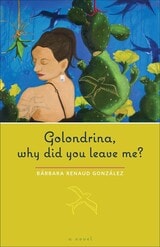
Golondrina, why did you leave me?
A NovelBy Bárbara Renaud González
University of Texas Press, 2009
Runner-up, Best Popular Fiction in English, Latino Book Awards Competition, 2010
The golondrina is a small and undistinguished swallow. But in Spanish, the word has evoked a thousand poems and songs dedicated to the migrant's departure and hoped-for return. As such, the migrant becomes like the swallow, a dream-seeker whose real home is nowhere, everywhere, and especially in the heart of the person left behind.
The swallow in this story is Amada García, a young Mexican woman in a brutal marriage, who makes a heart-wrenching decision—to leave her young daughter behind in Mexico as she escapes to el Norte searching for love, which she believes must reside in the country of freedom. However, she falls in love with the man who brings her to the Texas border, and the memories of those three passionate days forever sustain and define her journey in Texas. She meets and marries Lázaro Mistral, who is on his own journey—to reclaim the land his family lost after the U.S.-Mexican War. Their opposing narratives about love and war become the legacy of their first-born daughter, Lucero, who must reconcile their stories into her struggle to find "home," as her mother, Amada, finally discovers the country where love beats its infinite wings.
Bárbara Renaud González, a native-born Tejana and acclaimed journalist, has written a lyrical story of land, love, and loss, bringing us the first novel of a working-class Tejano family set in the cruelest beauty of the Texas panhandle. Her story exposes the brutality, tragedy, and hope of her homeland and helps to fill a dearth of scholarly and literary works on Mexican and Mexican American women in post–World War II Texas.

Goodbye Gluten
Kim Stanford
University of North Texas Press, 2014

Graham Barnett
A Dangerous ManJames L. Coffey
University of North Texas Press, 2017
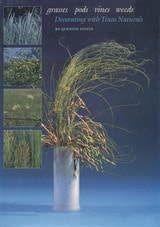
Grasses, Pods, Vines, Weeds
Decorating with Texas NaturalsQuentin Steitz
University of Texas Press, 1987
Purple three-awn.
Tree of heaven.
Alamo vine.
Narrowleaf cattail.
These exotic and fanciful names conjure up visions of lush foliage, colorful grasses, and dense plant life. They are, in fact, names of native and naturalized Texas plants—grasses, pods, vines, and weeds. Lovely and all-too-often overlooked in nature, they become ornamental delights when used imaginatively and decoratively.
Grasses, Pods, Vines, Weeds introduces 44 of Texas' most common and important naturals. Quentin Steitz shows how to recognize them and discover their aesthetic wealth. By taking the reader through all of the steps involved in utilizing naturals—from harvest to design—her book becomes an important tool for floral and landscape designers, decorators, horticulturalists, home gardeners, botanists: all those people who enjoy hands-on experience with Texas' vast array of native and naturalized plants.
The book presents clear and concise descriptions of many Texas naturals, accompanied by approximately 150 full-color photographs showing each in one or more stages of growth and also in a design. The reader can see the plant as it looks not only in the wild but also in an arrangement. The author offers techniques on how the species can be prepared for display, discussing drying and arranging. And a chapter on cultivation and conservation suggests to outdoor enthusiasts species they can grow for decorative natural materials as well as conserve and appreciate in the wild.
Grasses, Pods, Vines,Weeds is enhanced by flora selected, collected, prepared, and dried by the author. These hand-culled materials have been used in designs contributed by some nineteen notable floral designers as well as the author. The text and designs combine to reveal the fresh, creative applications of Texas' decorative naturals and to increase our pleasure in the wonders of natural Texas.
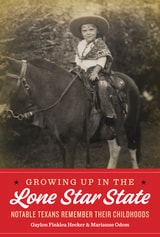
Growing Up in the Lone Star State
Notable Texans Remember Their ChildhoodsBy Gaylon Finklea Hecker and Marianne Odom
University of Texas Press, 2021
Gaylon Finklea Hecker and Marianne Odom began the interviews for this book in 1981 and devoted a professional lifetime to collecting the memories of accomplished Texans to determine what, if anything, about growing up in the Lone Star State prepared them for success.
The resulting forty-seven oral history interviews begin with tales from the early 1900s, when Texas was an agrarian state, and continue through the growth of major cities and the country’s race to the moon. Interviewees recalled life in former slave colonies; on gigantic ranches, tiny farms, and sharecropper fields; and in one-horse towns and big-city neighborhoods, with relatable stories as diverse as the state’s geography.
The oldest interviewees witnessed women earning the right to vote and weathered the Great Depression. Many remembered two world wars, while others recalled the Texas City explosion of 1947 and the tornado that devastated Waco in 1953. They witnessed the advent of television and the nightly news, which helped many come to terms with the assassination of a president that took place too close to home.
Their absorbing reflections are stories of good and bad, hope and despair, poverty and wealth, depression and inspiration, which would have been different if lived anywhere but Texas.
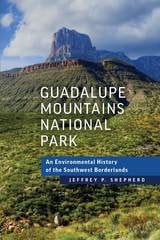
Guadalupe Mountains National Park
An Environmental History of the Southwest BorderlandsJeffrey P. Shepherd
University of Massachusetts Press, 2019
Drawing upon published sources, oral histories, and previously unused archival documents, Jeffrey P. Shepherd situates the Guadalupe Mountains and the national park in the context of epic tales of Spanish exploration, westward expansion, Native survival, immigrant settlement, the conservation movement, early tourism, and regional economic development. As Americans cope with climate change, polarized political rhetoric, and suburban sprawl, public spaces such as Guadalupe Mountains National Park remind us about our ties to nature and our historical relationships with the environment.
Gustav Dresel's Houston Journal
Adventures in North America and Texas, 1837-1841By Gustav Dresel
University of Texas Press, 1954
This is the travel diary of a young German businessman who came to Texas and worked for several years in Houston and the surrounding areas. His diary, originally published in German as Texanisches Tagebuch, gives a fascinating view of life in the Texas republic.