Results by title
91 books match the query 'West Virginia' and 3 start with g
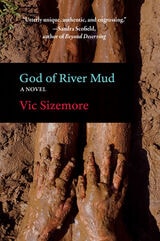
God of River Mud
A NovelVic Sizemore
West Virginia University Press, 2024
Winner, 2025 Tennessee Book Award, Fiction
Grappling with innate desires and LGBTQ identity, a family struggles under the oppressive expectations foisted on them by fundamentalist Christianity.
Told through alternating perspectives, God of River Mud chronicles the lives of Berna Minor, her husband, their four children, and Berna’s secret lover.
To escape a life of poverty and abuse, Berna Cannaday marries Zechariah Minor, a fundamentalist Baptist preacher, and commits herself to his faith, trying to make it her own. After Zechariah takes a church beside the Elk River in rural Clay, West Virginia, Berna falls in love with someone from their congregation—Jordan, a woman who has known since childhood that he was meant to be a man. Berna keeps her secret hidden as she struggles to be the wife and mother she believes God wants her to be. Berna and Zechariah’s children struggle as well, trying to reconcile the theology they are taught at home with the fast-changing world around them. And Jordan struggles to find a community and a life that allow him both to be safely and fully himself, as Jay, and to be loved for who he is.
As the decades and stories unfold, traditional evangelical Bible culture and the values of rural Appalachia clash against innate desires, LGBTQ identity, and gender orientation. Sympathies develop—sometimes unexpectedly—as the characters begin to reconcile their faith and their love. God of River Mud delves into the quandary of those marginalized and dehumanized within a religious patriarchy and grapples with the universal issues of identity, faith, love, and belonging.

Goshen Road
A NovelBonnie Proudfoot
Ohio University Press, 2020
Goshen Road is an elegiac, unvarnished, and empathetic portrait of one working-class family over two decades in rural West Virginia, with sisters Dessie and Billie Price as its urgently beating heart. Bonnie Proudfoot captures them, their husbands, and their children as they balance on the divide between Appalachia old and new, struggling for survival and reconciling themselves with past hurts and future uncertainties as the economy and culture shift around them.
The story opens in 1967 with a logging accident and the teenaged Lux Cranfield’s headlong plunge into the courtship of Dessie—a leap he takes not only in the wake of his near-death experience but to exchange his bitter home life for a future with the Prices, a family that appears to have the stability and peace that his own lacks. Within the year Lux and Dessie marry. Meanwhile, Dessie’s rebellious younger sister, Billie, fights her way through adolescence with an eye toward an escape of her own, only to land with Lux’s friend Alan Ray Munn and settle into a life of hardship. Ultimately, the voices and passions of Dessie, Billie, Lux, Alan Ray, and the Cranfield children build on one another to create an unforgettable chorus about the promises and betrayals of love—and what it takes to preserve a family when everything else is uncertain.
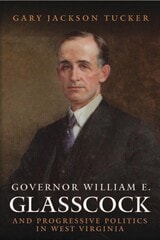
Governor William Glasscock and Progressive Politics in West Virginia
Gary Jackson Tucker
West Virginia University Press, 2008
From 1909 to 1913, Governor William Glasscock served the state of West Virginia as an ardent progressive and reformer. In his inaugural address he proclaimed government "the machinery invoked and devised by man for his benefit and protection” and good government the guarantor of the happiness, prosperity, success, and welfare of the people. Governor William Glasscock and Progressive Politics in West Virginia recounts the life and work of West Virginia’s thirteenth governor. Born during the Civil War, Glasscock witnessed a country torn by sectional, fratricidal war become a powerful industrial nation by the turn of the twentieth century. Author Gary Jackson Tucker demonstrates how Glasscock, along with others during the Progressive Era, railed against large and powerful political and economic machines to enact legislation protecting free and fair elections, just taxation, regulation of public utilities, and workmen’s compensation laws. Never hesitating to use the power of the state to stand firm against racism and mob rule, and placing his own personal safety in jeopardy, Glasscock won the praise and admiration of average people. Glasscock’s four years in office took his own health and financial security from him, but left behind a better government—a good government—for the people of West Virginia.