272 books match the query 'Work' and 6 start with g

cover of Gender and American Jews: Patterns in Work, Education, and Family in Contemporary Life

Gender and American Jews

Patterns in Work, Education, and Family in Contemporary Life

Harriet Hartman and Moshe Hartman

Brandeis University Press, 2009

In Gender and American Jews, Harriet Hartman and Moshe Hartman interpret the results of the two most recent National Jewish Population Surveys. Building on their critical work in Gender Equality and American Jews (1996), and drawing on relevant sociological work on gender, religion, and secular achievement, this new book brings their analysis of gendered patterns in contemporary Jewish life right to the present moment. The first part of the book examines the distinctiveness of American Jews in terms of family behavior, labor-force patterns, and educational and occupational attainment. The second investigates the interrelationships between “Jewishness” and religious, economic, and family behavior, including intermarriage. Deploying an engaging assortment of charts and graphs and a rigorous grasp of statistics, the Hartmans provide a multifaceted portrait of a multidimensional population.
[more]
cover of Gender, Work and Property: An Ethnographic Study of Value in a Spanish Village

Gender, Work and Property

An Ethnographic Study of Value in a Spanish Village

Nancy Konvalinka

Campus Verlag, 2013

Why do young men born in many small villages in Spain tend, at the end of the twentieth century, to stay there to live, often remaining unmarried, while young women from the same villages tend to leave? In Gender, Work, and Property, Nancy Konvalinka explores this phenomenon using the case of one small village in northwestern Spain, and she extrapolates her findings there to understand similar processes elsewhere in Europe.
The changes in this village are analyzed and documented through long-term ethnographic research, participant observation, interviews, kinship diagrams, life-course models, and archive study in order to help bring the village alive for the reader.

[more]
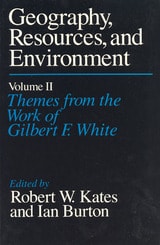
cover of Geography, Resources and Environment, Volume 2: Themes from the Work of Gilbert F. White

Geography, Resources and Environment, Volume 2

Themes from the Work of Gilbert F. White

Edited by Robert W. Kates and Ian Burton

University of Chicago Press, 1986
Over the course of half a century, Gilbert F. White's work has served to shape and, in several instances, establish many of the fields that have come to be known as the environmental sciences. In this collection of original essays, a companion volume to White's selected writings (volume I), leading scholars in areas such as water supply, environmental hazards, and natural resource management interpret changes in these fields since White's work and assess present and future problems. With volume 1, this collection presents a complete and cogent picture of Gilbert White's contribution and the work he inspired.
[more]
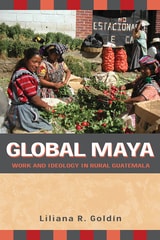
cover of Global Maya: Work and Ideology in Rural Guatemala

Global Maya

Work and Ideology in Rural Guatemala

Liliana R. Goldín

University of Arizona Press, 2009

In the central highland Maya communities of Guatemala, the demands of the global economy have become a way of life. This book explores how rural peoples experience economic and cultural change as their country joins the global market, focusing on their thoughts about work and sustenance as a way of learning about Guatemala’s changing economy.

For more than a decade, Liliana Goldín observed in highland towns both the intensification of various forms of production and their growing links to wider markets. In this first book to compare economic ideology across a range of production systems, she examines how people make a living and how they think about their options, practices, and constraints. Drawing on interviews and surveys—even retellings of traditional narratives—she reveals how contemporary Maya respond to the increasingly globalized yet locally circumscribed conditions in which they work.

Goldín presents four case studies: cottage industries devoted to garment production, vegetable growing for internal and border markets reached through direct commerce, crops grown for export, and wage labor in garment assembly factories. By comparing generational and gendered differences among workers, she reveals not only complexities of change but also how these complexities arereflected in changing attitudes, understandings, and aspirations that characterize people’s economic ideology. Further, she shows that as rural people take on diverse economic activities, they also reinterpret their views on such matters as accumulation, cooperation, competition, division of labor, and community solidarity.

Global Maya explores global processes in local terms, revealing the interplay of traditional values, household economics, and the inescapable conditions of demographic growth, a shrinking land base, and a global economy always looking for cheap labor. It offers a wealth of new insights not only for Maya scholars but also for anyone concerned with the effects of globalization on the Third World.

[more]
cover of Good Jobs America

Good Jobs America

Paul Osterman

Russell Sage Foundation, 2012

America confronts a jobs crisis that has two faces. The first is obvious when we read the newspapers or talk with our friends and neighbors: there are simply not enough jobs to go around. The second jobs crisis is more subtle but no less serious: far too many jobs fall below the standard that most Americans would consider decent work. A quarter of working adults are trapped in jobs that do not provide living wages, health insurance, or much hope of upward mobility. The problem spans all races and ethnic groups and includes both native-born Americans and immigrants. But Good Jobs America provides examples from industries ranging from food services and retail to manufacturing and hospitals to demonstrate that bad jobs can be made into good ones. Paul Osterman and Beth Shulman make a rigorous argument that by enacting policies to help employers improve job quality we can create better jobs, and futures, for all workers. Good Jobs America dispels several myths about low-wage work and job quality. The book demonstrates that mobility out of the low-wage market is a chimera—far too many adults remain trapped in poor-quality jobs. Osterman and Shulman show that while education and training are important, policies aimed at improving earnings equality are essential to lifting workers out of poverty. The book also demolishes the myth that such policies would slow economic growth. The experiences of countries such as France, Germany, and the Netherlands, show that it is possible to mandate higher job standards while remaining competitive in international markets. Good Jobs America shows that both government and the firms that hire low-wage workers have important roles to play in improving the quality of low-wage jobs. Enforcement agencies might bolster the effectiveness of existing regulations by exerting pressure on parent companies, enabling effects to trickle down to the subsidiaries and sub-contractors where low-wage jobs are located. States like New York have already demonstrated that involving community and advocacy groups—such as immigrant rights organizations, social services agencies, and unions—in the enforcement process helps decrease workplace violations. And since better jobs reduce turnover and improve performance, career ladder programs within firms help create positions employees can aspire to. But in order for ladder programs to work, firms must also provide higher rungs—the career advancement opportunities workers need to get ahead. Low-wage employment occupies a significant share of the American labor market, but most of these jobs offer little and lead nowhere. Good Jobs America reappraises what we know about job quality and low-wage employment and makes a powerful argument for our obligation to help the most vulnerable workers. A core principle of U.S. society is that good jobs be made accessible to all. This book proposes that such a goal is possible if we are committed to realizing it.
[more]
cover of Governing Gaza: Bureaucracy, Authority, and the Work of Rule, 1917–1967

Governing Gaza

Bureaucracy, Authority, and the Work of Rule, 1917–1967

Ilana Feldman

Duke University Press, 2008

Marred by political tumult and violent conflict since the early twentieth century, Gaza has been subject to a multiplicity of rulers. Still not part of a sovereign state, it would seem too exceptional to be a revealing site for a study of government. Ilana Feldman proves otherwise. She demonstrates that a focus on the Gaza Strip uncovers a great deal about how government actually works, not only in that small geographical space but more generally. Gaza’s experience shows how important bureaucracy is for the survival of government. Feldman analyzes civil service in Gaza under the British Mandate (1917–48) and the Egyptian Administration (1948–67). In the process, she sheds light on how governing authority is produced and reproduced; how government persists, even under conditions that seem untenable; and how government affects and is affected by the people and places it governs.

Drawing on archival research in Gaza, Cairo, Jerusalem, and London, as well as two years of ethnographic research with retired civil servants in Gaza, Feldman identifies two distinct, and in some ways contradictory, governing practices. She illuminates mechanisms of “reiterative authority” derived from the minutiae of daily bureaucratic practice, such as the repetitions of filing procedures, the accumulation of documents, and the habits of civil servants. Looking at the provision of services, she highlights the practice of “tactical government,” a deliberately restricted mode of rule that makes limited claims about governmental capacity, shifting in response to crisis and operating without long-term planning. This practice made it possible for government to proceed without claiming legitimacy: by holding the question of legitimacy in abeyance. Feldman shows that Gaza’s governments were able to manage under, though not to control, the difficult conditions in Gaza by deploying both the regularity of everyday bureaucracy and the exceptionality of tactical practice.

[more]