Results by title
22279 books match the query 'Social Science' and 583 start with g

Growing Up in the Gutter
Diaspora and ComicsRicardo Quintana-Vallejo; Foreword by Frederick Luis Aldama
University of Arizona Press, 2024
While the most traditional iteration of the bildungsroman—the coming-of-age story—follows middle-class male heroes who forge their identities in a process of complex introspection, contemporary graphic coming-of-age narratives represent formative processes that fit into, resist, or even disregard narratives of socialization under capitalism, of citizenship, and of nationhood.
Quintana-Vallejo delves into several important themes: how the coming-of-age genre can be used to study adulthood, how displacement and international or global heritage are fundamental experiences, how multidiasporic approaches foreground lived experiences, and how queerness opens narratives of development to the study of adulthood as fundamentally diverse and nonconforming to social norms. Quintana-Vallejo shows how openness enables belonging among chosen families and, perhaps most importantly, freedom to disidentify. And, finally, how contemporary authors writing for the instruction of BIPOC children (and children otherwise affected by diaspora and displacement) use the didactic power of the coming-of-age genre, combined with the hybrid language of graphic narratives, to teach difficult topics in accessible ways.
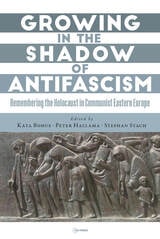
Growing in the Shadow of Antifascism
Remembering the Holocaust in State-Socialist Eastern EuropeKata Bohus
Central European University Press, 2022
Reined into the service of the Cold War confrontation, antifascist ideology overshadowed the narrative about the Holocaust in the communist states of Eastern Europe. This led to the Western notion that in the Soviet Bloc there was a systematic suppression of the memory of the mass murder of European Jews. Going beyond disputing the mistaken opposition between “communist falsification” of history and the “repressed authentic” interpretation of the Jewish catastrophe, this work presents and analyzes the ways as the Holocaust was conceptualized in the Soviet-ruled parts of Europe.
The authors provide various interpretations of the relationship between antifascism and Holocaust memory in the communist countries, arguing that the predominance of an antifascist agenda and the acknowledgment of the Jewish catastrophe were far from mutually exclusive. The interactions included acts of negotiation, cross-referencing, and borrowing. Detailed case studies describe how both individuals and institutions were able to use anti-fascism as a framework to test and widen the boundaries for discussion of the Nazi genocide. The studies build on the new historiography of communism, focusing on everyday life and individual agency, revealing the formation of a great variety of concrete, local memory practices.
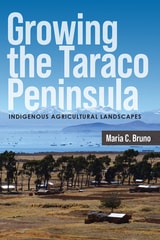
Growing the Taraco Peninsula
Indigenous Agricultural LandscapesMaria C. Bruno
University Press of Colorado, 2024
Beginning with the first small-scale communities of the Formative period (1500 BCE–500 CE) through the development of the Tiwanaku state (500–1100 CE), Bruno draws upon ethnographic insights from modern-day Indigenous farming practices on the peninsula as well as archaeological evidence from excavations at four sites to explore the landscapes and human-plant relationships that Taraco communities created through their agricultural practices. Through evaluation of environmental data on climate and land-use dynamics—rainfall, lake level, and soil character and distribution—she proposes a new hypothesis of how raised-field agriculture may have emerged in the region. With a detailed analysis of foodways at the Kala Uyuni site, her study reveals how Indigenous Taraco communities sustainably incorporated crops and wild plants into their daily and special-occasion meals, connecting the agricultural landscapes to local and regional social and political dynamics.
Bringing together several indicators of the region’s long-term history and demonstrating that shifts in agriculture do not neatly correspond to the changes traditionally highlighted by archaeological culture histories, Growing the Taraco Peninsula reveals Indigenous landscape creation through farming on the Taraco peninsula as a critical example of sustainability. This valuable contribution to Andean archaeology is also of interest to scholars, students, and the general reader concerned about the environment, sustainable farming, sustainability, Andean history, and the Indigenous peoples of the Americas.
Growth Machines
On the Hollow Joys of Consumption in the Desert of Economic LifeMark Joseph Stelzner
University of Chicago Press, 2026
A provocative look at America’s compulsion to consume and our obsession’s surprising—and strange—origins.
In a capitalist society, people sell their labor to purchase staples like food, shelter, and anxiety medication. That’s the equation of everyday economic life that we’ve always been told is true. Except, is it really that simple anymore? No matter how unmaterialistic you may think you are, odds are that deep within is a drive to consume because it feels good: books you won’t read, clothes you won’t like and might wear even less, a replacement phone whose novelty runs out as quickly as its upgrade hits the market. But what drives this impulse?
In Growth Machines, Mark Joseph Stelzner shows how today’s consumers are now programmed by a US economy intent on infinite growth to work for goods they’ve been convinced they need and conditioned to want. Stelzner establishes the gaps between economic thinking and economic reality, arguing that consumption is no longer just a reflection of needs, but rather, it reflects a need for transaction—in many cases, a treat we seek out because it feels good. We work not only to be able to consume the essentials for living, but also to consume for consumption's sake. Yet such consumption doesn’t make us happier. Stelzner traces this strange nature of consumption to an environmental source: an economy that demands growth. To keep its economy pumping, the US must keep Americans consuming. This makes Stelzner’s book an uncomfortable reflection on how we internalize our economy. To be an American is to consume; to consume is what makes America.
Growth Recurring
Economic Change in World HistoryE.L. Jones
University of Michigan Press, 2000
Eric Jones has written a substantial new introduction for this edition, which includes discussions of early evidence of growth episodes and the relation of these points to the Industrial Revolution, and the relevance of the East Asian "miracle" to his thesis.
Growth Triumphant
The Twenty-first Century in Historical PerspectiveRichard A. Easterlin
University of Michigan Press, 1998

Guaranteed Annual Wages
Jack Chernick and George Hellickson
University of Minnesota Press, 1945
Guaranteed Annual Wages was first published in 1945. Minnesota Archive Editions uses digital technology to make long-unavailable books once again accessible, and are published unaltered from the original University of Minnesota Press editions.
One of the last acts of President Roosevelt was to order a study of the guaranteed annual wage. The question that naturally arises in the mind of every thinking person is—what is the annual wage? What can it do for me? Is it economically feasible? Is it socially desirable? Will it work for the entire industrial structure as well as for individual firms within an industry?
Chernick and Hellickson in Guaranteed Annual Wages present an unbiased report showing to what extent the guaranteed annual wage contributes a solution to intermittent employment and indirectly to other forms of unemployment. Labor has followed the initiative of forward looking management in advocating guaranteed annual wages. Economists regard the guaranteed annual wage as a step toward full employment and the mass purchasing power so
essential to keep the wheels of industry turning.This book is the first substantial popular treatment of the annual wage in operation -- its effect upon the community, and how it relieves not only the wage earner but the homemaker from worry over the essentials of food, clothing, and shelter.
Chernick and Hellickson present the theory that the traditional wage system is obsolete and that, for the well-being of individuals and for society as a whole, it must be supplanted by a wage system that will make the operation of the economy more stable -- and that although the annual wage may not be a perfect system, it deserves a fair trial until something better is conceived.

Guarded by Two Jaguars
A Catholic Parish Divided by Language and FaithEric Hoenes del Pinal
University of Arizona Press, 2022
In Guarded by Two Jaguars, Eric Hoenes del Pinal tells the story of this dramatic split and in so doing addresses the role that language and gesture have played in the construction of religious identity. Drawing on a range of methods from linguistic and cultural anthropology, the author examines how the introduction of the Catholic Charismatic Renewal movement in the parish produced a series of debates between parishioners that illustrate the fundamentally polyvocal nature of Catholic Christianity. This work examines how intergroup differences are produced through dialogue, contestation, and critique. It shows how people’s religious affiliations are articulated not in isolation but through interaction with each other.
Although members of these two congregations are otherwise socially similar, their distinct interpretations of how to be a “good Catholic” led them to adopt significantly different norms of verbal and nonverbal communication. These differences became the idiom through which the two groups contested the meaning of being Catholic and Indigenous in contemporary Guatemala, addressing larger questions about social and religious change.

Guardians of Power
The Myth of the Liberal MediaDavid Edwards and David Cromwell, Foreword by John Pilger
Pluto Press, 2005
"Guardians of Power ought to be required reading in every media college. It is the most important book about journalism I can remember."
- John Pilger
"Regular critical analysis of the media, filling crucial gaps and correcting the distortions of ideological prisms, has never been more important. Media Lens has performed a major public service by carrying out this task with energy, insight, and care."
- Noam Chomsky
"Media Lens is doing an outstanding job of pressing the mainstream media to at least follow their own stated principles and meet their public service obligations. [This is] fun as well as enlightening."
- Edward S. Herman
Can a corporate media system be expected to tell the truth about a world dominated by corporations?
Can newspapers, including the 'liberal' Guardian and the Independent, tell the truth about catastrophic climate change -- about its roots in mass consumerism and corporate obstructionism -- when they are themselves profit-oriented businesses dependent on advertisers for 75% of their revenues?
Can the BBC tell the truth about UK government crimes in Iraq when its senior managers are appointed by the government? Has anything fundamentally changed since BBC founder Lord Reith wrote of the establishment: "They know they can trust us not to be really impartial"?
Why did the British and American mass media fail to challenge even the most obvious government lies on Iraqi weapons of mass destruction before the invasion in March 2003? Why did the media ignore the claims of UN weapons inspectors that Iraq had been 90-95% "fundamentally disarmed" as early as 1998?
This book answers these questions, and more.
Since July 2001, Media Lens has encouraged thousands of readers to email senior editors and journalists, challenging them to account for their distorted reporting on Iraq, Afghanistan, Kosovo, Haiti, East Timor, climate change, Western crimes in Central America, and much more. The responses -- often surprising, sometimes outrageous -- reveal the arrogance, unaccountability and servility to power of even our most respected media.
Guardians of the Flutes, Volume 1
Idioms of MasculinityGilbert Herdt
University of Chicago Press, 1994
Guatemala-U.S. Migration
Transforming RegionsBy Susanne Jonas and Nestor Rodríguez
University of Texas Press, 2015
Guatemala-U.S. Migration: Transforming Regions is a pioneering, comprehensive, and multifaceted study of Guatemalan migration to the United States from the late 1970s to the present. It analyzes this migration in a regional context including Guatemala, Mexico, and the United States. This book illuminates the perilous passage through Mexico for Guatemalan migrants, as well as their settlement in various U.S. venues. Moreover, it builds on existing theoretical frameworks and breaks new ground by analyzing the construction and transformations of this migration region and transregional dimensions of migration.
Seamlessly blending multiple sociological perspectives, this book addresses the experiences of both Maya and ladino Guatemalan migrants, incorporating gendered as well as ethnic and class dimensions of migration. It spans the most violent years of the civil war and the postwar years in Guatemala, hence including both refugees and labor migrants. The demographic chapter delineates five phases of Guatemalan migration to the United States since the late 1970s, with immigrants experiencing both inclusion and exclusion very dramatically during the most recent phase, in the early twenty-first century. This book also features an innovative study of Guatemalan migrant rights organizing in the United States and transregionally in Guatemala/Central America and Mexico. The two contrasting in-depth case studies of Guatemalan communities in Houston and San Francisco elaborate in vibrant detail the everyday experiences and evolving stories of the immigrants’ lives.
Guatemaltecas
The Women's Movement, 1986–2003By Susan A. Berger
University of Texas Press, 2006
After thirty years of military rule and state-sponsored violence, Guatemala reinstated civilian control and began rebuilding democratic institutions in 1986. Responding to these changes, Guatemalan women began organizing to gain an active role in the national body politic and restructure traditional relations of power and gender. This pioneering study examines the formation and evolution of the Guatemalan women's movement and assesses how it has been affected by, and has in turn affected, the forces of democratization and globalization that have transformed much of the developing world.
Susan Berger pursues three hypotheses in her study of the women's movement. She argues that neoliberal democratization has led to the institutionalization of the women's movement and has encouraged it to turn from protest politics to policy work and to helping the state impose its neoliberal agenda. She also asserts that, while the influences of dominant global discourses are apparent, local definitions of femininity, sexuality, and gender equity and rights have been critical to shaping the form, content, and objectives of the women's movement in Guatemala. And she identifies a counter-discourse to globalization that is slowly emerging within the movement. Berger's findings vigorously reveal the manifold complexities that have attended the development of the Guatemalan women's movement.

Gudrun’s Kitchen
Recipes from a Norwegian FamilyIrene O. Sandvold
Wisconsin Historical Society Press, 2011
The youngest of a large Norwegian immigrant family, Gudrun Thue Sandvold was known for her beaming blue eyes and a reserve that gave way to laughter whenever she got together with her sisters. She took immeasurable pride in her children and grandchildren, kept an exquisite home, and turned the most mundane occasion into a party. And to all who knew her, Gudrun’s cooking was the stuff of legend.
Part cookbook, part immigrant story, and part family memoir, Gudrun's Kitchen features hundreds of Gudrun Sandvold’s recipes for comfort food from a time when families and friends gathered at the table and connected with one another every single day. But this book is much more than a guide to Norwegian culinary traditions; it is an important contribution to immigrant history and a vital documentation of our nation’s multicultural heritage.
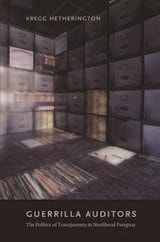
Guerrilla Auditors
The Politics of Transparency in Neoliberal ParaguayKregg Hetherington
Duke University Press, 2011
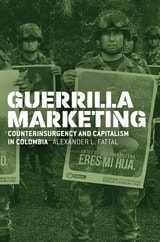
Guerrilla Marketing
Counterinsurgency and Capitalism in ColombiaAlexander L. Fattal
University of Chicago Press, 2018
Full of rich, unforgettable ethnographic stories, Guerrilla Marketing is a stunning and troubling analysis of the mediation of global conflict.

Guerrillas and Terrorists
Richard L. Clutterbuck
Ohio University Press, 1980
Terrorism and guerrilla warfare, whether justified as resistance to oppression or condemned as disrupting the rule of law, are as old as civilization itself. The power of the terrorist, however, has been magnified by modern weapons, including television, which he has learned to exploit.
To protect itself, society must understand the terrorist and what he is trying to do; thus Dr. Clutterbuck’s purpose in writing this book: “to contribute to the understanding and cooperation between the police, the public and the media.”
Guest Appearances and Other Travels in Time and Space
Peter I. Rose
Ohio University Press, 2003
Guest Appearances and Other Travels in Time and Space introduces us to many of those whom Rose has met along the way, a cast of characters as colorful as it is diverse. It includes his music-loving mother; his tour guides in China, Germany, and Israel; Indochinese refugees he followed to the United States; the notorious murderer, Nathan Leopold; the simple tailor, Mr. David; and three writers for whom Rose has a special affinity: Philip Roth, John Updike, and Paul Theroux.
Peter Rose gives us an entirely pleasurable and insightful look into the life of an American scholar actively involved in contemporary issues as he takes readers along on his field trips and guest appearances.
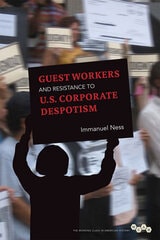
Guest Workers and Resistance to U.S. Corporate Despotism
Immanuel Ness
University of Illinois Press, 2011
Political scientist Immanuel Ness thoroughly investigates the use of guest workers in the United States, the largest recipient of migrant labor in the world. Ness argues that the use of migrant labor is increasing in importance and represents despotic practices calculated by key U.S. business leaders in the global economy to lower labor costs and expand profits under the guise of filling a shortage of labor for substandard or scarce skilled jobs.
Drawing on ethnographic field research, government data, and other sources, Ness shows how worker migration and guest worker programs weaken the power of labor in both sending and receiving countries. His in-depth case studies of the rapid expansion of technology and industrial workers from India and hospitality workers from Jamaica reveal how these programs expose guest workers to employers' abuses and class tensions in their home countries while decreasing jobs for American workers and undermining U.S. organized labor.
Where other studies of labor migration focus on undocumented immigrant labor and contend immigrants fill jobs that others do not want, this is the first to truly advance understanding of the role of migrant labor in the transformation of the working class in the early twenty-first century. Questioning why global capitalists must rely on migrant workers for economic sustenance, Ness rejects the notion that temporary workers enthusiastically go to the United States for low-paying jobs. Instead, he asserts the motivations for improving living standards in the United States are greatly exaggerated by the media and details the ways organized labor ought to be protecting the interests of American and guest workers in the United States.

Guide to Fossil Man
Michael H. Day
University of Chicago Press, 1986
Day begins with an introduction to the anatomy of human fossils. He then describes the forty-nine sites in Europe, the Near East, Africa, the Middle East, Asia, and Oceania that have yielded the most significant information on the development of hominid species and the appearance of early man. Grouped geographically, each site description includes data on the hominid remains, other finds such as tools and animal bones, the local geology and contemporary geomorphology and ecology, and dating and other references. Sites featured for the first time in this edition include Kow Swamp and Mungo in Australia; Dali and Maba in China; and West Turkana in Kenya, which contained the almost complete skeleton of a boy determined to be 1,600,000 years old.
Short essays on problems associated with neandertal, australpithecine, and Homo erectus remains are included, as well as a glossary, a geological time scale, charts and comprehensive illustrations. Day's Guide to Fossil Man is invaluable not only for working palaeontologists, palaeolithic archaeologists, and physical anthropologists, but also for anyone interested in human evolution.

Guilty People
Abbe Smith
Rutgers University Press, 2020
In Guilty People, law professor and longtime criminal defense attorney Abbe Smith gives us a thoughtful and honest look at guilty individuals on trial. Each chapter tells compelling stories about real cases she handled; some of her clients were guilty of only petty crimes and misdemeanors, while others committed offenses as grave as rape and murder. In the process, she answers the question that every defense attorney is routinely asked: How can you represent these people?
Smith’s answer also tackles seldom-addressed but equally important questions such as: Who are the people filling our nation’s jails and prisons? Are they as dangerous and depraved as they are usually portrayed? How did they get caught up in the system? And what happens to them there?
This book challenges the assumption that the guilty are a separate species, unworthy of humane treatment. It is dedicated to guilty people—every single one of us.

Guilty Pleasures
Feminist Camp from Mae West to MadonnaPamela Robertson
Duke University Press, 1996
Robertson grounds her theoretical discussion of female performance and spectatorship in detailed studies of figures such as Mae West, Joan Crawford, and Madonna. She locates these figures in turn within a tradition of feminist camp—a female form of aestheticism related to masquerade and rooted in burlesque, parallel to but different from gay male camp. Through analyses of films from Gold Diggers of 1933 to Johnny Guitar, as well as video and television, Robertson shows how the gold digger is to feminist camp what the dandy is to gay male camp—its original personification and defining voice. Set against a backdrop of social history, her analysis demonstrates that feminist camp flourishes during periods of antifeminist backlash in America, and that it reflects a working-class sensibility particularly attuned to changing attitudes toward women’s work and sexuality.
Appealing to a wide range of scholars spanning the fields of film and mass culture, feminism, gay/lesbian/queer studies, and cultural studies, Guilty Pleasures will also attract an audience of general readers interested in camp and popular culture.

Guitar Makers
The Endurance of Artisanal Values in North AmericaKathryn Marie Dudley
University of Chicago Press, 2014
In Guitar Makers, Kathryn Marie Dudley introduces us to builders of artisanal guitars, their place in the art world, and the specialized knowledge they’ve developed. Drawing on in-depth interviews with members of the lutherie community, she finds that guitar making is a social movement with political implications. Guitars are not simply made—they are born. Artisans listen to their wood, respond to its liveliness, and strive to endow each instrument with an unforgettable tone. Although professional luthiers work within a market society, Dudley observes that their overriding sentiment is passion and love of the craft. Guitar makers are not aiming for quick turnover or the low-cost reproduction of commodities but the creation of singular instruments with unique qualities, and face-to-face transactions between makers, buyers, and dealers are commonplace.
In an era when technological change has pushed skilled artisanship to the margins of the global economy, and in the midst of a capitalist system that places a premium on ever faster and more efficient modes of commerce, Dudley shows us how artisanal guitar makers have carved out a unique world that operates on alternative, more humane, and ecologically sustainable terms.

Gumshoe America
Hard-Boiled Crime Fiction and the Rise and Fall of New Deal LiberalismSean McCann
Duke University Press, 2000
Gumshoe America traces the way those problems surfaced in hard-boiled crime fiction from the1920s through the 1960s. Beginning by using a forum on the KKK in the pulp magazine Black Mask to describe both the economic and political culture of pulp fiction in the early twenties, McCann locates the origins of the hard-boiled crime story in the genre’s conflict with the racist antiliberalism prominent at the time. Turning his focus to Dashiell Hammett’s career, McCann shows how Hammett’s writings in the late 1920s and early 1930s moved detective fiction away from its founding fables of social compact to the cultural alienation triggered by a burgeoning administrative state. He then examines how Raymond Chandler’s fiction, unlike Hammett’s, idealized sentimental fraternity, echoing the communitarian appeals of the late New Deal. Two of the first crime writers to publish original fiction in paperback—Jim Thompson and Charles Willeford—are examined next in juxtaposition to the popularity enjoyed by their contemporaries Mickey Spillane and Ross Macdonald. The stories of the former two, claims McCann, portray the decline of the New Deal and the emergence of the rights-based liberalism of the postwar years and reveal new attitudes toward government: individual alienation, frustration with bureaucratic institutions, and dissatisfaction with the growing vision of America as a meritocracy. Before concluding, McCann turns to the work of Chester Himes, who, in producing revolutionary hard-boiled novels, used the genre to explore the changing political significance of race that accompanied the rise of the Civil Rights movement in the late 1950s and the 1960s.
Combining a striking reinterpretation of the hard-boiled crime story with a fresh view of the political complications and cultural legacies of the New Deal, Gumshoe America will interest students and fans of the genre, and scholars of American history, culture, and government.
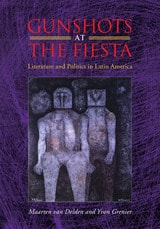
Gunshots at the Fiesta
Literature and Politics in Latin AmericaMaarten van Delden
Vanderbilt University Press, 2009
Yet the authors of this book argue that the relationship between the two realms is much more complex and fraught with tension than is nowadays recognized. In examining these tensions, and in revealing the diverse ways in which literature and politics intersect in the Latin American cultural tradition, Gunshots at the Fiesta offers a lively challenge to the current tendency--especially strong in the U.S. academy--to read Latin American literature through a narrowly political prism.
The authors argue that one can only understand the nature of the dialogue between literature and politics if one begins by recognizing the different logics that operate in these different domains. Using this idea of the different logics of politics and literature as a guiding thread, Van Delden and Grenier offer bold new readings of major authors such as José Martí, Octavio Paz, Carlos Fuentes, Gabriel García Márquez, and Mario Vargas Llosa, as well as compelling interpretations of works by less-frequently-discussed figures such as Claribel Alegría, Marisol Martín del Campo and Víctor Hugo Rascón Banda.

Gurus and Media
Sound, Image, Machine, Text and the DigitalEdited by Jacob Copeman, Arkotong Longkumer, and Koonal Duggal
University College London, 2023
Illuminating the mediatization of guruship and the guruization of media, this book bridges the gap between scholarship on gurus and the disciplines of media and visual culture studies. It investigates guru iconographies in and across various time periods and also the distinctive ways in which diverse gurus engage with and inhabit different forms of media: statuary, games, print publications, photographs, portraiture, films, machines, social media, bodies, words, graffiti, dolls, sound, verse, tombs, and more.
The book’s interdisciplinary chapters advance, both conceptually and ethnographically, our understanding of the function of media in the dramatic production of guruship and reflect on the corporate branding of gurus and on mediated guruship as a series of aesthetic traps for the captivation of devotees and others. They show how different media can further enliven the complex plurality of guruship, for instance in instantiating notions of “absent-present” guruship and demonstrating the mutual mediation of gurus, caste, and Hindutva.
Gurus and Media foregrounds contested visions of the guru in the development of devotional publics and pluriform guruship across time and space. Thinking through the guru’s many media entanglements in a single place, this book contributes new insights to the study of South Asian religions and to the study of mediation more broadly.

Gurus, Hucksters, Entertainers
How Influencers Reshaped Social MediaAngèle Christin
University of Chicago Press, 2026
An illuminating investigation of the complex work of social media content creators—their lives, conflicts, and controversies.
In this eye-opening book, digital studies scholar Angèle Christin demystifies the content creator economy, explaining its long history and the pitfalls of its professionalization. Drawing on in-depth fieldwork with digital creators as varied as vegan YouTubers, dads of Instagram, and self-described drama commentators, Christin shows how individuals enter social media creation, how they make money, and how their online environments shape their content.
Aspiring creators often dream of a better life in social media careers. Yet these dreams soon turn into exhaustion as influencers try to meet the contradictory demands of platforms, brands, and audiences. Over time, Christin shows, creators cluster into three types: hucksters, who work on behalf of brands; entertainers, who chase virality and platform payments; and gurus, who monetize the loyalty of their fans. Platform dynamics push entertainers and gurus to create extreme and incendiary content to maintain audience engagement, while brands and marketers nudge hucksters toward repetitive, staid commercial performances. Concerns about algorithmic manipulation and conflicts between creators further lead to reputation-damaging, harassment-laden scandals. Christin reveals how platform labor repeatedly—and structurally—fosters precarity and inequality, destructive drama, and inflammatory content online.

Gut Anthro
An Experiment in Thinking with MicrobesAmber Benezra
University of Minnesota Press, 2023
A fascinating ethnography of microbes that opens up new spaces for anthropological inquiry
The trillions of microbes in and on our bodies are determined by not only biology but also our social connections. Gut Anthro tells the fascinating story of how a sociocultural anthropologist developed a collaborative “anthropology of microbes” with a human microbial ecologist to address global health crises across disciplines. It asks: what would it mean for anthropology to act with science? Based partly at a preeminent U.S. lab studying the human microbiome, the Center for Genome Sciences at Washington University, and partly at a field site in Bangladesh studying infant malnutrition, it examines how microbes travel between human guts in the “field” and in microbiome laboratories, influencing definitions of health and disease, and how the microbiome can change our views on evolution, agency, and life.
As lab scientists studied the interrelationships between gut microbes and malnutrition in resource-poor countries, Amber Benezra explored ways to reconcile the scale and speed differences between the lab, the intimate biosocial practices of Bangladeshi mothers and their children, and the looming structural violence of poverty. In vital ways, Gut Anthro is about what it means to collaborate—with mothers, local field researchers in Bangladesh, massive philanthropic global health organizations, with the microbiome scientists, and, of course, with microbes. It follows microbes through various enactments in scientific research—microbes as kin, as data, and as race. Revealing how racial categories are used in microbiome research, Benezra argues that microbial differences need transdisciplinary collaboration to address racial health disparities without reifying race as a straightforward biological or social designation.
Gut Anthro is a tour de force of science studies and medical anthropology as well as an intensely personal and deeply theoretical accounting of what it means to do anthropology today.
Cover alt text:
Black background overlaid with a pink organic path suggestive of a human digestive system. Title appears within the guts as if being processed.
Gut Feminism
Elizabeth A. Wilson
Duke University Press, 2015
Guy Hocquenghem
Beyond Gay IdentityBill Marshall
Duke University Press, 1997
Marshall explores all aspects of Hocquenghem’s writing—journalistic, theoretical, and fictional—much of this work still untranslated. His consideration reaches beyond the aftermath of the events of May 1968 and points toward the ways in which Hocquenghem’s work might invigorate contemporary debates on a range of issues in Marxist and queer theory and in gay, lesbian, and cultural studies. These include the construction of homosexuality in social discourse, the status of "identity politics," and the role of the state and civil society in the determination of each. Demonstrating Hocquenghem’s importance within the framework of French leftist thought, Marshall links him to his contemporaries Foucault, Deleuze, and Guattari. Tracing his connections to the intellectual traditions of Benjamin, Diderot, Fourier, Lucretius, and Gnosticism, he also illustrates Hocquenghem’s place within the European intellectual tradition.Guy Hocquenghem brings an important, challenging, and overly neglected French theorist back to the main stage.
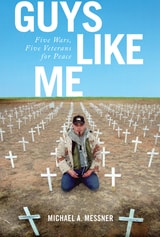
Guys Like Me
Five Wars, Five Veterans for PeaceMessner, Michael A
Rutgers University Press, 2019
Guys Like Me introduces us to five ordinary men who have done extraordinary work as peace activists: World War II veteran Ernie Sanchez, Korean War veteran Woody Powell, Vietnam veteran Gregory Ross, Gulf War veteran Daniel Craig, and Operation Iraqi Freedom veteran Jonathan Hutto. Acclaimed sociologist Michael Messner offers rich profiles of each man, recounting what led him to join the armed forces, what he experienced when fighting overseas, and the guilt and trauma he experienced upon returning home. He reveals how the pain and horror of the battlefront motivated these onetime warriors to reconcile with former enemies, get involved as political activists, and help younger generations of soldiers.
Guys Like Me is an inspiring multigenerational saga of men who were physically or psychically wounded by war, but are committed to healing themselves and others, forging a path to justice, and replacing endless war with lasting peace
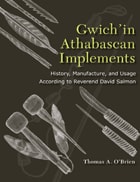
Gwich'in Athabascan Implements
History, Manufacture, and Usage According to Reverend David SalmonThomas A. O’Brien
University of Alaska Press, 2011
The most detailed and well-illustrated study of material culture for any northern Athabascan language group to date, Gwich’in Athabascan Implements reproduces pre- and early post-contact tools that are historically important to the Athabaskan people. A long-term collaboration between anthropologist Thomas O’Brien and Athabascan elder David Salmon, this volume provides more than one hundred one-to-one sketches of a wide variety of implements, many of which are no longer commonly found in use.
Gwich’in Climate Report
compiled and edited by Matt Gilbert
University of Alaska Press, 2022
These interview subjects are at a “ground zero” of climate change, and their voices are largely absent from popular research on and discussion of the topic. Their traditional knowledge of Arctic flora and fauna, forestation, landforms, meteorology, airstream behavior, and river hydrology makes a significant contribution to the documentation of climate change. In addition, Gilbert bridges the Gwich’in worldview and that of Western science by including factual substantiation and citations that corroborate key observations in the Gwich’in transcripts.
A text that matters for its cultural and historical significance—as well as its potential impact on the way science and policy are conducted in rural Alaska and on public lands—TheGwich’in Climate Report will be of interest to residents of and stakeholders in the communities it represents as well as researchers concerned with on-the-ground conditions of ecosystems and Indigenous peoples most directly affected by climate change.

Gypsy World
The Silence of the Living and the Voices of the DeadPatrick Williams
University of Chicago Press, 2003
In Gypsy World, Patrick Williams argues that these customs are at the center of how Manuš see the world and their place in it. The Manuš inhabit a world created by the "Gadzos" (non-Gypsies), who frequently limit or even prohibit Manuš movements within it. To claim this world for themselves, the Manuš employ a principle of cosmological subtraction: just as the dead seem to be absent from Manuš society, argues Williams, so too do the Manuš absent themselves from Gadzo society—and in so doing they assert and preserve their own separate culture and identity.
Anyone interested in Gypsies, death rituals, or the formation of culture will enjoy this fascinating and sensitive ethnography.