Results by title
28164 books match the query 'History' and 628 start with g
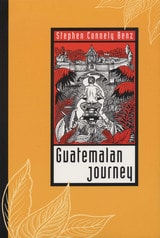
Guatemalan Journey
By Stephen Connely Benz
University of Texas Press, 1996
Guatemala draws some half million tourists each year, whose brief visits to the ruins of ancient Maya cities and contemporary highland Maya villages may give them only a partial and folkloric understanding of Guatemalan society. In this vividly written travel narrative, Stephen Connely Benz explores the Guatemala that casual travelers miss, using his encounters with ordinary Guatemalans at the mall, on the streets, at soccer games, and even at the funeral of massacre victims to illuminate the social reality of Guatemala today.
The book opens with an extended section on the capital, Guatemala City, and then moves out to the more remote parts of the country where the Guatemalan Indians predominate. Benz offers us a series of intelligent and sometimes humorous perspectives on Guatemala's political history and the role of the military, the country's environmental degradation, the influence of foreign missionaries, and especially the impact of the United States on Guatemala, from governmental programs to fast food franchises.

Gudrun’s Kitchen
Recipes from a Norwegian FamilyIrene O. Sandvold
Wisconsin Historical Society Press, 2011
The youngest of a large Norwegian immigrant family, Gudrun Thue Sandvold was known for her beaming blue eyes and a reserve that gave way to laughter whenever she got together with her sisters. She took immeasurable pride in her children and grandchildren, kept an exquisite home, and turned the most mundane occasion into a party. And to all who knew her, Gudrun’s cooking was the stuff of legend.
Part cookbook, part immigrant story, and part family memoir, Gudrun's Kitchen features hundreds of Gudrun Sandvold’s recipes for comfort food from a time when families and friends gathered at the table and connected with one another every single day. But this book is much more than a guide to Norwegian culinary traditions; it is an important contribution to immigrant history and a vital documentation of our nation’s multicultural heritage.
Guerrilla Auditors
The Politics of Transparency in Neoliberal ParaguayKregg Hetherington
Duke University Press, 2011
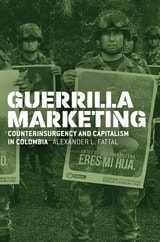
Guerrilla Marketing
Counterinsurgency and Capitalism in ColombiaAlexander L. Fattal
University of Chicago Press, 2018
Full of rich, unforgettable ethnographic stories, Guerrilla Marketing is a stunning and troubling analysis of the mediation of global conflict.
Guerrillas, Unionists, and Violence on the Confederate Home Front
Daniel E. Sutherland
University of Arkansas Press, 1999

Guide to Chicago's Twenty-First-Century Architecture
Chicago Architecture Center and John Hill
University of Illinois Press, 2021
Chicago's wealth of architectural treasures makes it one of the world's majestic cityscapes. Published in collaboration with the Chicago Architecture Center, this easy-to-use guide invites you to discover the new era of twenty-first-century architecture in the Windy City via two hundred architecturally significant buildings and spaces in the city and suburbs. Features include:
- Entries organized by neighborhood
- Maps with easy-to-locate landmarks and mass transit options
- Background on each entry, including the design architect, name and address, description, and other essential information
- Sidebars on additional sites and projects
- A detailed supplemental section with a glossary, selected bibliography, and indexes by architect, building name, and building type
Up-to-date and illustrated with almost four hundred color photos, the Guide to Chicago's Twenty-First-Century Architecture takes travelers and locals on a journey into an ever-changing architectural mecca.
Guide to Missouri Confederate Units, 1861-1865
James E. McGhee
University of Arkansas Press, 2010

Guide to the Colorado Ghost Towns and Mining Camps
And Mining CampsPerry Eberhart
Ohio University Press, 1969
"This is not a history book. Rather it is a directory of towns, and compilation of known information about those towns. In undertaking the stud, I was amazed at the amount of legend and contradictory information Colorado history has collected in just one hundred years. Who was it that said: 'History is the perpetuation of saleable gossip'? (Perhaps, nobody has said it yet. In that case, it's mine, all mine.)
"As of this moment, this is the most complete compilation of Colorado mining towns—ghost or going—available.
"For the fourth edition, over 100 towns have been added. Also, I have included a new chapter (XXVI. Addendum, page 466), the first couple of pages of which can well be read as a second Preface to the book."
— Perry Eberhart, Preface, 1959 and 1969
Guide to the Draper Manuscripts
Josephine L. Harper
Wisconsin Historical Society Press, 1983
In the mid-nineteenth century the Wisconsin Historical Society's first director, Lyman C. Draper, gathered outstanding materials such as the Daniel Boone papers, which include Draper's interviews with Boone's son, and the papers of Revolutionary War hero George Rogers Clark. These two collections alone are of vast significance to frontier history before 1830, but the full collection comprises nearly five hundred volumes of records, including military and government records, interviews, Draper's own research notes, and rare personal letters. For scholars, genealogists, and local historians, the Draper papers offer a wealth of information on the social, economic, and cultural conditions experienced by our frontier forebears. The 180-page index lists thousands of names and is an indispensable guide for all who wish to use the collection, which is available in libraries across the country on microfilm.

Guide to the Hispanic American Historical Review, 1956–1975
Stanley R. Ross and Wilber Chaffee, eds.
Duke University Press, 1980

Guidebook for the Scientific Traveler
Visiting Astronomy and Space Exploration Sites across AmericaNickell, Duane S
Rutgers University Press, 2008

Guided Missile Frigate Tromp
Jantinus Mulder
Amsterdam University Press, 2023

Guilds, Society and Economy in London 1450-1800
Ian Anders Gadd and Patrick Wallis
University of London Press, 2002
Gulf To Rockies
The Heritage of the Fort Worth and Denver–Colorado and Southern Railways, 1861–1898By Richard C. Overton
University of Texas Press, 1953
Gulf to Rockies is a chapter in the business and economic history of the American West and the story of two of the most colorful railroad builders of the nineteenth century.
Throughout the 1860s the mineral treasures of Colorado were virtually inaccessible for lack of railroads. Even after a hectic decade of building in the 1870s, the state faced a new sort of isolation: every railroad crossing her borders was controlled by the Union Pacific or the Santa Fe. As a result, the Rocky Mountain region could not hope to compete with the Midwest for the business of the Atlantic seaboard.
To remedy this situation, John Evans, former governor of Colorado, organized in 1881 a railroad to run southward from Denver as the first link in a cheap rail-water route via the Gulf of Mexico to the East. Meanwhile ambitious Fort Worth citizens had incorporated the Fort Worth and Denver City in 1873. Not a rail was laid on either road, however, until General Grenville M. Dodge, famed builder of the Union Pacific and the Texas Pacific, took up the Texas project and joined forces with Evans to create the Gulf-to-Rockies route.
It took seven years for these men and their associates to mobilize funds and complete the Fort Worth–Denver line, and another decade to establish the system’s independence and solve its financial problems in the face of drought, depression, and intense competition.
Gulf to Rockies was written under special agreements with Northwestern University and the Chicago, Burlington & Quincy Railroad, whereby the university relieved Mr. Overton of a part of his duties in order that he might have time for research and writing and the railroad undertook to bear the cost of the research. The Burlington also permitted him free access to all company records and granted him unrestricted freedom to publish his findings.
Gumshoe America
Hard-Boiled Crime Fiction and the Rise and Fall of New Deal LiberalismSean McCann
Duke University Press, 2000
Gumshoe America traces the way those problems surfaced in hard-boiled crime fiction from the1920s through the 1960s. Beginning by using a forum on the KKK in the pulp magazine Black Mask to describe both the economic and political culture of pulp fiction in the early twenties, McCann locates the origins of the hard-boiled crime story in the genre’s conflict with the racist antiliberalism prominent at the time. Turning his focus to Dashiell Hammett’s career, McCann shows how Hammett’s writings in the late 1920s and early 1930s moved detective fiction away from its founding fables of social compact to the cultural alienation triggered by a burgeoning administrative state. He then examines how Raymond Chandler’s fiction, unlike Hammett’s, idealized sentimental fraternity, echoing the communitarian appeals of the late New Deal. Two of the first crime writers to publish original fiction in paperback—Jim Thompson and Charles Willeford—are examined next in juxtaposition to the popularity enjoyed by their contemporaries Mickey Spillane and Ross Macdonald. The stories of the former two, claims McCann, portray the decline of the New Deal and the emergence of the rights-based liberalism of the postwar years and reveal new attitudes toward government: individual alienation, frustration with bureaucratic institutions, and dissatisfaction with the growing vision of America as a meritocracy. Before concluding, McCann turns to the work of Chester Himes, who, in producing revolutionary hard-boiled novels, used the genre to explore the changing political significance of race that accompanied the rise of the Civil Rights movement in the late 1950s and the 1960s.
Combining a striking reinterpretation of the hard-boiled crime story with a fresh view of the political complications and cultural legacies of the New Deal, Gumshoe America will interest students and fans of the genre, and scholars of American history, culture, and government.
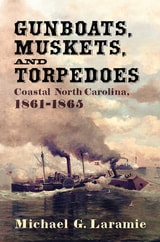
Gunboats, Muskets, and Torpedoes
Coastal North Carolina, 1861–1865Michael G. Laramie
Westholme Publishing, 2027
From the first shots at Cape Hatteras in the summer of 1861 to the fall of Fort Fisher in early 1865, the contest for coastal North Carolina during the American Civil War was crucial to the Union victory. With a clear naval superiority over the South, the North conducted blockading and amphibious operations from Virginia to Texas, including the three-hundred-mile seacoast of North Carolina. With its Pamlico and Albemarle Sounds—fed by navigable rivers that reached deep into the interior—and major Confederate port of Wilmington, the Carolina coast was essential for the distribution of foreign goods and supplies to Confederate forces in Virginia and elsewhere. If the Union was able to capture Wilmington or advance on the interior waters, they would cripple the South’s war efforts.
In Gunboats, Muskets, and Torpedoes: Coastal North Carolina, 1861–1865, award-winning historian Michael G. Laramie chronicles both the battle over supplying the South by sea as well as the ways this region proved to be a fertile ground for the application of new technologies. With the advent of steam propulsion, the telegraph, rifled cannon, repeating firearms, ironclads, and naval mines, the methods and tactics of the old wooden walls soon fell to those of this first major conflict of the industrial age. Soldiers and sailors could fire farther and faster than ever before. With rail transportation available, marches were no longer weeks but days or even hours, allowing commanders to quickly shift men and materials to meet an oncoming threat or exploit an enemy weakness. Fortifications changed to meet the challenges imposed by improved artillery, while the telegraph stretched the battlefield even further. Yet for all the technological changes, many of which would be harbingers of greater conflicts to come, the real story of this strategic coast is found in the words and actions of the soldiers and sailors who vied for this region for nearly four years. It is here, where the choices made—whether good or bad, misinformed, or not made at all—intersected with logistical hurdles, geography, valor, and fear to shape the conflict; a conflict thatwould ultimately set the postwar nation on track to becoming a modern naval power.
Gunflint Falling
Blowdown in the Boundary WatersCary J. Griffith
University of Minnesota Press, 2023
Stories from survivors of the Boundary Waters Canoe Area Wilderness’s epochal weather disaster
On July 4, 1999, in the Boundary Waters Canoe Area Wilderness (BWCAW), a bizarre confluence of meteorological events resulted in the most damaging blowdown in the region’s history. Originating over the Dakotas, the midsummer windstorm developed amid unusually high heat and water-saturated forests and moved steadily east, bearing down on Fargo, North Dakota, and damaging land as it crossed the Minnesota border. Gunflint Falling tells the story of this devastating storm from the perspectives of those who were on the ground before, during, and after the catastrophic event—from first-time visitors to the north woods to returning paddlers to Forest Service Rangers.
The pre-dawn forecasts from the National Weather Service in Duluth for that Sunday of the holiday weekend predicted the day would be “warm and humid. Partly sunny with a thirty percent chance of thunderstorms.” But as the afternoon and evening settled over the Boundary Waters, the first eyewitness accounts began to tell a dramatic and terrifying story. Five friends camping on Lake Polly watched in wonder as the sky turned green and the winds began to whip. They scrambled to pull canoes on shore and secure tarps when a tree snapped and struck one of them in the head, rendering her unconscious. Three women enjoying their last day of a camping trip near the end of the Gunflint Trail took shelter in their tent as winds increased. Water drenched the nylon walls as trees crashed around them, one flattening the tent and pinning a woman beneath its weight. A family vacationing at their cabin dodged falling trees and strained against straight-line winds as they sprinted from the cabin to the safest place they knew: a crawl space underneath it. They watched in awe as trees snapped and toppled, their twisted root balls torn out of the water-logged earth—as they prayed their cabin would hold.
By the time the storm began to subside, falling trees had injured approximately sixty people, and most needed to be medevacked to safety. Amazingly, no one died. The historic storm laid down timber that would later blaze in the Ham Lake fire of 2007, ultimately reshaping the region’s forests in ways we have yet to fully understand.
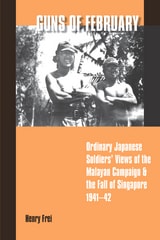
Guns of February
Ordinary Japanese Soldiers' Views of the Malayan Campaign and the Fall of Singapore, 1941-42Henry Frei
National University of Singapore Press, 1990

Guns, Democracy, and the Insurrectionist Idea
Joshua Horwitz and Casey Anderson
University of Michigan Press, 2009
---Saul Cornell, Ohio State University
Guns, Drugs, and Development in Colombia
By Jennifer S. Holmes, Sheila Amin Gutiérrez de Piñeres, and Kevin M. Curtin
University of Texas Press, 2009
For decades, Colombia has contended with a variety of highly publicized conflicts, including the rise of paramilitary groups in response to rebel insurgencies of the 1960s, the expansion of an illegal drug industry that has permeated politics and society since the 1970s, and a faltering economy in the 1990s. An unprecedented analysis of these struggles, Guns, Drugs, and Development in Colombia brings together leading scholars from a variety of fields, blending previously unseen quantitative data with historical analysis for an impressively comprehensive assessment. Culminating in an inspiring plan for peace, based on Four Cornerstones of Pacification, this landmark work is sure to spur new calls for change in this corner of Latin America and beyond.
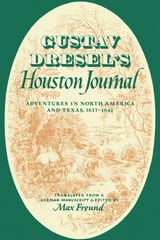
Gustav Dresel's Houston Journal
Adventures in North America and Texas, 1837-1841By Gustav Dresel
University of Texas Press, 1954
This is the travel diary of a young German businessman who came to Texas and worked for several years in Houston and the surrounding areas. His diary, originally published in German as Texanisches Tagebuch, gives a fascinating view of life in the Texas republic.
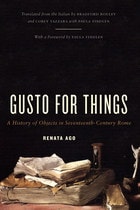
Gusto for Things
A History of Objects in Seventeenth-Century RomeRenata Ago
University of Chicago Press, 2013
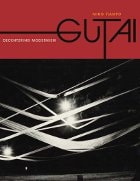
Gutai
Decentering ModernismMing Tiampo
University of Chicago Press, 2011
Gutai is the first book in English to examine Japan’s best-known modern art movement, a circle of postwar artists whose avant-garde paintings, performances, and installations foreshadowed many key developments in American and European experimental art.
Working with previously unpublished photographs and archival resources, Ming Tiampo considers Gutai’s pioneering transnational practice, spurred on by mid-century developments in mass media and travel that made the movement’s field of reception and influence global in scope. Using these lines of transmission to claim a place for Gutai among modernist art practices while tracing the impact of Japan on art in Europe and America, Tiampo demonstrates the fundamental transnationality of modernism. Ultimately, Tiampo offers a new conceptual model for writing a global history of art, making Gutai an important and original contribution to modern art history.

Guy Rivers
A Tale of GeorgiaWilliam G. Simms
University of Arkansas Press, 1993
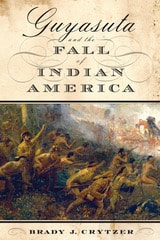
Guyasuta and the Fall of Indian America
Brady J. Crytzer
Westholme Publishing, 2013
Nearly a century before the United States declared the end of the Indian Wars, the fate of Native Americans was revealed in the battle of Fallen Timbers. In 1794, General Anthony Wayne led the first American army— the Legion of the United States—against a unified Indian force in the Ohio country. The Indians were routed and forced to vacate their lands. It was the last of a series of Indian attempts in the East to retain their sovereignty and foreshadowed what would occur across the rest of the continent. In Guyasuta and the Fall of Indian America, historian Brady J. Crytzer traces how American Indians were affected by the wars leading to American Independence through the life of one of the period’s most influential figures. Born in 1724, Guyasuta is perfectly positioned to understand the emerging political landscape of America in the tumultuous eighteenth century. As a sachem of the vaunted Iroquois Confederacy, for nearly fifty years Guyasuta dedicated his life to the preservation and survival of Indian order in a rapidly changing world, whether it was on the battlefield, in the face of powerful imperial armies, or around a campfire negotiating with his French, British, and American counterparts. Guyasuta was present at many significant events in the century, including George Washington’s expedition to Fort Le Boeuf, the Braddock disaster of 1755, Pontiac’s Rebellion and the Battle of Bushy Run in 1763, and the Battle of Oriskany during the American Revolution. Guyasuta’s involvement in the French and British wars and the American War for Independence were all motivated by a desire to retain relevance for Indian society. It was only upon the birth of the United States of America that Guyasuta finally laid his rifle down and watched as his Indian world crumbled beneath his feet. A broken man, debilitated by alcoholism, he died near Pittsburgh in 1794.
Supported by extensive research and full of compelling drama, Guyasuta and the Fall of Indian America unravels the tangled web of alliances, both white and native, and explains how the world of the American Indians could not survive alongside the emergent United States.
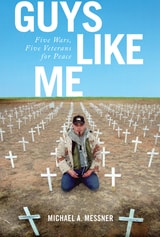
Guys Like Me
Five Wars, Five Veterans for PeaceMessner, Michael A
Rutgers University Press, 2019
Guys Like Me introduces us to five ordinary men who have done extraordinary work as peace activists: World War II veteran Ernie Sanchez, Korean War veteran Woody Powell, Vietnam veteran Gregory Ross, Gulf War veteran Daniel Craig, and Operation Iraqi Freedom veteran Jonathan Hutto. Acclaimed sociologist Michael Messner offers rich profiles of each man, recounting what led him to join the armed forces, what he experienced when fighting overseas, and the guilt and trauma he experienced upon returning home. He reveals how the pain and horror of the battlefront motivated these onetime warriors to reconcile with former enemies, get involved as political activists, and help younger generations of soldiers.
Guys Like Me is an inspiring multigenerational saga of men who were physically or psychically wounded by war, but are committed to healing themselves and others, forging a path to justice, and replacing endless war with lasting peace
Guys Like Us
Citing Masculinity in Cold War PoeticsMichael Davidson
University of Chicago Press, 2003
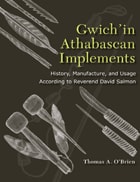
Gwich'in Athabascan Implements
History, Manufacture, and Usage According to Reverend David SalmonThomas A. O’Brien
University of Alaska Press, 2011
The most detailed and well-illustrated study of material culture for any northern Athabascan language group to date, Gwich’in Athabascan Implements reproduces pre- and early post-contact tools that are historically important to the Athabaskan people. A long-term collaboration between anthropologist Thomas O’Brien and Athabascan elder David Salmon, this volume provides more than one hundred one-to-one sketches of a wide variety of implements, many of which are no longer commonly found in use.