Results by title
5550 books match the query 'Biography & Autobiography' and 159 start with g
George Washington
A Man of ActionJohn P. Kaminski
Wisconsin Historical Society Press, 2017

George William Featherstonhaugh
The First U.S. Government GeologistEdmund Berkeley and Dororthy Berkeley
University of Alabama Press, 1988
—Choice
"For anyone interested in the history of American geology, knowledge of G. W. Featherstonhaugh (1780-1866) is both essential and hard to obtain. He was the force behind the first railroad in America; a pioneer in scientific agriculture; an essayist, poet, and novelist; a lobbyist; a linguist; and a daring diplomat who saved the king and queen of France from certain death. [Yet] his strongest tie was with the geology. [This] biography is interesting, well researched and well written. It is a balanced study of a complex man who did so much work and generated such controversy."
—Earth Sciences History
George Wingfield
Owner And Operator Of NevadaC. Elizabeth Raymond
University of Nevada Press, 2013
Banker, hotel owner, and political powerhouse George Wingfield was a significant figure in Nevada history. He was influential in developing Reno's gambling-and-divorce-related tourism. Raymond's biography depicts the man and his times, from his birth in Arkansas in 1876 until his death in Reno in 1959. Wilbur S. Shepperson Series in History and Humanities.
George's Run
A Writer's Journey through the Twilight ZoneHenry Chamberlain
Rutgers University Press, 2023
Later in life, Johnson befriended comics journalist and artist Henry Chamberlain, and the two had long chats about his amazing life and career. Now Chamberlain pays tribute to his late friend in the graphic novel George’s Run, which brings Johnson’s creative milieu to life in vividly illustrated color panels. The result feels less like reading a conventional biography and more like sitting in on an intimate conversation between friends as they recollect key moments in pop culture history, as well as the colorful band of writers known as the “Rat Pack of Science Fiction.”
Georges Clemenceau
FranceDavid Watson
Haus Publishing, 2010
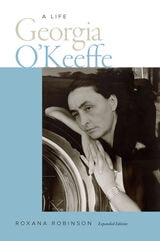
Georgia O'Keeffe
A LifeRoxana Robinson
Brandeis University Press, 2020
When Roxana Robinson’s definitive biography of O’Keeffe was first published in 1989, it received rave reviews and was named a New York Times Notable Book of the Year. This new edition features a new foreword by the author setting O’Keefe in an artistic context over the last thirty years since the book was first published, as well as previously unpublished letters of the young O’Keeffe to her lover, Arthur MacMahon. It also relates the story of Robinson’s own encounter with the artist. As interest in O’Keeffe continues to grow among museum-goers and scholars alike, this book remains indispensable for understanding her life and art.
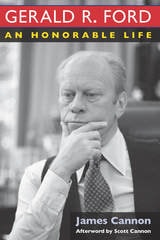
Gerald R. Ford
An Honorable LifeJames Cannon
University of Michigan Press, 2013
“Not since Harry Truman succeeded Franklin D. Roosevelt twenty-nine years earlier had the American people known so little about a man who had stepped forward from obscurity to take the oath of office as President of the United States.”
—from Chapter 4
This is a comprehensive narrative account of the life of Gerald Ford written by one of his closest advisers, James Cannon. Written with unique insight and benefiting from personal interviews with President Ford in his last years, Gerald R. Ford: An Honorable Lifeis James Cannon’s final look at the simple and honest man from the Midwest.
Gerard P. Kuiper and the Rise of Modern Planetary Science
Derek W. G. Sears
University of Arizona Press, 2019
Kuiper was an acclaimed astronomer of binary stars and white dwarfs when he accidentally discovered that Titan, the massive moon of Saturn, had an atmosphere. This turned our understanding of planetary atmospheres on its head, and it set Kuiper on a path of staggering discoveries: Pluto was not a planet, planets around other stars were common, some asteroids were primary while some were just fragments of bigger asteroids, some moons were primary and some were captured asteroids or comets, the atmosphere of Mars was carbon dioxide, and there were two new moons in the sky, one orbiting Uranus and one orbiting Neptune.
He produced a monumental photographic atlas of the Moon at a time when men were landing on our nearest neighbor, and he played an important part in that effort. He also created some of the world’s major observatories in Hawai‘i and Chile. However, most remarkable was that the keys to his success sprang from his wartime activities, which led him to new techniques. This would change everything.
Sears shows a brilliant but at times unpopular man who attracted as much dislike as acclaim. This in-depth history includes some of the twentieth century’s most intriguing scientists, from Harold Urey to Carl Sagan, who worked with—and sometimes against—the father of modern planetary science. Now, as NASA and other space agencies explore the solar system, they take with them many of the ideas and concepts first described by Gerard P. Kuiper.
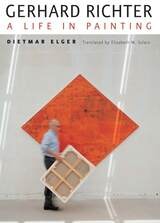
Gerhard Richter
A Life in PaintingDietmar Elger
University of Chicago Press, 2010
Gerhard Richter is one of the most important and influential artists of the post-war era. For decades he has sought innovative ways to make painting more relevant, often through a multifaceted dialogue with photography. Today Richter is most widely recognized for the photo-paintings he made during the 1960s that rely on images culled from mass media and pop culture. Always fascinated with the limits and uncertainties of representation, he has since then produced landscapes, abstractions, glass and mirror constructions, prints, sculptures, and installations.
Though Richter has been known in the United States for quite some time, the highly successful retrospective of his work at the MoMA in 2002 catapulted him to unprecedented fame. Enter noted curator Dietmar Elger, who here presents the first biography of this contemporary artist. Written with full access to Richter and his archives, this fascinating book offers unprecedented insight into his life and work. Elger explores Richter’s childhood in Nazi Germany; his years as a student and mural painter in communist East Germany; his time in the West during the turbulent 1960s and ’70s, when student protests, political strife, and violence tore the Federal Republic of Germany apart; and his rise to international acclaim during the 1980s and beyond.
Richter has always been a difficult personality to parse and the seemingly contradictory strands of his artistic practice have frustrated and sometimes confounded critics. But the extensive interviews on which this book is based disclose a Richter who is far more candid, personal, and vivid than ever before. The result is a book that will be the foundational portrait of this artist for years to come.
Germaine Dulac
A Cinema of SensationsTami Williams
University of Illinois Press, 2014
Best known for directing the Impressionist classic The Smiling Madame Beudet and the first Surrealist film The Seashell and the Clergyman, Germaine Dulac, feminist and pioneer of 1920s French avant-garde cinema, made close to thirty fiction films as well as numerous documentaries and newsreels. Through her filmmaking, writing, and cine-club activism, Dulac’s passionate defense of the cinema as a lyrical art and social practice had a major influence on twentieth century film history and theory.
In Germaine Dulac: A Cinema of Sensations, Tami Williams makes unprecedented use of the filmmaker's personal papers, production files, and archival film prints to produce the first full-length historical study and critical biography of Dulac. Williams's analysis explores the artistic and sociopolitical currents that shaped Dulac's approach to cinema while interrogating the ground breaking techniques and strategies she used to critique conservative notions of gender and sexuality. Moving beyond the director’s work of the 1920s, Williams examines Dulac's largely ignored 1930s documentaries and newsreels establishing clear links with the more experimental impressionist and abstract works of her early period.
This vivid portrait will be of interest to general readers, as well as to scholars of cinema and visual culture, performance, French history, women’s studies, queer cinema, in addition to studies of narrative avant-garde, experimental, and documentary film history and theory.
German Jerusalem
The Remarkable Life of a German-Jewish Neighborhood in the Holy CityThomas Sparr
Haus Publishing, 2024
In the 1920s, before the establishment of Israel, a group of German Jews settled in a garden city on the outskirts of Jerusalem. During World War II, their quiet community, nicknamed Grunewald on the Orient, emerged as both an immigrant safe haven and a lively expatriate hotspot, welcoming many famous residents including poet-playwright Else Lasker-Schüler, historian Gershom Scholem, and philosopher Martin Buber. It was an idyllic setting, if fraught with unique tensions on the fringes of the long-divided holy city. After the war, despite the weight of the Shoah, the neighborhood miraculously repaired shattered bonds between German and Israeli residents. In German Jerusalem, Thomas Sparr opens up the history of this remarkable community and the forgotten borderland they called home.

Gerrard Winstanley
The Digger's Life and LegacyJohn Gurney
Pluto Press, 2012
John Gurney reveals the hidden history of Winstanley and his movement. As part of the radical ferment which swept England at the time of the civil war, Winstanley led the Diggers in taking over land and running it as 'a common treasury for all' – provoking violent opposition from landowners. Gurney also guides us through Winstanley's writings, which are among the most remarkable prose writings of his age.
Gerrard Winstanley: The Digger's Life and Legacy is a must read for students of English history and all those seeking to re-claim the commons today.
Gerry Studds
America's First Openly Gay CongressmanMark Robert Schneider
University of Massachusetts Press, 2017
The defining moment of his career, however, came in 1983, when he was censured by the House for having had an affair with a page ten years previously. On the floor of Congress, Studds confessed to having behaved inappropriately and then courageously declared that he was a gay man—becoming the country's first openly gay member of Congress. Defying all expectations, Studds won reelection in a bruising campaign. For the rest of his career, he remained loyal to his constituents' concerns while also championing AIDS research and care, leading the effort in Congress to allow gays and lesbians to serve in the military, and opposing the Defense of Marriage Act. Once a deeply conflicted man, he ultimately found a balance between his public service and his private life, which included a happy, legally recognized marriage.
Gershom Scholem
An Intellectual BiographyAmir Engel
University of Chicago Press, 2017
As Engel shows, in his search for the truth of Jewish mysticism Scholem molded the vast literature of Jewish mystical lore into a rich assortment of stories that unveiled new truths about the modern condition. Positioning Scholem’s work and life within early twentieth-century Germany, Palestine, and later the state of Israel, Engel intertwines Scholem’s biography with his historiographical work, which stretches back to the Spanish expulsion of Jews in 1492, through the lives of Rabbi Isaac Luria and Sabbatai Zevi, and up to Hasidism and the dawn of the Zionist movement. Through parallel narratives, Engel touches on a wide array of important topics including immigration, exile, Zionism, World War One, and the creation of the state of Israel, ultimately telling the story of the realizations—and failures—of a dream for a modern Jewish existence.
Gershom Scholem
From Berlin to Jerusalem and BackNoam Zadoff
Brandeis University Press, 2017
Gertrud Kolmar
A Literary LifeDieter Kühn
Northwestern University Press, 2013
Linda Marianiello here translates into English for the first time Dieter Kühn’s highly praised and definitive biography of one of Germany’s greatest poets, Gertrud Kolmar. Kolmar carried German-language poetry to new heights, speaking truth in a time when many poets collapsed in the face of increasing Nazi repression. Born Gertrud Käthe Chodziesner in Berlin in 1894, she completed her first collection, Poems, in 1917. She took her pen name, Kolmar, from the name of the town where her family originated.
Kolmar’s third collection of poems appeared in 1938 but soon disappeared in the wake of the overall repression of Jewish authors. At the time, she served as secretary to her father, Ludwig Chodziesner, a prominent lawyer. In 1941, the Nazis compelled her to work in a German armaments factory. Even as a forced laborer, the strength of her poetic voice grew, perhaps reaching its highest level before her deportation to Auschwitz. From gentle nature verses to stirring introspection, these are poems in which we can still find ourselves today. Both she and her father died in Nazi concentration camps, he in 1942, she the following year. The translation of Dieter Kühn’s biography conveys the tragic, yet courageous, life of a great poet to an English-speaking audience.

Gertrude Stein - American Writers 10
University of Minnesota Pamphlets on American WritersFrederick J. Hoffman
University of Minnesota Press, 1961
Gertrude Stein - American Writers 10 was first published in 1961. Minnesota Archive Editions uses digital technology to make long-unavailable books once again accessible, and are published unaltered from the original University of Minnesota Press editions.
Get Your Elbow Off the Horn
Stories through the YearsJack R. Gannon
Gallaudet University Press, 2020
Many of his recollections are brief sketches that reveal much about being Deaf—and about being human. From reflecting on the difficult choices parents must make for their children, to recounting awkward communication exchanges, Gannon marries good humor with a poignant advocacy for sign language rights. His stories preserve and share Deaf American life and culture as he experienced it.
Get a Shot of Rhythm and Blues
The Arthur Alexander StoryRichard Younger
University of Alabama Press, 2000
The first book-length biography of an influential country/soul legend whose songs have been recorded by the Beatles, the Rolling Stones, and Bob Dylan.
Get a Shot of Rhythm and Blues chronicles the rise, fall, and rebirth of Arthur Alexander, an African American singer-songwriter whose music influenced many of the rock and soul musicians of the 1960s. Although his name is not well known today, Alexander's musical legacy is vast. His 1962 song "You Better Move On" was the first hit to emerge from the fledgling Muscle Shoals FAME studio in Alabama, and his fusion of country and soul and his heartfelt vocals on such songs as "Anna (Go to Him)" and "Every Day I Have to Cry" were revered by musicians including the Beatles, the Rolling Stones, and Bob Dylan, all of whom recorded his songs.
Alexander's story is a tragic one, with a brief, redemptive finale. His meteoric rise after the release of "You Better Move On" gave way to lean years caused both by his drug and alcohol abuse and by the mishandling of his career by producers and managers. In 1977, he quit the music business, but his music lived on. In 1992, Alexander returned to
the studio and recorded the critically praised album Lonely Just Like Me. Just three months after the album's release in March 1993, he suffered a heart attack in the offices of his music publisher in Nashville and died three days later.
In telling Alexander's story, Richard Younger captures the burgeoning music scenes in Muscle Shoals and Nashville during the 1960s and 1970s and recovers the life of a fascinating musician whose influence was international. Younger's account is enriched by his interviews with more than 200 artists, family members, and friends--such as Rick Hall, Billy Sherrill, Charlie McCoy, Chuck Jackson, Gerry Marsden, and Kris Kristofferson--and includes an abundance of never-before-seen photographs.
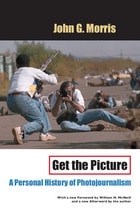
Get the Picture
A Personal History of PhotojournalismJohn G. Morris
University of Chicago Press, 2002
Find out in Get the Picture, a personal history of fifty years of photojournalism by one of the top journalists of the twentieth century. John G. Morris brought us many of the images that defined our era, from photos of the London air raids and the D-Day landing during World War II to the assassination of Robert Kennedy. He tells us the inside stories behind dozens of famous pictures like these, which are reproduced in this book, and provides intimate and revealing portraits of the men and women who shot them, including Robert Capa, Henri Cartier-Bresson, and W. Eugene Smith. A firm believer in the power of images to educate and persuade, Morris nevertheless warns of the tremendous threats posed to photojournalists today by increasingly chaotic wars and the growing commercialism in publishing, the siren song of money that leads editors to seek pictures that sell copies rather than those that can change the way we see the world.
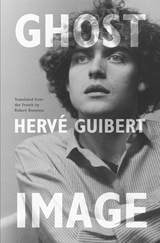
Ghost Image
Hervé Guibert
University of Chicago Press, 2014
Both a memoir and an exploration of the artistic process, Ghost Image not only reveals Guibert’s particular experience as a gay artist captivated by the transience and physicality of his media and his life, but also his thoughts on the more technical aspects of his vocation. In one essay, Guibert searches through a cardboard box of family portraits for clues—answers, or even questions—about the lives of his parents and more distant relatives. Rifling through vacation snapshots and the autographed images of long-forgotten film stars, Guibert muses, “I don’t even recognize the faces, except occasionally that of an aunt or great-aunt, or the thin, fair face of my mother as a young girl.” In other essays, he explains how he composes his photographs, and how—in writing—he seeks to escape and correct the inherent limits of his technique, to preserve those images lost to his technical failings as a photographer.
With strains of Jean Genet and recurring themes that speak to the work of contemporary artists across a range of media, Guibert’s Ghost Image is a beautifully written, melancholic ode to existence and art forms both fleeting and powerful—a unique memoir at the nexus of family, memory, desire, and photography.

Ghost Riders of Baghdad
Soldiers, Civilians, and the Myth of the SurgeDaniel A. Sjursen
University Press of New England, 2015
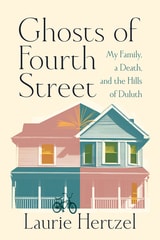
Ghosts of Fourth Street
My Family, a Death, and the Hills of DuluthLaurie Hertzel
University of Minnesota Press, 2026
An open, frank rumination on a brother’s death and its reverberations throughout a family
Every family has its stories and secrets. Laurie Hertzel’s family had more than its share. At an early age, Laurie, the seventh of the ten Hertzel children, took on the challenge of sorting them out. Not old enough to be one of the Big Kids, yet too old to be with the Three Little Kids, she spent most of her time alone, reading, wandering, and observing her family as they moved around her in their house in Duluth. Though her parents were not warm, there were moments of closeness in those years—gifts of Laura Ingalls Wilder’s Little House books and special trips to the dairy for a sundae—but everything shattered after the sudden death of Laurie’s oldest sibling, eighteen-year-old Bobby, when she was just nine years old.
Moving back and forth in time, Laurie reflects on Bobby’s death and what happens to a family’s story when no one can talk about a tragedy and its toll. In Ghosts of Fourth Street, readers witness how the apparition of memories, the shadow of needs unmet, and the spirit of a family once whole all linger long after the death of a child and brother. As Laurie shares her experiences, we see the emergence of her fascination with story and truth as she teaches herself to read and finds solace and inspiration in books amid the tensions and competing agendas within her big, complicated family.
With keen attention, candor, and grace, Laurie paints a vivid portrait of 1960s Duluth as she poignantly examines a family contending with grief and the fact that life steadily goes on—snow and school buses, Christmases and Thanksgivings, ice skating and tobogganing and climbing trees, with ghosts always lingering at the edges.
Retail e-book files for this title are screen-reader friendly.
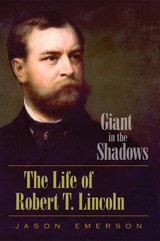
Giant in the Shadows
The Life of Robert T. LincolnJason Emerson
Southern Illinois University Press, 2012
University Press Books for Public and Secondary Schools, 2013 edition
Book of the Year by the Illinois State historical Society, 2013
Although he was Abraham and Mary Lincoln’s oldest and last surviving son, the details of Robert T. Lincoln’s life are misunderstood by some and unknown to many others. Nearly half a century after the last biography about Abraham Lincoln’s son was published, historian and author Jason Emerson illuminates the life of this remarkable man and his achievements in Giant in the Shadows: The Life of Robert T. Lincoln. Emerson, after nearly ten years of research, draws upon previously unavailable materials to offer the first truly definitive biography of the famous lawyer, businessman, and statesman who, much more than merely the son of America’s most famous president, made his own indelible mark on one of the most progressive and dynamic eras in United States history.
Born in a boardinghouse but passing his last days at ease on a lavish country estate, Robert Lincoln played many roles during his lifetime. As a president’s son, a Union soldier, an ambassador to Great Britain, and a U.S. secretary of war, Lincoln was indisputably a titan of his age. Much like his father, he became one of the nation’s most respected and influential men, building a successful law practice in the city of Chicago, serving shrewdly as president of the Pullman Car Company, and at one time even being considered as a candidate for the U.S. presidency.
Along the way he bore witness to some of the most dramatic moments in America’s history, including Robert E. Lee’s surrender at Appomattox Courthouse; the advent of the railroad, telephone, electrical, and automobile industries; the circumstances surrounding the assassinations of three presidents of the United States; and the momentous presidential election of 1912. Giant in the Shadows also reveals Robert T. Lincoln’s complex relationships with his famous parents and includes previously unpublished insights into their personalities. Emerson reveals new details about Robert’s role as his father’s confidant during the brutal years of the Civil War and his reaction to his father’s murder; his prosecution of the thieves who attempted to steal his father’s body in 1876 and the extraordinary measures he took to ensure it would never happen again; as well as details about the painful decision to have his mother committed to a mental facility. In addition Emerson explores the relationship between Robert and his children, and exposes the actual story of his stewardship of the Lincoln legacy—including what he and his wife really destroyed and what was preserved. Emerson also delves into the true reason Robert is not buried in the Lincoln tomb in Springfield but instead was interred at Arlington National Cemetery.
Meticulously researched, full of never-before-seen photographs and new insight into historical events, Giant in the Shadows is the missing chapter of the Lincoln family story. Emerson’s riveting work is more than simply a biography; it is a tale of American achievement in the Gilded Age and the endurance of the Lincoln legacy.
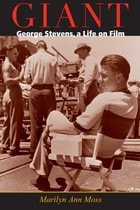
Giant
George Stevens, a Life on FilmMarilyn Ann Moss
University of Wisconsin Press, 2015
Moss documents Stevens’s role as a powerful director who often had to battle the heads of major studios to get his films made his way. She traces the four decades Stevens was a major Hollywood player and icon, from his earliest days at the Hal Roach Studios—where he learned to be a cameraman, writer, and director for Laurel and Hardy features—up to when his films made millions at the box office and were graced by actors such as Elizabeth Taylor, James Dean, Alan Ladd, and Montgomery Clift.
Gichigami Hearts
Stories and Histories from MisaabekongLinda LeGarde Grover
University of Minnesota Press, 2021
Award-winning author Linda LeGarde Grover interweaves family and Ojibwe history with stories from Misaabekong (the place of the giants) on Lake Superior
Long before there was a Duluth, Minnesota, the massive outcropping that divides the city emerged from the ridge of gabbro rock running along the westward shore of Lake Superior. A great westward migration carried the Ojibwe people to this place, the Point of Rocks. Against this backdrop—Misaabekong, the place of the giants—the lives chronicled in Linda LeGarde Grover’s book unfold, some in myth, some in long-ago times, some in an imagined present, and some in the author’s family history, all with a deep and tenacious bond to the land, one another, and the Ojibwe culture.
Within the larger history, Grover tells the story of her ancestors’ arrival at the American Fur Post in far western Duluth more than two hundred years ago. Their fortunes and the family’s future are inextricably entwined with tales of marriages to voyageurs, relocations to reservation lands, encounters with the spirits of the lake and wood creatures, the renewal of life—in myth and in art, the search for meaning in the transformations of our day is always vital. Finally, in one man’s struggles, age-old tribulations, the intergenerational traumas of extended families and communities, and a uniquely Ojibwe appreciation for the natural and spiritual worlds converge, forging the Ojibwe worldview and will to survive as his legacy to his descendants.
Blending the seen and unseen, the old and the new, the amusing and the tragic and the hauntingly familiar, this lyrical work encapsulates a way of life forever vibrant at the Point of Rocks.
Gideon Lincecum, 1793-1874
A BiographyBy Lois Wood Burkhalter
University of Texas Press, 1965
Gifts of Power
The Writings of Rebecca Jackson, Black Visionary, Shaker EldressJean M. Humez
University of Massachusetts Press, 1981
A free black woman in antebellum America, Rebecca Cox Jackson (1795–1871) was an independent itinerant preacher and religious visionary who founded a Shaker community in Philadelphia that survived her death by twenty-five years. Gifts of Power contains her complete extant writings, covering the period 1830 to 1864.
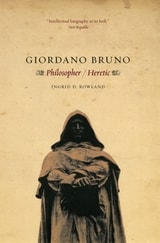
Giordano Bruno
Philosopher / HereticIngrid D. Rowland
University of Chicago Press, 2009
Giordano Bruno (1548–1600) is one of the great figures of early modern Europe, and one of the least understood. Ingrid D. Rowland’s biography establishes him once and for all as a peer of Erasmus, Shakespeare, and Galileo—a thinker whose vision of the world prefigures ours.
Writing with great verve and erudition, Rowland traces Bruno’s wanderings through a sixteenth-century Europe where every certainty of religion and philosophy has been called into question, and reveals how he valiantly defended his ideas to the very end, when he was burned at the stake as a heretic on Rome’s Campo de’ Fiori.
“A loving and thoughtful account of [Bruno’s] life and thought, satires and sonnets, dialogues and lesson plans, vagabond days and star-spangled nights. . . . Ingrid D. Rowland has her reasons for preferring Bruno to Copernicus, Tycho Brahe, Johannes Kepler, even Galileo and Leonardo, and they’re good ones.”—John Leonard, Harper’s
“Whatever else Bruno was, he was wild-minded and extreme, and Rowland communicates this, together with a sense of the excitement that his ideas gave him. . . . It’s that feeling for the explosiveness of the period, and [Rowland’s] admiration of Bruno for participating in it—indeed, dying for it—that is the central and most cherishable quality of the biography.”—Joan Acocella, New Yorker
“Rowland tells this great story in moving, vivid prose, concentrating as much on Bruno’s thought as on his life. . . . His restless mind, as she makes clear, not only explored but transformed the heavens.”—Anthony Grafton, New York Review of Books
“[Bruno] seems to have been an unclassifiable mixture of foul-mouthed Neapolitan mountebank, loquacious poet, religious reformer, scholastic philosopher, and slightly wacky astronomer.”—Anthony Gottlieb, New York Times Book Review
“A marvelous feat of scholarship. . . . This is intellectual biography at its best.”—Peter N. Miller, New Republic
“An excellent starting point for anyone who wants to rediscover the historical figure concealed beneath the cowl on Campo de’ Fiori.”—Paula Findlen, Nation
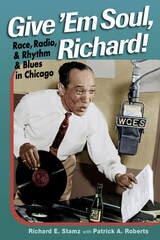
Give 'Em Soul, Richard!
Race, Radio, and Rhythm and Blues in ChicagoRichard E. Stamz with Patrick A. Roberts, Foreword by Robert Pruter
University of Illinois Press, 2010
As either observer or participant, radio deejay and political activist Richard E. Stamz witnessed every significant period in the history of blues and jazz in the last century. From performing first-hand as a minstrel in the 1920s to broadcasting Negro League baseball games in a converted 1934 Chrysler to breaking into Chicago radio and activist politics and hosting his own television variety show, the remarkable story of his life also is a window into milestones of African American history throughout the twentieth century.
Dominating the airwaves with his radio show "Open the Door, Richard" on WGES in Chicago, Stamz cultivated friendships with countless music legends, including Willie Dixon, Sonny Boy Williamson, Little Walter, Howlin' Wolf, Memphis Slim, and Leonard Chess. The pioneering Chicago broadcaster and activist known as "The Crown Prince of Soul" died in 2007 at the age of 101, but not before he related the details of his life and career to college professor Patrick A. Roberts. Give 'Em Soul, Richard! surrounds Stamz's memories of race records, juke joints, and political action in Chicago's Englewood neighborhood with insights on the larger historical trends that were unfolding around him in radio and American history.
Narrated by Stamz, this entertaining and insightful chronicle includes commentary by Roberts as well as reflections on the unlikely friendship and collaboration between a black radio legend and a white academic that resulted in one of the few existing first-hand accounts of Chicago's post-war radio scene.
Given Up for You
A Memoir of Love, Belonging, and BeliefErin O. White
University of Wisconsin Press, 2018
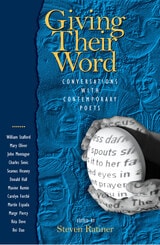
Giving Their Word
Conversations with Contemporary PoetsSteven Ratiner
University of Massachusetts Press, 2002
Based on a three-year series of interviews conducted by Steven Ratiner for the Christian Science Monitor, this book offers extended conversations with twelve of the most influential poets writing today. Their comments are wonderfully detailed, refreshingly honest, and provide the sort of intimate introduction to both poet and text that readers are rarely privileged to enjoy. Included are conversations with William Stafford, Mary Oliver, John Montague, Charles Simic, Seamus Heaney, Donald Hall, Maxine Kumin, Carolyn Forché, Martín Espada, Marge Piercy, Rita Dove, and Bei Dao. In the book's closing interview, Steven Ratiner makes a return visit to Donald Hall's New Hampshire farm shortly before the publication of Hall's collection Without, which focused on the death of his wife, poet Jane Kenyon.
Giving their word is what poets do; it is their stock-in-trade, their daily bread. In the hands of the most accomplished, a poet's words are transformed into a kind of window: looking inward toward the territory of memory, dream, personal mythology and opening out onto the landscape of the shared world where life and work are rooted. For each poet there is an intricate relationship between these two realms and poetry's third domain, the language that bridges both experiences and becomes the body of the poem. Giving Their Word shows us that the poet's fidelity to that relationship sustains his or her development over time, urges the writing toward new levels of discovery, and bestows on readers that most prized of commodities: a feeling of the authentic.
For poets, students of poetry, and that far-flung community of readers for whom the contemporary poem still provides a journey worth taking, this book will present a host of pleasures. Giving Their Word enlarges the frame through which we view the poet's text and yields significant insights into the craft and character of each of these writers.
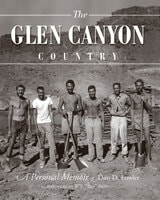
Glen Canyon Country, The
A Personal MemoirDon D Fowler
University of Utah Press, 2011
In his new book, The Glen Canyon Country, archaeologist Don D. Fowler shares the history of a place and the peoples who sojourned there over the course of several thousand years. To tell this story, he weaves his personal experience as a student working on the Glen Canyon Salvage Project with accounts of early explorers, geologists, miners, railroad developers, settlers, river runners, and others who entered this magical place. The book details the canyon’s story via historical and scientific summaries, biographical sketches, personal memoir, and previously unpublished photos of the land and its explorers.
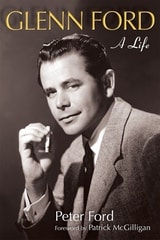
Glenn Ford
A LifePeter Ford
University of Wisconsin Press, 2011
Glenn Ford: A Life chronicles the volatile life, relationships, and career of the renowned actor, beginning with his move from Canada to California and his initial discovery of theater. It follows Ford’s career in diverse media—from film to television to radio—and shows how Ford shifted effortlessly between genres, playing major roles in dramas, noir, westerns, and romances.
This biography by Glenn Ford’s son, Peter Ford, offers an intimate view of a star’s private and public life. Included are exclusive interviews with family, friends, and professional associates, and snippets from the Ford family collection of diaries, letters, audiotapes, unpublished interviews, and rare candid photos. This biography tells a cautionary tale of Glenn Ford’s relentless infidelities and long, slow fade-out, but it also embraces his talent-driven career. The result is an authentic Hollywood story that isn’t afraid to reveal the truth.
Best Books for General Audiences, selected by the American Association of School Librarians
Best Books for General Audiences, selected by the Public Library Reviewers
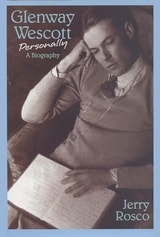
Glenway Wescott Personally
A BiographyJerry Rosco
University of Wisconsin Press, 2002
As a writer, Glenway Wescott (1901–1987) left behind several novels, including The Grandmothers and The Pilgrim Hawk, noted for their remarkable lyricism. As a literary figure, Wescott also became a symbol of his times. Born on a Wisconsin farm in 1901, he associated as a young writer with Hemingway, Stein, and Fitzgerald in 1920s Paris and subsequently was a central figure in New York’s artistic and gay communities. Though he couldn’t finish a novel after the age of forty-five, he was just as famous as an arts impresario, as a diarist, and for the company he kept: W. H. Auden, Christopher Isherwood, Marianne Moore, Somerset Maugham, E. M. Forster, Joseph Campbell, and scores of other luminaries.
In Glenway Wescott Personally, Jerry Rosco chronicles Wescott’s long and colorful life, his early fame and later struggles to write, the uniquely privileged and sometimes tortured world of artistic creation. Rosco sensitively and insightfully reveals Wescott’s private life, his long relationship with Museum of Modern Art curator Monroe Wheeler, his work with sex researcher Alfred Kinsey that led to breakthrough findings on homosexuality, and his kinship with such influential artists as Jean Cocteau, George Platt-Lynes, and Paul Cadmus.
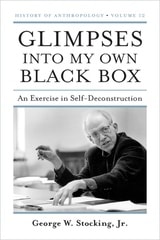
Glimpses into My Own Black Box
An Exercise in Self-DeconstructionGeorge W. Stocking
University of Wisconsin Press, 2010
George W. Stocking, Jr., has spent a professional lifetime exploring the history of anthropology, and his findings have shaped anthropologists’ understanding of their field for two generations. Through his meticulous research, Stocking has shown how such forces as politics, race, institutional affiliations, and personal relationships have influenced the discipline from its beginnings. In this autobiography, he turns his attention to a subject closer to home but no less challenging. Looking into his own “black box,” he dissects his upbringing, his politics, even his motivations in writing about himself. The result is a book systematically, at times brutally, self-questioning.
An interesting question, Stocking says, is one that arouses just the right amount of anxiety. But that very anxiety may be the ultimate source of Stocking’s remarkable intellectual energy and output. In the first two sections of the book, he traces the intersecting vectors of his professional and personal lives. The book concludes with a coda, “Octogenarian Afterthoughts,” that offers glimpses of his life after retirement, when advancing age, cancer, and depression changed the tenor of his reflections about both his life and his work.
This book is the twelfth and final volume of the influential History of Anthropology series.

Global Warming and Political Intimidation
How Politicians Cracked Down on Scientists as the Earth Heated UpRaymond S. Bradley
University of Massachusetts Press, 2011
In this powerful book, highly respected climate scientist Raymond Bradley provides the inside story from the front lines of the debate. In clear and direct language, he describes the tactics those in power have used to intimidate him and his colleagues part of a larger pattern of governmental suppression of scientific information, politics at the expense of empirically based discourse.
Speaking from his experience, Bradley exposes the fault lines in the global warming debate, while providing a concise primer on climate change. The result is a cautionary tale of how politics and science can become fatally intertwined.
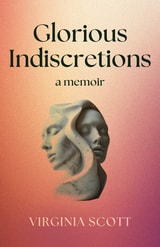
Glorious Indiscretions
Virginia M. Scott
University of Wisconsin Press, 2027
Spanning nearly six decades and three continents, this engrossing memoir traces one woman’s sexual awakening amid a reckoning with family secrets. After a teenage Virginia stumbles onto her father’s closeted homosexuality and rampant infidelity, she spends the next few years suppressing memories of the discovery and the traumatic night when she first realized her family had a secret. Simultaneously, the glamorous jet-setting existence she had known throughout her childhood—following her father’s business ventures in France, Kenya, and Denmark—comes to a sudden end.
Years later, when Virginia Scott confides in her father about her own lesbian awakening, he advises her to “live it on the side” as he had. The consequences of this advice are disastrous: A failed marriage results in loss of custody of her children, forcing her to reckon with her sexuality and its place in her life. Forthright and unflinching, Scott’s memoir follows her path from trauma to healing, from secrets to truth, and from denying to embracing her identity.
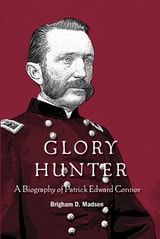
Glory Hunter
A Biography of Patric Edward ConnorBrigham Madsen
University of Utah Press, 1990
The life of Patrick Edward Connor serves as a half-century slice of western American history. After leaving New York City, where he had arrived at the age of twelve as a poor Irish immigrant, the nineteen-year-old youth joined the U.S. Army in 1839. He fought in the war with Mexico and then joined the gold rush in California until marrying and settling down in Stockton in 1854.
The Civil War found him volunteering again, this time as colonel of California troops sent to the Utah Territory to protect the mail lines from Indian attacks. Bitterly anti-Mormon, Connor spent the war years alternately engaging in a war of words with Brigham Young or in fighting Indians in northern Utah and present-day Wyoming. After the Civil War, ex-Major General Connor began mining operations in Utah and Nevada, ventures that went from boom to bust. He spent his final years in straitened financial circumstances.
Patrick Edward Connor was a “Man of the West,” possessing both its prejudices and its democratic, independent spirit. His greatest success lay as a military leader, and he would have agreed that he was made for war, not peace. He left an imprint on the history of the American West, remembered as the founder of Fort Douglas, as the “first gentile in Utah,” the “father of Utah mining,” and the “father of the Liberal Party in Utah.”
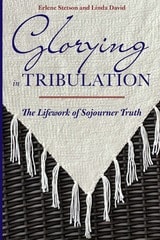
Glorying in Tribulation
The Lifework of Sojourner TruthErlene Stetson
Michigan State University Press, 1994
In Glorying in Tribulation, Stetson presents a new dimension of Sojourner Truth's character. Much of the information regarding this oft-quoted African American woman is either the stuff of legend or is in dispute. This important new biography takes both legend and fact and sets them into a larger historical context. The authors utilize archival sources, and other forms of direct and indirect evidence to create a better understanding of Truth. We see her victories as well as her defeats--we see her as a real person. Truth comes alive in the pages of this book through her poignant, prophetic words and we realize that what she spoke of in the nineteenth century is just as relevant to us today.
Glorying in Tribulation offers students, scholars, and teachers of American history and culture studies a comprehensive look and a new perspective on Truth's contribution to American history. It is a long-overdue, exciting interpretation of the meaning of Sojourner Truth's life.
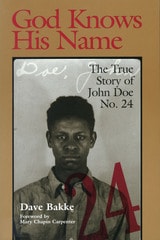
God Knows His Name
The True Story of John Doe No. 24David Bakke. Foreword by Mary Chapin Carpenter
Southern Illinois University Press, 2000
Police found John Doe No. 24 in the early morning hours of October 11, 1945, in Jacksonville, Illinois. Unable to communicate, the deaf and mute teenager was labeled “feeble minded” and sentenced by a judge to the nightmarish jumble of the Lincoln State School and Colony in Jacksonville. He remained in the Illinois mental health care system for over thirty years and died at the Sharon Oaks Nursing Home in Peoria on November 28, 1993.
Deaf, mute, and later blind, the young black man survived institutionalized hell: beatings, hunger, overcrowding, and the dehumanizing treatment that characterized state institutions through the 1950s. In spite of his environment, he made friends, took on responsibilities, and developed a sense of humor. People who knew him found him remarkable.
Award-winning journalist Dave Bakke reconstructs the life of John Doe No. 24 through research into a half-century of the state mental health system, personal interviews with people who knew him at various points during his life, and sixteen black-and-white illustrations. After reading a story about John Doe in the New York Times, acclaimed singer-songwriter Mary Chapin Carpenter wrote and recorded “John Doe No. 24” and purchased a headstone for his unmarked grave. She contributes a foreword to this book.
As death approached for the man known only as John Doe No. 24, his one-time nurse Donna Romine reflected sadly on his mystery. “Ah, well,” she said, “God knows his name.”
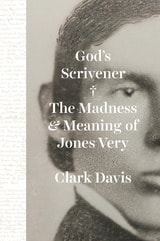
God's Scrivener
The Madness and Meaning of Jones VeryClark Davis
University of Chicago Press, 2023
In September of 1838, a few months after Ralph Waldo Emerson delivered his controversial Divinity School address, a twenty-five-year-old tutor and divinity student at Harvard named Jones Very stood before his beginning Greek class and proclaimed himself “the second coming.” Over the next twenty months, despite a brief confinement in a mental hospital, he would write more than three hundred sonnets, many of them in the voice of a prophet such as John the Baptist or even of Christ himself—all, he was quick to claim, dictated to him by the Holy Spirit.
Befriended by the major figures of the Transcendentalist movement, Very strove to convert, among others, Elizabeth and Sophia Peabody, Bronson Alcott, Nathaniel Hawthorne, and most significantly, Emerson himself. Though shocking to some, his message was simple: by renouncing the individual will, anyone can become a “son of God” and thereby usher in a millennialist heaven on earth. Clark Davis’s masterful biography shows how Very came to embody both the full radicalism of Emersonian ideals and the trap of isolation and emptiness that lay in wait for those who sought complete transcendence.
God’s Scrivener tells the story of Very’s life, work, and influence in depth, recovering the startling story of a forgotten American prophet, a “brave saint” whose life and work are central to the development of poetry and spirituality in America.
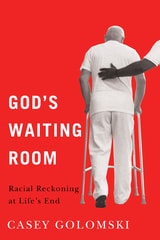
God's Waiting Room
Racial Reckoning at Life's EndCasey Golomski
Rutgers University Press, 2025
Winner of the Elliott P. Skinner Award from the Association of Africanist Anthropology, part of the American Anthropological Association
Third Place in the Victor Turner Prize in Ethnographic Writing from the American Anthropological Association's Society for Humanistic Anthropology
Can older racists change their tune, or will they haunt us further once they're gone? Rich in mystery and life's lessons, God's Waiting Room considers what matters in the end for older white adults and the younger Black nurses who care for them. An innovation in creative nonfiction, Casey Golomski's story of his years of immersive research at a nursing home in South Africa, thirty years after the end of apartheid, is narrated as a one-day, room-by-room tour. The story is told in breathtakingly intimate and witty conversations with the home's residents and nurses, including the untold story of Nelson Mandela's Robben Island prison nurse, and readers learn how ageism, sexism, and racism intersect and impact health care both in South Africa and in the United States, as well as create conditions in which people primed to be enemies find grace despite the odds.
Course or Book Club Reading and Discussion Guide (https://dhjhkxawhe8q4.cloudfront.net/rup-wp-v2/wp-content/uploads/2025/02/04135941/gods-waiting-room_reading-questions.pdf)
For copyright reasons, this edition is not available in the South African Development Community and Kenya.
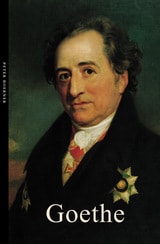
Goethe
Peter Boerner
Haus Publishing, 2013
An exceptionally prolific and versatile writer, Goethe produced important works covering a range of genres. As a young man, he composed pastoral plays in the style of the waning Rococco, was an early proponent of the avant-garde Sturm und Drang movement, and became a literary superstar with The Sorrows of Young Werther, in which a young man’s unrequited love culminates in tragedy. In his classic play Faust, which evolved over a sixty-year period, he created one of the best-known versions of the legend and introduced the prototype of the romantic hero. A scientist active in various fields, including botany and the theory of colors, Goethe also pondered issues of evolution well before Darwin. In Boerner’s illustrated biography, Goethe’s impressive oeuvre comes to vibrant life.
A major contribution to the English-language literature on Goethe, this is a beautiful and accessible introduction to one of history’s foremost geniuses.
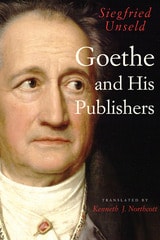
Goethe and His Publishers
Siegfried Unseld
University of Chicago Press, 1996
Goethe and His Publishers organizes for the first time the myriad details of Goethe's career in print. Director of the German publishing company Suhrkamp Verlag, Siegfried Unseld brings a singular perspective to this biography, focusing our attention on an essential component of Goethe's literary endeavors: his relationship to his publishers. Carefully examining each work, Unseld covers the range of Goethe's oeuvre, from first anonymous publications to eventual monumental editions brought out by Johann Friedrich Cotta, the most renowned publisher of his day.
Unseld sifts through the rich correspondence between Goethe and his publishers, as well as letters to and from friends, colleagues, and contemporaries. Analyzing publishing contracts, draft contracts, and historical documents, Unseld reveals the tremendous energy Goethe exerted on behalf of his manuscripts. During negotiations he was sometimes circumspect and reserved, other times demanding and assertive. These exchanges not only shed new light on Goethe's complex character but also show how he changed the author's role in the publishing process. Thus, this work offers a penetrating study on the intricate and many-tiered relations between author and publisher, then and today.
Goethe and His Publishers celebrates Goethe's works, his life, and his times, from the viewpoint of a publisher today. Written by an individual who has devoted much of his life to the study of the poet whom he reveres, such a personal approach not only forms an excellent introduction to Goethe's work but helps restore Goethe to his rightful place in the world of letters.
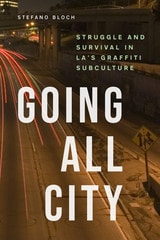
Going All City
Struggle and Survival in LA's Graffiti SubcultureStefano Bloch
University of Chicago Press, 2019
In the age of commissioned wall murals and trendy street art, it’s easy to forget graffiti’s complicated and often violent past in the United States. Though graffiti has become one of the most influential art forms of the twenty-first century, cities across the United States waged a war against it from the late 1970s to the early 2000s, complete with brutal police task forces. Who were the vilified taggers they targeted? Teenagers, usually, from low-income neighborhoods with little to their names except a few spray cans and a desperate need to be seen—to mark their presence on city walls and buildings even as their cities turned a blind eye to them.
Going All City is the mesmerizing and painful story of these young graffiti writers, told by one of their own. Prolific LA writer Stefano Bloch came of age in the late 1990s amid constant violence, poverty, and vulnerability. He recounts vicious interactions with police; debating whether to take friends with gunshot wounds to the hospital; coping with his mother’s heroin addiction; instability and homelessness; and his dread that his stepfather would get out of jail and tip his unstable life into full-blown chaos. But he also recalls moments of peace and exhilaration: marking a fresh tag; the thrill of running with his crew at night; exploring the secret landscape of LA; the dream and success of going all city.
Bloch holds nothing back in this fierce, poignant memoir. Going All City is an unflinching portrait of a deeply maligned subculture and an unforgettable account of what writing on city walls means to the most vulnerable people living within them.
Going Away to Think
Engagement, Retreat, and Ecocritical ResponsibilityScott Slovic
University of Nevada Press, 2008
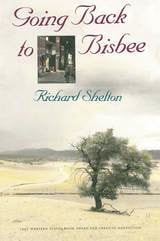
Going Back to Bisbee
Richard Shelton
University of Arizona Press, 1992
Couched within the narrative of his journey are passages revealing Shelton's deep familiarity with the region's natural and human history. Whether conveying the mystique of tarantulas or describing the mountain-studded topography, he brings a poet's eye to this seemingly desolate country. His observations on human habitation touch on Tombstone, "the town too tough to die," on ghost towns that perhaps weren't as tough, and on Bisbee itself, a once prosperous mining town now an outpost for the arts and a destination for tourists. What he finds there is both a broad view of his past and a glimpse of that city's possible future.
Going Back to Bisbee explores a part of America with which many readers may not be familiar. A rich store of information embedded in splendid prose, it shows that there are more than miles on the road to Bisbee.
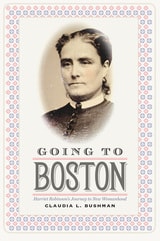
Going to Boston
Harriet Robinson's Journey to New WomanhoodClaudia L. Bushman
University Press of New England, 2017
Going to Cincinnati
A History of the Blues in the Queen CitySteven C. Tracy
University of Illinois Press, 2025