Results by title
2706 books match the query 'European' and 54 start with g

Guillaume Tell
Opera in Four Acts by Etienne de Jouy and Hippolyte BisGioachino Rossini
University of Chicago Press, 1992

Guillermo Cabrera Infante
Two Islands, Many WorldsBy Raymond D. Souza
University of Texas Press, 1996
A native Cuban who has lived in London since 1966, Guillermo Cabrera Infante is, in every sense, a multilingual and multicultural author. Equally at ease in both Spanish and English, he has distinguished himself with daring and innovative novels, essays, short stories, and film scripts written in both languages. His work has won major literary awards in France, Italy, and Spain, as well as a Guggenheim fellowship in the United States.
This biography is the first comprehensive exploration of the life and works of Guillermo Cabrera Infante. Drawing on wide-ranging interviews with the author and his family and friends, as well as extensive study of both published and unpublished works, Raymond D. Souza creates an intimate portrait of Cabrera Infante and the cultural and political milieus that shaped his writing, including Three Trapped Tigers (Tres tristes tigres), View of Dawn in the Tropics (Vista del amanecer en el trópico), Infante's Inferno (La Habana para un Infante difunto), Holy Smoke, A Twentieth Century Job (Un oficio del siglo XX), Writes of Passage (Así en la paz como en la guerra), and Mea Cuba.
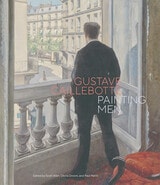
Gustave Caillebotte
Painting MenScott Allan
J. Paul Getty Trust, The, 2024
More than any other French Impressionist, painter Gustave Caillebotte (1848–1894) observed and depicted the many men in his life, including his brothers and friends, employees, and the workers and bourgeois in his Parisian neighborhood. Male subjects feature prominently in some of his best-known works, such as The Floor Scrapers, Man at His Bath, Young Man at His Window, Boating Party, and Paris Street, Rainy Day. The originality of his paintings of men is fully explored for the first time in this catalogue, published to accompany a major international exhibition co-organized by the J. Paul Getty Museum, Musée d’Orsay, and the Art Institute of Chicago.
Alongside paintings, drawings, and photographs, as well as an appendix featuring maps and new biographical research that sheds light on Caillebotte’s social network, this volume includes historically grounded thematic essays by curators and leading scholars. By exploring the complex and varied facets of Caillebotte’s identity—as son, brother, soldier, bachelor, amateur, sportsman, and so on—these essays pose questions of identity, leaving space for ambiguous and fluid expressions of gender and masculinity—for both Caillebotte and the larger late nineteenth-century French world.
This volume is published to accompany an exhibition on view at the Musée d’Orsay from October 8, 2024, to January 19, 2025, J. Paul Getty Museum at the Getty Center from March 25 to May 25, 2025, and The Art Institute of Chicago from June 29 to October 5, 2025.

Guy of Warwick
Edited by William B. Todd
University of Texas Press, 1968
The story of Sir Guy, once as familiar as the tales of King Arthur, is now largely forgotten.
Originally composed about 1240 A.D., this heroic romance early circulated in countless manuscripts, first in poetic, then in expanded prose form. Later, in 1525, the extended version was printed in French, and later still, in 1821, it was rendered into English. That last essential act unfortunately served little purpose, since the translation was thereafter available only to successive descendants of the family that prepared it. In 1959, however, The University of Texas acquired this unique translation, followed by a copy of the rare 1525 issue in 1963, and with both texts rejoined now offers, through William B. Todd, one final service: an edition for present readers.
So rescued from oblivion, Guy of Warwick emerges as a grand exemplum of chivalric conduct. Perhaps even more than Arthur, or Launcelot, or Galahad, the hero is a very proper knight, displaying at once all the mundane attributes of nobility: unswerving loyalty to kin, kith, and king; the ready rescue of damsels in distress; the prompt dispatch of dragons, giants, or other enemies of the realm—and in aftertime exhibiting also all the spiritual qualities of true gentility: defense of the faith against every infidel, mortification of the flesh, and final withdrawal to a hermitage. Thus Guy may rightly deserve not only his early accolade as the "Hercules of England" but also some measure of the tribute usually reserved for a patron saint. However regarded, this knight's exploits must necessarily rank as one of the great "matters of Britain" and again become an essential part of Western cultural heritage.