Results by title
3258 books match the query 'Performing Arts' and 65 start with g
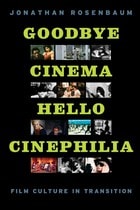
Goodbye Cinema, Hello Cinephilia
Film Culture in TransitionJonathan Rosenbaum
University of Chicago Press, 2010
The esteemed film critic Jonathan Rosenbaum has brought global cinema to American audiences for the last four decades. His incisive writings on individual filmmakers define film culture as a diverse and ever-evolving practice, unpredictable yet subject to analyses just as diversified as his own discriminating tastes. For Rosenbaum, there is no high or low cinema, only more interesting or less interesting films, and the pieces collected here, from an appreciation of Marilyn Monroe’s intelligence to a classic discussion on and with Jean-Luc Godard, amply testify to his broad intellect and multi-faceted talent. Goodbye Cinema, Hello Cinephilia gathers together over fifty examples of Rosenbaum’s criticism from the past four decades, each of which demonstrates his passion for the way we view movies, as well as how we write about them. Charting our changing concerns with the interconnected issues that surround video, DVDs, the Internet, and new media, the writings collected here also highlight Rosenbaum’s polemics concerning the digital age. From the rediscovery and recirculation of classic films, to the social and aesthetic impact of technological changes, Rosenbaum doesn’t disappoint in assembling a magisterial cast of little-known filmmakers as well as the familiar faces and iconic names that have helped to define our era.
As we move into this new decade of moviegoing—one in which Hollywood will continue to feel the shockwaves of the digital age—Jonathan Rosenbaum remains a valuable guide. Goodbye Cinema, Hello Cinephilia is a consummate collection of his work, not simply for fans of this seminal critic, but for all those open to the wide variety of films he embraces and helps us to elucidate.
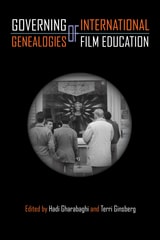
Governing Genealogies of International Film Education
Hadi Gharabaghi and Terri Ginsberg
Temple University Press, 2026
The editors of and contributors to Governing Genealogies of International Film Education offer a critical historiographic understanding of governmentalized film education during the Cold War. Chapters examine the production of hygiene and cultural films in Travancore, India during the postcolonial period, and Michigan State University’s documentary collaboration with Iran during the 1970s, among other topics, elucidating cinema’s deployment as a state apparatus and its implications for global cultures, subject positions, and social relations.
Governing Genealogies of International Film Education investigates this distinct modality of cultural production and policy to shed necessary light on the ideological overdetermination of institutionalized film education as well as on audiovisual education as an international academic discipline. The contributors show how governmentalized film education has taught American exceptionalism, hegemony, and colonialism. They also theorize about and provide methodological examples of how film archives and film studies have framed prevailing understandings of cinema’s role in American and world history.
Contributors: Kaveh Askari, Zoë Druick, Bindu Menon Mannil, Wissam Mouawad, and the editors
Graceful Errors
Pindar and the Performance of PraiseHilary Mackie
University of Michigan Press, 2003
Reading Pindar's poems with their public performance in mind, Hilary Mackie suggests that the poet was forced to tread a precarious path: weighing the interests of various groups of audience members against one another, balancing praise of the victorious athlete with praise of the deeds of mythic heroes, and catering at the same time to an uncertain future. Mackie's new approach illuminates apparent contradictions in the poet's pronouncements by bringing to the fore the variety of messages conveyed in his wishes and prayers. Her innovative examination of the moment-to-moment dynamic between Pindar and his audience shows that the poet's performance often contained one message for the victor and his family, and quite another for the gods.
Graceful Errors significantly changes our perspective on Pindar's work, providing a lucid appreciation of Pindaric poetry that takes into account the oral context of these poems' performance. It will be of interest not only to classicists but also to scholars and students interested in oral performance, the social function of poetry, and the role and status of poets in traditional cultures, whether ancient or modern.
Hilary Mackie is Associate Professor of Classics at Rice University.
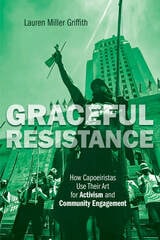
Graceful Resistance
How Capoeiristas Use Their Art for Activism and Community EngagementLauren Miller Griffith
University of Illinois Press, 2023
Capoeira began as a martial art developed by enslaved Afro-Brazilians. Today, the practice incorporates song, dance, acrobatics, and theatrical improvisation—and leads many participants into activism.
Lauren Miller Griffith’s extensive participant observation with multiple capoeira groups informs her ethnography of capoeiristas--both individuals and groups--in the United States. Griffith follows practitioners beyond their physical training into social justice activities that illuminate capoeira’s strong connection to resistance and subversion. As both individuals and communities of capoeiristas, participants march against racial discrimination, celebrate Martin Luther King Jr. Day and Juneteenth, organize professional clothing drives for job seekers, and pursue economic and environmental justice in their neighborhoods. For these people, capoeira becomes a type of serious leisure that contributes to personal growth, a sense of belonging, and an overall sense of self, while also imposing duties and obligations.
An innovative look at capoeira in America, Graceful Resistance reveals how the practicing of an art can catalyze action and transform communities.
Grassroots Theater
A Search for Regional Arts in AmericaRobert Gard; With a Foreword by David H. Stevens and a new Introduction by Maryo Gard Ewell
University of Wisconsin Press, 1999
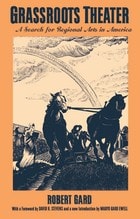
Robert Gard’s timeless book is a moving account of one man’s struggle to bring his dream of community-building through creative theater to citizens around the country. He traveled across America—from New York’s Finger Lakes to the prairies of Alberta, Canada, to the backwoods of northern Wisconsin—discovering and nurturing the folklore, legends, history, and drama of the region. He talked to ballad singers, painters, the tellers of tall tales, and farm women, whose poetry and painting reflected the elemental violence of nature and quiet joys of neighborliness. Grassroots Theater reminds us that an individual’s creative vision transcends technology, current events, and changing demographics.
This reprint of Grassroots Theater was generously funded by the Robert E. Gard Wisconsin Idea Foundation, an affiliate of the Wisconsin Academy of Sciences, Arts & Letters.
Greasepaint Puritan
Boston to 42nd Street in the Queer Backstage Novels of Bradford RopesMaya Cantu
University of Michigan Press, 2024
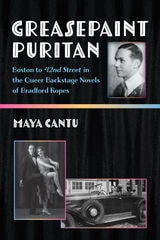
Greasepaint Puritan aims to find out and reclaim his story. Descended from Mayflower Pilgrims, Ropes rebelled against the “Proper Bostonian” life, in a career that touched upon the Jazz Age, American vaudeville, and theater censorship. We follow Ropes’s successful career as both a performer and the author of the trilogy of backstage novels: 42nd Street, Stage Mother, and Go Into Your Dance. Populated by scheming stage mothers, precocious stage children, grandiose bit players, and tart-tongued chorines, these novels centered on the lives and relationships of gay men on Broadway during the Jazz Age and Prohibition era. Rigorously researched, Greasepaint Puritan chronicles Ropes’s career as a successful screenwriter in 1930s and ’40s Hollywood, where he continued to be a part of a dynamic gay subculture within the movie industry before returning to obscurity in the 1950s. His legacy lives on in the Hollywood and Broadway incarnations of 42nd Street—but Greasepaint Puritan restores the “forgotten melody” of the man who first envisioned its colorful characters.
Great Lengths
Seven Works of Marathon TheaterJonathan Kalb
University of Michigan Press, 2013
"Reading this book is certainly a vigorous experience. Kalb's sense of nuance, unpredictability, and the complexity of perception brings these productions to life. He is our surrogate, our scapegoat even, enduring the length of these productions so that he can convey the essence of their power."
---Stanton B. Garner, Jr., University of Tennessee
"Jonathan Kalb takes us on a tour of monumental theater events, which flaunt the rules of economy, Aristotelian and otherwise. Kalb captures these unwieldy marathon productions by skillfully mixing personal experience and scholarly analysis. I read this engaging book in a single sitting---and came away ready to join the first theater marathon I could find."
---Martin Puchner, Harvard University
"Jonathan Kalb's Great Lengths leaps to the head of any class in theatre history. Rich with critical perspective of 'marathon' works by Peter Brook, Tony Kushner, Robert Wilson, and others, and written with panache and lucidity, Kalb's book is filled with suspense as he describes and demystifies more than the post-modern and post-dramatic haunting recent theatre. This is history as present event, embracing the Greeks, Shakespeare, and even Charles Dickens."
---Gordon Rogoff, Yale University
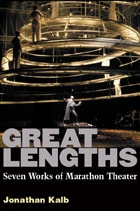
We know that size matters in many areas of human endeavor, but what about works of the imagination? Why do some dramatic creations extend to five hours or more, and how does their extreme length help them accomplish extraordinarily ambitious aims? In Great Lengths, theater critic and scholar Jonathan Kalb addresses these and other questions through a close look at seven internationally prominent theater productions, including Tony Kushner's Angels in America, Robert Wilson's Einstein on the Beach, and the Royal Shakespeare Company's Nicholas Nickleby. This is a book about extreme length, monumental scope, and intensive immersion in the theater in general, written by a passionate spectator reflecting on selected pinnacles of his theatergoing over thirty years.
The book's examples, deliberately chosen for their diversity, range from adapted novels and epics, to dramatic chronicles with macrohistorical and macropolitical implications, to stagings of super-size classic plays, to "postdramatic" works that negotiate the border between life and art. Kalb reconstructs each of the works, re-creating the experience of seeing it while at the same time explaining how it maintained attention and interest over so many hours, and then expanding the scope to embrace a wider view and ask broader questions. The discussion of Nicholas Nickleby, for example, considers melodrama as a basic tool of theatrical communication, and the section on Peter Brook's The Mahabharata explores the ethical problems surrounding theatrical exoticism. The chapter on Einstein on the Beach grows into a reflection on the media-age status of the much-debated Gesamtkunstwerk (or "total artwork") and a reassessment of the long avant-gardist tradition of challenging the primacy of rational language in theater. The essay on Peter Stein's Faust I + II becomes a reflection on the interpretive role of theater directors and the theatrical viability of antitheatrical closet drama. Great Lengths thus offers a remarkable panorama of the surprisingly broad field of contemporary marathon theater---an art form that diverse audiences of savvy, screen-weaned spectators continue to seek out, for the increasingly rare experiences of awe, transcendence, and sustained immersion that it provides.
Great Lengths will appeal to general readers as well as theater specialists. It situates the chosen productions in various historical and critical contexts and engages with the many lively scholarly debates that have swirled around them. At the same time, it uses the productions as springboards for wide-ranging reflections on the basic purpose and enduring power of theater in an attention-challenged, media-saturated era.

Greek Cinema
Texts, Histories, IdentitiesEdited by Lydia Papadimitriou and Yannis Tzioumakis
Intellect Books, 2012
Covering the silent era to the present, this wide-ranging collection of essays examines Greek cinema as an aesthetic, cultural, and political phenomenon with the potential to appeal to a diverse range of audiences. Using a range of methodological tools, the authors investigate the ever-shifting forms and meanings at work within Greece’s national cinema and locate it within the booming interdisciplinary study of European cinema at large. Designed for undergraduate courses in film studies, this well-researched volume fills a substantial gap in the market for critical works on Greek cinema in English.
Green Documentary
Environmental Documentary in the 21st CenturyHelen Hughes
Intellect Books, 2014

Greenwich Village 1963
Avant-Garde Performance and the Effervescent BodySally Banes
Duke University Press, 1993
A leading writer on cultural history, Banes draws a vibrant portrait of the artists and performers who gave the 1963 Village its exhilarating force, the avant-garde whose interweaving of public and private life, work and play, art and ordinary experience, began a wholesale reworking of the social and cultural fabric of America. Among these young artists were many who went on to become acknowledged masters in their fields, including Andy Warhol, John Cage, Yoko Ono, Yvonne Rainer, Lanford Wilson, Sam Shepard, Brian de Palma, Harvey Keitel, Kate Millet, and Claes Oldenburg. In live performance--Off-Off Broadway theater, Happenings, Fluxus, and dance--as well as in Pop Art and underground film, we see this generation of artists laying the groundwork for the explosion of the counterculture in the late 1960s and the emergence of postmodernism in the 1970s. Exploring themes of community, freedom, equality, the body, and the absolute, Banes shows us how the Sixties artists, though shaped by a culture of hope and optimism, helped to galvanize a culture of criticism and change. As 1963 came to define the Sixties, so this vivid account of the year will redefine a crucial generation in recent American history.
Groove Tube
Sixties Television and the Youth RebellionAniko Bodroghkozy
Duke University Press, 2001
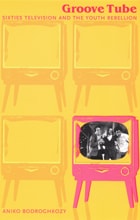
Bodroghkozy argues that, in order to woo an increasingly lucrative baby boomer audience, television had to appeal to the social and political values of a generation of young people who were enmeshed in the hippie counterculture, the antiwar movement, campus protests, urban guerilla action—in general, a culture of rebellion. She takes a close look at the compromises and negotiations that were involved in determining TV content, as well as the ideological difficulties producers and networks faced in attempting to appeal to a youthful cohort so disaffected from dominant institutions. While programs that featured narratives about hippies, draft resisters, or revolutionaries are examined under this lens, Groove Tube doesn’t stop there: it also examines how the nation’s rebellious youth responded to these representations. Bodroghkozy explains how, as members of the first “TV generation,” some made sense of their societal disaffection in part through their childhood experience with this powerful new medium.
Groove Tube will interest sociologists, American historians, students and scholars of television and media studies, and others who want to know more about the 1960s.

Grounding Practice
Dancing Haiti on Tè GliseDasha A. Chapman
University of Michigan Press, 2027
Grounding Practice: Dancing Haiti on Tè Glise tracks the responsive physical techniques Haitian dancers devised for navigating precarity, making place, and igniting repair in the decade following the 2010 earthquake. Via the concept “grounding practice,” which connotes the powerful community building and placemaking made possible by the teaching and practice of Haitian folkloric dance, this interdisciplinary study illustrates how the embodied labor of revitalizing traditions took on increasing relevance as vital reparative worldmaking amidst instability, or tè glise–—Haitian Creole for sliding land or slippery ground.
The dancers in Grounding Practice regenerate understandings of Haitian dance’s potential for fomenting decolonial consciousness, meaningfully sustaining African-derived culture, birthing new social relations, activating the queer potentials of tradition, and ultimately making place. Through ethnography and vivid descriptions, Dasha A. Chapman’s attention to embodied knowledge illuminates how movement practice operates as a site of theorization—wherein not just subjectivity, but also concepts of sovereignty, relation, and futurity, are articulated through the body. Paying homage to important forebears yet moving us beyond static narratives, this study brings our understanding of Haitian dance—and Haiti—through expansive landscapes into the contemporary.
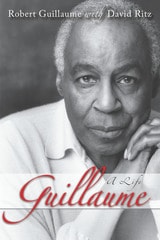
Guillaume
A LifeRobert Guillaume & David Ritz
University of Missouri Press, 2002
Guillaume: A Life is the autobiography of esteemed Broadway, Hollywood, and television star Robert Guillaume. Ten months after suffering a stroke, Guillaume—perhaps best known as television’s Benson—began this autobiography with award-winning author and collaborator David Ritz.
The book goes beyond the recounting of a long and successful career to examine the forces that shaped the man: family, religion, race, and class. Startlingly candid and disarmingly self-aware, Guillaume seeks to know and understand himself, his treatment of the women in his life, and the choices he made along the way. He pursues the truth, however painful it may be, says Ritz, guided by two questions, “Who the hell am I?” and “What made me do what I did?”
Born in St. Louis in 1927 to a young, abused, unstable mother, and reared by a strong, hardworking grandmother, Robert Guillaume managed to move from the poverty and adversity of his youth to a rich, full career as an actor and a singer. Fierce determination and sharp focus enabled this man born to hardship and racial discrimination to study, learn, cultivate his natural talents, and succeed at the performance career he pursued with a vengeance. Guillaume first performed in the strict Catholic schools and churches to which his grandmother, who understood that education would be the key to any success he might achieve, sent him. There his love of classical music was nurtured, and he was encouraged to perform.
From a child longing for his mother’s love to a man unsure of the meaning of love for many of the women in his life, from a young performer struggling to succeed on Broadway and in Hollywood to a grief-stricken father watching his son die of AIDS, Robert Guillaume tells what it was like to realize celebrity and what he sacrificed in the process. Readers will savor the success story of this artist who achieved great recognition and fame, but who never lost sight of his beginnings. Appealing to all audiences, Guillaume is a revealing and poignant autobiography of an extraordinary and distinguished American thespian.

Guilty Pleasures
Feminist Camp from Mae West to MadonnaPamela Robertson
Duke University Press, 1996
Robertson grounds her theoretical discussion of female performance and spectatorship in detailed studies of figures such as Mae West, Joan Crawford, and Madonna. She locates these figures in turn within a tradition of feminist camp—a female form of aestheticism related to masquerade and rooted in burlesque, parallel to but different from gay male camp. Through analyses of films from Gold Diggers of 1933 to Johnny Guitar, as well as video and television, Robertson shows how the gold digger is to feminist camp what the dandy is to gay male camp—its original personification and defining voice. Set against a backdrop of social history, her analysis demonstrates that feminist camp flourishes during periods of antifeminist backlash in America, and that it reflects a working-class sensibility particularly attuned to changing attitudes toward women’s work and sexuality.
Appealing to a wide range of scholars spanning the fields of film and mass culture, feminism, gay/lesbian/queer studies, and cultural studies, Guilty Pleasures will also attract an audience of general readers interested in camp and popular culture.
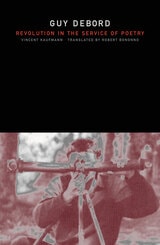
Guy Debord
Revolution in the Service of PoetryVincent Kaufmann
University of Minnesota Press, 2010
Instead of providing a conventional day-to-day account of Debord's life, Kaufmann deftly locates his subject within the historical and intellectual context of the radical social, political, and artistic movements in which he participated. He traces Debord's development as an intellectual: his involvement with the lettrist movement in the early 1950s, his central role in the Situationist International from 1957 to 1971 and in the events of May 1968, and the productive and frequently misunderstood period between the dissolution of the situationists and his suicide, during which time Debord clarified the rules of his war against inauthenticity.
As Kaufmann makes clear, for Debord political thought and action were inseparable from aesthetics and poetic expression. Whether envisioning the recovery of a lost, protocommunist age of authenticity and transparency in The Society of the Spectacle or critically assessing the possibility of revolution against postmodern capitalism two decades later, Debord advocated and practiced an art of defiance, a concurrently martial and melancholic poetics. Avoiding the mythologies about Debord that both admirers and critics have cultivated, Kaufmann provides a groundbreaking and generous assessment of Debord and his uncompromising struggle against a corrupt civilization.