Results by title
3785 books match the query 'Poetry' and 82 start with g
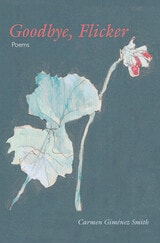
Goodbye, Flicker
PoemsCarmen Giménez Smith
University of Massachusetts Press, 2012
This distinctive collection introduces a new type of mythmaking, daring in its marriage of fairy tale tropes with American mundanities. Conspiratorial, Goodbye, Flicker describes the interior life of a girl whose prince is a deadbeat dad and whose escape into a fantasy world is also an escape into language, beauty, and the surreal.

Goodbye, Silver Sister
PoemsJeanne Foster
Northwestern University Press, 2015
Goodbye, Silver Sister, Jeanne Foster’s second collection of poems, opens with a series of poems about a girl coming of age in pre-Katrina New Orleans, informed and haunted by the magic of the city. The powerful Pearl River forms the dividing line between adulthood and other worlds, both geographic and existential: “death, divorce, and the thousand other ways I would lose faith in the breastplate of love.”
The collection is also an elegy for and tribute to the poet’s parents, who met in the WPA Artists’ Project. Through her poems she keeps them alive and is also able to say good-bye. Like the work of her mentor, James Wright, these poems reach far beyond the personal in their willingness to look at the unseemly sides of being human within the context of a profound spiritual search.
Goodnight, Gracie
Lloyd Schwartz
University of Chicago Press, 1992
"Like a latter-day Whitman, an addict of contraries or its victim, Schwartz sets out to understand that network in as many ways as his imagination allows. Once you get the hang of what Schwartz is tuning into, you can't stop tuning into it yourself. . . .A master of timing."—Robyn Selman, Voice Literary Supplement
"[Schwartz's] poems seem to think in musical structures; he hears those evanescent snatches of conversation that compose our emotional lives, recognizes their fluid importance, and organizes them for us."—Stephen Tapscott, Boston Phoenix

Gossip & Metaphysics
Russian Modernist Poems & ProseEdited by Katie Farris, Ilya Kaminsky, and Valzhyna Mort
Tupelo Press, 2014

Grabbing the Beast by the Throat
Pamela R. Anderson-Bartholet
Michigan State University Press, 2027
Grabbing the Beast by the Throat is a gripping volume of historical fiction in poetry that follows the life of Pavel Svoboda, a Czechoslovakian man whose life turns upside down when Nazi Germany invades Czechoslovakia and brings Europe to the brink of World War II. Readers witness Pavel’s evolution from a carefree college student with a close-knit family into a resistance fighter who opposes Hitler’s brutal regime. When other college students are slaughtered for protesting the occupation and his Jewish girlfriend is taken to Terezín (Theresienstadt) Concentration Camp, Pavel joins the Czech resistance to protect the people he loves, undermine those in power, and help regain his country’s freedom.
In America and around the world, the clear rise of fascism makes it vitally important that we continue to learn from the past. Grounded in history, this book is a powerful—and unmistakably timely—reminder that there are times when we must fight for freedom.
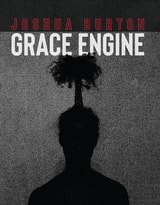
Grace Engine
Joshua Burton
University of Wisconsin Press, 2023
Burton experiments with spaces, absences, and forms in navigating the tensions between shame and accountability, guilt and forgiveness, to understand how one finds the ability to cope under the worst of conditions. With patience and ferocity, he delves into generational and familial trauma to question whether black strength is inherent to blackness and to build a mechanism to survive and heal.
both at the moment they unwed
themselves of shame
and before that.
—Excerpt from “Grace Engine”
Graceful Errors
Pindar and the Performance of PraiseHilary Mackie
University of Michigan Press, 2003
Reading Pindar's poems with their public performance in mind, Hilary Mackie suggests that the poet was forced to tread a precarious path: weighing the interests of various groups of audience members against one another, balancing praise of the victorious athlete with praise of the deeds of mythic heroes, and catering at the same time to an uncertain future. Mackie's new approach illuminates apparent contradictions in the poet's pronouncements by bringing to the fore the variety of messages conveyed in his wishes and prayers. Her innovative examination of the moment-to-moment dynamic between Pindar and his audience shows that the poet's performance often contained one message for the victor and his family, and quite another for the gods.
Graceful Errors significantly changes our perspective on Pindar's work, providing a lucid appreciation of Pindaric poetry that takes into account the oral context of these poems' performance. It will be of interest not only to classicists but also to scholars and students interested in oral performance, the social function of poetry, and the role and status of poets in traditional cultures, whether ancient or modern.
Hilary Mackie is Associate Professor of Classics at Rice University.
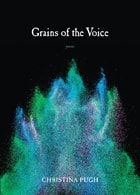
Grains of the Voice
PoemsChristina Pugh
Northwestern University Press, 2013
Christina Pugh’s Grains of the Voice exhibits a pervasive fascination with sound in all its manifestations. The human voice, musical instruments, the sounds produced by the natural and man-made worlds—all serve at one time or another as both the framework of poems and the occasion for their lightning-quick changes of direction, of tone, of point of reference. The poems are eclectic in their allusiveness, filled with echoes—and sometimes the words themselves—of other poets, but just as often of songs both popular and obscure, of the noise of pop culture, and of philosophers’ writings. But Pugh always wears her learning lightly. Beneath the jewellike surfaces of her poems is a strenuous investigation of the nature of and need for communication and a celebration of the endless variety of its forms.
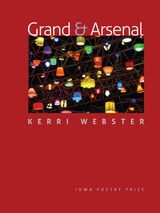
Grand & Arsenal
Kerri Webster
University of Iowa Press, 2012
Grand & Arsenal begins “Bless me I am not myself,” but it is not long before the probability of being blessed is revealed to be as remote as the concept of a whole self. Thus begins the book’s defining struggle, enacted by a multitude of voices which move from rush to stumble and back again—meanwhile using all the tools we as a culture use to hold fear at arm’s length.
We hear a familiar irony, as in “On a trip West, porn in the hotel room. I can take or leave it. The climax that puts me in the seats? World’s end.” We hear humor, as in “I believed in . . . / . . . a certain apocalypse not so much foretold as crafted / by large-brained monkeys.” We hear understatement, as in “knowing it does not matter / in the grand—she would say scheme, I would say / mishap—.” Most importantly, though, these poems allow for the fleeting triumph of an undefended voice, which appears often to emerge tentatively from a sort of exhausted collapse.
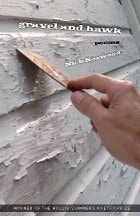
Gravel and Hawk
PoemsNick Norwood
Ohio University Press, 2012
Gravel and Hawk dwells on the physical and cultural landscapes of the Texarkana border region, an area of stark natural beauty and even starker manifestations of its human habitation: oil derricks and pump jacks, logging trucks, chicken houses, come-to-Jesus billboards, and greasy catfish joints, a patchwork of dying farm towns and ragtag municipalities laced together by county roads, state highways, and that treacherous, rust-hued slurry known as the Red River. Gravel and Hawk charts the emotional landscape of a single extended family, its history of loss and gain, and, especially, its encounters with violent death. It is an eminently readable collection, rooted in a distinctly American place and united by a poetic voice that is honest, sophisticated, and persuasive.
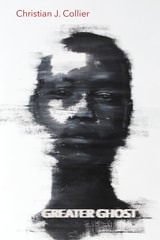
Greater Ghost
Christian J. Collier
Four Way Books, 2024
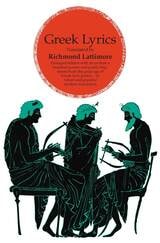
Greek Lyrics, Second Edition
More than a Hundred Poems and Poetic Fragments from the Great Age of Greek Lyric PoetryRichmond Lattimore
University of Chicago Press, 1960
In this second edition of Greek Lyrics, translator and editor Richmond Lattimore brings together a vast assortment of seventh-and sixth-century Greek lyric, elegiac, and iambic poetry. For the Greekless student or curious scholar, these translations showcase the diversity of poetic subjects in classical antiquity, which range from love poems to medical inscriptions and drinking songs. Gracefully and robustly translated by a number of top-tier translators, this volume includes poets such as Archílochus, Callínus, Semónides of Amórgos, Hippónax, Tyrtaéus, Mimnérmus, Solon, Phocýlides, Xenóphanes, Theógnis, Terpánder, Alcman, Stesíchorus, íbycus, Sappho, Alcaéus, Anácreon, Hýbrias, Praxílla, Corínna, Simónides of Ceos, Pindar, and Bacchýlides.
Green Island
Liz Countryman
Tupelo Press, 2024
The poems in Green Island delve into the relationship between place and imagination, examining the ways in which the physical places the speaker occupies, remembers, and imagines determine and enlarge her understanding of self.
While operating with startling self-awareness, Green Island does not simply offer poems that interrogate the circumstances of their own making. The work found in this slim volume questions the poetic tropes of beauty and romantic love and their relationships to the lyric. Ultimately working within the confines of a received tradition to expand what is possible within it, Liz Countryman shows us moments of quiet revelation in the quotidian, the comic, and in the vestiges of popular culture.
Green Rice
Poems by Lam Thi My DaLam Thi My Da
Northwestern University Press, 2005
Greenwich Village 1963
Avant-Garde Performance and the Effervescent BodySally Banes
Duke University Press, 1993
A leading writer on cultural history, Banes draws a vibrant portrait of the artists and performers who gave the 1963 Village its exhilarating force, the avant-garde whose interweaving of public and private life, work and play, art and ordinary experience, began a wholesale reworking of the social and cultural fabric of America. Among these young artists were many who went on to become acknowledged masters in their fields, including Andy Warhol, John Cage, Yoko Ono, Yvonne Rainer, Lanford Wilson, Sam Shepard, Brian de Palma, Harvey Keitel, Kate Millet, and Claes Oldenburg. In live performance--Off-Off Broadway theater, Happenings, Fluxus, and dance--as well as in Pop Art and underground film, we see this generation of artists laying the groundwork for the explosion of the counterculture in the late 1960s and the emergence of postmodernism in the 1970s. Exploring themes of community, freedom, equality, the body, and the absolute, Banes shows us how the Sixties artists, though shaped by a culture of hope and optimism, helped to galvanize a culture of criticism and change. As 1963 came to define the Sixties, so this vivid account of the year will redefine a crucial generation in recent American history.
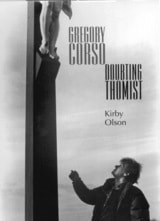
Gregory Corso
Doubting ThomistKirby Olson
Southern Illinois University Press, 2002
Gregory Corso is the most intensely spiritual of the Beat generation poets and still by far the least explored. The virtue of Kirby Olson’s Gregory Corso: Doubting Thomist is that it is the first book to place all of Corso’s work in a philosophical perspective, concentrating on Corso as a poet torn between a static Catholic Thomist viewpoint and that of a progressive surrealist.
While Corso is a subject of great controversy—his work often being seen as nihilistic and wildly comic—Olson argues that Corso’s poetry, in fact, maintains an insistent theme of doubt and faith with regard to his early Catholicism. Although many critics have attempted to read his poetry, and some have done so brilliantly, Olson—in his approach and focus—is the first to attempt to give a holistic understanding of the oeuvre as essentially one not of entertainment or hilarity but of a deep spiritual and philosophical quest by an important and profound mind.
In nine chapters, Olson addresses Corso from a broad philosophical perspective and shows how Corso takes on particular philosophical issues and contributes to new understandings. Corso’s concerns, like his influence, extend beyond the Beat generation as he speaks about concerns that have troubled thinkers from the beginning of the Western tradition, and his answers offer provocative new openings for thought.
Corso may very well be the most important Catholic poet in the American literary canon, a visionary like Burroughs and Ginsberg, whose work illuminated a generation. Written in a lively and engaging style, Gregory Corso: Doubting Thomist seeks to keep Corso’s memory alive and at last delve fully into Corso’s poetry.
Grief for the Green That Was
Jacob Shores-Argüello
University of Arizona Press, 2026
Moving tenderly across memory, continents, and literary forms, Jacob Shores-Argüello’s tightly woven cross-genre collection evolves a private family bereavement into an exploration of collective ecological grief. Following the death of his mother, the speaker navigates between his Costa Rican heritage and his Oklahoma upbringing, eventually arriving at something like healing on the banks of New Zealand’s Whanganui River—the first river in the world granted legal personhood.
Structured around a Spanish nursery rhyme, Grief for the Green That Was finds solace in the prospect of citizenship for a more-than-human world, a possibility it approaches through perspectival shifts and innovative forms—including footnoted poems, hybrid fiction, and an experimental choose-your-own-adventure sequence—that overturn lyric and storytelling conventions.
A book about what we inherit and what we leave behind, both in families and in landscapes, Grief for the Green That Was examines how climate change affects not just the physical world but also our emotional and spiritual relationships to place. Here Shores-Argüello creates a new language for twenty-first-century grief that refuses to separate the personal from the planetary.
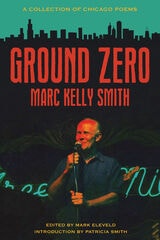
Ground Zero
A Collection of Chicago PoemsMarc Kelly Smith; Edited by Mark Eleveld; With an introduction by Patricia Smith
Northwestern University Press, 2021
Inception and implosion, Chicago’s grit and grandiosity all come together in the finite poetic power of the original Slam igniter, renowned poet Marc Kelly Smith and his retrospect denotation, Ground Zero.
A cultural, community, and adversarial figure, Smith has challenged the status quo and raised new questions about an environment in a state of continuous calamity. Smith’s power and influence have inspired celebrated figures who cut their teeth on both the stage and the page under his watchful eye—always speaking in the traditions of Carl Sandburg and Gwendolyn Brooks. Ground Zero challenges but pays homage to the thousand underbellies of Chicago with Smith’s wicked, cigarette-in-the-beer language: “I ain’t diggin’ no concrete coffin, / No backyard mausoleum / To keep me a pickle sweet aplenty / Plied with sardines and pork sausage wieners / Livin’ out the chance that some bubble-flesh victim / Will come puckered up and scabby lipped / To kiss me in the name of a new mankind.”
Ground Zero leaves no doubt. The Slampapi / instigator / visionary / you-may-love-me-or-hate-me-but-my-history-will-always-be-chiseled-in-everything-the-poetry-world-does-next collects a survey of his land and his experience, no matter how beautiful or flawed. This book lets the landmines of imagery and Chicago’s slow and uneasy drawl showcase one of our most original voices.
Groundwork
Robert Morgan
Ohio University Press, 1979
Published in 1979 by Gnomon Press
In Groundwork, Robert Morgan offers a vivid poetic excavation of Appalachian life, memory, and landscape. Drawing deeply from his upbringing in the Blue Ridge Mountains of North Carolina, Morgan crafts a collection that is both intimate and elemental. These poems explore the textures of rural existence—its labor, rituals, and natural rhythms—through language that is spare, musical, and richly evocative.
Morgan’s verse is rooted in place, yet it transcends regionalism through its mythic resonance and emotional clarity. He sifts through family lore, childhood recollections, and local history to recover what he calls “pieces of the morgenland”—a personal and cultural terrain shaped by hardship, resilience, and wonder. The poems in Groundwork are populated by grandparents, farmers, and mountain folk, rendered with a quiet reverence that elevates the everyday to the numinous.
This collection marks a foundational moment in Morgan’s career, establishing the poetic voice that would inform his later fiction and nonfiction. With titles like “Mountain Bride,” “Burning the Hornet’s Nest,” and “Baptism of Fire,” the poems evoke both the physical and spiritual dimensions of Appalachian life. Groundwork remains one of Morgan’s most concentrated and enduring tributes to the Southern mountains and their people.
Essential for readers of American poetry, Appalachian studies, and environmental literature, Groundwork is a lyrical testament to the power of memory and place.
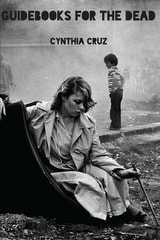
Guidebooks for the Dead
Cynthia Cruz
Four Way Books, 2020

Gulf
Pimone Triplett
University of Iowa Press, 2027
Gunslinger
Edward Dorn
Duke University Press, 1968
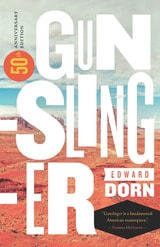
Gunslinger
Edward Dorn
Duke University Press, 1968
"Gunslinger is a fundamental American masterpiece."---Thomas McGuane
This fiftieth anniversary edition commemorates Edward Dorn’s masterpiece, Gunslinger, a comic, anti-epic critique of American capitalism that still resonates today. Set in the American West, the Gunslinger, his talking horse Claude Lévi-Strauss, a saloon madam named Lil, and the narrator called “I” set out in search of the billionaire Howard Hughes. As they travel along the Rio Grande to Truth or Consequences, New Mexico, and finally on to Colorado, they are joined by a whole host of colorful characters: Dr. Jean Flamboyant, Kool Everything, and Taco Desoxin and his partner Tonto Pronto. During their adventures and hijinks, as captured in Dorn’s multilayered, absurd, and postmodern voice, they joke and smoke their way through debates about the meaning of existence. Put simply, Gunslinger is an American classic.
In a new foreword Marjorie Perloff discusses Gunslinger's continued relevance to contemporary politics. This new edition also includes a critical essay by Michael Davidson and Charles Olson’s idiosyncratic “Bibliography on America for Ed Dorn,” which he wrote to provide guidance for Dorn's study of, and writing about, the American West.
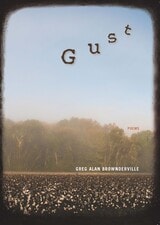
Gust
PoemsGreg Alan Brownderville
Northwestern University Press, 2011
Brownderville commands the complex eloquence of Southerners who love not only local color but also high-flown rhetoric. Instead of reinforcing stereotypes about rural folks' thought and speech, he challenges our assumptions by presenting real life as a festival of mixed diction. Church, as Brownderville enacts it, both quickens and forbids the erotic, whose lightning flashes and crashes everywhere in these poems. Highlights include a press conference with a bizarrely poetic rural sheriff, a Zimbabwean meter never before employed in English, a rock and roll song interrupted by a Walmart intercom, and poems about the exploitation of Italians in Arkansas cotton fields.
At once evoking Yeats and Whitman, Gust recovers the dramatic mode often neglected in contemporary American poetry. Brownderville's uncanny lyricism storms through stories that are both moving and humorous.
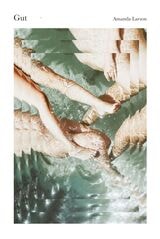
Gut
Amanda Larson
Omnidawn, 2021
Amanda Larson’s Gut begins with an epigraph from Frank O’Hara: “Pain always produces logic, which is very bad for you.” From there, Larson launches an unflinching interrogation of how a young woman maintains agency in the wake of trauma, violence, and desire. Larson spins a conversation between works of feminist theory—including the those of Cathy Caruth, Susan Bordo, Patricia Hill Collins, Anne Carson, Hélène Cixous, and bell hooks—and her own experiences. The book moves through Larson’s recovery while questioning the limits of the very term and of language as a whole. She employs a variety of different forms, including prose, Q&A poems, and a timeline, reflecting both the speaker’s obsession with control and her growing willingness to let it go. With a measured voice, Larson finds a path for how to move beyond logic during processes of trauma and recovery.
Gut won the Omnidawn 1st/2nd Book Contest, selected by Jericho Brown.
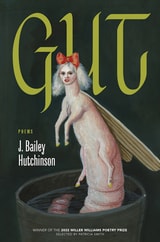
Gut
PoemsJ. Bailey Hutchinson
University of Arkansas Press, 2022
Winner, 2022 Miller Williams Poetry Prize
J. Bailey Hutchinson’s Gut is the dazzling debut of a born storyteller. In Hutchinson’s poems, which explore the substance of personal history, family attains the mysterious stature of folklore, while the vast worlds of nature and of the imagination abound with extraordinary creatures that likewise elude full understanding. For the voracious consciousness at work here, inheritance—what it means to be from a particular place and a particular people, no matter how one might strain against that—lies at the very heart of things.
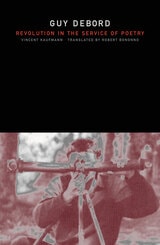
Guy Debord
Revolution in the Service of PoetryVincent Kaufmann
University of Minnesota Press, 2010
Instead of providing a conventional day-to-day account of Debord's life, Kaufmann deftly locates his subject within the historical and intellectual context of the radical social, political, and artistic movements in which he participated. He traces Debord's development as an intellectual: his involvement with the lettrist movement in the early 1950s, his central role in the Situationist International from 1957 to 1971 and in the events of May 1968, and the productive and frequently misunderstood period between the dissolution of the situationists and his suicide, during which time Debord clarified the rules of his war against inauthenticity.
As Kaufmann makes clear, for Debord political thought and action were inseparable from aesthetics and poetic expression. Whether envisioning the recovery of a lost, protocommunist age of authenticity and transparency in The Society of the Spectacle or critically assessing the possibility of revolution against postmodern capitalism two decades later, Debord advocated and practiced an art of defiance, a concurrently martial and melancholic poetics. Avoiding the mythologies about Debord that both admirers and critics have cultivated, Kaufmann provides a groundbreaking and generous assessment of Debord and his uncompromising struggle against a corrupt civilization.
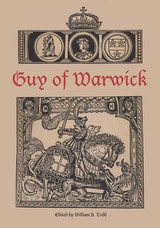
Guy of Warwick
Edited by William B. Todd
University of Texas Press, 1968
The story of Sir Guy, once as familiar as the tales of King Arthur, is now largely forgotten.
Originally composed about 1240 A.D., this heroic romance early circulated in countless manuscripts, first in poetic, then in expanded prose form. Later, in 1525, the extended version was printed in French, and later still, in 1821, it was rendered into English. That last essential act unfortunately served little purpose, since the translation was thereafter available only to successive descendants of the family that prepared it. In 1959, however, The University of Texas acquired this unique translation, followed by a copy of the rare 1525 issue in 1963, and with both texts rejoined now offers, through William B. Todd, one final service: an edition for present readers.
So rescued from oblivion, Guy of Warwick emerges as a grand exemplum of chivalric conduct. Perhaps even more than Arthur, or Launcelot, or Galahad, the hero is a very proper knight, displaying at once all the mundane attributes of nobility: unswerving loyalty to kin, kith, and king; the ready rescue of damsels in distress; the prompt dispatch of dragons, giants, or other enemies of the realm—and in aftertime exhibiting also all the spiritual qualities of true gentility: defense of the faith against every infidel, mortification of the flesh, and final withdrawal to a hermitage. Thus Guy may rightly deserve not only his early accolade as the "Hercules of England" but also some measure of the tribute usually reserved for a patron saint. However regarded, this knight's exploits must necessarily rank as one of the great "matters of Britain" and again become an essential part of Western cultural heritage.
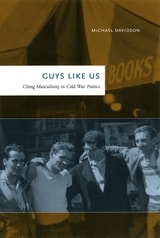
Guys Like Us
Citing Masculinity in Cold War PoeticsMichael Davidson
University of Chicago Press, 2003
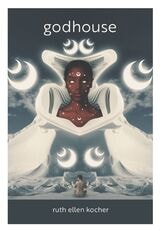
godhouse
Ruth Ellen Kocher
Omnidawn, 2023
Starting with the idea that the human experience is the universe looking back at itself, godhouse takes the notion a few steps further by centering cosmology within a raced and gendered body. Ruth Ellen Kocher’s poems envision this body as a union of god and soul that, within our material world, encompasses love and hate, joy and despair. The body is a site of divine presence made mortal, electrified with the resonance of both the infinite and the human. In godhouse, we encounter the body as a site where the universe is made personal and celebratory, where the celestial endure the complications of flesh and friction forms between the glorious and the monstrous aspects of personhood.

god’s breath hovering across the waters
Henry Israeli
Four Way Books, 2016
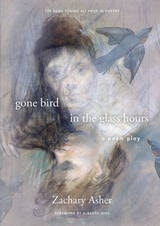
gone bird in the glass hours
a poem playZachary Asher
University of Utah Press, 2020
Winner of the 2019 Agha Shahid Ali Prize in Poetry
Zachary Asher’s second collection, gone bird in the glass hours, is a play in verse, featuring seven voices. It begins with a rabbi, bewildered and bent by personal grief, guided and beguiled by elusive Blue Postman into the world of “the glass hours” and its inhabitants.
Rooted in magical realism, gone bird in the glass hours experiments with multiple forms from epistles to centos, from fractals to prayers. These poems are brave in their excavations of grief and solace, wonder and rage, collective trauma and, ultimately, transcendence.