Results by title
8812 books match the query 'Political Science' and 228 start with g
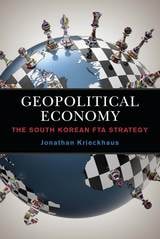
Geopolitical Economy
The South Korean FTA StrategyJonathan Krieckhaus
University of Michigan Press, 2018
Geopolitical Economy examines the significance and nature of free trade agreements (FTAs), the primary policy tool through which modern nations seek access to international markets and promote economic growth. The book focuses specifically on how South Korea, the world’s leader in the number and significance of FTAs as well as the world’s sixth largest export economy, uses FTAs.
Jonathan Krieckhaus argues that geopolitics—the struggle between powerful nations over specific geographic regions around the globe—influenced FTA strategy and economic policy in South Korea and beyond. This perspective illustrates the security approach to FTAs, but adds that the geographic specificity of security concerns deeply shape FTA policy.
Geopolitical Economy also looks at Korean FTAs through the lens of development strategy. South Korea is singularly successful in garnering FTAs with all three players in the global economy: the United States, the European Union, and China. This unprecedented success was built on a strong commitment from three consecutive Korean presidential administrations, each operating within a favorable state-society context that enjoyed the existence of a centralized and effective trade bureaucracy.

Geopolitical Exotica
Tibet in Western ImaginationDibyesh Anand
University of Minnesota Press, 2008
Geopolitical Exotica examines exoticized Western representations of Tibet and Tibetans and the debate over that land’s status with regard to China. Concentrating on specific cultural images of the twentieth century—promulgated by novels, popular films, travelogues, and memoirs—Dibyesh Anand lays bare the strategies by which “Exotica Tibet” and “Tibetanness” have been constructed, and he investigates the impact these constructions have had on those who are being represented.
Although images of Tibet have excited the popular imagination in the West for many years, Geopolitical Exotica is the first book to explore representational practices within the study of international relations. Anand challenges the parochial practices of current mainstream international relations theory and practice, claiming that the discipline remains mostly Western in its orientation. His analysis of Tibet’s status with regard to China scrutinizes the vocabulary afforded by conventional international relations theory and considers issues that until now have been undertheorized in relation to Tibet, including imperialism, history, diaspora, representation, and identity.
In this masterfully synthetic work, Anand establishes that postcoloniality provides new insights into themes of representation and identity and demonstrates how IR as a discipline can meaningfully expand its focus beyond the West.
Dibyesh Anand is a reader in international relations at the University of Westminster, London.
Geopolitics in the Danube Region
Hungarian Reconciliation Efforts, 1848–1998Ignác Romsics
Central European University Press, 1998
Central and Eastern Europe has a long history of, on the one hand, ethnic conflicts and, on the other, of a revolutionary tradition against expansionism. Both have their roots in the geographical situation and ethnic composition of the region. All these problems have surfaced at times when the political status quo has been upset for some reason, such as after the two world wars and after the collapse of the Soviet Union.
Both great powers bordering the Danube region-Germany and Russia-have strived to develop their own versions of confederations (Mitteleuropa and Pan-Slavic movements). Also, politicians and intellectuals of the countries affected have proposed various theories, and made initiatives for different forms of closer or looser confederative formations.
This book examines the reasons for the failure of these initiatives, these reasons including such factors as ethnically-motivated political antagonism, and the lack of economic complementarity. Contributing valuable information on the problems of political and economic integration, which should not be forgotten in a period when the countries of the region are looking towards the European Union, expecting-realistically or not-the solution of their various conflicts.
George F. Kennan and the Origins of Containment, 1944-1946
The Kennan-Lukacs CorrespondenceGeorge F. Kennan & Jonh Lukacs
University of Missouri Press, 1997
In 1945 the United States saw the Soviet Union as its principal ally. By 1947, it saw the Soviet Union as its principal opponent. How did this happen? Historian John Lukacs has provided an answer to this question through an exchange of letters with George F. Kennan. Their correspondence deals with the antecedents of containment between 1944 and 1946, during most of which time Kennan was at the American embassy in Moscow.
Kennan had strong opinions about America's appropriate role during and after World War II and is perhaps best known as the architect of America's containment policy. Much has been written about Kennan and containment, but relatively little is known about the events that made him compose and send the Long Telegram in 1946 that ultimately became the draft for foreign policy dealing with the Soviets in the following forty years.
These letters show Kennan's fear of the extent to which the United States misunderstood the Soviet regime. Especially in 1944, at the time of the Russians' betrayal of the Warsaw Uprising, it became evident that the Soviets were interested in establishing their rigid domination of Eastern and Central Europe and dividing the continent.
Kennan's letters to Lukacs are thorough and detailed, suggesting that the Truman administration was not in the least premature in opposing the Soviet Union. Indeed, both correspondents suggest that these decisions should have been made earlier. This series of letters will add greatly to our understanding of what preceded containment and the Cold War in 1947.
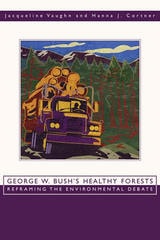
George W. Bush's Healthy Forests
Reframing the Environmental DebateJacqueline Vaughn
University Press of Colorado, 2005
The authors show how the administration used news events such as wildfires to propel legislation through Congress. Focusing blame for wildfires on legal obstacles and environmentalists' use of appeals to challenge fuel-reduction projects, the administration restricted opportunities for environmental analysis, administrative appeals, and litigation. The authors argue that these tools have a history of use by diverse interests and have long protected Americans' right to question government decisions.
This readable study identifies the players, events, and strategies that expedited the policy shift and contextualizes it in the president's career and in legislative and administrative history. Revealing a policy change with major implications for the future of public lands and public process, George W. Bush's Healthy Forests will become required reading in environmental studies and political science.

George Washington and Slavery
A Documentary PortrayalFritz Hirschfeld
University of Missouri Press, 1997
"I never mean (unless some particular circumstance should compel me to it) to possess another slave by purchase; it being among my first wishes to see some plan adopted, by which slavery in this country may be abolished by slow, sure and imperceptible degrees."—George Washington, September 9, 1786
No history of racism in America can be considered complete without taking into account the role that George Washington—the principal founding father—played in helping to mold the racist cast of the new nation. Because General Washington—the universally acknowledged hero of the Revolutionary War—in the postwar period uniquely combined the moral authority, personal prestige, and political power to influence significantly the course and the outcome of the slavery debate, his opinions on the subject of slaves and slavery are of crucial importance to understanding how racism succeeded in becoming an integral and official part of the national fabric during its formative stages.The successful end of the War for Independence in 1783 brought George Washington face-to-face with a fundamental dilemma: how to reconcile the proclaimed ideals of the revolution with the established institution of slavery. So long as black human beings in America could legally be considered the chattel property of whites, the rhetoric of equality and individual freedom was hollow. Progressive voices urged immediate emancipation as the only way to resolve the contradiction; the Southern slave owners, of course, stood firm for the status quo. Washington was caught squarely in the middle.
As a Virginia plantation proprietor and a lifelong slaveholder, Washington had a substantial private stake in the economic slave system of the South. However, in his role as the acknowledged political leader of the country, his overriding concern was the preservation of the Union. If Washington publicly supported emancipation, he would almost certainly have to set an example and take steps to dispose of his Mount Vernon slaves. If he spoke out on the side of slavery, how could he legitimately and conscientiously expect to uphold and defend the humanistic goals and moral imperatives of the new nation as expressed in the Declaration of Independence and embodied in the Constitution and the Bill of Rights? His was a balancing act that became more and more difficult to sustain with the passing years.
Relying primarily on Washington's own words—his correspondence, diaries, and other written records—supplemented by letters, comments, and eyewitness reports of family members, friends, employees, aides, correspondents, colleagues, and visitors to Mount Vernon, together with contemporary newspaper clippings and official documents pertaining to Washington's relationships with African Americans, Fritz Hirschfeld traces Washington's transition from a conventional slaveholder to a lukewarm abolitionist. George Washington and Slavery will be an essential addition to the historiography of eighteenth-century America and of Washington himself.

Georges Bataille
A Critical IntroductionBenjamin Noys
Pluto Press, 2000
Treating Bataille's work as a whole rather than focusing, as other studies have done, on aspects of his work (i.e. as social theory or philosophy), Noys' study is intended to be sensitive to the needs of students new to Bataille's work while at the same time drawing on the latest research on Bataille to offer new interpretations of Bataille's oeuvre for more experienced readers. This is the first clear, introductory reading of Bataille in English - challenging current reductive readings, and stressing the range of disciplines affected by Bataille's work, at a time when interest in Bataille is growing.
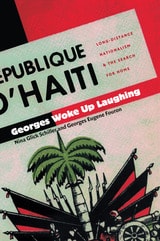
Georges Woke Up Laughing
Long-Distance Nationalism and the Search for HomeNina Glick Schiller and Georges Eugene Fouron
Duke University Press, 2001
According to a long-standing myth, once emigrants leave their homelands—particularly if they emigrate to the United States—they sever old nationalistic ties, assimilate, and happily live the American dream. In fact, many migrants remain intimately and integrally tied to their ancestral homeland, sometimes even after they become legal citizens of another country. In Georges Woke Up Laughing the authors reveal the realities and dilemmas that underlie the efforts of long-distance nationalists to redefine citizenship, race, nationality, and political loyalty. Through discussions of the history and economics that link the United States with countries around the world, Glick Schiller and Fouron highlight the forces that shape emigrants’ experiences of government and citizenship and create a transborder citizenry. Arguing that governments of many countries today have almost no power to implement policies that will assist their citizens, the authors provide insights into the ongoing sociological, anthropological, and political effects of globalization.
Georges Woke up Laughing will entertain and inform those who are concerned about the rights of people and the power of their governments within the globalizing economy.
“In my dream I was young and in Haiti with my friends, laughing, joking, and having a wonderful time. I was walking down the main street of my hometown of Aux Cayes. The sun was shining, the streets were clean, and the port was bustling with ships. At first I was laughing because of the feeling of happiness that stayed with me, even after I woke up. I tried to explain my wonderful dream to my wife, Rolande. Then I laughed again but this time not from joy. I had been dreaming of a Haiti that never was.”—from Georges Woke Up Laughing
Georgia
Pawn in the New Great GamePer Gahrton
Pluto Press, 2010
The 2008 Ossetia War underlined the fact that Georgia is caught in a political struggle between East and West. Per Gahrton analyses American and Russian policy towards the country and provides a firsthand account of the Rose Revolution of 2003, its origin and aftermath.
The book traces the increasing US involvement in Georgia and the Russian reaction of anger, sanctions and, eventually, invasion. Gahrton's analysis is based on interviews with key politicians and his experience as the rapporteur of the European Parliament on South Caucasus. At centre stage is the growing opposition against authoritarian aspects of President Mikheil Saakashvili’s regime and the mysterious death of Prime Minister Zhvania in 2005. The book also asks if the Rose Revolution was a conspiracy or a genuine popular uprising.
This truly authoritative account of Georgia is a must for students studying international relations in the aftermath of The Cold War.

Gerald R. Ford
An Honorable LifeJames Cannon
University of Michigan Press, 2013
“Not since Harry Truman succeeded Franklin D. Roosevelt twenty-nine years earlier had the American people known so little about a man who had stepped forward from obscurity to take the oath of office as President of the United States.”
—from Chapter 4
This is a comprehensive narrative account of the life of Gerald Ford written by one of his closest advisers, James Cannon. Written with unique insight and benefiting from personal interviews with President Ford in his last years, Gerald R. Ford: An Honorable Lifeis James Cannon’s final look at the simple and honest man from the Midwest.

German Dis/Continuities, Volume 96
Martin Morris
Duke University Press, 0
The contributions presented here include Fredric Jameson’s “Ramblings in Old Berlin,” Günter Grass’s “Lonesome Capitalism,” and Peter Weiss’s “Aesthetics of Resistance.” Among the topics discussed in the volume are the debate over Holocaust memorials in Germany and the significance of their connections to the German past, the problematic continuity that identifies the new unified Germany with the former Federal Republic; the dangers to women posed by the neoliberal project; the legacy of the avant-garde in today’s media theory; Ars nova and Doktor Faustus; nostalgia for the old German Democratic Republic; and reflections on traumatic memory and history as trauma.
Contributors. Ulrich Baer, Michael Geyer, Günter Grass, Frigga Haug, Julia Hell, Fredric Jameson, Juliet Koss, Andreas Michel, Martin Morris, Arkady Plotnitsky, Pierra Vidal-Naquet, Peter Weiss, James E. Young

German Empires and Decolonial Fantasies, 1492–1942
Patricia Anne Simpson
University of Michigan Press, 2025
2026 DAAD/GSA Prize for the Best Book in History and Social Sciences Winner
German Empires and Decolonial Fantasies, 1492–1942 investigates the ways German-speaking Europe’s cultural narratives reflect histories of entanglement with the colonial world. Drawing from an impressive range of sources, Patricia Anne Simpson decodes the ironclad colonial logic that reproduces and inflects tropes of the conquistador, scientific explorer, and pioneers. She brings them into dialogue with a cast of historical agents who reimagine the cannibal, the enslaved, the conquered, Indigenous interlocutors, and the ungovernable. Throughout, intersectional attributes of race, gender, ethnicity, and religion reconfigure around shades of European whiteness. Individual chapters explore the Hohenzollern legacy in early modernity; debates about sovereignty and enslavement; recruitment literature, prose and fiction about migration and colonization in Africa and the Americas; and colonial memoirs driven by recolonial fantasies after 1918. German Empires and Decolonial Fantasies advances efforts to decolonize the multiple disciplines that intersect the field of German studies, including literary criticism, history, philosophy, art history, and anthropology.
German Empires and Decolonial Fantasies, 1492–1942 draws from a wide range of sources, from a seventeenth-century Brandenburg fort on the coast of Ghana to a novella about a beleaguered colonial administrator in German East Africa, to advance an interdisciplinary discourse at the nexus of colonial narratives and national imaginaries. Through detailed case studies, Simpson argues for the inclusion of voices that pushed back against imperialist expansion or intervention, as well as those historical actors who disputed the supremacy of whiteness and the persuasive power of German-centric national history.

German Greens
Margit Mayer
Temple University Press, 1998
This is a book about their paradoxical situation and about the dilemmas all advocates of change face when they become powerful enough to negotiate with the status quo. The critical essays by German social scientists and activists also provide a detailed picture of the dynamics of the German Greens -- where their support has come from, the nature of the competing factions, and the place of feminism. The editors provide a substantial introduction.
The flavor and texture of the Greens -- including their raucous public arguments and their innovative campaign tactics -- are suggested by the political posters included in the book and by a whole section of primary documents.
The documents and the essays (except for one originally written in English) have been translated from the German. The result is to make available to English-speaking readers a view of a complex movement whose very name and color have become synonymous with social action in favor of the environment and the empowerment of people.
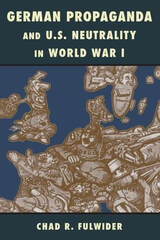
German Propaganda and U.S. Neutrality in World War I
Chad R. Fulwider
University of Missouri Press, 2016
In the fading evening light of August 4, 1914, Great Britain’s H.M.S. Telconia set off on a mission to sever the five transatlantic cables linking Germany and the United States. Thus Britain launched its first attack of World War I and simultaneously commenced what became the war’s most decisive battle: the battle for American public opinion.
In this revealing study, Chad Fulwider analyzes the efforts undertaken by German organizations, including the German Foreign Ministry, to keep the United States out of the war. Utilizing archival records, newspapers, and “official” propaganda, the book also assesses the cultural impact of Germany’s political mission within the United States and comments upon the perception of American life in Europe during the early twentieth century.

German Women for Empire, 1884-1945
Lora Wildenthal
Duke University Press, 2001
In confrontation and sometimes cooperation with men over their place in the colonial project, German women launched nationalist and colonialist campaigns for increased settlement and new state policies. Wildenthal analyzes recently accessible Colonial Office archives as well as mission society records, periodicals, women’s memoirs, and fiction to show how these women created niches for themselves in the colonies. They emphasized their unique importance for white racial “purity” and the inculcation of German culture in the family. While pressing for career opportunities for themselves, these women also campaigned against interracial marriage and circulated an image of African and Pacific women as sexually promiscuous and inferior. As Wildenthal discusses, the German colonial imaginary persisted even after the German colonial empire was no longer a reality. The women’s colonial movement continued into the Nazi era, combining with other movements to help turn the racialist thought of the late-nineteenth and early-twentieth centuries into the hierarchical evaluation of German citizens as well as colonial subjects.
Students and scholars of women’s history, modern German history, colonial politics and culture, postcolonial theory, race/ethnicity, and gender will welcome this groundbreaking study.

Germany 1945-1990
A Parallel HistoryJürgen Weber
Central European University Press, 2004
This book offers lively description and convincing interpretation of the most significant events, cruxes and ongoing themes in German history from the end of the Second World War up to the present. The main features of the last fifty years are not only succinctly and vividly presented and interpreted, they are also placed in the context of international political developments.
The chronologies that accompany each chapter record the most important dates, facts and names occurring in the narrative. Jürgen Weber’s text supplies the reader with a combination of vivid descriptive history, easily absorbed chronology, and a reliable reference work for the parallel lives of the two Germanies, a product of the Cold War.

Germany and the Politics of Europe's Money
Karl Kaltenthaler
Duke University Press, 1998
Moving away from state-centered and Marxist approaches to the study of the European monetary integration process, Karl Kaltenthaler offers a new analytical framework to assess the dynamics within and among the participating countries. Using official and unofficial documents as well as interviews with players ranging from presidents of the Bundesbank to functionaries in the trade unions, Kaltenthaler argues that the number of decision makers negotiating policy and their accountability to interest groups, political parties, government ministries, and Germany’s central bank have made Germany’s fluctuations in policy inevitable. Germany and the Politics of Europe’s Money examines twenty years of German policy through an analysis of four key episodes: the creation of the European Monetary System, the creation of the Franco-German Economic and Financial Council, the establishment of policy toward the European Monetary Union, and the institutional transformation of the EMS in the 1990s. It thus brings a new understanding to Germany’s dynamic policies and the political forces behind them.
Germany at the Polls
The Bundestag Elections of the 1980sKarl H. Cerny, ed.
Duke University Press, 1990
Contributors. Kendall L. Baker, Karl H. Cerny, David P. Conradt, Arthur B. Gunlicks, Alice McGillivray, Peter H. Merkl, Ferdinand Muller-Rommel, Helmut Norpoth, Richard M. Scammon, Donald Schoonmaker, Christian Soe

Germany in Central America
Competitive Imperialism, 1821-1929Thomas Schoonover
University of Alabama Press, 1999
Analyzes the German role in Central American domestic and international relations
Using previously untapped resources including private collections, the records of cultural institutions, and federal and state government archives, Schoonover analyzes the German role in Central American domestic and international relations.Of the four countries most active in independent Central America-Britain, the United States, France, and Germany- historians know the least about the full extent of the involvement of the Germans.German colonial expansion was based on its position as an industrialized state seeking economic well-being and security in a growing world market. German leaders were quick to recognize that ties to the cheap labor of overseas countries could compensate for some of the costs and burdens of conceding material and social privileges to their domestic labor force. The Central American societies possessed limited resource bases; smaller and poorly educated populations; and less capital, communications, and technological development than Germany. They saw the borrowing of development as a key to their social, economic, and political progress. Wary Central American leaders also saw the influx of German industrialists as assurance against excessive U.S. presence in their political economies and cultures.
Although the simplistic bargain to trade economic development for cheap labor appeared to succeed in the short term, complex issues of German domestic unemployment and social disorder filtered to Central American countries and added to their own burdens. By 1929, Germany had recovered most of its pre-World War I economic position.
Gerrard Winstanley
The Digger's Life and LegacyJohn Gurney
Pluto Press, 2012
John Gurney reveals the hidden history of Winstanley and his movement. As part of the radical ferment which swept England at the time of the civil war, Winstanley led the Diggers in taking over land and running it as 'a common treasury for all' – provoking violent opposition from landowners. Gurney also guides us through Winstanley's writings, which are among the most remarkable prose writings of his age.
Gerrard Winstanley: The Digger's Life and Legacy is a must read for students of English history and all those seeking to re-claim the commons today.

Gesta principum Polonorum
The Deeds of the Princes of the PolesJános M. Bak
Central European University Press, 2003

Gestures of Concern
Chris Ingraham
Duke University Press, 2020
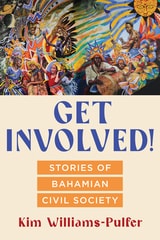
Get Involved!
Stories of Bahamian Civil SocietyKim Williams-Pulfer
Rutgers University Press, 2024
Junkanoo is the national cultural festival of The Bahamas. It fosters a sense of community pride, identity, companionship, spirituality and unity. Watch a video about Junknoo:
https://www.youtube.com/watch?v=tnMpMesNb1Q&t=14s
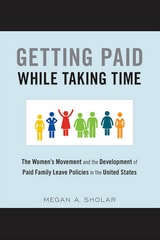
Getting Paid While Taking Time
The Women's Movement and the Development of Paid Family Leave Policies in the United StatesMegan Sholar
Temple University Press, 2016
The United States remains the only industrialized nation in the world that does not provide paid family leave at the national level for either men or women. In the more than two decades since the passage of the Family and Medical Leave Act, there have been numerous unsuccessful attempts to expand family leave benefits nationally. However, in the United States, it is common for innovations in family policies to arise at the state level.
In her timely book, Getting Paid While Taking Time, Megan Sholar explains the development of family leave policies at both the national and state levels in the United States. She provides cogent studies of states that have passed and proposed family leave legislation, and she pays special attention to the ways in which women’s movement actors and other activists (e.g., labor unions) exert pressure on public officials to help influence the policymaking process. In her conclusion, Sholar considers the future of paid family leave policies in the United States and the chances for it ever equaling the benefits in other countries.
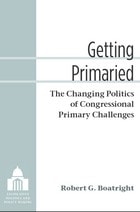
Getting Primaried
The Changing Politics of Congressional Primary ChallengesRobert G. Boatright
University of Michigan Press, 2014
Each of the past few election cycles has featured at least one instance of "primarying," a challenge to an incumbent on the grounds that he or she is not sufficiently partisan. For many observers, such races signify an increasingly polarized electorate and an increasing threat to moderates of both parties.
In Getting Primaried, Robert G. Boatright shows that primary challenges are not becoming more frequent; they wax and wane in accordance with partisan turnover in Congress. The recent rise of primarying corresponds to the rise of national fundraising bases and new types of partisan organizations supporting candidates around the country. National fundraising efforts and interest group–supported primary challenges have garnered media attention disproportionate to their success in winning elections. Such challenges can work only if groups focus on a small number of incumbents.
Getting Primaried makes several key contributions to congressional scholarship. It presents a history of congressional primary challenges over the past forty years, measuring the frequency of competitive challenges and distinguishing among types of challenges. It provides a correction to accounts of the link between primary competition and political polarization. Further, this study offers a new theoretical understanding of the role of interest groups in congressional elections.
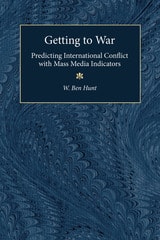
Getting to War
Predicting International Conflict with Mass Media IndicatorsW. Ben Hunt
University of Michigan Press, 1997

Gettysburg, Time and Again
Restaging America and Its Civil Wars TodayMads Daugbjerg
University of Massachusetts Press, 2027
Tracing how the Civil War continues to shape the landscapes, politics, and culture of today
Every year, thousands of Americans don Civil War uniforms and restage the bloodiest battle ever fought on American soil. In Gettysburg, Time and Again, Mads Daugbjerg explores how the Civil War continues to inhabit the present. Bringing together reenactors, National Park Service rangers, ghost hunters, tourists, and local residents, this study examines how Americans across social and political divides engage the past through the landscapes, institutions, and everyday practices of public history.
At once historically grounded and urgently contemporary, this book speaks directly to current struggles over the meaning of America and its values. Rather than treating time and history as abstract concepts, Daugbjerg approaches them as lived, material forces produced through commemorative landscapes, interpretive labor, and the relentless restaging of 1863 for contemporary audiences. Studying reenactment illuminates not only a distinctive cultural practice but also the broader processes through which the past is continuously reshaped, repeated, and felt in the present. He argues that present-day American unrest can be understood, in part, as a conflict over how the past is curated. He further suggests that Americans today often occupy profoundly different temporal worlds.
Daugbjerg traces these tensions through landscapes, material culture, tourism infrastructures, and social life at Gettysburg. Challenging the commonsense notion of history as linear progression, Gettysburg, Time and Again reveals repetition as a defining feature of American historical experience. By offering a finely grained anthropology of the “present past,” Daugbjerg shows how history’s afterlives remain powerfully out of sync and why those temporal disjunctions matter now.
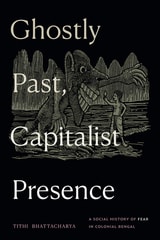
Ghostly Past, Capitalist Presence
A Social History of Fear in Colonial BengalTithi Bhattacharya
Duke University Press, 2024

Ghosts Over the Boiler
Voices from Alabama's Death RowProject Hope to Abolish the Death Penalty; Edited by Katie Owens-Murphy
Vanderbilt University Press, 2023
Ghosts Over the Boiler is a curated collection of poetry, visual art, photographs, essays, creative writings, and other archival materials that have emerged from Alabama's death row from the organization Project Hope to Abolish the Death Penalty (PHADP). This group was founded at Holman Correctional Facility and has been operating autonomously since 1989 toward its mission to abolish the death penalty in Alabama and in the nation.

Ghosts in the Neighborhood
Why Japan Is Haunted by Its Past and Germany Is NotWalter F. Hatch
University of Michigan Press, 2023
Germany, which brutalized its neighbors in Europe for centuries, has mostly escaped the ghosts of the past, while Japan remains haunted in Asia. The most common explanation for this difference is that Germany knows better how to apologize; Japan is viewed as “impenitent.” Walter F. Hatch rejects the conventional wisdom and argues that Germany has achieved reconciliation with neighbors by showing that it can be a trustworthy partner in regional institutions like the European Union and NATO; Japan has never been given that opportunity (by its dominant partner, the U.S.) to demonstrate such an ability to cooperate. This book rigorously defends the argument that political cooperation—not discourse or economic exchange—best explains Germany’s relative success and Japan’s relative failure in achieving reconciliation with neighbors brutalized by each regional power in the past. It uses paired case studies (Germany-France and Japan-South Korea; Germany-Poland and Japan-China) to gauge the effect of these competing variables on public opinion over time. With numerous charts, each of the four empirical chapters illustrates the powerful causal relationship between institution building and interstate reconciliation.

Ghosts of Fascism
Italian Intellectuals After MussoliniSimon Levis Sullam, Translated by Stuart Oglethorpe
University of Wisconsin Press, 2026
While public intellectuals are typically thought of as inherently nonconformist and critical of established power, in practice many adapt themselves to the views of the majority—particularly in the context of repressive governments and dictatorships. When the political winds change, such figures often refashion themselves to fit the new paradigm. Ghosts of Fascism follows the trajectories of four major Italian intellectuals who, despite their passivity and at times collaboration with Fascist institutions, became some of postwar Italy’s iconic anti-Fascists: Federico Chabod, a prominent historian who would join the Resistance; the jurist Piero Calamandrei, who later participated in drafting the Italian democratic constitution; the influential literary critic Luigi Russo, who presided over the prestigious Scuola Normale Superiore in Pisa; and Alberto Moravia, the internationally renowned novelist. Simon Levis Sullam weaves together their histories to show how postwar Italian intellectuals quietly revised their previous political positions, redefining themselves—and their recent pasts, together with that of the entire nation—as consistently anti-Fascist.
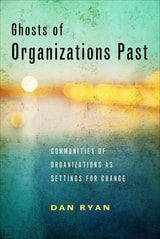
Ghosts of Organizations Past
Communities of Organizations as Settings for ChangeDan Ryan
Temple University Press, 2015
Ryan draws on concepts from the study of organizations, social capital, and social networks to re-think questions such as “What kind of thing is a community?” and “Why is it so difficult to build community initiatives out of organizations?” He provides a social organizational explanation for problems familiar to anyone who has been involved in community programs, issues that are usually understood as personal incompetence, turf wars, greed, or corruption.
Ghosts of Organizations Past describes the challenges of using organizations to create change in places in dire need of it.

Girls of Liberty
The Struggle for Suffrage in Mandatory PalestineMargalit Shilo
Brandeis University Press, 2016
Give a Man a Fish
Reflections on the New Politics of DistributionJames Ferguson
Duke University Press, 2015
Giving Offense
Essays on CensorshipJ. M. Coetzee
University of Chicago Press, 1996
J. M. Coetzee presents a coherent, unorthodox analysis of censorship from the perspective of one who has lived and worked under its shadow. The essays collected here attempt to understand the passion that plays itself out in acts of silencing and censoring. He argues that a destructive dynamic of belligerence and escalation tends to overtake the rivals in any field ruled by censorship.
From Osip Mandelstam commanded to compose an ode in praise of Stalin, to Breyten Breytenbach writing poems under and for the eyes of his prison guards, to Aleksander Solzhenitsyn engaging in a trial of wits with the organs of the Soviet state, Giving Offense focuses on the ways authors have historically responded to censorship. It also analyzes the arguments of Catharine MacKinnon for the suppression of pornography and traces the operations of the old South African censorship system.
"The most impressive feature of Coetzee's essays, besides his ear for language, is his coolheadedness. He can dissect repugnant notions and analyze volatile emotions with enviable poise."—Kenneth Baker, San Francisco Chronicle Book Review
"Those looking for simple, ringing denunciations of censorship's evils will be disappointed. Coetzee explicitly rejects such noble tritenesses. Instead . . . he pursues censorship's deeper, more fickle meanings and unmeanings."—Kirkus Reviews
"These erudite essays form a powerful, bracing criticism of censorship in its many guises."—Publishers Weekly
"Giving Offense gets its incisive message across clearly, even when Coetzee is dealing with such murky theorists as Bakhtin, Lacan, Foucault, and René; Girard. Coetzee has a light, wry sense of humor."—Bill Marx, Hungry Mind Review
"An extraordinary collection of essays."—Martha Bayles, New York Times Book Review
"A disturbing and illuminating moral expedition."—Richard Eder, Los Angeles Times Book Review
Giving Voters a Voice
The Origins of the Initiative and Referendum in AmericaSteven L. Piott
University of Missouri Press, 2003

Gleanings from the Field
Food Security, Resilience, and Experiential LearningEdited by Dan Trudeau, William Moseley, and Paul Schadewald
Lever Press, 2025
This timely essay collection frames our food security challenges as “wicked problems,” puzzles without clear solutions that are characterized by evolving complexities and divergent stakeholder priorities. In classroom settings, they argue for the usage of experiential learning to cultivate “wicked problem-solving skills” among students. Gleanings from the Field exemplifies this approach, offering pedagogical interventions to prepare students for tackling these wicked problems, while advocating for high-impact learning experiences that enable students to grapple with the interconnected systems influencing food security. Through hands-on experiences and reflective practice, students gain a deeper understanding of these systems and their societal implications. Importantly, the contributions outlined in this volume underscore the need for a multidimensional view of food security, thus examining the intersections of economic interests, government policies, and social movements. By contextualizing food security within broader political-economic arrangements, educators can empower students to enact meaningful change.
Gleanings from the Field argues for a holistic approach to food security education, one that acknowledges the fraught nature of wicked problems and equips students with the skills and knowledge needed for effective action. By integrating experiential learning, conceptual frameworks about food security and resilience, and real-world engagement, educators can cultivate a new generation of resilient problem-solvers committed to addressing food insecurity and other wicked problems.

Gleanings of Freedom
Free and Slave Labor along the Mason-Dixon Line, 1790-1860Max Grivno
University of Illinois Press, 2014
Global Activism, Global Media
Edited by Wilma de Jong, Martin Shaw, and Neil Stammers
Pluto Press, 2005
This book brings together activists and academics in one volume, to explore the theory and practice of global activism's relation to all forms of media, mainstream and otherwise. The contributors examine how global activism is represented in the mainstream press and explain the strategies that activists adopt to spread their own ideas.
Investigating Indymedia and internet activism, they show how transformations in communications technology offer new possibilities, and explain how activists have successfully used and developed their own media. Case studies and topics include the world social forums, an example of a campaign from the NGO Action Aid, a campaign strategy from an internet activist, Greenpeace and the Brent Spar conflict, the World Development Movement and representations in the mainstream press, the Independent Media Centre, transgender activism on the net, Amnesty International, Oxfam and the internet.

Global Bioethics
Building on the Leopold LegacyVan Rensselaer Potter
Michigan State University Press, 1988
Van Rensselaer Potter created and defined the term "bioethics" in 1970, to describe a new philosophy that sought to integrate biology, ecology, medicine, and human values. Bioethics is often linked to environmental ethics and stands in sharp contrast to biomedical ethics. Because of this confusion (and appropriation of the term in medicine), Potter chose to use the term "Global Bioethics" in 1988. Potter's definition of bioethics from Global Bioethics is, "Biology combined with diverse humanistic knowledge forging a science that sets a system of medical and environmental priorities for acceptable survival."

Global Child
Children and Families Affected by War, Displacement, and MigrationMyriam Denov
Rutgers University Press, 2023

Global Cinderellas
Migrant Domestics and Newly Rich Employers in TaiwanPei-Chia Lan
Duke University Press, 2006
Lan demonstrates how economic disparities, immigration policies, race, ethnicity, and gender intersect in the relationship between the migrant workers and their Taiwanese employers. The employers are eager to flex their recently acquired financial muscle; many are first-generation career women as well as first-generation employers. The domestics are recruited from abroad as contract and “guest” workers; restrictive immigration policies prohibit them from seeking permanent residence or transferring from one employer to another. They care for Taiwanese families’ children, often having left their own behind. Throughout Global Cinderellas, Lan pays particular attention to how the women she studied identify themselves in relation to “others”—whether they be of different classes, nationalities, ethnicities, or education levels. In so doing, she offers a framework for thinking about how migrant workers and their employers understand themselves in the midst of dynamic transnational labor flows.
Global City-Twinning in the Digital Age
Michel S. Laguerre
University of Michigan Press, 2019
For many years, cities throughout the globe have developed ties with each other to process and nurture friendship, solidarity, and collaboration. These city relationships constitute a mode of governance distinct from those of cities that are not involved in such cross-border arrangements, with influence that expands far beyond region.
In this light, Global City-Twinning in the Digital Age unveils an analysis of intercity relationships both on a global scale and as a global phenomenon with digital communication technologies that play key roles in upgrading traditional practices, enhancing cross-border cooperation, and facilitating the production of digital sister cities. This book analyzes the deployment of sister-city formations and operations throughout the world with a focus on cities of North America, Latin America, North Africa, Europe, and the Mediterranean region. Using a global approach, it discusses friendship, entrepreneurship, urban development, cooperative management, municipal policy, and digital entanglements. It expands the scope of study of sister cities by unveiling the role of immigrants, diaspora, and post-diaspora in the making and functioning of the digital model of sister cities.
Global Common Good
Intercultural Perspectives on a Just and Ecological TransformationEdited by Michael Reder, Verena Risse, Katharina Hirschbrunn, and Georg Stoll
Campus Verlag, 2015
Global Encyclopaedia of Informality, Volume 3
A Hitchhiker's Guide to Informal Problem-Solving in human lifeEdited by Alena Ledeneva
University College London, 2024
For a post-human hitchhiker, human life–with its anxiety, aging, illness, and constant need for problem-solving–may look unviable. Yet, for humans, the life struggle is softened by human touch, human emotion, and human cooperation.
The Global Encyclopaedia of Informality, Volume 3 continues the journey of the two previous volumes into the world’s open secrets, unwritten rules, and hidden practices. It focuses on issues of emotional ambivalence and pressures of the digital age. The informal practices presented in this volume demonstrate the urgency of alleviating tensions between continuity and all-too-rapid change and the need to tackle the central problem of modern societies—uncertainty.
The volume takes the reader on a biographical journey through elusive, taken-for-granted, or banal ways of getting things done from over seventy countries and world regions. It offers an innovative understanding of the significance of fringes and challenges the assumption that informality is associated exclusively with poverty, underdevelopment, the Global South, oppressive regimes, or the former socialist countries of Eastern Europe and Central Asia. It also maps the patterns of informality around the globe, identifies specific informal practices in a context-sensitive way, and documents their ambivalent impact on people engaged in problem-solving, on societies in which these problems arise, and on humanity overall.
Global Energy Shifts
Fostering Sustainability in a Turbulent AgeBruce Podobnik
Temple University Press, 2005
In Global Energy Shifts, Bruce Podobnik draws intriguing parallels between the "coal panics" that once swept through Britain and the "oil panics" that grip the world today. His concise history of global energy use contextualizes the coal and oil scares, demonstrating how the convergence of specific geopolitical, commercial, and social conditions can generate rapid and far-reaching transformations in the energy foundations of our world.
Ultimately, Podobnik informs readers on how a "crisis" of one fuel system is quickly averted with the introduction of another, and describes opportunities for shifting our problematic, oil-based system toward a renewable energy system.
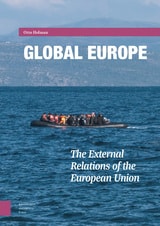
Global Europe
The External Relations of the European UnionOtto Holman
Amsterdam University Press, 2019
These questions and more are answered in 'Global Europe' in the context of the current impasse in the integration process. A clear analysis of the history of the EU's external relations up to now provides us with a better insight into the feasibility of EU strategies directed at the outside world.

Global Fever
How to Treat Climate ChangeWilliam H. Calvin
University of Chicago Press, 2008
With Global Fever, William H. Calvin delivers both a clear-eyed diagnosis and a strongly worded prescription. In striking, straightforward language, he first clearly sets out the current state of the Earth’s warming climate and the disastrous possibilities ahead should we continue on our current path. Increasing temperatures will kill off vegetation and dry up water resources, and their loss will lead, in an increasingly destructive feedback loop, to even more warming. Resource depletion, drought, and disease will follow, leading to socioeconomic upheaval—and accompanying violence—on a scale barely conceivable.
It is still possible, Calvin argues, to avoid such a dire fate. But we must act now, aggressively funneling resources into jump-starting what would amount to a third industrial revolution, this one of clean technologies—while simultaneously expanding our use of existing low-emission technologies, from nuclear power to plug-in hybrid vehicles, until we achieve the necessary scientific breakthroughs.
Passionately written, yet thoroughly grounded in the latest climate science, Global Fever delivers both a stark warning and an ambitious blueprint for saving the future of our planet.
Global Health
Why Cultural Perceptions, Social Representations, and Biopolitics MatterMark Nichter
University of Arizona Press, 2008
The book examines the perceptions of three groups whose points of view on illness, health care, and the politics of responsibility often differ and frequently conflict: local populations living in developing countries, public health practitioners working in international health, and health planners/policy makers. The book is written for both health social scientists working in the fields of international health and development and public health practitioners interested in learning practical lessons they can put to good use when engaging communities in participatory problem solving.
Global Health critically examines representations that frame international health discourse. It also addresses the politics of what is possible in a world compelled to work together to face emerging and re-emerging diseases, the control of health threats associated with political ecology and defective modernization, and the rise of new assemblages of people who share a sense of biosociality. The book proposes research priorities for a new program of health social science research. Nichter calls for greater involvement by social scientists in studies of global health and emphasizes how medical anthropologists in particular can better involve themselves as scholar activists.

Global Heartland
Cultivating the American Century on the Midwestern FarmPeter Simons
University of Minnesota Press, 2025
Highlighting the critical role of midwestern farmers in the creation of the American Century
Though often left out of the story of the making of the American Century, the farmers of the Midwest were at its center, fueling the nation’s growing power in the midtwentieth century. In Global Heartland, Peter Simons explores how, after decades of slipping to the margins of an urbanizing economy, these farmers assumed renewed strategic and cultural importance as they produced essential sustenance for overseas troops and food rations for a domestic population.
During the mid-1900s, once-isolationist midwestern farmers came to see the continental interior not as an insulated space but as an environmentally rich landscape that mandated them to accept a larger stake in global affairs. Simons traces this transformation from an older agrarian internationalism rooted in religion and ties to family abroad to illuminate the increasing influence of the U.S. agricultural community during the Cold War. Examining regional political parties, Lend-Lease programs, wartime mass media, and farmer-led relief programs, and interspersing this history with vignettes revisiting the Mercy Wheat campaign of 1947, the postwar International Farm Youth Exchange, and the Flying Farmers organization, Simons offers an enlightening consideration of midwestern farmers’ involvement in America’s international ascent.
Unique in its focus on farmers and their work rather than the more common attention to food or agricultural commodities, Global Heartland complicates and expands ideas of the farm industry’s role in American history.