Results by title
18284 books match the query 'United States' and 433 start with g
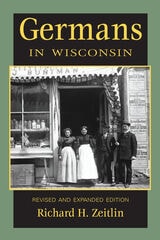
Germans in Wisconsin
Richard H. Zeitlin
Wisconsin Historical Society Press, 2001
Between 1820 and 1910, nearly five and a half million German-speaking immigrants came to the United States in search of new homes, new opportunities, and freedom from European tyrannies. Most settled in the Midwest, and many came to Wisconsin, whose rich farmlands and rising cities attracted three major waves of immigrants. By 1900, German farmers, merchants, manufacturers, editors, and educators—to say nothing of German churches (both Catholic and Lutheran), cultural institutions, food, and folkways—had all set their mark upon Wisconsin. In the most recent census (1990), more than 53 percent of the state's residents considered themselves "German"—the highest of any state in the Union.
In this best-selling book, now with updated text and additional historical photographs, Richard H. Zeitlin describes the values and ideas the Germans brought with them from the Old Country; highlights their achievements on the farm, in the workplace, and in the academy over the course of 150 years; and explains why their impact has been so profound and pervasive.
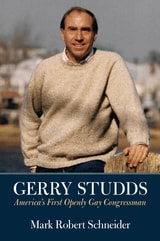
Gerry Studds
America's First Openly Gay CongressmanMark Robert Schneider
University of Massachusetts Press, 2017
The defining moment of his career, however, came in 1983, when he was censured by the House for having had an affair with a page ten years previously. On the floor of Congress, Studds confessed to having behaved inappropriately and then courageously declared that he was a gay man—becoming the country's first openly gay member of Congress. Defying all expectations, Studds won reelection in a bruising campaign. For the rest of his career, he remained loyal to his constituents' concerns while also championing AIDS research and care, leading the effort in Congress to allow gays and lesbians to serve in the military, and opposing the Defense of Marriage Act. Once a deeply conflicted man, he ultimately found a balance between his public service and his private life, which included a happy, legally recognized marriage.
Gertrude Stein
The Language That Rises: 1923-1934Ulla E. Dydo
Northwestern University Press, 2008
The first extensive examination of Stein's notebooks, manuscripts and letters, prepared over a period of twenty years, Gertrude Stein: The Language That Rises asks new questions and explores new ways of reading Stein. This definitive study give us a finely detailed, deeply felt understanding of Stein, the great modernist, throughout one of her most productive periods. From "An Elucidation" in 1923 to Lectures In America in 1934, Ulla E. Dydo examines the process of the making and remaking of Stein's texts as they move from notepad to notebook to manuscript, from an idea to the ultimate refinement of the author's intentions. The result is an unprecedented view of the development of Stein's work, word by word, text by text, and over time.
Gestating Judaism
The Corporeal Technologies of American Jewish ReligionCara Rock-Singer
University of Chicago Press, 2026
An ethnography of how people use reproductive practices to transmit and reinvent American Judaism.
In Gestating Judaism, Cara Rock-Singer develops a new analytic technique called ethnodrashy (a combination of rabbinical midrash and sociological ethnography) to explore the centrality of reproductive bodies to the intellectual, political, and spiritual life of American Judaism. She considers how, in reproduction, religious practices like the mikveh combine with secular practices like fertility treatments in ways that challenge the popular idea that religion occupies a separate sphere of life from politics or science. In fact, Rock-Singer shows how Jewish feminists have leveraged the work of reproduction to intervene in important conversations about both politics and theology. Drawing together religious studies, gender studies, and science and technology studies, Gestating Judaism shows how Jewish tradition is transmitted and reinvented through the ongoing labor of reproduction.
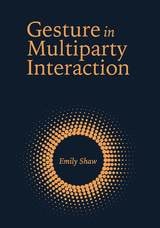
Gesture in Multiparty Interaction
Emily Shaw
Gallaudet University Press, 2018
Shaw filmed Deaf and hearing participants playing a gesture-based game as part of a social game night. Their interactions were then studied using discourse analysis to see whether and how Deaf and hearing people craft discourses through the use of their bodies. This volume examines gesture, not just for its iconic, imagistic qualities, but also as an interactive resource in signed and spoken discourse. In addition, Shaw addresses the key theoretical barriers that prevent a full accounting of gesture’s interface with signed and spoken language. Her study pushes further the notion that language is fundamentally embodied.
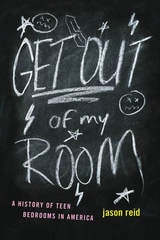
Get Out of My Room!
A History of Teen Bedrooms in AmericaJason Reid
University of Chicago Press, 2016
Even in our era of Snapchat and hoverboards, bedrooms remain a key part of teenage life, one of the only areas where a teen can exert control and find some privacy. And while these separate bedrooms only became commonplace after World War II, the idea of the teen bedroom has been around for a long time. With Get Out of My Room!, Jason Reid digs into the deep historical roots of the teen bedroom and its surprising cultural power. He starts in the first half of the nineteenth century, when urban-dwelling middle-class families began to consider offering teens their own spaces in the home, and he traces that concept through subsequent decades, as social, economic, cultural, and demographic changes caused it to become more widespread. Along the way, Reid shows us how the teen bedroom, with its stuffed animals, movie posters, AM radios, and other trappings of youthful identity, reflected the growing involvement of young people in American popular culture, and also how teens and parents, in the shadow of ongoing social changes, continually negotiated the boundaries of this intensely personal space.
Richly detailed and full of surprising stories and insights, Get Out of My Room! is sure to offer insight and entertainment to anyone with wistful memories of their teenage years. (But little brothers should definitely keep out.)
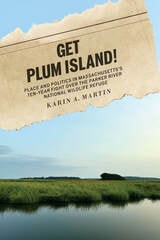
Get Plum Island!
Place and Politics in Massachusetts's Ten-Year Fight Over the Parker River National Wildlife RefugeKarin A. Martin
University of Massachusetts Press, 2026
An environmental history of resistance, negotiation, and conservation on the Massachusetts coast
An hour north of Boston, Parker River National Wildlife Refuge occupies the southern three-quarters of Plum Island, a barrier island off the Massachusetts coast. Parker River is a nationally renowned birding destination and the second most-visited wildlife refuge in the Northeast, drawing over 300,000 visitors annually. Today, environmentally minded Massachusetts barely remembers the decade-long fight that reduced the refuge to half its original size. Get Plum Island! tells the forgotten story of how six small towns in Essex County (Newbury, West Newbury, Rowley, Ipswich, Groveland, and Georgetown) fought the establishment of the refuge in the 1940s. Through political organizing across local, state, and federal levels, the opposition nearly abolished the refuge and ultimately succeeded in making it smaller.
The conflict was deeply shaped by class, geography, and competing visions of land use. On one side were elite conservationists—sportsmen, ornithologists, and preservation advocates from Boston, Cambridge, and Newton—who envisioned a federally protected habitat. On the other side of the conflict, a group of mostly middle- and working-class men, farmers, and local hunters organized a resistance to the establishment of a refuge. Through protests, public hearings, and even aggression toward visiting federal officials, local opposition made the case that their communities had clammed, farmed, and hunted the disputed lands before there even was a United States government. They recounted a version of their history as founders of the nation that made them, in their view, entitled to the land that was given to them by the English Crown. In telling this story, Get Plum Island! reveals how ordinary citizens can challenge—and reshape—federal authority, and offers a timely case study in the politics of land, class, and conservation.
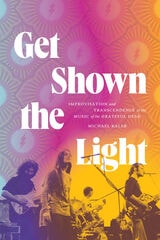
Get Shown the Light
Improvisation and Transcendence in the Music of the Grateful DeadMichael Kaler
Duke University Press, 2023
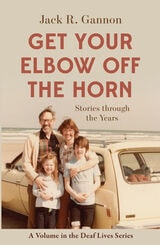
Get Your Elbow Off the Horn
Stories through the YearsJack R. Gannon
Gallaudet University Press, 2020
Many of his recollections are brief sketches that reveal much about being Deaf—and about being human. From reflecting on the difficult choices parents must make for their children, to recounting awkward communication exchanges, Gannon marries good humor with a poignant advocacy for sign language rights. His stories preserve and share Deaf American life and culture as he experienced it.
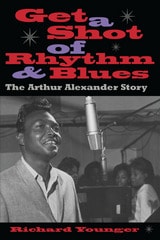
Get a Shot of Rhythm and Blues
The Arthur Alexander StoryRichard Younger
University of Alabama Press, 2000
The first book-length biography of an influential country/soul legend whose songs have been recorded by the Beatles, the Rolling Stones, and Bob Dylan.
Get a Shot of Rhythm and Blues chronicles the rise, fall, and rebirth of Arthur Alexander, an African American singer-songwriter whose music influenced many of the rock and soul musicians of the 1960s. Although his name is not well known today, Alexander's musical legacy is vast. His 1962 song "You Better Move On" was the first hit to emerge from the fledgling Muscle Shoals FAME studio in Alabama, and his fusion of country and soul and his heartfelt vocals on such songs as "Anna (Go to Him)" and "Every Day I Have to Cry" were revered by musicians including the Beatles, the Rolling Stones, and Bob Dylan, all of whom recorded his songs.
Alexander's story is a tragic one, with a brief, redemptive finale. His meteoric rise after the release of "You Better Move On" gave way to lean years caused both by his drug and alcohol abuse and by the mishandling of his career by producers and managers. In 1977, he quit the music business, but his music lived on. In 1992, Alexander returned to
the studio and recorded the critically praised album Lonely Just Like Me. Just three months after the album's release in March 1993, he suffered a heart attack in the offices of his music publisher in Nashville and died three days later.
In telling Alexander's story, Richard Younger captures the burgeoning music scenes in Muscle Shoals and Nashville during the 1960s and 1970s and recovers the life of a fascinating musician whose influence was international. Younger's account is enriched by his interviews with more than 200 artists, family members, and friends--such as Rick Hall, Billy Sherrill, Charlie McCoy, Chuck Jackson, Gerry Marsden, and Kris Kristofferson--and includes an abundance of never-before-seen photographs.
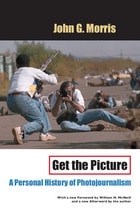
Get the Picture
A Personal History of PhotojournalismJohn G. Morris
University of Chicago Press, 2002
Find out in Get the Picture, a personal history of fifty years of photojournalism by one of the top journalists of the twentieth century. John G. Morris brought us many of the images that defined our era, from photos of the London air raids and the D-Day landing during World War II to the assassination of Robert Kennedy. He tells us the inside stories behind dozens of famous pictures like these, which are reproduced in this book, and provides intimate and revealing portraits of the men and women who shot them, including Robert Capa, Henri Cartier-Bresson, and W. Eugene Smith. A firm believer in the power of images to educate and persuade, Morris nevertheless warns of the tremendous threats posed to photojournalists today by increasingly chaotic wars and the growing commercialism in publishing, the siren song of money that leads editors to seek pictures that sell copies rather than those that can change the way we see the world.
Getting It, Having It, Keeping It Up
Straight Men’s Sexuality in Public and PrivateBeth Montemurro
Rutgers University Press, 2022
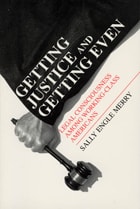
Getting Justice and Getting Even
Legal Consciousness among Working-Class AmericansSally Engle Merry
University of Chicago Press, 1990
Getting Justice and Getting Even concerns the legal consciousness of working class Americans and their experiences with court and mediation. Following cases into and through the courts, Sally Engle Merry provides an ethnographic study of local law and of the people who use it in a New England city. The litigants, primarily white, native-born, and working class, go to court because as part of mainstream America they feel entitled to use its legal system. Although neither powerful nor highly educated, they expect the law's support when they face intolerable infringements of their rights, privacy, and safety. Yet as personal problems enter the legal system and move through mediation sessions, clerk's hearings, and prosecutor's conferences, the citizen plaintiff rapidly loses control of the process. Court officials and mediators interpret and characterize the meaning of these experiences, reframing and categorizing them in different discourses. Some plaintiffs yield to these interpretations, but others resist, struggling to assert their own version of the problem.
Ultimately, Merry exposes the paradox of legal entitlement. While going to court allows an individual to dominate domestic relationships, the litigant must increasingly yield control of the situation to the court that supplies that power.
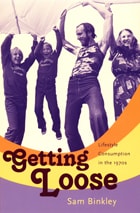
Getting Loose
Lifestyle Consumption in the 1970sSam Binkley
Duke University Press, 2007
Through a sociological analysis of the countercultural print culture of the 1970s, Sam Binkley investigates the dissemination of these self-loosening narratives and their widespread appeal to America’s middle class. He describes the rise of a genre of lifestyle publishing that emerged from a network of small offbeat presses, mostly located on the West Coast. Amateurish and rough in production quality, these popular books and magazines blended Eastern mysticism, Freudian psychology, environmental ecology, and romantic American pastoralism as they offered “expert” advice—about how to be more in touch with the natural world, how to release oneself into trusting relationships with others, and how to delve deeper into the body’s rhythms and natural sensuality. Binkley examines dozens of these publications, including the Whole Earth Catalog, Rainbook, the Catalog of Sexual Consciousness, Celery Wine, Domebook, and Getting Clear.
Drawing on the thought of Pierre Bourdieu, Zygmunt Bauman, and others, Binkley explains how self-loosening narratives helped the middle class confront the modernity of the 1970s. As rapid social change and political upheaval eroded middle-class cultural authority, the looser life provided opportunities for self-reinvention through everyday lifestyle choice. He traces this ethos of self-realization through the “yuppie” 1980s to the 1990s and today, demonstrating that what originated as an emancipatory call to loosen up soon evolved into a culture of highly commercialized consumption and lifestyle branding.
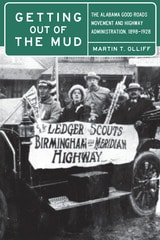
Getting Out of the Mud
The Alabama Good Roads Movement and Highway Administration, 1898–1928Martin T. Olliff, Foreword by David O. Whitten
University of Alabama Press, 2017
Recounts the history of the Good Roads Movement that arose in progressive-era Alabama, how it used the power of the state to achieve its objectives of improving market roads for farmers and highways for automobiles
Getting Out of the Mud: The Alabama Good Roads Movement and Highway Administration, 1898–1928 explores the history of the Good Roads Movement and investigates the nature of early twentieth-century progressivism in the state. Martin T. Olliff reveals how middle-class reformers secured political, economic, and social power not only by fighting against corporate domination and labor recalcitrance but also by proposing alternative projects like road improvement and identifying the interests of the rising middle class as being the most important to public interest.
With the development of national markets in the late nineteenth and early twentieth centuries, Americans began to regard the nation as a whole, rather than their state or region, as the most important political entity. Many Alabamians wished to travel beyond their local communities in all seasons without getting stuck in the mud of rudimentary rutted dirt roads. The onset of the automobile age bolstered the need for roadmaking, alerting both automobilists and good roads advocates to the possibility of a new transportation infrastructure. The Good Roads Movement began promoting farm-to-market roads, then highways that linked cities, then those that connected states. Federal matching funds for road construction after 1916 led state and federal governments to supplant the Good Roads Movement, building and administering the highway system that emerged by the late 1920s.
Olliff’s study of how Alabamians dealt with strained resources and overcame serious political obstacles in order to construct a road system that would accommodate economic growth in the twentieth century may offer clues to the resurrection of a similar strategy in our modern era. Many problems are unchanged over the hundred years between crises: Alabamians demand good roads and a government that has the capacity to build and maintain such an infrastructure while, at the same time, citizens are voting into office men and women who promise lower taxes and smaller government.
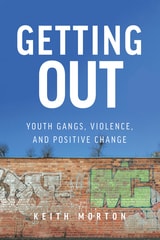
Getting Out
Youth Gangs, Violence, and Positive ChangeKeith Morton
University of Massachusetts Press, 2019
For eight years Keith Morton codirected a safe-space program for youth involved in gang or street violence in Providence, Rhode Island. Getting Out is a result of the innovative perspectives he developed as he worked alongside staff from a local nonviolence institute to help these young people make life-affirming choices. Rather than view their violence as pathological, Morton explains that gang members are victims of violence, and the trauma they have experienced leads them to choose violence as the most meaningful option available. To support young people as they “unlearned” violence and pursued nonviolent alternatives, he offered what he calls a "Youth Positive" approach that prioritizes healing over punishment and recognizes them as full human beings. Informed by deep personal connections with these youth, Morton contends that to help them, we need to change our question from “What is wrong with you?” to “What happened to you?”
Getting Paid While Taking Time
The Women's Movement and the Development of Paid Family Leave Policies in the United StatesMegan Sholar
Temple University Press, 2016
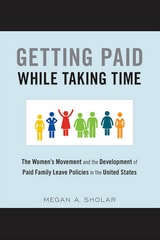
The United States remains the only industrialized nation in the world that does not provide paid family leave at the national level for either men or women. In the more than two decades since the passage of the Family and Medical Leave Act, there have been numerous unsuccessful attempts to expand family leave benefits nationally. However, in the United States, it is common for innovations in family policies to arise at the state level.
In her timely book, Getting Paid While Taking Time, Megan Sholar explains the development of family leave policies at both the national and state levels in the United States. She provides cogent studies of states that have passed and proposed family leave legislation, and she pays special attention to the ways in which women’s movement actors and other activists (e.g., labor unions) exert pressure on public officials to help influence the policymaking process. In her conclusion, Sholar considers the future of paid family leave policies in the United States and the chances for it ever equaling the benefits in other countries.
Getting Primaried
The Changing Politics of Congressional Primary ChallengesRobert G. Boatright
University of Michigan Press, 2014
Each of the past few election cycles has featured at least one instance of "primarying," a challenge to an incumbent on the grounds that he or she is not sufficiently partisan. For many observers, such races signify an increasingly polarized electorate and an increasing threat to moderates of both parties.
In Getting Primaried, Robert G. Boatright shows that primary challenges are not becoming more frequent; they wax and wane in accordance with partisan turnover in Congress. The recent rise of primarying corresponds to the rise of national fundraising bases and new types of partisan organizations supporting candidates around the country. National fundraising efforts and interest group–supported primary challenges have garnered media attention disproportionate to their success in winning elections. Such challenges can work only if groups focus on a small number of incumbents.
Getting Primaried makes several key contributions to congressional scholarship. It presents a history of congressional primary challenges over the past forty years, measuring the frequency of competitive challenges and distinguishing among types of challenges. It provides a correction to accounts of the link between primary competition and political polarization. Further, this study offers a new theoretical understanding of the role of interest groups in congressional elections.

Getting The Word Out
Academic Libraries AsMaria Bonn
Assoc of College & Research Libraries, 2015
Getting There
The Epic Struggle between Road and Rail in the American CenturyStephen B. Goddard
University of Chicago Press, 1996
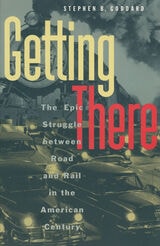
"This is a riveting story: of mighty railroads hamstrung almost overnight by government bureaucrats; of road interests led by General Motors Corp. conspiring in city after city to destroy efficient trolley systems . . . and of freeways that are far from free."—Bill Laitner, Detroit Free Press
"The combination of forces and fates that turned America into a giant parking lot from sea to shining sea is the subject of Stephen B. Goddard's lively pop history. . . . As Mr. Goddard ably points out, road-building and the creation of car-dependent suburbs have become ends in themselves."—James Howard Kunstler, Wall Street Journal
"The strength of Goddard's book is that he understands the complexities of manipulating public opinion to influence legislatures."—David Young, Chicago Tribune
"[Goddard's] book is a deft and easily read history of how transportation has shaped the nation and its economy, and ultimately, how a federation of truck and car interests drastically tilted national policies. . . . For many reasons this is an exceptionally important work."—Jim Dwyer, New York Newsday
Getting Used to Being Shot At
Mark K. Christ
University of Arkansas Press, 2002
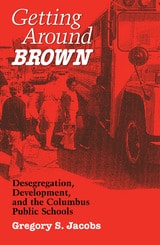
Getting around Brown
Desegregation, Development, and the Columbus Public SchoolsGregory S. Jacobs
The Ohio State University Press, 1998
Getting Around Brown is both the first history of school desegregation in Columbus, Ohio, and the first case study to explore the interplay of desegregation, business, and urban development in America.
Drawing on a broad range of sources, including over sixty interviews, the book details the causes and consequences of Penick v. Columbus Board of Education (1977). Gregory S. Jacobs argues that school desegregation in Columbus failed to produce equal educational opportunity, not because it was inherently detrimental to learning, but because it was incompatible with urban development. As a consequence, the long-term health of the city school district was sacrificed to preserve the growth of the city itself. The resulting middle-class abandonment of urban education in Columbus produced an increasingly poor, African-American city school system and a powerful form of defensive activism within the overwhelmingly white suburban systems.
The title of the book refers not only to the elaborate tools used to circumvent the spirit of the Supreme Court’s landmark 1954 Brown v. Board of Education decision but also to the need to move beyond the flawed dichotomies and failed policies that have come to define desegregation. The book calls for a reconsideration of the complicated relationship race, class, and housing patterns have with city school reform efforts, a relationship obscured by this country’s vitriolic and occasionally violent battle over busing. Jacobs concludes his study with a “modest proposal,” in which he recommends the abolition of the Columbus Public School District, the dispersal of its students throughout surrounding suburban systems, and the creation of a choice-based “experimental education zone” within the old city school district boundaries.
Readable and relevant, Getting around Brownis essential reading for scholars of recent American history, urban studies, civil rights and race relations, and educational policy, as well as anyone interested in public education and politics.
Getting into Print
The Decision-Making Process in Scholarly PublishingWalter W. Powell
University of Chicago Press, 1985
Throughout, the sociology of organizations and of culture serves as Powell's interpretive framework. Powell shows how scholarly publishers help define what is "good" social science research and how the history and tradition of a publishing house contribute to the development of an organizational identity. Powell's review of actual correspondence, from outside letters proposing projects to internal "kill" letters of rejection, suggests that editors and authors at times form their own quasi-organization with external allegiances and bonds beyond those of the publishing house.
"This is a welcome addition to the literature on the life of the organizations that produce our science and our culture. Powell's intimate look at two scholarly publishing companies has an insider's appreciation of the book business and an outsider's eye for questions the editors are not asking themselves."—Michael Schudson, University of California at San Diego
"Getting Into Print will long be the book about how academic editors choose the titles they sponsor. Even experienced editors and authors will find new insights here and revealing comparisons with decision-making in other kinds of organizations."—Edward Tenner, Los Angeles Times Book Review
"Getting Into Print is an unusually outstanding ethnographic study in that it reflects the evocative richness of detail associated with the ethnographic approach while simultaneously maintaining a clear-headed, analytical distance from the subject that allows for a meaningful theoretical contribution. Powell is an astute ethnographer who presents a vital and compelling 'insider's view' of the decision-making process in scholarly publishing, making this book fascinating reading for all those involved in the 'publish-or-perish' syndrome."—Barbara Levitt, American Journal of Sociology
Getting the Word Out
Academic Libraries as Scholarly PublishersMaria Bonn
Assoc of College & Research Libraries, 2015
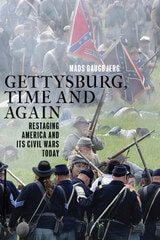
Gettysburg, Time and Again
Restaging America and Its Civil Wars TodayMads Daugbjerg
University of Massachusetts Press, 2027
Tracing how the Civil War continues to shape the landscapes, politics, and culture of today
Every year, thousands of Americans don Civil War uniforms and restage the bloodiest battle ever fought on American soil. In Gettysburg, Time and Again, Mads Daugbjerg explores how the Civil War continues to inhabit the present. Bringing together reenactors, National Park Service rangers, ghost hunters, tourists, and local residents, this study examines how Americans across social and political divides engage the past through the landscapes, institutions, and everyday practices of public history.
At once historically grounded and urgently contemporary, this book speaks directly to current struggles over the meaning of America and its values. Rather than treating time and history as abstract concepts, Daugbjerg approaches them as lived, material forces produced through commemorative landscapes, interpretive labor, and the relentless restaging of 1863 for contemporary audiences. Studying reenactment illuminates not only a distinctive cultural practice but also the broader processes through which the past is continuously reshaped, repeated, and felt in the present. He argues that present-day American unrest can be understood, in part, as a conflict over how the past is curated. He further suggests that Americans today often occupy profoundly different temporal worlds.
Daugbjerg traces these tensions through landscapes, material culture, tourism infrastructures, and social life at Gettysburg. Challenging the commonsense notion of history as linear progression, Gettysburg, Time and Again reveals repetition as a defining feature of American historical experience. By offering a finely grained anthropology of the “present past,” Daugbjerg shows how history’s afterlives remain powerfully out of sync and why those temporal disjunctions matter now.
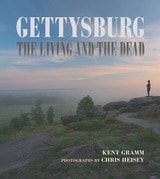
Gettysburg
The Living and the DeadKent Gramm. Photographs by Chris Heisey
Southern Illinois University Press, 2019
Creative nonfiction, fiction, dramatic dialogue, and poetry combine with full-color photographs to convey the essential reality of the famous battlefield as a place both terrible and beautiful. The living and the dead contained here include Confederates and Yankees, soldiers and civilians, male and female, young and old. Visitors to the battlefield after 1863, both well known and obscure, provide the voices of the living. They include a female admiral in the U.S. Navy and a man from rural Virginia who visits the battlefield as a way of working through the death of his son in Iraq. The ghostly voices of the dead include actual participants in the battle, like a fiery colonel and a girl in Confederate uniform, as well as their representatives, such as a grieving widow who has come to seek her husband.
Utilizing light as a central motif and fourscore and seven voices to evoke how Gettysburg continues to draw visitors and resound throughout history, alternately wounding and stitching the lives it touches, Gramm’s words and Heisey’s photographs meld for a historical experience unlike any other. Gettysburg: The Living and the Dead offers a panoramic view wherein the battle and battlefield of Gettysburg are seen through the eyes of those who lived through it and died on it as well as those who have sought meaning at the site ever since.
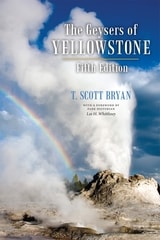
Geysers of Yellowstone, Fifth Edition
T. Scott Bryan
University Press of Colorado, 2018
Both a reference work and a fine introduction to the nature of geyser activity, this popular field guide includes a glossary of key terms, a comprehensive appendix that discusses other geyser areas of the world, detailed maps of each geyser basin, and tables for easy reference. The Geysers of Yellowstone will continue to serve geyser gazers as well as newcomers to geothermal phenomena for years to come.
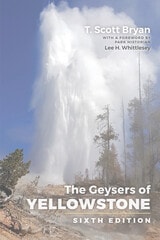
Geysers of Yellowstone
Sixth EditionT. Scott Bryan
University Press of Colorado, 2024
Both a reference work and a fine introduction to the nature of geyser activity, this popular field guide includes detailed maps of each geyser basin, tables for easy reference, and a glossary of key terms. A comprehensive appendix discusses other geyser areas of the world, several of which are described here for the first time. The Geysers of Yellowstone will continue to serve geyser gazers as well as newcomers to geothermal phenomena for years to come.

Ghost Ranch
Lesley Poling-Kempes
University of Arizona Press, 2005
Building on the history of the Abiquiu region that she told in Valley of Shining Stone, Ghost Ranch historian Lesley Poling-Kempes now unfolds the story of this celebrated retreat. She traces its transformation from el Rancho de los Brujos, a hideout for legendary outlaws, to a renowned cultural mecca and one of the Southwest’s premier conference centers.
First a dude ranch, Ghost Ranch became a magical sanctuary where the veil between heaven and earth seemed almost transparent. Focusing on those who visited from the 1920s and ’30s until the 1990s, Poling-Kempes tells how O’Keeffe and others—from Boston Brahmin Carol Bishop Stanley to paleontologist Edwin H. Colbert, Los Alamos physicists to movie stars—created a unique community that evolved into the institution that is Ghost Ranch today. For this book, Poling-Kempes has drawn on information not available when Valley of Shining Stone was written. The biography of Juan de Dios Gallegos has been enhanced and definitively corrected. The Robert Wood Johnson (of Johnson & Johnson) years at Ghost Ranch are recounted with reminiscences from family members. And the memories of David McAlpin Jr. shed light on how the Princeton circle that included the Packs, the Johnson brothers, the Rockefellers, and the McAlpins ended up as summer neighbors on the high desert of New Mexico.
After Arthur Pack’s gift of the ranch to the Presbyterian Church in 1955, Ghost Ranch became a spiritual home for thousands of people still awestruck by the landscape that O’Keeffe so lovingly committed to canvas; yet the care taken to protect Ghost Ranch’s land and character has preserved its sense of intimacy. By relating its remarkable story, Poling-Kempes invites all visitors to better appreciate its place as an honored wilderness—and to help safeguard its future.
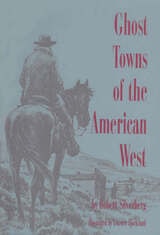
Ghost Towns of the American West
Robert Silverberg
Ohio University Press, 1990
The story of the American mining frontier can be traced through the ghost towns that dot the western landscape to this day, from the camps of California’s forty-niners to the twentieth-century ruins in the Nevada desert. These abandoned towns mark an epoch of high adventure, of quick wealth and quicker poverty, of gambling and gunslinging and hell-raising. Those who have seen the Old West movies sometimes think that the legends of the Wild West were invented by screenwriters. The ghost towns remain, and their battered ruins testify that the legends are true. Behind the tall tales is a history where a fortune could be made in a week and lost over the course of an evening.
With a historian’s attention to fact and a novelist’s gift for dramatic storytelling, celebrated science fiction author Robert Silverberg brings these adventures back to life in the rowdy splendor of their heyday in Ghost Towns of the American West. History and travelers’ tales are woven together with clarity and wit to create a lively account of a fascinating era in our history. Lorence Bjorklund’s illustrations, rich in detail, portray the ghost towns in their glory and in their dusty decline.
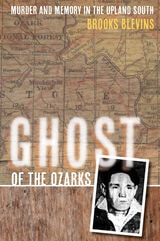
Ghost of the Ozarks
Murder and Memory in the Upland SouthBrooks Blevins
University of Illinois Press, 2012
Ghostly Communion
Cross-Cultural Spiritualism in Nineteenth-Century American LiteratureJohn J. Kucich
Dartmouth College Press, 2015
Ghostly Figures
Memory and Belatedness in Postwar American PoetryAnn Keniston
University of Iowa Press, 2015
Ghostly Figures contends that this poetics of belatedness, along with the way it is bound to questions of poetic making, is a central, if critically neglected, force in postwar American poetry. Discussing works by Sylvia Plath, Adrienne Rich, Jorie Graham, Susan Howe, and a group of poets responding to the AIDS epidemic, Ann Keniston draws on and critically assesses trauma theory and psychoanalysis, as well as earlier discussions of witness, elegy, lyric trope and figure, postmodernism, allusion, and performance, to define the ghosts that clearly dramatize poetics of belatedness throughout the diverse poetry of post–World War II America.
Ghosts in the Schoolyard
Racism and School Closings on Chicago's South SideEve L. Ewing
University of Chicago Press, 2018
That’s how Eve L. Ewing opens Ghosts in the Schoolyard: describing Chicago Public Schools from the outside. The way politicians and pundits and parents of kids who attend other schools talk about them, with a mix of pity and contempt.
But Ewing knows Chicago Public Schools from the inside: as a student, then a teacher, and now a scholar who studies them. And that perspective has shown her that public schools are not buildings full of failures—they’re an integral part of their neighborhoods, at the heart of their communities, storehouses of history and memory that bring people together.
Never was that role more apparent than in 2013 when Mayor Rahm Emanuel announced an unprecedented wave of school closings. Pitched simultaneously as a solution to a budget problem, a response to declining enrollments, and a chance to purge bad schools that were dragging down the whole system, the plan was met with a roar of protest from parents, students, and teachers. But if these schools were so bad, why did people care so much about keeping them open, to the point that some would even go on a hunger strike?
Ewing’s answer begins with a story of systemic racism, inequality, bad faith, and distrust that stretches deep into Chicago history. Rooting her exploration in the historic African American neighborhood of Bronzeville, Ewing reveals that this issue is about much more than just schools. Black communities see the closing of their schools—schools that are certainly less than perfect but that are theirs—as one more in a long line of racist policies. The fight to keep them open is yet another front in the ongoing struggle of black people in America to build successful lives and achieve true self-determination.
Ghosts of Glen Canyon
History beneath Lake PowellC Gregory Crampton
University of Utah Press, 2009
Author Gregory Crampton led the historical investigations of Glen and San Juan Canyons from 1957 to 1963 under contract with the National Park Service. The objective was to locate and record historical sites that would be lost to the rising waters of the reservoir. This book records that effort.
First published in 1986, this edition has been revised to include several new “ghosts” of Glen Canyon, including a never-before-published foreword by Edward Abbey. It also showcases stunning color photographs by Philip Hyde and includes hundreds of black-and-white photographs taken by the original salvage crews.
This informative guide to the historic treasures of Glen Canyon includes numbered maps keyed to each location. It is a book for both the armchair traveler and the lake enthusiast eager for a journey through the past to a place few had the privilege to know.
Ghosts of the Colorado Plains
Perry Eberhart
Ohio University Press, 1996
Since the second quarter of the nineteenth century, changing conditions have built and emptied small and large towns across the Colorado plain. At the time when Denver was little more than an overpopulated campsite along Cherry Creek there were numerous other settlements to the east and south, each with its own dreams of growth, gold or silver strikes, railroad connections, and rising influence over the surrounding territory. In Ghosts of the Colorado Plains, Eberhart traces some 150 of these ill-fated settlements, providing accounts of their birth, peak activity, and ultimate demise.
As early trapping, mining, cattle, farming, and transportation industries brought successive waves of “easterners” into the territory, they created some of the most colorful communities of their time. The trail towns Boston and Trail City were reputed to be two of the roughest towns in the entire west. Real estate schemers and promoters offered dreams of civilization and respectability in the “cow towns.” Elsewhere, the stage stations, side of the road settlements, and farm centers arose out of the basic necessities of commerce and from a simple desire of far-flung settlers, trappers, and others for a place to congregate, celebrate, trade, brawl, and receive news from the east. Though the personalities and events which animated these communities are all but forgotten, the towns themselves are the legacy of the competing forces that opened and developed the Colorado territory.
Readers of Guide to Colorado Ghost Towns and Mining Camps will welcome Ghosts of the Colorado Plains as an extension of Eberhart’s colorful blend of history and on-site information to a larger and much neglected area of the state. Through historical records, vignettes of personalities, and over 250 photos and 80 maps, Eberhart provides ready access to the towns and settlment sites of eastern Colorado’s past. For travelers, Ghosts of the Colorado Plains offers numerous pleasant excursions and investigations; for those less inclined to take to the field in search of artifacts and sites, the book offers fascinating glimpses of Colorado’s disappearing past.
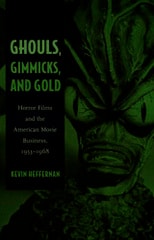
Ghouls, Gimmicks, and Gold
Horror Films and the American Movie Business, 1953–1968Kevin Heffernan
Duke University Press, 2004
Heffernan argues that major cultural and economic shifts in the production and reception of horror films began at the time of the 3-d film cycle of 1953–54 and ended with the 1968 adoption of the Motion Picture Association of America’s ratings system and the subsequent development of the adult horror movie—epitomized by Rosemary’s Baby. He describes how this period presented a number of daunting challenges for movie exhibitors: the high costs of technological upgrade, competition with television, declining movie attendance, and a diminishing number of annual releases from the major movie studios. He explains that the production and distribution branches of the movie industry responded to these trends by cultivating a youth audience, co-producing features with the film industries of Europe and Asia, selling films to television, and intensifying representations of sex and violence. Shining through Ghouls, Gimmicks, and Gold is the delight of the true horror movie buff, the fan thrilled to find The Brain that Wouldn’t Die on television at 3 am.
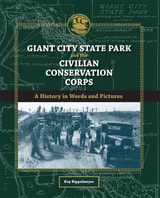
Giant City State Park and the Civilian Conservation Corps
A History in Words and PicturesKay Rippelmeyer
Southern Illinois University Press, 2010
Many recognize Giant City State Park as one of the premier recreation spots in southern Illinois, with its unspoiled forests, glorious rock formations, and famous sandstone lodge. But few know the park’s history or are aware of the remarkable men who struggled to build it. Giant City State Park and the Civilian Conservation Corps: A History in Words and Pictures provides the first in-depth portrait of the park’s creation, drawing on rarely seen photos, local and national archival research, and interviews to present an intriguing chapter in Illinois history.
Kay Rippelmeyer traces the geological history of the park, exploring the circumstances that led to the breathtaking scenery for which Giant City is so well known, and providing insightful background on and cultural history of the area surrounding the park. Rippelmeyer then outlines the effects of the Great Depression and the New Deal on southern Illinois, including relief efforts by the Civilian Conservation Corps, which began setting up camps at Giant City in 1933. The men of the CCC, most of them natives of southern and central Illinois, are brought to life through vividly detailed, descriptive prose and hundreds of black-and-white photographs that lavishly illustrate life in the two camps at the park. This fascinating book not only documents the men’s hard work—from the clearing of the first roads and building of stone bridges, park shelters, cabins, and hiking and bridle trails, to quarry work and the raising of the lodge’s famous columns—it also reveals the more personal side of life in the two camps at the park, covering topics ranging from education, sports, and recreation, to camp newspapers, and even misbehavior and discipline.
Supplementing the photographs and narrative are engaging conversations with alumni and family members of the CCC, which give readers a rich oral history of life at Giant City in the 1930s. The book is further enhanced by maps, rosters of enrollees and officers, and a list of CCC camps in southern Illinois. The culmination of three decades of research, Giant City State Park and the Civilian Conservation Corps provides the most intimate history ever of the park and its people, honoring one of Illinois’s most unforgettable places and the men who built it.
Giant Steps
Suffragettes and SoldiersMary Blair Immel
Indiana Historical Society Press, 2017
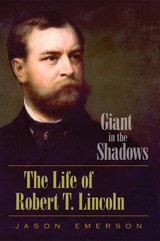
Giant in the Shadows
The Life of Robert T. LincolnJason Emerson
Southern Illinois University Press, 2012
University Press Books for Public and Secondary Schools, 2013 edition
Book of the Year by the Illinois State historical Society, 2013
Although he was Abraham and Mary Lincoln’s oldest and last surviving son, the details of Robert T. Lincoln’s life are misunderstood by some and unknown to many others. Nearly half a century after the last biography about Abraham Lincoln’s son was published, historian and author Jason Emerson illuminates the life of this remarkable man and his achievements in Giant in the Shadows: The Life of Robert T. Lincoln. Emerson, after nearly ten years of research, draws upon previously unavailable materials to offer the first truly definitive biography of the famous lawyer, businessman, and statesman who, much more than merely the son of America’s most famous president, made his own indelible mark on one of the most progressive and dynamic eras in United States history.
Born in a boardinghouse but passing his last days at ease on a lavish country estate, Robert Lincoln played many roles during his lifetime. As a president’s son, a Union soldier, an ambassador to Great Britain, and a U.S. secretary of war, Lincoln was indisputably a titan of his age. Much like his father, he became one of the nation’s most respected and influential men, building a successful law practice in the city of Chicago, serving shrewdly as president of the Pullman Car Company, and at one time even being considered as a candidate for the U.S. presidency.
Along the way he bore witness to some of the most dramatic moments in America’s history, including Robert E. Lee’s surrender at Appomattox Courthouse; the advent of the railroad, telephone, electrical, and automobile industries; the circumstances surrounding the assassinations of three presidents of the United States; and the momentous presidential election of 1912. Giant in the Shadows also reveals Robert T. Lincoln’s complex relationships with his famous parents and includes previously unpublished insights into their personalities. Emerson reveals new details about Robert’s role as his father’s confidant during the brutal years of the Civil War and his reaction to his father’s murder; his prosecution of the thieves who attempted to steal his father’s body in 1876 and the extraordinary measures he took to ensure it would never happen again; as well as details about the painful decision to have his mother committed to a mental facility. In addition Emerson explores the relationship between Robert and his children, and exposes the actual story of his stewardship of the Lincoln legacy—including what he and his wife really destroyed and what was preserved. Emerson also delves into the true reason Robert is not buried in the Lincoln tomb in Springfield but instead was interred at Arlington National Cemetery.
Meticulously researched, full of never-before-seen photographs and new insight into historical events, Giant in the Shadows is the missing chapter of the Lincoln family story. Emerson’s riveting work is more than simply a biography; it is a tale of American achievement in the Gilded Age and the endurance of the Lincoln legacy.
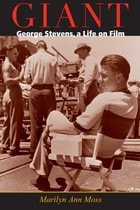
Giant
George Stevens, a Life on FilmMarilyn Ann Moss
University of Wisconsin Press, 2015
Moss documents Stevens’s role as a powerful director who often had to battle the heads of major studios to get his films made his way. She traces the four decades Stevens was a major Hollywood player and icon, from his earliest days at the Hal Roach Studios—where he learned to be a cameraman, writer, and director for Laurel and Hardy features—up to when his films made millions at the box office and were graced by actors such as Elizabeth Taylor, James Dean, Alan Ladd, and Montgomery Clift.
Giants Among Us
First-Generation College Graduates Who Lead Activist LivesSandria Rodriguez
Vanderbilt University Press, 2001
The daughter of parents who didn't finish elementary school, Rodriguez uses many examples from her own life in the course of examining the participants' experiences before, during, and after college that directed them toward social or educational activism. Together, the seventeen represent a wide range of diversity in terms of race, ethnicity, age, geographical area of childhood, and profession. Twelve of the seventeen hold advanced degrees, all are working professionals, and all come from families who were poor. Jerry, the son of German immigrants, owns an engineering company in Chicago; Chang, a native of China, is the first from his village to go to college; Grant, a sharecropper's son, is a lawyer with a nationally prominent law firm in Washington, D.C., and patron of fine arts; Arlene, a Mohawk Indian, is a storyteller and social activist; Alex, from Spanish Harlem, is an elementary school principal.
The book is divided into four parts. In the first two chapters, we meet the participants. In the three chapters that follow, Rodriguez examines how the participants as children perceived themselves within their families, schools, and communities. Chapters four and five focus on the campus life and the participants' activist experiences. Finally, chapter six offers recommendations for mentoring disadvantaged children, so that they can successfully "switch the track" and aim for something better.
Giants Among Us is an essential resource for college administrators, faculty, counselors, and student support-services staff--as well as K-12 educators--concerned with preparing, retaining and mentoring first-generation students.
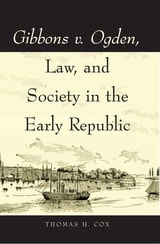
Gibbons v. Ogden, Law, and Society in the Early Republic
Thomas H. Cox
Ohio University Press, 2009
Gibbons v. Ogden, Law, and Society in the Early Republic examines a landmark decision in American jurisprudence, the first Supreme Court case to deal with the thorny legal issue of interstate commerce.
Decided in 1824, Gibbons v. Ogden arose out of litigation between owners of rival steamboat lines over passenger and freight routes between the neighboring states of New York and New Jersey. But what began as a local dispute over the right to ferry the paying public from the New Jersey shore to New York City soon found its way into John Marshall’s court and constitutional history. The case is consistently ranked as one of the twenty most significant Supreme Court decisions and is still taught in constitutional law courses, cited in state and federal cases, and quoted in articles on constitutional, business, and technological history.
Gibbons v. Ogden initially attracted enormous public attention because it involved the development of a new and sensational form of technology. To early Americans, steamboats were floating symbols of progress—cheaper and quicker transportation that could bring goods to market and refinement to the backcountry. A product of the rough-and-tumble world of nascent capitalism and legal innovation, the case became a landmark decision that established the supremacy of federal regulation of interstate trade, curtailed states’ rights, and promoted a national market economy. The case has been invoked by prohibitionists, New Dealers, civil rights activists, and social conservatives alike in debates over federal regulation of issues ranging from labor standards to gun control. This lively study fills in the social and political context in which the case was decided—the colorful and fascinating personalities, the entrepreneurial spirit of the early republic, and the technological breakthroughs that brought modernity to the masses.
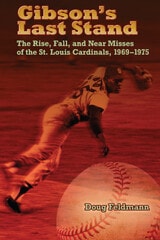
Gibson's Last Stand
The Rise, Fall, and Near Misses of the St. Louis Cardinals, 1969-1975Doug Feldmann
University of Missouri Press, 2013
Girls Who Wore Black
Women Writing the Beat GenerationJohnson, Ronna C
Rutgers University Press, 2002
Girls Will Be Boys
Cross-Dressed Women, Lesbians, and American Cinema, 1908-1934Horak, Laura
Rutgers University Press, 2016
Finalist for 2016 Richard Wall Memorial Award from the Theatre Library Association
Long-listed for the 2017 Best Photography Book Award from the Kraszna-Krausz Foundation
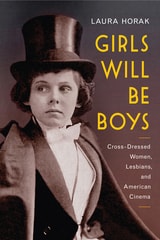
Marlene Dietrich, Greta Garbo, and Katharine Hepburn all made lasting impressions with the cinematic cross-dressing they performed onscreen. What few modern viewers realize, however, is that these seemingly daring performances of the 1930s actually came at the tail end of a long wave of gender-bending films that included more than 400 movies featuring women dressed as men.
Laura Horak spent a decade scouring film archives worldwide, looking at American films made between 1908 and 1934, and what she discovered could revolutionize our understanding of gender roles in the early twentieth century. Questioning the assumption that cross-dressing women were automatically viewed as transgressive, she finds that these figures were popularly regarded as wholesome and regularly appeared onscreen in the 1910s, thus lending greater respectability to the fledgling film industry. Horak also explores how and why this perception of cross-dressed women began to change in the 1920s and early 1930s, examining how cinema played a pivotal part in the representation of lesbian identity.
Girls Will Be Boys excavates a rich history of gender-bending film roles, enabling readers to appreciate the wide array of masculinities that these actresses performed—from sentimental boyhood to rugged virility to gentlemanly refinement. Taking us on a guided tour through a treasure-trove of vintage images, Girls Will Be Boys helps us view the histories of gender, sexuality, and film through fresh eyes.

Girls in Trouble with the Law
Schaffner, Laurie
Rutgers University Press, 2006
Offering a critical assessment of what she describes as a gender-insensitive juvenile legal system, Schaffner makes a compelling argument that current policies do not go far enough to empower disadvantaged girls so that communities can assist them in overcoming the social limitations and gender, sexual, and racial/ethnic discrimination that continue to plague young women growing up in contemporary United States.
Give Me This Mountain
LIFE HISTORY AND SELECTED SERMONSReverend C. L. Franklin
University of Illinois Press, 1989
Few black preachers have been better known that the Reverend C. L. Franklin; none has been considered a better preacher. This collection of twenty of Franklin's best sermons shows the development of his style. A learned man, Franklin had attended both seminary and college, yet in his sermons used the old-fashioned, extemporaneous style of preaching, "whooping" or chanting, combining oratory and intoned poetry to reach both head and heart.
Dozens of Franklin's sermons were released on record albums, and he went on preaching tours with gospel groups that included his daughter, Aretha Franklin, reaching virtually every corner of the United States.
This volume begins with Franklin's life history, told in his own words.
In an afterword, Jeff Titon reviews the African-American sermon tradition
and Franklin's place in it.
Given Up for You
A Memoir of Love, Belonging, and BeliefErin O. White
University of Wisconsin Press, 2018