Results by title
22279 books match the query 'Social Science' and 583 start with g
Glen Canyon Archaeological Survey Part II
UUAP 39.2Don D. Fowler
University of Utah Press, 1959
Glen Canyon Country, The
A Personal MemoirDon D Fowler
University of Utah Press, 2011
In his new book, The Glen Canyon Country, archaeologist Don D. Fowler shares the history of a place and the peoples who sojourned there over the course of several thousand years. To tell this story, he weaves his personal experience as a student working on the Glen Canyon Salvage Project with accounts of early explorers, geologists, miners, railroad developers, settlers, river runners, and others who entered this magical place. The book details the canyon’s story via historical and scientific summaries, biographical sketches, personal memoir, and previously unpublished photos of the land and its explorers.

Glen Canyon
An Archaeological SummaryJesse D Jennings
University of Utah Press, 1998
In 1956, Congress passed legislation that provided authorization and funds for emergency research to be conducted in Glen Canyon in response to the threat of losses posted by the construction of the Glen Canyon Dam in northern Arizona. For eight years, scientists worked against the clock to record the archaeology, geology, history, and paleontology of the region before the waters of Lake Powell covered the area.
In this highly interpretive summary, Jesse Jennings preserves the achievements of the salvage team and explains how the finds affected previous conclusions. Maps and photographs capture archaeological artifacts as well as the landscape of the area. This book also highlights the larger consequences of the massive salvage project — among them the stimulation of additional Southwest research, the applications of techniques made in response to emergency situations, and a valuable perspective on the Pueblo culture. Because this area is becoming increasingly controversial, with a raging debate over whether Lake Powell should be drained, Glen Canyon: An Archaeological Summary stands as more than a model of salvage archaeology. It is also a record and testament of the rich history of Glen Canyon.

Glikl
Memoirs 1691-1719Annotated by and with an Introduction by Chava Turniansky
Brandeis University Press, 2019
These words from the memoirs Glikl bas Leib wrote in Yiddish between 1691 and 1719 shed light on the life of a devout and worldly woman. Writing initially to seek solace in the long nights of her widowhood, Glikl continued to record the joys and tribulations of her family and community in an account unique for its impressive literary talents and strong invocation of self. Through intensely personal recollections, Glikl weaves stories and traditional tales that express her thoughts and beliefs. While influenced by popular Yiddish moral literature, Glikl’s frequent use of first person and the significance she assigns her own life experience set the work apart. Informed by fidelity to the original Yiddish text, this authoritative new translation is fully annotated to explicate Glikl’s life and times, offering readers a rich context for appreciating this classic work.

Glimpses into My Own Black Box
An Exercise in Self-DeconstructionGeorge W. Stocking
University of Wisconsin Press, 2010
George W. Stocking, Jr., has spent a professional lifetime exploring the history of anthropology, and his findings have shaped anthropologists’ understanding of their field for two generations. Through his meticulous research, Stocking has shown how such forces as politics, race, institutional affiliations, and personal relationships have influenced the discipline from its beginnings. In this autobiography, he turns his attention to a subject closer to home but no less challenging. Looking into his own “black box,” he dissects his upbringing, his politics, even his motivations in writing about himself. The result is a book systematically, at times brutally, self-questioning.
An interesting question, Stocking says, is one that arouses just the right amount of anxiety. But that very anxiety may be the ultimate source of Stocking’s remarkable intellectual energy and output. In the first two sections of the book, he traces the intersecting vectors of his professional and personal lives. The book concludes with a coda, “Octogenarian Afterthoughts,” that offers glimpses of his life after retirement, when advancing age, cancer, and depression changed the tenor of his reflections about both his life and his work.
This book is the twelfth and final volume of the influential History of Anthropology series.

Glitter Up the Dark
How Pop Music Broke the BinaryBy Sasha Geffen
University of Texas Press, 2020
Why has music so often served as an accomplice to transcendent expressions of gender? Why did the query "is he musical?" become code, in the twentieth century, for "is he gay?" Why is music so inherently queer? For Sasha Geffen, the answers lie, in part, in music’s intrinsic quality of subliminal expression, which, through paradox and contradiction, allows rigid gender roles to fall away in a sensual and ambiguous exchange between performer and listener. Glitter Up the Dark traces the history of this gender fluidity in pop music from the early twentieth century to the present day.
Starting with early blues and the Beatles and continuing with performers such as David Bowie, Prince, Missy Elliot, and Frank Ocean, Geffen explores how artists have used music, fashion, language, and technology to break out of the confines mandated by gender essentialism and establish the voice as the primary expression of gender transgression. From glam rock and punk to disco, techno, and hip-hop, music helped set the stage for today’s conversations about trans rights and recognition of nonbinary and third-gender identities. Glitter Up the Dark takes a long look back at the path that led here.
Global Black Consciousness
Natalie Natalie Crawford and Salah M. Hassan, special issue editors
Duke University Press, 2018
Contributors: Hisham Aidi, Souleymane Bachir Diagne, Ahmed Bedjaoui, Margo Natalie Crawford, Romi Crawford, Lydie Diakhaté, Manthia Diawara, Amanda Gilvin, Salah M. Hassan, Shannen Hill, Tsitsi Jaji, Barbara Murray, Zita Nunes, Ugochukwu-Smooth C. Nzewi, Richard J. Powell, Holiday Powers, Shana L. Redmond, Penny M. Von Eschen, Dagmawi Woubshet
Global Bollywood
Travels of Hindi Song and DanceSangita Gopal
University of Minnesota Press, 2008
Bollywood movies and their signature song-and-dance spectacles are an aesthetic familiar to people around the world, and Bollywood music now provides the rhythm for ads marketing goods such as computers and a beat for remixes and underground bands. These musical numbers have inspired scenes in Western films such as Vanity Fair and Moulin Rouge.
Global Bollywood shows how this currency in popular culture and among diasporic communities marks only the latest phase of the genre’s world travels. This interdisciplinary collection describes the many roots and routes of the Bollywood song-and-dance spectacle. Examining the reception of Bollywood music in places as diverse as Indonesia and Israel, the essays offer a stimulating redefinition of globalization, highlighting the cultural influence of Hindi film music from its origins early in the twentieth century to today.
Contributors: Walter Armbrust, Oxford U; Anustup Basu, U of Illinois, Urbana-Champaign; Nilanjana Bhattacharjya, Colorado College; Edward K. Chan, Kennesaw State U; Bettina David, Hamburg U; Rajinder Dudrah, U of Manchester; Shanti Kumar, U of Texas, Austin; Monika Mehta, Binghamton U; Anna Morcom, Royal Holloway College; Ronie Parciack, Tel Aviv U; Biswarup Sen, U of Oregon; Sangita Shrestova; Richard Zumkhawala-Cook, Shippensburg U.
Sangita Gopal is assistant professor of English at the University of Oregon. Sujata Moorti is professor of women’s and gender studies at Middlebury College.
Global Child
Children and Families Affected by War, Displacement, and MigrationMyriam Denov
Rutgers University Press, 2023
Global Cinema Networks
Gorfinkel, Elena
Rutgers University Press, 2018
Global Circuits of Blackness
Interrogating the African DiasporaEdited by Jean Muteba Rahier, Percy C. Hintzen, and Felipe Smith
University of Illinois Press, 2010
Global Cities of the South, Volume 22
Ashley Dawson and Brent Hayes Edwards, eds.
Duke University Press, 0
This special issue challenges postcolonial theorists to engage with urban studies and challenges urban analysts to turn their focus to the postcolonial societies where these cities have developed. Gathering well-known scholars in postcolonial theory and urban studies, the collection opens an interdisciplinary exchange through a series of case studies focused on cities in Africa and Asia. One essay argues that the world’s urban spaces are key to the continuance of inequity under capitalist globalization (exemplified by rapidly expanding urban slums), as well as to any possible resistance to that inequity. Another article considers the history and politics of Harlem from the perspective of a well-known academic, activist, and postcolonial theorist whose work here is interwoven with the photographic art of Alice Attie. A third reflects on the politics of representation of Hindu and Muslim populations in Mumbai, evaluating popular media including film and the cosmopolitan fiction of Salman Rushdie.
Contributors. Alice Attie, Mike Davis, Ashley Dawson, Brent Hayes Edwards, Brian Larkin, Rossana Reguillo, Gayatri Chakravorty Spivak, Rashmi Varma, Victor Vich
Global Cities
Cinema, Architecture, and Urbanism in a Digital AgePetro, Patrice
Rutgers University Press, 2003

Global Communication Electric
Business, News and Politics in the World of TelegraphyEdited by M. Michaela Hampf and Simone Müller-Pohl
Campus Verlag, 2013
This book examines the emergence of this global media system between 1860 and 1930 in four sections—"Inter|Nationalisms," "Agents|Actors," "Use|News," and "Space|Time"—that aim to broaden and challenge popular conceptions of telegraphy. In exploring the varied uses of telegraphy, real or imagined, Global Communication Electric expands the notion of the telegraph as a globalizing medium: of connection as well as friction; of political, social, and economic entanglement as well as disentanglement; and of crossing as well as creating distance in space and time.
Global Currents
Media and Technology NowOren, Tasha G
Rutgers University Press, 2004
Rhetoric about media technology tends to fall into two extreme categories: unequivocal celebration or blanket condemnation. This is particularly true in debate over the clash of values when first world media infiltrate third world audiences.
Bringing together the best new work on contemporary media practices, technologies, and policies, the essayists in Global Currents argue that neither of these extreme views accurately represents the role of media technology today. New ways of thinking about film, television, music, and the internet demonstrate that it is not only media technologies that affect the cultures into which they are introduced—it is just as likely that the receiving culture will change the media.
Topics covered in the volume include copyright law and surveillance technology, cyber activism in the African Diaspora, transnational monopolies and local television industries, the marketing and consumption of “global music,” “click politics” and the war on Afghanistan, the techno-politics of distance education, artificial intelligence and global legal institutions, and traveling and “squatting” in digital space. Balanced between major theoretical positions and original field research, the selections address the political and cultural meanings that surround and configure new technologies.
Global Debates in the Digital Humanities
Domenico Fiormonte
University of Minnesota Press, 2022
A necessary volume of essays working to decolonize the digital humanities
Often conceived of as an all-inclusive “big tent,” digital humanities has in fact been troubled by a lack of perspectives beyond Westernized and Anglophone contexts and assumptions. This latest collection in the Debates in the Digital Humanities series seeks to address this deficit in the field. Focused on thought and work that has been underappreciated for linguistic, cultural, or geopolitical reasons, contributors showcase alternative histories and perspectives that detail the rise of the digital humanities in the Global South and other “invisible” contexts and explore the implications of a globally diverse digital humanities.
Advancing a vision of the digital humanities as a space where we can reimagine basic questions about our cultural and historical development, this volume challenges the field to undertake innovation and reform.
Contributors: Maria José Afanador-Llach, U de los Andes, Bogotá; Maira E. Álvarez, U of Houston; Purbasha Auddy, Jadavpur U; Diana Barreto Ávila, U of British Columbia; Deepti Bharthur, IT for Change; Sayan Bhattacharyya, Singapore U of Technology and Design; Anastasia Bonch-Osmolovskaya, National Research U Higher School of Economics; Jing Chen, Nanjing U; Carlton Clark, Kazimieras Simonavičius U, Vilnius; Carolina Dalla Chiesa, Erasmus U, Rotterdam; Gimena del Rio Riande, Institute of Bibliographic Research and Textual Criticism; Leonardo Foletto, U of São Paulo; Rahul K. Gairola, Murdoch U; Sofia Gavrilova, Leibniz Institute for Regional Geography; Andre Goodrich, North-West U; Anita Gurumurthy, IT for Change; Aliz Horvath, Eötvös Loránd U; Igor Kim, Russian Academy of Sciences; Inna Kizhner, Siberian Federal U; Cédric Leterme, Tricontinental Center; Andres Lombana-Bermudez, Pontificia, U Javeriana, Bogotá; Lev Manovich, City U of New York; Itay Marienberg-Milikowsky, Ben-Gurion U of the Negev; Maciej Maryl, Polish Academy of Sciences; Nirmala Menon, Indian Institute of Technology, Indore; Boris Orekhov, National Research U Higher School of Economics; Ernesto Priego, U of London; Sylvia Fernández Quintanilla, U of Kansas; Nuria Rodríguez-Ortega, U of Málaga; Steffen Roth, U of Turku; Dibyadyuti Roy, Indian Institute of Technology, Jodhpur; Maxim Rumyantsev, Siberian Federal U; Puthiya Purayil Sneha, Centre for Internet and Society, Bengaluru; Juan Steyn, South African Centre for Digital Language Resources; Melissa Terras, U of Edinburgh; Ernesto Miranda Trigueros, U of the Cloister of Sor Juana; Lik Hang Tsui, City U of Hong Kong; Tim Unwin, U of London; Lei Zhang, U of Wisconsin–La Crosse.
Global Decisions, Local Collisions
Urban Life In The New World OrderDavid Ranney
Temple University Press, 2002
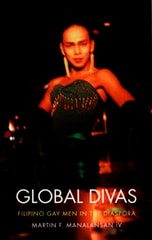
Global Divas
Filipino Gay Men in the DiasporaMartin F. Manalansan IV
Duke University Press, 2003
Manalansan locates diasporic, transnational, and global dimensions of gay and other queer identities within a framework of quotidian struggles ranging from everyday domesticity to public engagements with racialized and gendered images to life-threatening situations involving AIDS. He reveals the gritty, mundane, and often contradictory deeds and utterances of Filipino gay men as key elements of queer globalization and transnationalism. Through careful and sensitive analysis of these men’s lives and rituals, he demonstrates that transnational gay identity is not merely a consumable product or lifestyle, but rather a pivotal element in the multiple, shifting relationships that queer immigrants of color mobilize as they confront the tribulations of a changing world.
Global Dynamics of Shi'a Marriages
Religion, Gender, and BelongingYafa Shanneik
Rutgers University Press, 2022
Global Emergence Of Gay & Lesbian Pol
edited by Barry D Adam, Jan Willem Duyvendak and André Krouwel
Temple University Press, 1998
Lesbian and gay groups have existed for more than a century, often struggling against enormous odds. In the middle of the twentieth century, movement organizations were suppressed or swept away by fascism, Stalinism, and McCarthyism. Refounded by a few pioneers in the postwar period, movements have risen again as more and more people have stood up for their right to love and live with persons of their choice.
This book addresses both the mature movements of the European Union, North America, and Australia and the newer movements emerging in Latin America, Eastern Europe, and parts of Asia and Africa, examining the social and political conditions that shape movement opportunities and trajectories. It is rich in the details of gay and lesbian cultural and political life in different countries.
Global Encyclopaedia of Informality, Volume 3
A Hitchhiker's Guide to Informal Problem-Solving in human lifeEdited by Alena Ledeneva
University College London, 2024
For a post-human hitchhiker, human life–with its anxiety, aging, illness, and constant need for problem-solving–may look unviable. Yet, for humans, the life struggle is softened by human touch, human emotion, and human cooperation.
The Global Encyclopaedia of Informality, Volume 3 continues the journey of the two previous volumes into the world’s open secrets, unwritten rules, and hidden practices. It focuses on issues of emotional ambivalence and pressures of the digital age. The informal practices presented in this volume demonstrate the urgency of alleviating tensions between continuity and all-too-rapid change and the need to tackle the central problem of modern societies—uncertainty.
The volume takes the reader on a biographical journey through elusive, taken-for-granted, or banal ways of getting things done from over seventy countries and world regions. It offers an innovative understanding of the significance of fringes and challenges the assumption that informality is associated exclusively with poverty, underdevelopment, the Global South, oppressive regimes, or the former socialist countries of Eastern Europe and Central Asia. It also maps the patterns of informality around the globe, identifies specific informal practices in a context-sensitive way, and documents their ambivalent impact on people engaged in problem-solving, on societies in which these problems arise, and on humanity overall.
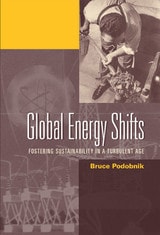
Global Energy Shifts
Fostering Sustainability in a Turbulent AgeBruce Podobnik
Temple University Press, 2005
In Global Energy Shifts, Bruce Podobnik draws intriguing parallels between the "coal panics" that once swept through Britain and the "oil panics" that grip the world today. His concise history of global energy use contextualizes the coal and oil scares, demonstrating how the convergence of specific geopolitical, commercial, and social conditions can generate rapid and far-reaching transformations in the energy foundations of our world.
Ultimately, Podobnik informs readers on how a "crisis" of one fuel system is quickly averted with the introduction of another, and describes opportunities for shifting our problematic, oil-based system toward a renewable energy system.

Global Fashion Brands
Style, Luxury and HistoryEdited by Joseph H. Hancock II, Gjoko Muratovski, Veronica Manlow, and Anne Peirson-Smith
Intellect Books, 2014
In this collection, the contributors explore the meaning behind fashion branding in the context of the contested power relations underpinning the production, marketing, and consumption of style and fashion as part of our global culture.

Global Film Color
The Monopack Revolution at MidcenturySarah Street
Rutgers University Press, 2024

Global Governance in Question
Empire, Class and the New Common Sense in Managing North-South RelationsSusanne Soederberg
Pluto Press, 2006
William I. Robinson, University of California-Santa Barbara
"[An] acute and revealing examination of the economic difficulties facing the American empire."
Ronnie D. Lipschutz, Professor of Politics, University of California, Santa Cruz
"Indispensable for students of international polical economy and a must for political activists." Professor Elmar Altvater, Department of Political Science, Free University, Berlin
Like many buzzwords, 'global governance' is as poorly understood as it is popular. In contrast to most mainstream accounts, this book examines global economic governance as an integral moment of contemporary capitalism -- presenting a critical insight into its real nature and the interests that it serves.
This book begins by asking what has not been discussed in the mainstream debates and why. Drawing on a Marxist perspective, Soederberg explores neglected issues including transnational debt and the increasingly coercive nature of US aid to so-called Œfailed states'. Soederberg argues that mainstream understandings fail to engage with the wider contradictions that characterise global capitalism. In consequence, there is no explanation of the changing nature of American empire and capitalist power in the world. Furthermore, Soederberg argues that global governance acts to normalise and legitimise increasingly austere forms of capitalist expansion, which may be regarded as a deepening and broadening of neoliberalism.
Susanne Soederberg is a Canada Research Chair in Global Political Economy and Associate Professor in International Development Studies at Queen's University, Kingston, Canada. She is author of The Politics of the New International Financial Architecture: Reimposing Neoliberal Domination in the Global South (Zed, 2005).
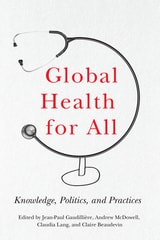
Global Health for All
Knowledge, Politics, and PracticesJean-Paul Gaudillière
Rutgers University Press, 2022

Global Health in Africa
Historical Perspectives on Disease ControlTamara Giles-Vernick
Ohio University Press, 2013
Global Health in Africa is a first exploration of selected histories of global health initiatives in Africa. The collection addresses some of the most important interventions in disease control, including mass vaccination, large-scale treatment and/or prophylaxis campaigns, harm reduction efforts, and nutritional and virological research.The chapters in this collection are organized in three sections that evaluate linkages between past, present, and emergent. Part I, “Looking Back,” contains four chapters that analyze colonial-era interventions and reflect upon their implications for contemporary interventions. Part II, “The Past in the Present,” contains essays exploring the historical dimensions and unexamined assumptions of contemporary disease control programs. Part III, “The Past in the Future,” examines two fields of public health intervention in which efforts to reduce disease transmission and future harm are premised on an understanding of the past.
This much-needed volume brings together international experts from the disciplines of demography, anthropology, and historical epidemiology. Covering health initiatives from smallpox vaccinations to malaria control to HIV campaigns, Global Health in Africa offers a first comprehensive look at some of global health’s most important challenges.
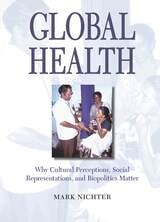
Global Health
Why Cultural Perceptions, Social Representations, and Biopolitics MatterMark Nichter
University of Arizona Press, 2008
The book examines the perceptions of three groups whose points of view on illness, health care, and the politics of responsibility often differ and frequently conflict: local populations living in developing countries, public health practitioners working in international health, and health planners/policy makers. The book is written for both health social scientists working in the fields of international health and development and public health practitioners interested in learning practical lessons they can put to good use when engaging communities in participatory problem solving.
Global Health critically examines representations that frame international health discourse. It also addresses the politics of what is possible in a world compelled to work together to face emerging and re-emerging diseases, the control of health threats associated with political ecology and defective modernization, and the rise of new assemblages of people who share a sense of biosociality. The book proposes research priorities for a new program of health social science research. Nichter calls for greater involvement by social scientists in studies of global health and emphasizes how medical anthropologists in particular can better involve themselves as scholar activists.

Global Heartland
Cultivating the American Century on the Midwestern FarmPeter Simons
University of Minnesota Press, 2025
Highlighting the critical role of midwestern farmers in the creation of the American Century
Though often left out of the story of the making of the American Century, the farmers of the Midwest were at its center, fueling the nation’s growing power in the midtwentieth century. In Global Heartland, Peter Simons explores how, after decades of slipping to the margins of an urbanizing economy, these farmers assumed renewed strategic and cultural importance as they produced essential sustenance for overseas troops and food rations for a domestic population.
During the mid-1900s, once-isolationist midwestern farmers came to see the continental interior not as an insulated space but as an environmentally rich landscape that mandated them to accept a larger stake in global affairs. Simons traces this transformation from an older agrarian internationalism rooted in religion and ties to family abroad to illuminate the increasing influence of the U.S. agricultural community during the Cold War. Examining regional political parties, Lend-Lease programs, wartime mass media, and farmer-led relief programs, and interspersing this history with vignettes revisiting the Mercy Wheat campaign of 1947, the postwar International Farm Youth Exchange, and the Flying Farmers organization, Simons offers an enlightening consideration of midwestern farmers’ involvement in America’s international ascent.
Unique in its focus on farmers and their work rather than the more common attention to food or agricultural commodities, Global Heartland complicates and expands ideas of the farm industry’s role in American history.
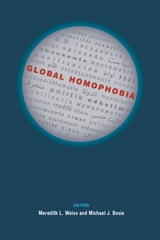
Global Homophobia
States, Movements, and the Politics of OppressionEdited by Meredith L. Weiss and Michael J. Bosia
University of Illinois Press, 2013
Combining rich empirical analysis with theoretical synthesis, these studies examine how homophobia travels across complex and ambiguous transnational networks, how it achieves and exerts decisive power, and how it shapes the collective identities and strategies of those groups it targets. The first comparative volume to focus specifically on the global diffusion of homophobia and its implications for an emerging worldwide LGBT movement, Global Homophobia opens new avenues of debate and dialogue for scholars, students, and activists.
Contributors are Mark Blasius, Michael J. Bosia, David K. Johnson, Kapya J. Kaoma, Christine (Cricket) Keating, Katarzyna Korycki, Amy Lind, Abouzar Nasirzadeh, Conor O'Dwyer, Meredith L. Weiss, and Sami Zeidan.
Global Icons
Apertures to the PopularBishnupriya Ghosh
Duke University Press, 2011

Global Indigenous Health
Reconciling the Past, Engaging the Present, Animating the FutureEdited by Robert Henry, Amanda LaVallee, Nancy Van Styvendale, and Robert Alexander Innes
University of Arizona Press, 2018
Building on Indigenous knowledge systems of health and critical decolonial theories, the volume’s contributors—who are academic and community researchers from Canada, the United States, Sweden, and New Zealand—weave a narrative to explore issues of Indigenous health within four broad themes: ethics and history, environmental and ecological health, impacts of colonial violence on kinship, and Indigenous knowledge and health activism. Chapters also explore how Indigenous peoples are responding to both the health crises in their communities and the ways for non-Indigenous people to engage in building positive health outcomes with Indigenous communities.
Global Indigenous Health is unique and timely as it deals with the historical and ongoing traumas associated with colonization and colonialism, understanding Indigenous concepts of health and healing, and ways of moving forward for health equity.
Contributors:
Sharon Leslie Acoose
Seth Adema
Peter Butt
John E. Charlton
Colleen Anne Dell
Debra Dell
Paul DePasquale
Judy A. Dow
C. Randy Duncan
Carina Fiedeldey-Van Dijk
Barbara Fornssler
Chelsea Gabel
Eleanor Louise Hadden
Laura Hall
Robert Henry
Carol Hopkins
Robert Alexander Innes
Simon Lambert
Amanda LaVallee
Josh Levy
Rachel Loewen Walker
David B. MacDonald
Peter Menzies
Christopher Mushquash
David Mykota
Nancy Poole
Alicia Powell
Ioana Radu
Margo Rowan
Mark F. Ruml
Caroline L. Tait
Lisa Tatonetti
Margaretha Uttjek
Nancy Van Styvendale
Global Indigenous Media
Cultures, Poetics, and PoliticsPamela Wilson and Michelle Stewart, eds.
Duke University Press, 2008
Global Indigenous Media addresses Indigenous self-representation across many media forms, including feature film, documentary, animation, video art, television and radio, the Internet, digital archiving, and journalism. The volume’s sixteen essays reflect the dynamism of Indigenous media-making around the world. One contributor examines animated films for children produced by Indigenous-owned companies in the United States and Canada. Another explains how Indigenous media producers in Burma (Myanmar) work with NGOs and outsiders against the country’s brutal regime. Still another considers how the Ticuna Indians of Brazil are positioning themselves in relation to the international community as they collaborate in creating a CD-ROM about Ticuna knowledge and rituals. In the volume’s closing essay, Faye Ginsburg points out some of the problematic assumptions about globalization, media, and culture underlying the term “digital age” and claims that the age has arrived. Together the essays reveal the crucial role of Indigenous media in contemporary media at every level: local, regional, national, and international.
Contributors: Lisa Brooten, Kathleen Buddle, Cache Collective, Michael Christie, Amalia Córdova,
Galina Diatchkova, Priscila Faulhaber, Louis Forline, Jennifer Gauthier, Faye Ginsburg, Alexandra Halkin, Joanna Hearne, Ruth McElroy, Mario A. Murillo, Sari Pietikäinen, Juan Francisco Salazar,
Laurel Smith, Michelle Stewart, Pamela Wilson

Global Indios
The Indigenous Struggle for Justice in Sixteenth-Century SpainNancy E. van Deusen
Duke University Press, 2015
Global Labor Migration
New DirectionsEdited by Eileen Boris, Heidi Gottfried, Julie Greene, and Joo-Cheong Tham
University of Illinois Press, 2023
Global Labor Migration presents new multidisciplinary, transregional perspectives on issues surrounding global labor migration. The essays go beyond disciplinary boundaries, with sociologists, ethnographers, legal scholars, and historians contributing research that extends comparison among and within world regions. Looking at migrant workers from the late nineteenth century to the present day, the contributors illustrate the need for broader perspectives that study labor migration over longer timeframes and from wider geographic areas. The result is a unique, much-needed collection that delves into one of the world’s most pressing issues, generates scholarly dialogue, and proposes cutting-edge research agendas and methods.
Contributors: Bridget Anderson, Rutvica Andrijasevic, Katie Bales, Jenny Chan, Penelope Ciancanelli, Felipe Barradas Correia Castro Bastos, Eileen Boris, Charlie Fanning, Judy Fudge, Jorge L. Giovannetti-Torres, Heidi Gottfried, Julie Greene, Justin Jackson, Radhika Natarajan, Pun Ngai, Bastiaan Nugteren, Nicola Piper, Jessica R. Pliley, Devi Sacchetto, Helen Sampson, Yael Schacher, Joo-Cheong Tham, and Matt Withers
Global Lynching and Collective Violence
Volume 1: Asia, Africa, and the Middle EastEdited by Michael J. Pfeifer
University of Illinois Press, 2017

Global Lynching and Collective Violence
Volume 2: The Americas and EuropeMichael Pfeifer
University of Illinois Press, 2017
The volume's European-themed topics explore why three communities of medieval people turned to mob violence, and the ways exclusion from formal institutions fueled peasant rough justice in Russia. Essays on Latin America examine how lynching in the United States influenced Brazilian debates on race and informal justice, and how shifts in religious and political power drove lynching in twentieth-century Mexico. Finally, scholars delve into English Canadians' use of racist and mob violence to craft identity; the Communist Party's Depression-era campaign against lynching in the United States; and the transnational links that helped form--and later emanated from--Wisconsin's notoriously violent skinhead movement in the late twentieth century.
Contributors: Brent M. S. Campney, Amy Chazkel, Stephen P. Frank, Dean J. Kotlowski, Michael J. Pfeifer, Gema Santamaría, Ryan Shaffer, and Hannah Skoda.
Global Masculinities and Manhood
Edited by Ronald L. Jackson II and Murali Balaji
University of Illinois Press, 2013
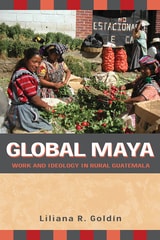
Global Maya
Work and Ideology in Rural GuatemalaLiliana R. Goldín
University of Arizona Press, 2009
For more than a decade, Liliana Goldín observed in highland towns both the intensification of various forms of production and their growing links to wider markets. In this first book to compare economic ideology across a range of production systems, she examines how people make a living and how they think about their options, practices, and constraints. Drawing on interviews and surveys—even retellings of traditional narratives—she reveals how contemporary Maya respond to the increasingly globalized yet locally circumscribed conditions in which they work.
Goldín presents four case studies: cottage industries devoted to garment production, vegetable growing for internal and border markets reached through direct commerce, crops grown for export, and wage labor in garment assembly factories. By comparing generational and gendered differences among workers, she reveals not only complexities of change but also how these complexities arereflected in changing attitudes, understandings, and aspirations that characterize people’s economic ideology. Further, she shows that as rural people take on diverse economic activities, they also reinterpret their views on such matters as accumulation, cooperation, competition, division of labor, and community solidarity.
Global Maya explores global processes in local terms, revealing the interplay of traditional values, household economics, and the inescapable conditions of demographic growth, a shrinking land base, and a global economy always looking for cheap labor. It offers a wealth of new insights not only for Maya scholars but also for anyone concerned with the effects of globalization on the Third World.
Global Memoryscapes
Contesting Remembrance in a Transnational AgeEdited by Kendall R. Phillips and G. Mitchell Reyes
University of Alabama Press, 2011
The essays contained within the volume--by scholars from a wide range of disciplines including American studies, art history, political science, psychology, and sociology--each engage a particular instance of the practices of memory as they are complicated by globalization.
Subjects include the place of nostalgia in post-Yugoslavia Serbian national memory, Russian identity after the collapse of the Soviet Union, political remembrance in South Africa’s Truth and Reconciliation Commissions, the role of Chilean mass media in forging national identity following the arrest of Augusto Pinochet, American debates over memorializing Japanese internment camps, and how the debate over the Iraq war is framed by memories of opposition to the Vietnam War.

Global Narratives of Russian Disinformation
Edited by Muriel Fischer, Sandra Frimmel, Nanina Graf, Iryna Herasimovich, Sylvia Sasse
Diaphanes, 2026
Disinformation, conspiracy narratives, and propaganda are not only manipulative forms of communication with the intention to deceive, but also a field of global collective narratives. Russia is an important player in this field. From the Cold War to the present day, we can observe how (pro-)Russian narratives are regionally tailored, internationally disseminated, and appropriated by various political, economic, or cultural actors for their own purposes.
While some narratives might originate from literary fantasy, science fiction, or national myths, others draw on historical narratives and reproduce them. Russia often claims an anti-imperialist, anti-fascist, or postcolonial intention in order to conceal its own imperialism and fascism.
The contributions in this book document these narratives in their respective geographical and historical contexts. They examine narrative practices and their history, the interplay of global address, and local appropriation as well as affects and effects within political discourse.
Global Perspectives on Landscapes of Warfare
Hugo C. Ikehara-Tsukayama
University Press of Colorado, 2021
Global Perspectives on Landscapes of Warfare examines the effects of conflict on landscapes and the ways landscapes have shaped social and political boundaries over time. Contributors from different archaeological traditions introduce a variety of methodologies and theories to understand and explain how territories and geographies in antiquity were modified in response to threat.
Drawing from eleven case studies from periods ranging over eight thousand years in the Americas, Asia, and Europe, contributors consider how social groups moved and concentrated residences, built infrastructure, invested resources, created alliances and negotiated with human and nonhuman entities for aid, formed and reformed borders, and memorialized sites and territories. Because landscapes of warfare deal with built environments, chapters are presented with rich graphic documentation—detailed maps, site plans, and artifacts—to support the analysis and interpretations.
Territories that have been appropriated and transformed by communities at war illustrate how built landscapes not only reflect immediate events but also influence subsequent generations. With a diverse array of case studies and an explicit focus on landscapes, Global Perspectives on Landscapes of Warfare will be of great interest to students and scholars of conflict archaeology and the anthropology and history of violence across the globe.
Contributors: Elizabeth Arkush, Viktor A. Borzunov, Igor V. Chechushkov, Tiffany Earley-Spadoni, Nam C. Kim, Lauren Kohut, Takehiko Matsugi, Kerry Nichols, Russell S. Quick, Lizzie Scholtus, James T. Williams

Global Perspectives on the United States
Pro-Americanism, Anti-Americanism, and the Discourses BetweenEdited by Virginia R. Dominguez and Jane C. Desmond
University of Illinois Press, 2017
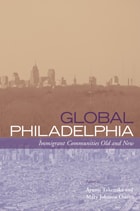
Global Philadelphia
Immigrant Communities Old and NewEdited by Ayumi Takenaka and Mary Johnson Osirim
Temple University Press, 2010
The racial and ethnic composition of Philadelphia continues to diversify as a new wave of immigrants—largely from Asia and Latin America—reshape the city’s demographic landscape. Moreover, in a globalized economy, immigration is the key to a city’s survival and competitiveness. The contributors to Global Philadelphia examine how Philadelphia has affected its immigrants’ lives, and how these immigrants, in turn, have shaped Philadelphia.
Providing a detailed historical, ethnographic, and sociological look at Philadelphia’s immigrant communities, this volume examines the social and economic dynamics of various ethnic populations. Significantly, the contributors make comparisons to and connections between the traditional immigrant groups—Germans, Italians, the Irish, Jews, Puerto Ricans, and Chinese—and newer arrivals, such as Cambodians, Haitians, Indians, Mexicans, and African immigrants of various nationalities.
While their experiences vary, Global Philadelphia focuses on some of the critical features that face all immigrant groups—intra-group diversity, the role of institutions, and ties to the homeland. Taken together, these essays provide a richer understanding of the processes and implications of contemporary immigration to the area.
Global Platform Work
Negotiating Relations in a Translocal AssemblageAnna Oechslen
Campus Verlag, 2023
Digital freelance platforms promise workers flexibility, independence, and access to a global labor market. But what does organizing and positioning oneself in this environment look like? Global Platform Work focuses on the everyday lives of graphic designers in India who use gig platforms to connect to a global client base. Drawing on interviews, observations, and photo diaries, Anna Oechslen describes how important it is for gig workers to constantly put themselves in a positive light, build relationships, and adapt to an ever-changing work environment. In doing so, she formulates gig work as making and sustaining relationships and sheds light on everyday practices that common understandings of work often leave unconsidered.
Global Politics of Regionalism
Theory and PracticeEdited by Mary Farrell, Bjorn Hettne, and Luk Van Langenhove
Pluto Press, 2005
The book reviews the major theoretical approaches to regional cooperation including perspectives from international relations, political economy, economics and sociology. It is divided into three main sections: theoretical approaches to regionalism; issues of regional cooperation (such as security, monetary issues, identity and integration); and an exploration of specific case studies including the Middle East, Africa, the Americas, China, Europe, Asia and the Pacific.
With an international range of contributors, including Bjorn Hettne, Louise Fawcett and Andrew Hurrell, this in-depth and multi-disciplinary guide will be of interest to students across the social sciences and to the wider policy community.
Global Prescriptions
The Production, Exportation, and Importation of a New Legal OrthodoxyYves Dezalay and Bryant G. Garth, Editors
University of Michigan Press, 2002
Comprised of two sections, the volume first develops theoretical perspectives key to an understanding of the production and impact of new "global legal prescriptions." The second part shifts attention to the national importation of these legal orthodoxies. The scholars provide a diverse set of sophisticated approaches, both to the circumstances promoting the production of these prescriptions and to the limitations of the prescriptions in the different national settings. Thus, Global Prescriptions provides a unique treatment for readers interested in globalization generally or the potential spread of the "rule of law" in particular.
This volume will intrigue scholars and students interested in a political science, economics, history, anthropology, law, and sociology.
Contributors are Jeremy Adelman, Robert Boyer, Elizabeth Heger Boyle, Miguel Angel Centeno, Heinz Klug, Larissa Adler Lomnitz, John W. Meyer, Setsuo Miyazawa, Hiroshi Otsuka, Rodrigo Salazar, Kathryn Sikkink, Anne-Marie Slaughter, and Catalina Smulovitz.
Yves Dezalay is Director of Research, National Center for Scientific Research, Paris. Bryant G. Garth is Director of the American Bar Foundation.

Global Sex
Dennis Altman
University of Chicago Press, 2001
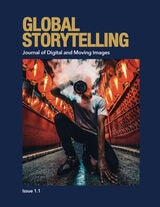
Global Storytelling, vol. 1, no. 1
Journal of Digital and Moving ImagesYing Zhu
Michigan Publishing Services, 2021
In this issue
Letter from the Editor Ying Zhu Hong Kong and Social MovementsHong Kong Unraveled: Social Media and the 2019 Protest Movement
Anonymous
Unleashing the Sounds of Silence: Hong Kong’s Story in Troubled Times
Andrea Riemenschnitter
Tragedy of Errors at Warp Speed
Sam Ho
Imagining a City-Based Democracy: Review of The Appearing Demos: Hong Kong During and After the Umbrella Movement by Laikwan Pang, University of Michigan Press, 2020
Enoch Tam
China and the Film Festival
Richard Peña
Nationalism from Below: State Failures, Nollywood, and Nigerian Pidgin Jonathan Haynes Collective Memory and the Rhetorical Power of the Historical Fiction Film
Carl Plantinga
From Nations to Worlds: Chris Marker’s Si j’avais quatre dromadaires
Michael Walsh
American Factory and the Difficulties of Documenting Neoliberalism
Peter Hitchcock
R.I.P. Soft Power: China’s Story Meets the Reset Button: Review of Soft Power with Chinese Characteristics: China’s Campaign for Hearts and Minds edited by Kingsley Edney, Stanley Rosen, and Ying Zhu, Routledge, 2019
Robert A. Kapp
Review: On Epidemics, Epidemiology, and Global Storytelling
Carlos Rojas
Global Storytelling, vol. 1, no. 2
Journal of Digital and Moving ImagesYing Zhu
Michigan Publishing Services, 2021
Letter from the Editor - YING ZHU
Research Articles
Consuming the Pastoral Desire: Li Ziqi, Food Vlogging, and the Structure of Feeling in the Era of Microcelebrity - LIANG LIMIN
This Is Not Reality (Ceci n’est pas la réalité): Capturing the Imagination of the People Creativity, the Chinese Subaltern, and Documentary Storytelling - PAOLA VOCI
The Networked Storyteller and Her Digital Tale: Film Festivals and Ann Hui’s My Way - GINA MARCHETTI
“Retweet for More”: The Serialization of Porn on the Twitter Alter Community - RUEPERT CAO
Book Reviews
Dazzling Revelations - Review of Negative Exposures: Knowing What Not to Know in Contemporary China by Margaret Hillenbrand, Duke University Press, 2020 - HARRIET EVANS
Speaking Nations, Edge Ways - Reviews of Postcolonial Hangups in Southeast Asian Cinema: Poetics of Space, Sound and Stability by Gerald Sim, Amsterdam University Press, 2020; and Southeast Asia on Screen: From Independence to Financial Crisis (1945–1998) edited by Gaik Cheng Khoo, Thomas Barker, Mary Ainslie, Amsterdam University Press, 2020 - MIN HUI YEO
Film Reviews
Nomadland: An American or Chinese Story? Review of Nomadland, directed by Chloe Zhao, 2020 - YING ZHU
New from Netflix: Mank, Fincher, and A Hollywood Creation Tale - Review of Mank, directed by David Fincher, 2020 - THOMAS SCHATZ
Superheroes: The Endgame - Review of Superhero Movies - PETER BISKIND
Short Essay
Love and Duty: Translating Films and Teaching Online through a Pandemic - CHRISTOPHER REA
Report
Narrating New Normal: Graduate Student Symposium Report - RUEPERT JIEL DIONISIO CAO, MINOS-ATHANASIOS KARYOTAKIS, MISTURA ADEBUSOLA SALAUDEEN, DONGLI CHEN, & YANJING WINNIE WU