Results by title
58 books match the query '1865-1950' and 4 start with h
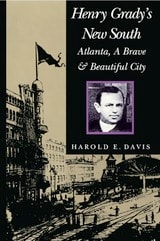
Henry Grady's New South
Atlanta, a Brave and Beautiful CityHarold E. Davis
University of Alabama Press, 1990
Reassessing the man, the movement, and the making of modern Atlanta.
The popular image of Henry W. Grady is that of a champion of the postbellum South, a region that would forgive the North for defeating it and would mobilize its own many resources for hones business and agricultural competition. Biographies and collections of Grady’s essays and speeches that appeared shortly after his death enhanced this image, and for a half-century, Grady was considered the personification of the New South Movement, a movement which promised industrialization for the South, an improved Southern agriculture, and justice and opportunity for black Southerners. As managing editor of the Atlanta Constitution, he espoused the New South throughout the nation and was in demand as a speaker for audiences in New York and Boston.
Through extensive research, focusing on the decade of the 1880s in Georgia, Davis demonstrates that although Grady said all the right things to show that he wished to industrialize the South and that he was committed to the improvement of agriculture and fairness in racial matters, in fact he spent most of his efforts on behalf of Atlanta. His major interest was in making a difference for that city, leaving the rest of the South to enjoy whatever Atlanta could not garner for itself.
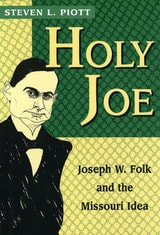
Holy Joe
Joseph W. Folk and the Missouri IdeaSteven L. Piott
University of Missouri Press, 1997
One of Missouri's best-known leaders of the Progressive Era, Joseph W. Folk epitomized the moral reformer in politics. As a crusading district attorney in St. Louis, Folk won national acclaim for his investigations of wrongdoing in municipal government. With the help of muckraking journalist Lincoln Steffens, Folk revealed for the first time the extent of political corruption then plaguing America's cities and helped bring about a popular demand for the regeneration of municipal government nationwide.
A firm believer that the law was a weapon with which to check political corruption and restrain powerful special interests, Folk popularized the "Missouri Idea," the doctrine that public office is a public trust, not merely an opportunity for private gain. Elected as governor of Missouri in 1904, Folk orchestrated a remarkable record of legislative accomplishment. He established himself as one of Missouri's outstanding governors and one of the nation's leading progressive reformers.
In asserting that traditional moral values could be applied to politics, Folk became known among friends and enemies as Holy Joe. His refusal to make any distinction between public and private morality, however, alienated some Missourians, while his disregard for party organization angered politicians. His idealism cost him political advancement and ultimately a place in national politics.
Whereas some studies of the Progressive Era have minimized the moral dimension of Progressivism and downplayed the importance of reformers like Joseph W. Folk, Holy Joe establishes him as a major leader of the Progressive movement. This biography will be a welcome addition to the literature on the subject.
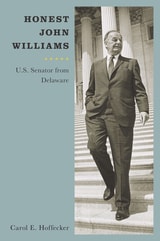
Honest John Williams
U.S. Senator from DelawareCarol E. Hoffecker
University of Delaware Press, 2024
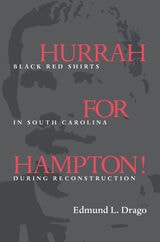
Hurrah for Hampton!
Black Red Shirts in South Carolina during ReconstructionEdmund L. Drago
University of Arkansas Press, 1999
This post-revisionist study examines the motives and the concerns of the ex-slaves in South Carolina who supported a movement that eventually led to white supremacy.
Although most freedmen throughout the states of the former Confederacy were Republicans loyal to the party of the Federal government that had emancipated them, they were factions of African-American voters who aligned themselves with local white Democratic leaders. one such group of black conservatives joined the “Red Shirts,” white paramilitary clubs that attempted to restore antebellum values in electing former Confederate general Wade Hampton governor of South Carolina in 1876.
Drago’s fine analysis recovers and explains this lost aspect of Southern black history. Drawing on primary sources that include testimonies of several black Red Shirts before a Congressional investigation of the election and eleven slave narratives, he de-romanticizes the black experience by examining the relationship between black initiative and southern paternalism.