Results by title
53 books match the query '1948-' and 3 start with h
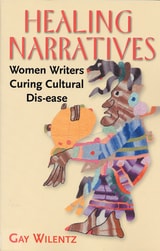
Healing Narratives
Women Writers Curing Cultural Dis-easeWilentz, Gay
Rutgers University Press, 2000
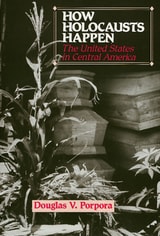
How Holocausts Happen
The United States in Central AmericaDouglas V. Porpora
Temple University Press, 1992
"History repeats itself, but it never repeats itself exactly," observes Douglas Porpora in this powerful indictment of U.S. intervention in Central America. Comparing the general public’s reaction to the Holocaust in Nazi Germany with American public opinion of U.S. participation in the genocidal policies of Nicaraguan counter-revolutionary forces, and the governments of Guatemala and El Salvador among others, Porpora demonstrates that moral indifference to the suffering of others was the common response. With reference to Hannah Arendt’s thesis of the banality of evil, he develops the concept of a "Holocaust-like event" and examines how even a democratic society can be capable of something on the order of a Holocaust.
Unlike other accounts of the Holocaust and genocide, this book focuses on the citizenry served or ruled by genocidal governments rather than on the governments themselves. Porpora argues that moral indifference and lack of interest in critical reflection are key factors that enable Holocaust-like events to happen And he characterizes American society as being typically indifferent to the fate of other people, uninformed, and anti-intellectual.
Porpora cites numerous horrifying examples of U.S.-backed Latin American government actions against their own peasants, Indians, and dissident factions. He offers finally a theory of public moral indifference and argues that although such indifference is socially created by government, the media, churches, and other institutions, we, the public, must ultimately take responsibility for it. How Holocausts Happen is at once a scholarly examination of the nature of genocide and a stinging indictment of American society.
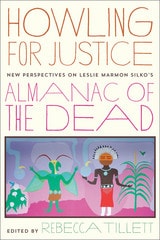
Howling for Justice
New Perspectives on Leslie Marmon Silko’s Almanac of the DeadEdited by Rebecca Tillett
University of Arizona Press, 2014
Howling for Justice actively engages with both the literary achievements and the politics of Silko’s text. It brings together essays by international scholars reacting to the novel while keeping in mind its larger concern with issues of social justice, both local and transnational. Aiming both to refocus critical attention and open the book to a broader array of readers, this collection offers fresh perspectives on its transnational vision, on its sociocultural, historical, and political ambitions, and on its continued relevance in the twenty-first century. The essays examine and explain some of the key points that readers and critics have identified as confusing, problematic, and divisive. Together, they offer new ways to approach and appreciate the text.
The book concludes with a new, never-before-published interview in which Silko reflects on the twenty years since the novel’s publication and relates the concerns of Almanac to her current work.