Results by title
8642 books match the query '20th century' and 252 start with h

H.D. and Poets After
Donna Krolik Hollenberg
University of Iowa Press, 2000
Twenty essays—half by eminent American poets writing about their literary engagement with H.D. and half by critics writing about H.D. in relation to these same poets—provide a fruitful exchange of perceptions and interpretations. The dialogue between these two perspectives—the first autobiographical testimony and the second critical analysis by scholars attuned to both modern and contemporary poetries and poetics—calls into question both traditional notions of literary criticism and earlier theories of literary influence.
The volume includes a range of contemporary responses to H.D.'s work—from Alicia Ostriker's radical eroticism to Brenda Hillman's epistemological restlessness to Carolyn Forché's response to moral disasters of the century. H.D. and Poets After demonstrates key aspects of the poet's continuing importance as a "poet's poet" in the best sense.
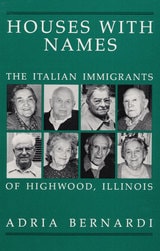
HOUSES WITH NAMES
"THE ITALIAN IMMIGRANTS OF HIGHWOOD, ILLAdria Bernardi
University of Illinois Press, 1990
Habits of Hope
A Pragmatic TheoryPatrick Shade
Vanderbilt University Press, 2001

Hagia Sophia, 1850-1950
Holy Wisdom Modern MonumentRobert S. Nelson
University of Chicago Press, 2004
Built from 532 to 537 as the Cathedral of Constantinople, Hagia Sophia was little studied and seldom recognized as a great monument of world art until the nineteenth century, and Nelson examines the causes and consequences of the building's newly elevated status during that time. He chronicles the grand dome's modern history through a vibrant cast of characters—emperors, sultans, critics, poets, archaeologists, architects, philanthropists, and religious congregations—some of whom spent years studying it, others never visiting the building. But as Nelson shows, they all had a hand in the recreation of Hagia Sophia as a modern architectural icon. By many means and for its own purposes, the West has conceptually transformed Hagia Sophia into the international symbol that it is today.
While other books have covered the architectural history of the structure, this is the first study to address its status as a modern monument. With his narrative of the building's rebirth, Nelson captures its importance for the diverse communities that shape and find meaning in Hagia Sophia. His book will resonate with cultural, architectural, and art historians as well as with those seeking to acquaint themselves with the modern life of an inspired and inspiring building.
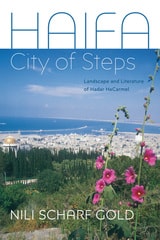
Haifa
City of StepsNili Scharf Gold
Brandeis University Press, 2017
Haim Nahum
A Sephardic Chief Rabbi in Politics, 1892-1923Esther Benbassa
University of Alabama Press, 1995
A collection of rare writings and correspondence by a rabbi and diplomat active at the end of the Ottoman Empire
Rabbi, diplomat, linguist, fixer of delicate problems, Haim Nahum moved through the last years of the Ottoman world and the birth of the modern Middle East with uncommon dexterity. He left behind a rich trove of letters and writing, the best of which are collected in this volume. For contemporary readers, his story feels surprisingly current. He inhabited an age crowded with competing identities, clashing nationalisms, and endless political improvisations. In other words, he would feel perfectly at home today.
The most intriguing feature of Nahum is not that he occupied important positions, but that he seemed constitutionally incapable of belonging to only one world. Equally at ease among statesmen, clerics, scholars, and bureaucrats, he functioned as a human connecting flight between cultures. In this fascinating biography first edited and published in French in 1990, Esther Benbassa captures this cosmopolitan figure without embalming him in reverence, allowing readers to encounter a subtle, resourceful, and occasionally elusive man whose métier was negotiation and whose natural habitat was complexity.
This book will delight readers of Ottoman history, Jewish history, Middle Eastern affairs, diplomatic history, biography, religious studies, and Mediterranean culture. It will also appeal to polyglots, antiquarians, devotees of vanished empires, and anyone attracted to those liminal figures who stand at the crossroads of civilizations, translating not merely languages but entire ways of seeing the world.
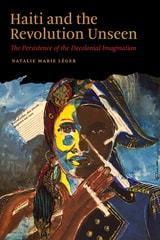
Haiti and the Revolution Unseen
The Persistence of the Decolonial ImaginationNatalie Marie Léger
Vanderbilt University Press, 2025
Léger writes against a Haiti- and Haitians-less idea of the Revolution. She asks scholars and artists of the Revolution to know Haitians as Ginens (African Haitians) and Haiti as Ayiti Ginen (Africa Haiti). This form of knowing demands a decolonial understanding of the Haitian Revolution and a reevaluation of its stories as told by influential twentieth-century Caribbean writers. The story she tells showcases the immense political impact of the African Haitian revolutionist’s philosophies of freedom in Saint Domingue and Haiti thereafter; and she argues that the absence of these philosophies in Caribbean classics of the Revolution demands consideration of why these classics continue to shape how the Revolution and Haiti are discussed in Caribbean Studies, Black Studies, Postcolonial Studies and Haitian Studies. More pressingly, Léger calls on artists and scholars of the Revolution to be mindful of how Haiti and Haitians are figured in narratives of the Revolution. The immense space Haiti holds in Caribbean imaginings of freedom and revolution makes mediating it, its Revolution, and peoples through a prejudiced gaze that serves the West hugely problematic, since a denigrated Haiti yields stunted visions of the Caribbean’s future. These conditions require attention to the pervasive presence of colonial paradigms for being in classic literatures of the Revolution and the way they undermine the generative manner Caribbean writers have used Haiti to think through their past, present, and future.
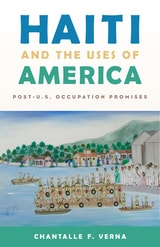
Haiti and the Uses of America
Post-U.S. Occupation PromisesVerna, Chantalle F.
Rutgers University Press, 2017
In the years following the U.S. occupation of Haiti (1915-1934), Haitian politicians and professionals with a cosmopolitan outlook shaped a new era in Haiti-U.S. diplomacy. Their efforts, Verna shows, helped favorable ideas about the United States, once held by a small segment of Haitian society, circulate more widely. In this way, Haitians contributed to and capitalized upon the spread of internationalism in the Americas and the larger world.

Half Portions
Edna Ferber
University of Illinois Press, 2002
A collection of short stories from Pultizer Prize winner, Edna Ferber
The short stories in this collection take the reader from small-town Wisconsin to the bustling streets of New York and Chicago and back again. While they range greatly in length and tone, they all share the trademark wit and affectionate insight of Edna Ferber.
Showcasing the facility with words that made her a mainstay at the Algonquin round table, Ferber explores some of her favorite themes: the role of women (especially strong or unconventional women) in modern society, the mores of the midwestern small town, and the changes over time in relationships between parents and children.
In “The Maternal Feminine,” a plain, overlooked child grows into a strong, resourceful businesswoman and forms a strong motherly bond with the children of her more attractive sister. In “April 25th, As Usual,” an aging Wisconsin couple reluctantly join their successful daughter in New York, where they try to adjust to a very different lifestyle. “Old Lady Mandle” is a bittersweet tale about an elderly Chicago mother coming to terms with the fact that she is no longer the most important woman in the life of her grown son. “One Hundred Per Cent” features Ferber’s celebrated heroine Emma McChesney, now re-married, seeing her husband off to war.
The stories gathered here are beautifully observed chronicles of early twentieth-century life and are filled with characters who, despite their very human foibles, are all bestowed by Ferber with warmth and dignity.
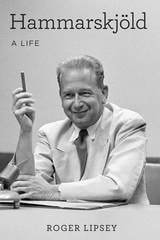
Hammarskjöld
A LifeRoger Lipsey
University of Michigan Press, 2015
After his mysterious death, Dag Hammarskjöld was described by John F. Kennedy as the "greatest statesman of our century." Second secretary-general of the United Nations (1953 - 61), he is the only person to have been awarded the Nobel Peace Prize posthumously. Through extensive research in little explored archives and personal correspondence, Roger Lipsey has produced the definitive biography of Dag Hammarskjöld. Hammarskjöld: A Life provides vivid new insights into the life and mind of a truly great individual. Hammarskjöld the statesman and Hammarskjöld the author of the classic spiritual journal Markings meet in this new biography - and the reader will meet them both in these pages. A towering mid-twentieth-century figure, Hammarskjöld speaks directly to our time.
Hands Across the Sea?
U.S.-Japan Relations, 1961–1981Timothy P. Maga
Ohio University Press, 1997
In 1961, the U.S. economy and military remained unassailable in the eyes of the world. Within twenty years, America faced defeat in Vietnam and its economy had been shaken. Japan was now considered the great economic superpower, while the U.S. and Japan reversed roles as surplus and debtor nations. Hands across the Sea? examines this reversal of roles, determining how and why America and Japan became the post-World War II era’s most argumentative allies.
Through extensive research in a number of presidential libraries and author interviews with both American and Japanese policy-makers, Professor Maga finds a U.S.-Japan relationship forever troubled by cultural misunderstanding, America’s Cold War obsession, Japanese pride, and strangely conflicting goals in both trade and defense. Given the intensity of the arguments over some of these issues, it is remarkable that Washington and Tokyo continued a working dialogue during this critical time.
Hands across the Sea? represents the first in-depth study of the modern U.S.-Japan relationship. It especially discovers how serious the U.S.-Japan disagreements over trade, defense, the direction of the Cold War, nuclear policy, and the environment had become.
Whereas American observers of U.S.-Japan relations are quick to point out their fellow countrymen’s ignorance of other cultures and Japan’s brilliance in analyzing American policy and life, the evidence suggests otherwise. Steering far away from anyone’s political correctness, this book’s bottom line involves hard-hitting investigation and analysis.
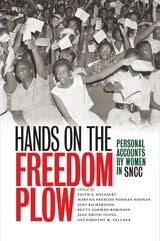
Hands on the Freedom Plow
Personal Accounts by Women in SNCCFaith S. Holsaert
University of Illinois Press, 2012
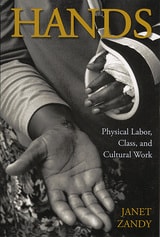
Hands
Physical Labor, Class, and Cultural WorkZandy, Janet
Rutgers University Press, 2004
In linking forms of cultural expression to labor, occupational injuries, and deaths, Hands: Physical Labor, Class, and Cultural Work centers what is usually decentered--the complex culture of working-class people. Janet Zandy begins by examining the literal loss of lives to unsafe jobs and occupational hazards. She asks critical and timely questions about worker representation--who speaks for employees when the mills, mines, factories, and even white-collar cubicles shut down? She presents the voices of working-class writers and artists, and discusses their contribution to knowledge and culture.
This innovative study reveals the flesh and bone beneath the abstractions of labor, class, and culture. It is an essential contribution to the emerging field of working-class studies, offering a hybrid model for bridging communities and non-academic workers to scholars and institutions of knowledge.
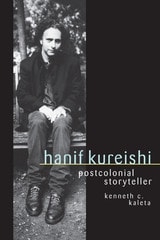
Hanif Kureishi
Postcolonial StorytellerBy Kenneth C. Kaleta
University of Texas Press, 1997
"Hanif Kureishi is a proper Englishman. Almost." So observes biographer Kenneth Kaleta. Well known for his films My Beautiful Laundrette and Sammy and Rosie Get Laid, the Anglo-Asian screenwriter, essayist, and novelist has become one of the leading portrayers of Britain's multicultural society. His work raises important questions of personal and national identity as it probes the experience of growing up in one culture with roots in another, very different one.
This book is the first critical biography of Hanif Kureishi. Kenneth Kaleta interviewed Kureishi over several years and enjoyed unlimited access to all of his working papers, journals, and personal files. From this rich cache of material, he opens a fascinating window onto Kureishi's creative process, tracing such works as My Beautiful Laundrette, Sammy and Rosie Get Laid, The Buddha of Suburbia, London Kills Me, The Black Album, and Love in a Blue Time from their genesis to their public reception. Writing for Kureishi fans as well as film and cultural studies scholars, Kaleta pieces together a vivid mosaic of the postcolonial, hybrid British culture that has nourished Kureishi and his work.
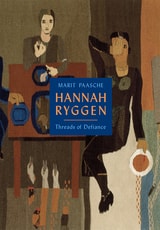
Hannah Ryggen
Threads of DefianceMarit Paasche
University of Chicago Press, 2019
A widely recognized authority on Ryggen, Marit Paasche brings this important Scandinavian artist to the foreground in this biography, the first published on Ryggen in English. Paasche looks at Ryggen within the social, political, and cultural contexts of her time and explores how these issues informed her work, from her anti-fascist tapestry that depicted a spear piercing Mussolini’s head to one protesting the war in Vietnam. Published to correspond with a major retrospective in Frankfurt, of which Paasche is one of the curators, Hannah Ryggen is a foundational book that will provide a crucial introduction of this artist to a broader audience.
Hansberry's Drama
COMMITMENT AMID COMPLEXITYSteven R. Carter
University of Illinois Press, 1991
Hapa Girl
A MemoirMay-lee Chai
Temple University Press, 2008
In the mid-1960s, Winberg Chai, a young academic and the son of Chinese immigrants, married an Irish-American artist. In Hapa Girl ("hapa" is Hawaiian for "mixed") their daughter tells the story of this loving family as they moved from Southern California to New York to a South Dakota farm by the 1980s. In their new Midwestern home, the family finds itself the object of unwelcome attention, which swiftly escalates to violence. The Chais are suddenly socially isolated and barely able to cope with the tension that arises from daily incidents of racial animosity, including random acts of cruelty.
May-lee Chai's memoir ends in China, where she arrives just in time to witness a riot and demonstrations. Here she realizes that the rural Americans' "fears of change, of economic uncertainty, of racial anxiety, of the unknowable future compared to the known past were the same as China's. And I realized finally that it had not been my fault."
Happy Days and Wonder Years
The Fifties and the Sixties in Contemporary Cultural PoliticsMarcus, Daniel
Rutgers University Press, 2004
From Ronald Reagan's image as a Fifties Cold Warrior to Bill Clinton's fandom for Elvis Presley and John F. Kennedy, politicians have invoked the Fifties and the Sixties to connect to their public. Marcus shows how films, television, music, and memoirs have responded to the political nostalgia of today, and why our entertainment remains immersed in reruns, revivals, and references to earlier times. This book offers a new understanding of how politics and popular culture have influenced our notions of the past, and how events from long ago continue to shape our understanding of the present day.
Happy Days
Images of the Pre-Sixties Past in Seventies AmericaBenjamin L. Alpers
Rutgers University Press, 2024
Happy Days investigates how 1970s popular culture was obsessed with America’s past but often offered radically different interpretations of the same historical events and icons. Even the figure of the greaser, once an icon of juvenile delinquency, was made family-friendly by Henry Winkler’s Fonzie at the same time that he was being appropriated in more threatening ways by punk and gay subcultures. The cultural historian Benjamin Alpers discovers similar levels of ambivalence toward the past in 1970s neo-noir films, representations of America’s founding, and neo-slave narratives by Alex Haley and Octavia Butler. By exploring how Americans used the 1970s to construct divergent representations of their shared history, he identifies it as a pivotal moment in the nation’s ideological fracturing.
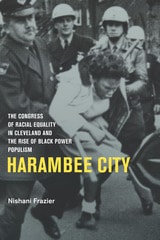
Harambee City
The Congress of Racial Equality in Cleveland and the Rise of Black Power PopulismNishani Frazier
University of Arkansas Press, 2017
BLACK POWER!
It was a phrase that consumed the American imagination in the 1960s and 70s and inspired a new agenda for black freedom. Dynamic and transformational, the black power movement embodied more than media stereotypes of gun-toting, dashiki-wearing black radicals; the movement opened new paths to equality through political and economic empowerment.
In Harambee City, Nishani Frazier chronicles the rise and fall of black power within the Congress of Racial Equality (CORE) by exploring the powerful influence of the Cleveland CORE chapter. Frazier explores the ways that black Clevelanders began to espouse black power ideals including black institution building, self-help, and self-defense. These ideals challenged CORE’s philosophy of interracial brotherhood and nonviolent direct action, spawning ideological ambiguities in the Cleveland chapter. Later, as Cleveland CORE members rose to national prominence in the organization, they advocated an open embrace of black power and encouraged national CORE to develop a notion of black community uplift that emphasized economic populism over political engagement. Not surprisingly, these new empowerment strategies found acceptance in Cleveland.
By providing an understanding of the tensions between black power and the mainstream civil rights movement as they manifested themselves as both local and national forces, Harambee City sheds new light on how CORE became one of the most dynamic civil rights organizations in the black power era.
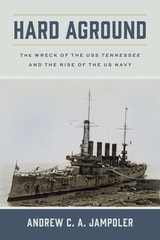
Hard Aground
The Wreck of the USS Tennessee and the Rise of the US NavyAndrew C. A. Jampoler
University of Alabama Press, 2023
Three intertwined stories that reveal the challenges faced by the US Navy in its evolution between the Civil War and the First World War
Hard Aground brings together three intertwined stories documenting the US Navy’s strategic and matériel evolution from the end of Civil War through the First World War. These incidents had lasting consequences for how the navy would modernize itself throughout the rest of the twentieth century.
The first story focuses on the reconstruction of the US Navy following the swift and near-total dismantling of the Union Navy infrastructure after the Civil War. This reconstruction began with barely enough time for the navy’s campaigns in the Spanish-American War, and for its role in the First World War. Jampoler argues that the federal government discovered that the fleet requested by the navy, and paid for by Congress, was the wrong fleet. Focus was on battleships and cruisers rather than destroyers and other small combat vessels needed to hunt submarines and serve as convoy escorts.
The second story relates the short, tragic life of the USS Tennessee (later renamed Memphis), one of the steel-hulled ships of the new Armored Cruiser Squadron that was a centerpiece of the navy’s modernization effort. The USS Tennessee was ordered on two unusual missions in the early months of the First World War, long before the United States formally entered the war. These little-known missions and the ship's shocking destruction in a storm surge in the Caribbean serve as the centerpiece of the story. Threaded through the narrative are biographical sketches of the principal players in the drama that unfolded following the ship’s demise, including two of Tennessee’s commanding officers: Vice Admiral Sims, who commanded the US Navy squadrons deployed to Europe in support of the Royal Navy; Rear Admiral William Caperton, who commanded the Caribbean squadron before the Memphis (formerly the Tennessee) was lost; Charles Pond, squadron commander during the wreck; and the American ambassador to the Ottoman court, President Wilson’s enthusiastic supporter, Henry Morgenthau.
Jampoler rounds out this fascinating account with the story of how the USS Tennessee’s destruction prompted fierce deliberations about the US Navy’s operations and chains of command for the remainder of the First World War and the high-level political wrangling inside the Department of the Navy immediately after the war, as civilian appointees and senior officers wrestled to reshape the department in their image.

Hard Choices
An "Iowa Review" ReaderDAVID HAMILTON
University of Iowa Press, 1996
For twenty-five years, the Iowa Review has published many of America's finest writers, often helping them become established in their careers. From Tillie Olsen and William Stafford in the first volume to James Galvin and Pattiann Rogers in the twenty-fourth, the names and voices are recognizable and respected or soon will be. As editor David Hamilton notes in his introduction to this eclectic anniversary volume of nearly eighty poems and stories, "To a considerable extent we have defined ourselves by them; thus Hard Choices, a generous sampling of the best and most interesting writing from the Iowa Review's first years, defines the past and the future of American literature."
The Iowa Review is one of a small group of dedicated literary magazines that have defined American literary culture in the past quarter century. The adventurous, stimulating pieces in Hard Choices will encourage readers to look forward to the next quarter century.
Hard Scrabble
Observations on a Patch of LandBy John Graves<br>Introduction by Rick Bass
University of Texas Press, 2016
“A kind of homemade book—imperfect like a handmade thing, a prize. It’s a galloping, spontaneous book, on occasion within whooping distance of that greatest and sweetest of country books, Ivan Turgenev’s A Sportsman’s Notebook.” —Edward Hoagland, New York Times Book Review
“His subjects are trees and brush, hired help, fences, soil, armadillos and other wildlife, flood and drought, local history, sheep and goats . . . and they come to us reshaped and reenlivened by his agreeably individual (and sometimes cranky) notions.” —New Yorker
“If Goodbye to a River was in some sense Graves’s Odyssey, this book is his [version of Hesiod’s] Works and Days. It is partly a book about work, partly a book about nature, but mostly a book about belonging. In the end John Graves has learned to belong to his patch of land so thoroughly that at moments he can sense in himself a unity with medieval peasants and Sumerian farmers, working with their fields by the Tigris.” —Larry McMurtry, Washington Post Book World
“Hard Scrabble is hard pastoral of the kind we have learned to recognize in Wordsworth, Frost, Hemingway, and Faulkner. It celebrates life in accommodation with a piece of the ‘given’ creation, a recalcitrant four hundred or so acres of Texas cedar brake, old field, and creek bottom, which will require of any genuine resident all the character he can muster.” —Southwest Review
Hard Times in the Marvelous City
From Dictatorship to Democracy in the Favelas of Rio de JaneiroBryan McCann
Duke University Press, 2013
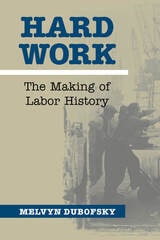
Hard Work
The Making of Labor HistoryMelvyn Dubofsky
University of Illinois Press, 2000
A career-spanning collection of writings by the legendary labor historian
One of American labor history's most prominent scholars, Melvyn Dubofsky curated an accessible style and historical reach that have long marked his work as required reading for students and scholars.
This collection juxtaposes Dubofsky's early writings with scholarship from the 1990s. Selections include work on western working-class radicalism, U.S. labor history in transnational and comparative settings, and the impact of technological change on American worker’s movements. Throughout, the writings provide an invaluable eyewitness perspective on the academic and political climate of the 1960s and 1970s while tracing the development of labor history as a discipline.
An exploration of important themes in labor history, Hard Work combines essential scholarship with the story of how past and present interact in the work of historians.
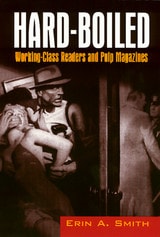
Hard-Boiled
Erin A. Smith
Temple University Press, 2000
Relying on pulp magazine advertising, the memoirs of writers and publishers, Depression-era studies of adult reading habits, social and labor history, Smith offers an innovative account of how these popular stories were generated and read. She shows that although the work of pulp fiction authors like Dashiell Hammett, Raymond Chandler, and Erle Stanley Gardner have become “classics” of popular culture, the hard-boiled genre was dominated by hack writers paid by the word, not self-styled artists. Pulp magazine editors and writers emphasized a gritty realism in the new genre. Unlike the highly rational and respectable British protagonists (Miss Marple and Hercule Poirot, for instance), tough-talking American private eyes relied as much on their fists as their brains as they made their way through tangled plotlines.
Casting working-class readers of pulp fiction as “poachers,” Smith argues that they understood these stories as parables about Taylorism, work, and manhood; as guides to navigating consumer culture; as sites for managing anxieties about working women. Engaged in re-creating white, male privilege for the modern, heterosocial world, pulp detective fiction shaped readers into consumers by selling them what they wanted to hear – stories about manly artisan-heroes who resisted encroaching commodity culture and the female consumers who came with it. Commenting on the genre’s staying power, Smith considers contemporary detective fiction by women, minority, and gay and lesbian writers.
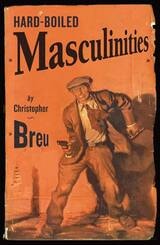
Hard-Boiled Masculinities
Christopher Breu
University of Minnesota Press, 2005
Looking closely at this transformation, Christopher Breu offers a complex account of how and why hard-boiled masculinity emerged during an unsettled time of increased urbanization and tenuous peace and traces the changes in its cultural conception as it moved back and forth across the divide between high and low culture as well as the color line that bifurcated American society.
Examining the work of Ernest Hemingway, Dashiell Hammett, Chester Himes, and William Faulkner, as well as many lesser-known writers for the hypermasculine pulp magazines of the 1920s and 1930s, Breu illustrates how the tough male was a product of cultural fantasy, one that shored up gender and racial stereotypes as a way of lashing out at the destabilizing effects of capitalism and social transformation.
Christopher Breu is assistant professor of English at Illinois State University.
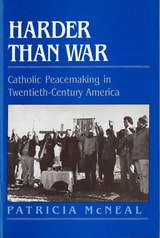
Harder than War
Catholic Peacemaking in Twentieth-Century AmericaMcNeal, Patricia F.
Rutgers University Press, 1992
During the Viet Nam War, Catholic Workers burned their draft cards and turned from nonviolence to resistance by practicing civil disobedience. Daniel and Philip Berrigan escalated that resistance when they destroyed draft files, and symbolically poured blood over and hammered nuclear weapons to awaken the national conscience to the life-ending effects of nuclear warfare.
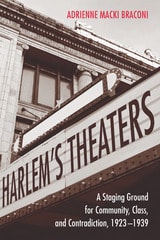
Harlem's Theaters
A Staging Ground for Community, Class, and Contradiction, 1923-1939Adrienne Macki Braconi
Northwestern University Press, 2015
Honorable Mention, 2016 Errol Hill Book Award for Outstanding Scholarship in African American Theater, Drama and/or Performance
Based on a vast amount of archival research, Adrienne Macki Braconi’s illuminating study of three important community-based theaters in Harlem shows how their work was essential to the formation of a public identity for African Americans and the articulation of their goals, laying the groundwork for the emergence of the Civil Rights movement. Macki Braconi uses textual analysis, performance reconstruction, and audience reception to examine the complex dynamics of productions by the Krigwa Players, the Harlem Experimental Theatre, and the Negro Theatre of the Federal Theatre Project. Even as these theaters demonstrated the extraordinary power of activist art, they also revealed its limits. The stage was a site in which ideological and class differences played out, theater being both a force for change and a collision of contradictory agendas. Macki Braconi’s book alters our understanding of the Harlem Renaissance, the roots of the Civil Rights movement, and the history of community theater in America.
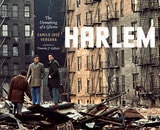
Harlem
The Unmaking of a GhettoCamilo José Vergara
University of Chicago Press, 2013
Photographer Camilo José Vergara has been chronicling the neighborhood for forty-three years, and Harlem: The Unmaking of a Ghetto is an unprecedented record of urban change. Vergara began his documentation of Harlem in the tradition of such masters as Helen Levitt and Aaron Siskind, and he later turned his focus on the neighborhood’s urban fabric, both the buildings that compose it and the life and culture embedded in them. By repeatedly returning to the same locations over the course of decades, Vergara is able to show us a community that is constantly changing—some areas declining, as longtime businesses give way to empty storefronts, graffiti, and garbage, while other areas gentrify, with corporate chain stores coming in to compete with the mom-and-pops. He also captures the ever-present street life of this densely populated neighborhood, from stoop gatherings to graffiti murals memorializing dead rappers to impersonators honoring Michael Jackson in front of the Apollo, as well as the growth of tourism and racial integration.
Woven throughout the images is Vergara’s own account of his project and his experience of living and working in Harlem. Taken together, his unforgettable words and images tell the story of how Harlem and its residents navigated the segregation, dereliction and slow recovery of the closing years of the twentieth century and the boom and racial integration of the twenty-first century. A deeply personal investigation, Harlem will take its place with the best portrayals of urban life.

Harmonic Function in Chromatic Music
A Renewed Dualist Theory and an Account of Its PrecedentsDaniel Harrison
University of Chicago Press, 1994
One of Harrison's central innovations is his reconstruction of the notion of harmony. Harrison understands harmonic power to flow not from chords as such but from the constituents of chords, reckoned for the most part as scale degrees of a key. This insight proves especially useful in analyzing the unusual progressions and key relations that characterize chromatic music.
Complementing the theoretical ideas is a critical history of nineteenth-century German harmonic theory in which Harrison traces the development of Hugo Riemann's ideas on dualism and harmonic function and examines aspects of Riemannian theory in the work of later theorists. Combining theoretical innovations with a sound historical understanding of those innovations, Harmonic Function in Chromatic Music will aid anyone studying this pivotal period of Western music history.
Harriette Simpson Arnow
Critical Essays on Her WorkHaeja K. Chung
Michigan State University Press, 1995
At her death in 1986, Harriette Simpson Arnow left a modest collection of published work: ten short stories, five novels, two non-fiction books, a short autobiography, and nineteen essays and book reviews. Although the sum is small, her writing has been examined from regionalist, Marxist, feminist, and other critical perspectives.
The 1970s saw the first serious attempts to revive interest in Arnow. In 1971, Tillie Olsen identified her as a writer whose "books of great worth suffer the death of being unknown, or at best, a peculiar eclipsing." Joyse Carol Oates wrote in The New York Times Book Review that Arnow's The Dollmaker is "our most unpretentious American masterpiece."
In the 1990s, it is appropriate to take stock of her earlier work and to prompt reexamination of this powerful yet poorly understood writer. This collection of critical essays examines traditional as well as new interpretations of Arnow and her work. It also suggests future directions for Arnow scholarship and includes studies of all of Arnow's writing, fiction and non-fiction, published and unpublished.
Harriman vs. Hill
Wall Street’s Great Railroad WarLarry Haeg
University of Minnesota Press, 2013
In 1901, the Northern Pacific was an unlikely prize: a twice-bankrupt construction of the federal government, it was a two-bit railroad (literally—five years back, its stock traded for twenty-five cents a share). But it was also a key to connecting eastern markets through Chicago to the rising West. Two titans of American railroads set their sights on it: James J. Hill, head of the Great Northern and largest individual shareholder of the Northern Pacific, and Edward Harriman, head of the Union Pacific and the Southern Pacific. The subsequent contest was unprecedented in the history of American enterprise, pitting not only Hill against Harriman but also Big Oil against Big Steel and J. P. Morgan against the Rockefellers, with a supporting cast of enough wealthy investors to fill the ballroom of the Waldorf Astoria.
The story, told here in full for the first time, transports us to the New York Stock Exchange during the unfolding of the earliest modern-day stock market panic. Harriman vs. Hill re-creates the drama of four tumultuous days in May 1901, when the common stock of the Northern Pacific rocketed from one hundred ten dollars a share to one thousand in a mere seventeen hours of trading—the result of an inadvertent “corner” caused by the opposing forces. Panic followed and then, in short order, a calamity for the “shorts,” a compromise, the near-collapse of Wall Street brokerages and banks, the most precipitous decline ever in American stock values, and the fastest recovery. Larry Haeg brings to life the ensuing stalemate and truce, which led to the forming of a holding company, briefly the biggest railroad combine in American history, and the U.S. Supreme Court ruling against the deal, launching the reputation of Justice Oliver Wendell Holmes as the “great dissenter” and President Theodore Roosevelt as the “trust buster.”
The forces of competition and combination, unfettered growth, government regulation, and corporate ambition—all the elements of American business at its best and worst—come into play in the account of this epic battle, whose effects echo through our economy to this day.
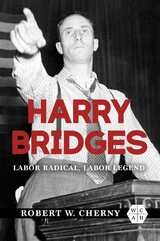
Harry Bridges
Labor Radical, Labor LegendRobert W. Cherny
University of Illinois Press, 2023
- Winner of a Silver Medal from the Independent Publisher Book Awards
- Won Honorable Mention for 2023 ILHA Book of the Year (International Labor History Association)
The iconic leader of one of America’s most powerful unions, Harry Bridges put an indelible stamp on the twentieth century labor movement. Robert Cherny’s monumental biography tells the life story of the figure who built the International Longshore and Warehouse Union (ILWU) into a labor powerhouse that still represents almost 30,000 workers.
An Australian immigrant, Bridges worked the Pacific Coast docks. His militant unionism placed him at the center of the 1934 West Coast Waterfront Strike and spurred him to expand his organizing activities to warehouse laborers and Hawaiian sugar and pineapple workers. Cherny examines the overall effectiveness of Bridges as a union leader and the decisions and traits that made him effective. Cherny also details the price paid by Bridges as the US government repeatedly prosecuted him for his left-wing politics.
Drawing on personal interviews with Bridges and years of exhaustive research, Harry Bridges places an extraordinary individual and the ILWU within the epic history of twentieth-century labor radicalism.
Harry S. Truman and the Cold War Revisionists
Robert H. Ferrell
University of Missouri Press, 2006
Harry S. Truman and the News Media
Contentious Relations, Belated RespectFranklin D. Mitchell
University of Missouri Press, 1998
Based upon extensive research in the papers of President Harry S. Truman and in several journalistic collections, Harry S. Truman and the News Media recounts the story of a once unpopular chief executive who overcame the censure of the news media to ultimately win both the public's and the press's affirmation of his personal and presidential greatness.
Franklin D. Mitchell traces the major contours of journalism during the lifetime and presidency of Truman. Although newspapers and newsmagazines are given the most emphasis, reporters and columnists of the Washington news corps also figure prominently for their role in the president's news conferences and their continuing coverage of Truman and his family. Broadcast journalism's expanding coverage of the president is also explored through chapters dealing with radio and television.
President Truman's advocacy of a liberal Fair Deal for all Americans and a prudent and visible role for the nation in world affairs drew fire from the anti-administration news media, particularly the publishing empire of William Randolph Hearst, the McCormick-Patterson newspapers, the Scripps-Howard chain, and the Time-Life newsmagazines of Henry R. Luce. Despite press opposition and the almost universal prediction of defeat in the 1948 election, Truman was victorious in the greatest miscalled presidential election in journalistic history.
During his full term, Truman's relations with the news media became contentious over such matters as national security in the Cold War, the conduct of the Korean War, and the continuing charges of communism and corruption in the administration. Although Truman's career in politics was based on honesty and the welfare of the people, his early political alliance with Thomas Pendergast, Kansas City's notorious political boss, provided the opportunity for a portion of the press to charge Truman with subservience to Pendergast's own agenda of corrupt government.
The history and the dynamics of the Truman presidency and the American news media, combined with biographical and institutional sketches of key individuals and news organizations, make Harry S. Truman and the News Media a captivating and original investigation of an American president. Well written and researched, this book will be of great value to Truman scholars, journalists, and anyone interested in American history or presidential studies.
Harry S. Truman versus the Medical Lobby
The Genesis of MedicareMonte M. Poen
University of Missouri Press, 1996
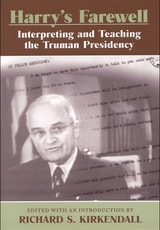
Harry's Farewell
Interpreting and Teaching the Truman PresidencyEdited & Intro by Richard S. Kirkendall
University of Missouri Press, 2004

Harvest of Hazards
Family Farming, Accidents, and Expertise in the Corn Belt, 1940-1975Derek S. Oden
University of Iowa Press, 2017
In this study of the farm safety movement in the Corn Belt, historian Derek Oden examines why agriculture was so dangerous and why improvements were so difficult to achieve. Because farmers were self-employed business owners whose employees were mainly family members; because they lived far from aid such as hospitals and fire stations; and because they had to manage such a diverse array of new technologies, they could not easily adopt the workplace safety and public health reforms designed for factories and urban settings. In response, beginning in the 1940s, farmers and a new breed of farm safety specialists relied upon an increasingly elaborate educational campaign to lessen injuries and illnesses on the farm.
Several government, business, and nonprofit organizations—from the US Department of Agriculture to the National Safety Council and 4-H and the Future Farmers of America—worked together to publicize both the dangers of farming and the information farmers needed to stay safe while driving tractors, applying anhydrous ammonia, or repairing machinery. By the 1960s, however, the partnership began to break down, and by the 1970s the safety movement became increasingly contested as professional and policy divisions emerged. This groundbreaking study incorporates agriculture into the histories of occupational safety and public health.
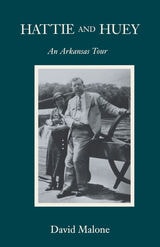
Hattie and Huey
An Arkansas TourDavid Malone
University of Arkansas Press, 1990
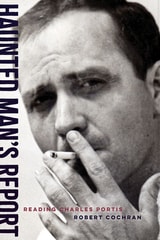
Haunted Man's Report
Reading Charles PortisRobert Cochran
University of Arkansas Press, 2024
Haunted Man’s Report, a deeply insightful literary exploration of Portis’s singular and underexamined oeuvre, celebrates this novelist’s great achievement and is certain to prove a valuable guide for readers new to Portis as well as aficionados.
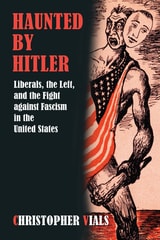
Haunted by Hitler
Liberals, the Left, and the Fight against Fascism in the United StatesChristopher Vials
University of Massachusetts Press, 2014
Although fascism is typically associated with Europe, the threat of fascism in the United States haunted the imaginations of activists, writers, and artists, spurring them to create a rich, elaborate body of cultural and political work. Traversing the Popular Front of the 1930s, the struggle against McCarthyism in the 1950s, the Black Power movement of the 1960s, and the AIDS activism of the 1980s, Haunted by Hitler highlights the value of “antifascist” cultural politics, showing how it helped to frame the national discourse.
Christopher Vials examines the ways in which anxieties about fascism in the United States have been expressed in the public sphere, through American television shows, Off-Broadway theater, party newspapers, bestselling works of history, journalism, popular sociology, political theory, and other media. He argues that twentieth-century liberals and leftists were more deeply unsettled by the problem of fascism than those at the center or the right and that they tirelessly and often successfully worked to counter America's fascist equivalents.
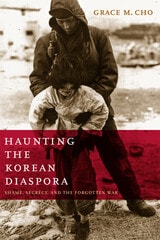
Haunting the Korean Diaspora
Shame, Secrecy, and the Forgotten WarGrace M. Cho
University of Minnesota Press, 2008
Grace M. Cho exposes how Koreans in the United States have been profoundly affected by the forgotten war and uncovers the silences and secrets that still surround it, arguing that trauma memories have been passed unconsciously through a process psychoanalysts call “transgenerational haunting.” Tracing how such secrets have turned into “ghosts,” Cho investigates the mythic figure of the yanggongju, literally the “Western princess,” who provides sexual favors to American military personnel. She reveals how this figure haunts both the intimate realm of memory and public discourse, in which narratives of U.S. benevolence abroad and assimilation of immigrants at home go unchallenged. Memories of U.S. violence, Cho writes, threaten to undo these narratives—and so they have been rendered unspeakable.
At once political and deeply personal, Cho’s wide-ranging and innovative analysis of U.S. neocolonialism and militarism under contemporary globalization brings forth a new way of understanding—and remembering—the impact of the Korean War.
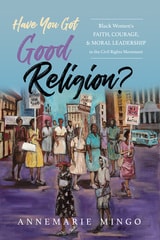
Have You Got Good Religion?
Black Women's Faith, Courage, and Moral Leadership in the Civil Rights MovementAnneMarie Mingo
University of Illinois Press, 2024
A depiction of moral imagination that resonates today, Have You Got Good Religion? reveals how Black Churchwomen’s understanding of God became action and transformed a nation.
Hawaiian Blood
Colonialism and the Politics of Sovereignty and IndigeneityJ. Kauanui Kahaulani
Duke University Press, 2008
Kauanui provides an impassioned assessment of how the arbitrary correlation of ancestry and race imposed by the U.S. government on the indigenous people of Hawai‘i has had far-reaching legal and cultural effects. With the HHCA, the federal government explicitly limited the number of Hawaiians included in land provisions, and it recast Hawaiians’ land claims in terms of colonial welfare rather than collective entitlement. Moreover, the exclusionary logic of blood quantum has profoundly affected cultural definitions of indigeneity by undermining more inclusive Kanaka Maoli notions of kinship and belonging. Kauanui also addresses the ongoing significance of the 50-percent rule: Its criteria underlie recent court decisions that have subverted the Hawaiian sovereignty movement and brought to the fore charged questions about who counts as Hawaiian.

Hawker Hunter
the story of a thoroughbredSreco Bradic
Amsterdam University Press, 2023
Hayek and the Evolution of Capitalism
Naomi Beck
University of Chicago Press, 2018
Yet even among those who study his work in depth, few have looked closely at his use of ideas from evolutionary science to advance his vision of markets and society. With this book Naomi Beck offers the first full-length engagement with Hayek’s thought from this perspective. Hayek argued that the capitalism we see in advanced civilizations is an unintended consequence of group selection—groups that adopted free market behavior expanded more successfully than others. But this attempt at a scientific grounding for Hayek’s principles, Beck shows, fails to hold water, plagued by incoherencies, misinterpretations of the underlying science, and lack of evidence. As crises around the globe lead to reconsiderations of the place of capitalism, Beck’s excavation of this little-known strand of Hayek’s thought—and its failure—is timely and instructive.
Healing Narratives
Women Writers Curing Cultural Dis-easeWilentz, Gay
Rutgers University Press, 2000

Healing Our Divided Society
Investing in America Fifty Years after the Kerner ReportFred Harris and Alan Curtis
Temple University Press, 2018
In 1968, the Kerner Commission concluded that America was heading toward “two societies, one black, one white—separate and unequal.” Today, America’s communities are experiencing increasing racial tensions and inequality, working-class resentment over the unfulfilled American Dream, white supremacy violence, toxic inaction in Washington, and the decline of the nation’s example around the world.
In Healing Our Divided Society, Fred Harris, the last surviving member of the Kerner Commission, along with Eisenhower Foundation CEO Alan Curtis, re-examine fifty years later the work still necessary towards the goals set forth in The Kerner Report. This timely volume unites the interests of minorities and white working- and middle-class Americans to propose a strategy to reduce poverty, inequality, and racial injustice. Reflecting on America’s urban climate today, this new report sets forth evidence-based policies concerning employment, education, housing, neighborhood development, and criminal justice based on what has been proven to work—and not work.
Contributors include: Oscar Perry Abello, Elijah Anderson, Anil N.F. Aranha, Jared Bernstein, Henry G. Cisneros, Elliott Currie, Linda Darling-Hammond, Martha F. Davis, E. J. Dionne, Jr., Marian Wright Edelman, Delbert S. Elliott, Carol Emig, Jeff Faux, Ron Grzywinski, Michael P. Jeffries, Lamar K. Johnson, Celinda Lake, Marilyn Melkonian, Gary Orfield, Diane Ravitch, Laurie Robinson, Herbert C. Smitherman, Jr., Joseph Stiglitz, Dorothy Stoneman, Kevin Washburn, Valerie Wilson, Gary Younge, Julian E. Zelizer, and the editors

Healing the Land and the Nation
Malaria and the Zionist Project in Palestine, 1920-1947Sandra M. Sufian
University of Chicago Press, 2007
Taking its title from a Jewish public health mantra, Healing the Land and the Nation situates antimalarial medicine and politics within larger colonial histories. By analyzing the science alongside the politics of Jewish settlement, Sufian addresses contested questions of social organization and the effects of land reclamation upon the indigenous Palestinian population in a decidedly innovative way. The book will be of great interest to scholars of the Middle East, Jewish studies, and environmental history, as well as to those studying colonialism, nationalism, and public health and medicine.