Results by title
196 books match the query 'Activism & Social Justice' and 7 start with h
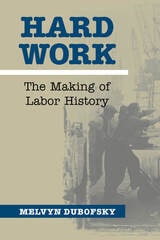
Hard Work
The Making of Labor HistoryMelvyn Dubofsky
University of Illinois Press, 2000
A career-spanning collection of writings by the legendary labor historian
One of American labor history's most prominent scholars, Melvyn Dubofsky curated an accessible style and historical reach that have long marked his work as required reading for students and scholars.
This collection juxtaposes Dubofsky's early writings with scholarship from the 1990s. Selections include work on western working-class radicalism, U.S. labor history in transnational and comparative settings, and the impact of technological change on American worker’s movements. Throughout, the writings provide an invaluable eyewitness perspective on the academic and political climate of the 1960s and 1970s while tracing the development of labor history as a discipline.
An exploration of important themes in labor history, Hard Work combines essential scholarship with the story of how past and present interact in the work of historians.
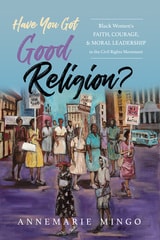
Have You Got Good Religion?
Black Women's Faith, Courage, and Moral Leadership in the Civil Rights MovementAnneMarie Mingo
University of Illinois Press, 2024
A depiction of moral imagination that resonates today, Have You Got Good Religion? reveals how Black Churchwomen’s understanding of God became action and transformed a nation.
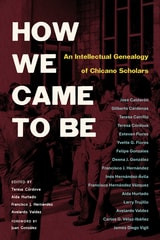
How We Came to Be
An Intellectual Genealogy of Chicano ScholarsEdited by Teresa Córdova, Aída Hurtado, Francisco J. Hernández, Avelardo Valdez; Foreword by Juan González
University of Arizona Press, 2026
This work chronicles the lives and legacies of Chicana and Chicano scholars whose formative experiences in the Chicano Movement shaped the development of Chicano studies and transformed higher education. Originating from the Reuniónes de Colegas—gatherings of veteran scholars reflecting on their shared histories—the volume features sixteen essays organized into five thematic sections that explore the intersections of activism, scholarship, and institutional change.
The contributors document how grassroots organizing evolved into academic inquiry, leading to the creation of departments, student support systems, and policy reforms that advanced equity and representation in universities. Essays address how community-engaged research influenced urban planning, health advocacy, and cultural production, while also highlighting Indigenous and transnational epistemologies that redefined theoretical frameworks in Chicano studies. The volume concludes with reflections on academic leadership and the breaking of barriers by Chicana scholars in higher education administration.
Together, these essays offer a powerful intellectual history and a testament to a generation’s enduring commitment to social justice. How We Came to Be is both a scholarly archive and a call to action, preserving the legacy of those who built Chicano studies and inspiring future generations to continue the work of transformation within and beyond the academy.
Contributors
José Calderón
Gilberto Cárdenas
Teresa Carrillo
Teresa Córdova
Estevan Flores
Yvette G. Flores
Felipe Gonzales
Deena J. González
Francisco J. Hernández
Inés Hernández-Ávila
Francisco Hernández Vázquez
Aída Hurtado
Larry Trujillo
Avelardo Valdez
Carlos G. Vélez-Ibáñez
James Diego Vigil
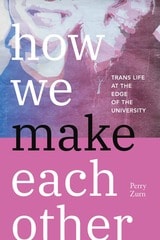
How We Make Each Other
Trans Life at the Edge of the UniversityPerry Zurn
Duke University Press, 2025

How to Protest
Lessons on Nonviolent ActionMegan Hershey, Illustrations by Matthew Cahill
University of Wisconsin Press, 2026
Many people around the world are frustrated with their governments yet do not know what actions to take. Protest may feel out of reach, like something only seasoned activists can do. This accessible guide explores the creativity, joy, and accessibility of peaceful protest. Megan Hershey introduces readers to twenty-five specific and inspiring nonviolent protest methods through real-life examples from the past fifty years. Each chapter includes a short, vivid description of a bold nonviolent action taken by everyday people who demanded that their leaders listen to them. From patriotic choir concerts in Estonia to live painted pigs at the Ugandan parliament, these unique protest strategies will inspire those looking to effect change and offer encouragement from past successes.
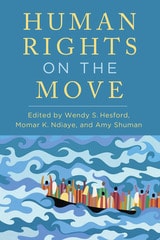
Human Rights on the Move
Edited by Wendy S. Hesford, Momar K. Ndiaye, and Amy Shuman
The Ohio State University Press, 2024
Contributing artists, activists, and scholars expose the fundamental paradox of human rights (namely that nation-states are violators and guarantors of rights) while also showing how people facing violence and persecution move with the hope of more livable and equitable futures. The assembled scholarly essays, interviews, and creative pieces demonstrate the importance of a more relational and contextual understanding of human rights—one that can destabilize current definitions and open space for new formulations.
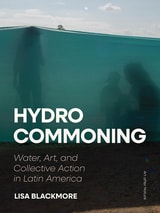
Hydrocommoning
Water, Art, and Collective Action in Latin AmericaLisa Blackmore
University of Minnesota Press, 2027
Reimagining watersheds as living hydrocommons through which artists and communities create more just and sustainable futures
Hydrocommoning explores how artists, activists, and curators coalesce around water in embodied efforts to contest entrenched and enduring forms of harm and degradation. Against the reduction of rivers, streams, and wetlands to mere resources to be managed, Hydrocommoning centers water as a living web of relations through which artists and communities forge creative means of reconnection by moving, weaving, pumping, eating, and listening.
By charting these aesthetic practices, Hydrocommoning shows how artists and organizers across Latin America oppose extractivism, unequal urbanization, ecological degradation, and the erasure of Indigenous water cultures. To cultivate widespread social attunement to vulnerable waters and raise the call for their defense and care, collectives in Brazil, Colombia, Guatemala, and Peru engage in communal meals, sound art, infrastructural interventions, and other practices that Lisa Blackmore theorizes as “hydrocommoning.”
Grounded in five years of experiential fieldwork, archival research, and curatorial projects in Latin America, Blackmore proposes a methodology to work with water as an analytical framework for collective action. Bridging the gap between theory, curating, and community-based practices, Hydrocommoning offers a promising vision of grassroots organizing that actively confronts some of today’s most urgent ecological threats.
Retail e-book files for this title are screen-reader friendly with images accompanied by short alt text and/or extended descriptions.