Results by title
314 books match the query 'African' and 7 start with h
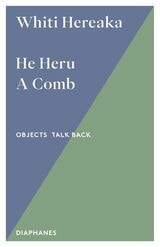
He Heru. A Comb
An Ornament for the Most Sacred Part of the BodyWhiti Hereaka
Diaphanes, 2026
Drawing inspiration from a seemingly simple comb, or heru, this new text by Whiti Heraka comes in nine sections, “a part for each tooth, and a part for each space between them.” The parts tell stories of love, loss, and longing: tales of whales whose bones were used to make objects, of a carver creating a comb, of Maori gods and the power of women, of colonial whalers fishing their prey almost to extinction in the South Pacific, of a writer who cuts her hair and moves across worlds, weaving connections. Hereaka unfurls a stunning cosmology around the heru, combing with it through time and space to make “stories of ocean blue, blood red, bone white.”
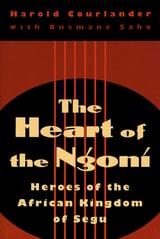
Heart of the Ngoni
Heroes of the African Kingdom of SeguHarold Courlander
University of Massachusetts Press, 1994
The heroic legends described here recreate the events and annals of the kingdom of Segu and of the Bambara tribe that formed a series of important city-states along the Niger River during the 17th century.
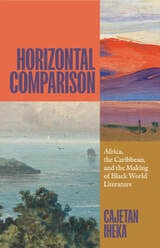
Horizontal Comparison
Africa, the Caribbean, and the Making of Black World LiteratureCajetan Iheka
University of Chicago Press, 2026
By analyzing African and Caribbean texts on their own terms, Horizontal Comparison articulates new forms of transoceanic solidarity.
The fields of comparative literature and Black Atlantic studies have an Africa problem: despite sustained attempts to decenter Western paradigms, they still privilege the United States and Europe as the primary loci of reference. So argues Cajetan Iheka in Horizontal Comparison, which aims to redirect both fields toward a non-hierarchical, South-South orientation focusing on the links between Africa and the Caribbean.
By analyzing the literary work and real-life trajectories of writers such as Peter Abrahams, Chimamanda Adichie, Maryse Condé, Buchi Emecheta, Jamaica Kincaid, Claude McKay, Dinaw Mengestu, Ferdinand Oyono, Taiye Selasi, and Sam Selvon, Iheka draws our attention to the ways in which African and Caribbean texts inform and mutually constitute each other, bypassing the usual comparisons to Western literary canons. The book challenges not only Western cultural hegemony in the study of global Black writing but also the very methodologies of comparative literary studies, offering fresh insights into reading, trauma, character, and the “worlding” of literature.
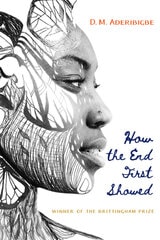
How the End First Showed
D. M. Aderibigbe
University of Wisconsin Press, 2018
Widening his gaze to capture the moral rhythms of life in Lagos, he embraces themes of love, spirituality, poverty, compassion, sickness, and death. Aderibigbe offers both an extended elegy for his mother and poems addressed to children of the African continent, poems that speak to the past that has made them.
We salivated; slices of yam softened.
We chewed our teeth; slices of yam perished.
Mother smiled. Father arrived,
filled the room with curses;
his voice beat in our hearts,
as thunder on the walls of a building.
His empty stomach was a bowl of anger.
In a room built with our silence,
father was hitting mother.
—excerpt from "Hungry Man" D. M. Aderibigbe. All rights reserved.
Hungry Subjects
Mapping Appetites in the African Cultural LandscapeNjeri Githire
University of Michigan Press, 2026
Against the backdrop of media representations of Africa through persistent and pervasive images of emaciated, starving Africans and the critical need to marshall food aid in response, Hungry Subjects places Africa’s food anxiety within a broader historical context and expands ongoing food scholarship beyond its current confines in the social sciences. Njeri Githire weaves together coming-of-age texts across the African and African diasporic literary landscape in English, French, and Portuguese expression to ask how African writers incorporate food into their storylines to transmit cultural information, question norms, and propose alternatives. Eating is an intimately personal yet inherently social experience codified by public rituals and commerce, invariably linked to a larger tapestry of historical, cultural, economic, and political dynamics. Delving into the political dynamics of food as a tool of power and control alongside subversive potentialities, Hungry Subjects appraises the narrative and political thrust of (not-)eating and exposes the ways in which postcolonial manifestations of colonial-era power relations are symbolized in food’s many functions and meanings.
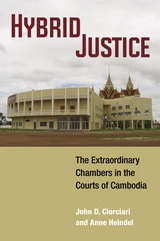
Hybrid Justice
The Extraordinary Chambers in the Courts of CambodiaJohn D. Ciorciari and Anne Heindel
University of Michigan Press, 2014
Since 2006, the United Nations and Cambodian Government have participated in the Extraordinary Chambers in the Courts of Cambodia, a hybrid tribunal created to try key Khmer Rouge officials for crimes of the Pol Pot era. In Hybrid Justice, John D. Ciorciari and Anne Heindel examine the contentious politics behind the tribunal’s creation, its flawed legal and institutional design, and the frequent politicized impasses that have undermined its ability to deliver credible and efficient justice and leave a positive legacy. They also draw lessons and principles for future hybrid and international courts and proceedings.

Hybrid Justice
The Extraordinary Chambers in the Courts of CambodiaJohn D. Ciorciari and Anne Heindel
University of Michigan Press, 2023
Since 2006, the United Nations and Cambodian Government have participated in the Extraordinary Chambers in the Courts of Cambodia, a hybrid tribunal created to try key Khmer Rouge officials for crimes of the Pol Pot era. In Hybrid Justice, John D. Ciorciari and Anne Heindel examine the contentious politics behind the tribunal’s creation, its flawed legal and institutional design, and the frequent politicized impasses that have undermined its ability to deliver credible and efficient justice and leave a positive legacy. They also draw lessons and principles for future hybrid and international courts and proceedings.