Results by title
312 books match the query 'African American authors' and 5 start with h
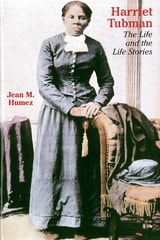
Harriet Tubman
The Life and the Life StoriesJean M. Humez
University of Wisconsin Press, 2005
Harriet Tubman’s name is known world-wide and her exploits as a self-liberated Underground Railroad heroine are celebrated in children’s literature, film, and history books, yet no major biography of Tubman has appeared since 1943. Jean M. Humez’s comprehensive Harriet Tubman is both an important biographical overview based on extensive new research and a complete collection of the stories Tubman told about her life—a virtual autobiography culled by Humez from rare early publications and manuscript sources. This book will become a landmark resource for scholars, historians, and general readers interested in slavery, the Underground Railroad, the Civil War, and African American women.
Born in slavery in Maryland in or around 1820, Tubman drew upon deep spiritual resources and covert antislavery networks when she escaped to the north in 1849. Vowing to liberate her entire family, she made repeated trips south during the 1850s and successfully guided dozens of fugitives to freedom. During the Civil War she was recruited to act as spy and scout with the Union Army. After the war she settled in Auburn, New York, where she worked to support an extended family and in her later years founded a home for the indigent aged. Celebrated by her primarily white antislavery associates in a variety of private and public documents from the 1850s through the 1870s, she was rediscovered as a race heroine by woman suffragists and the African American women’s club movement in the early twentieth century. Her story was used as a key symbolic resource in education, institutional fundraising, and debates about the meaning of "race" throughout the twentieth century.
Humez includes an extended discussion of Tubman’s work as a public performer of her own life history during the nearly sixty years she lived in the north. Drawing upon historiographical and literary discussion of the complex hybrid authorship of slave narrative literature, Humez analyzes the interactive dynamic between Tubman and her interviewers. Humez illustrates how Tubman, though unable to write, made major unrecognized contributions to the shaping of her own heroic myth by early biographers like Sarah Bradford. Selections of key documents illustrate how Tubman appeared to her contemporaries, and a comprehensive list of primary sources represents an important resource for scholars.
Hearing the Hurt
Rhetoric, Aesthetics, and Politics of the New Negro MovementEric King Watts
University of Alabama Press, 2012
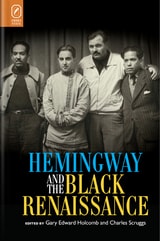
Hemingway and the Black Renaissance
Edited by Gary Edward Holcomb and Charles Scruggs
The Ohio State University Press, 2012
Hemingway and the Black Renaissance, edited by Gary Edward Holcomb and Charles Scruggs, explores a conspicuously overlooked topic: Hemingway’s wide-ranging influence on writers from the Harlem Renaissance to the present day. An observable who’s who of black writers—Ralph Ellison, James Baldwin, Langston Hughes, Claude McKay, Wallace Thurman, Chester Himes, Alex la Guma, Derek Walcott, Gayl Jones, and more—cite Hemingway as a vital influence. This inspiration extends from style, Hemingway’s minimalist art, to themes of isolation and loneliness, the dilemma of the expatriate, and the terrifying experience of living in a time of war. The relationship, nevertheless, was not unilateral, as in the case of Jean Toomer’s 1923 hybrid, short-story cycle Cane, which influenced Hemingway’s collage-like 1925 In Our Time.
Hot Music, Ragmentation, and the Bluing of American Literature
Steven C. Tracy
University of Alabama Press, 2015
Exploring the deep and enduring relationship between music and literature, Hot Music, Ragmentation, and the Bluing of American Literature examines the diverse ways in which African American “hot” music influenced American culture—particularly literature—in early twentieth century America. Steven C. Tracy provides a history of the fusion of African and European elements that formed African American “hot” music, and considers how terms like ragtime, jazz, and blues developed their own particular meanings for American music and society. He draws from the fields of literature, literary criticism, cultural anthropology, American studies, and folklore to demonstrate how blues as a musical and poetic form has been a critical influence on American literature.
Hot Music, Ragmentation, and the Bluing of American Literature begins by highlighting instances in which American writers, including Herman Melville, Stephen Crane, and Gertrude Stein, use African American culture and music in their work, and then characterizes the social context of the Jazz Age, discussing how African American music reflected the wild abandon of the time. Tracy focuses on how a variety of schools of early twentieth century writers, from modernists to members of the Harlem Renaissance to dramatists and more, used their connections with “hot” music to give their own work meaning.
Tracy’s extensive and detailed understanding of how African American “hot” music operates has produced a fresh and original perspective on its influence on mainstream American literature and culture. An experienced blues musician himself, Tracy draws on his performance background to offer an added dimension to his analysis. Where another blues scholar might only analyze blues language, Tracy shows how the language is actually performed.
Hot Music, Ragmentation, and the Bluing of American Literature is the first book to offer such a refreshingly broad interdisciplinary vision of the influence of African American “hot” music on American literature. It is an essential addition to the library of serious scholars of American and African American literature and culture and blues aficionados alike.
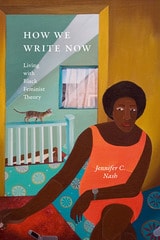
How We Write Now
Living with Black Feminist TheoryJennifer C. Nash
Duke University Press, 2024