Results by title
104 books match the query 'Animals & Nature' and 4 start with h
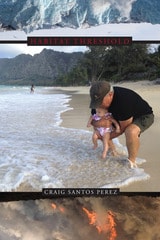
Habitat Threshold
Craig Santos Perez
Omnidawn, 2019
With Habitat Threshold, Craig Santos Perez has crafted a timely collection of eco-poetry that explores his ancestry as a native Pacific Islander, the ecological plight of his homeland, and his fears for the future. The book begins with the birth of the author’s daughter, capturing her growth and childlike awe at the wonders of nature. As it progresses, Perez confronts the impacts of environmental injustice, the ravages of global capitalism, toxic waste, animal extinction, water rights, human violence, mass migration, and climate change. Throughout, he mourns lost habitats and species, and confronts his fears for the future world his daughter will inherit. Amid meditations on calamity, this work does not stop at the threshold of elegy. Instead, the poet envisions a sustainable future in which our ethics are shaped by the indigenous belief that the earth is sacred and all beings are interconnected—a future in which we cultivate love and “carry each other towards the horizon of care.”
Through experimental forms, free verse, prose, haiku, sonnets, satire, and a method he calls “recycling,” Perez has created a diverse collection filled with passion. Habitat Threshold invites us to reflect on the damage done to our world and to look forward, with urgency and imagination, to the possibility of a better future.
Through experimental forms, free verse, prose, haiku, sonnets, satire, and a method he calls “recycling,” Perez has created a diverse collection filled with passion. Habitat Threshold invites us to reflect on the damage done to our world and to look forward, with urgency and imagination, to the possibility of a better future.
[more]
Harm
Hillary Gravendyk
Omnidawn, 2012
Offering a new narrative of physical body constituted in perilous scenes of contact, Harm performs the loss of that fictive division between a unified body and its surrounding world. Terrifying and unlooked- for harmonies emerge in these poems, which dwell in a medicalized landscape where both the body and the land are monitored and laid bare. Troubling the idea of cure by recasting it in the terms of harm, Harm shifts between warning and error, nature and the body. In the sense of Baudelaire’s “correspondences,” bloodclots externalize into “sunclots” and the air is “rusty with blood.” The book troubles the idea of cure by casting it also as a form of harm itself. Moving amid the prose poem and the lyric, Harm navigates a landscape of extremity both frightening and filled with wonders.
[more]
Here
Sydney Lea
Four Way Books, 2019
In his thirteenth book of poetry, Sydney Lea gives voice to the deep connection between human life and the natural world as well as their fragility and transience. Here, nature is as much a muse as a trigger for sense memory—as a schoolboy on a playground “breathing in autumn mud, / that cherished aroma” or as witness to a redtail hawk’s attack and the aftermath during which “That poor doomed duckling’s wisps of down / Floated in air like snowflakes, /Diaphanous.” Death is a constant presence in these poems, too, arising from the bittersweet awareness of what eventually will be lost. While there is reckoning, there are few regrets in a life well-lived and closely observed. Here is a title, but it’s also a statement, an incantation and affirmation: “Let’s chant it throughout the year,” Lea writes, “like so much birdsong: we’re here we’re here we’re here.”
[more]
How to Abandon Ship
Sasha West
Four Way Books, 2024
In How to Abandon Ship, Sasha West harnesses poetry as a vessel to ferry the inconceivable, to wreck upon the shores of what we’ve known thus far. Assessing the accelerating emergencies of climate change amid the West’s self-cannibalizing capitalism, the speaker of these poems wrestles with the state of the world and its compounding catastrophes as a new parent. That fierce love becomes her grappling hook into the glut of information and epochal view of time and space we must scale to leave our children a habitable, equitable planet. To approach a perspective too vast for the individual mind, West cycles through personae which collectively metabolize the strands of the past, and the foundational myths of Western civilization, that constructed this looming future. West speaks as a contemporary mother and an ancient proxy, the unheeded Greek oracle Cassandra; gives voice to fossil fuels; and imagines grown children, real and mythological, surviving beyond a world our generation preemptively mourns. “I have taken / my voice past the threshold, past / the lintel,” Cassandra addresses readers and, more broadly, a paralyzed and apathetic public. “I am speaking to you now from / inside the wildfire while it burns the hair / from my body: I don’t expect you will listen.” But while making space for climate grief, holding our faces up to the ever-expanding sinkhole of earthly loss, West liberates us unto joy, enjoining us to remake the narratives that drive our culture, our consumption, and our relationship to the non-human world. Cassandra’s daughter rides the ship as it sinks, declaring, “I am being shaped / into something new, waiting, / listening to birds give out song / before / the songs give out.” And Cassandra’s granddaughter endures to remind us that, when the sails buckle, we need not drown if we choose to swim. “When you were still alive and apt to get weepy over what you saw as rubbled landscapes, I was impatient. Only a tourist fetishizes the ground where tragedy occurred…. What needs to be done, we do. We act in tiny increments.” These splinters compose the timeless story of humanity: we love each other because we cannot help it; we fail, and fail repeatedly; we go on.
[more]