Results by title
82 books match the query 'Appalachian Region' and 8 start with h
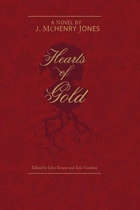
HEARTS OF GOLD
a novel by J. McHenry Jones, edited by John Ernest and Eric Gardner
West Virginia University Press, 2010
J. McHenry Jones’s Hearts of Gold is a gripping tale of post-Civil War battles against racism and systemic injustice. Originally published in 1896, this novel reveals an African American community of individuals dedicated to education, journalism, fraternal organizations, and tireless work serving the needs of those abandoned by the political process of the white world. Jones challenges conventional wisdom by addressing a range of subjects—from interracial relationships to forced labor in coal mines—that virtually no other novelist of the time was willing to approach. With the addition of an introduction and appendix, this new edition reveals the difficult foundations upon which African Americans built a platform to address injustice; generate opportunities; and play a prominent role in American social, economic, and political life.

Harriette Simpson Arnow
Critical Essays on Her WorkHaeja K. Chung
Michigan State University Press, 1995
At her death in 1986, Harriette Simpson Arnow left a modest collection of published work: ten short stories, five novels, two non-fiction books, a short autobiography, and nineteen essays and book reviews. Although the sum is small, her writing has been examined from regionalist, Marxist, feminist, and other critical perspectives.
The 1970s saw the first serious attempts to revive interest in Arnow. In 1971, Tillie Olsen identified her as a writer whose "books of great worth suffer the death of being unknown, or at best, a peculiar eclipsing." Joyse Carol Oates wrote in The New York Times Book Review that Arnow's The Dollmaker is "our most unpretentious American masterpiece."
In the 1990s, it is appropriate to take stock of her earlier work and to prompt reexamination of this powerful yet poorly understood writer. This collection of critical essays examines traditional as well as new interpretations of Arnow and her work. It also suggests future directions for Arnow scholarship and includes studies of all of Arnow's writing, fiction and non-fiction, published and unpublished.
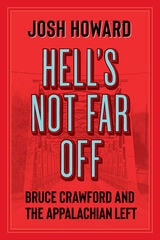
Hell's Not Far Off
Bruce Crawford and the Appalachian LeftJosh Howard
West Virginia University Press, 2024
A biography of Bruce Crawford, a southwest Virginia journalist-writer of the radical tradition and one of the first to interpret Appalachian labor history.
Hell’s Not Far Off is a grounded, politically engaged study of the Appalachian journalist and political critic Bruce Crawford, a scourge of coal and railway interests. Crawford fought injustices wherever he saw them at major risk to his own life and became an early interpreter of Appalachian labor history.
His writings and actions from the 1920s to the 1960s helped shape southwest Virginia and West Virginia. Through Crawford’s Weekly, a newspaper active from 1920 to 1935, Crawford challenged the Ku Klux Klan, lynch mobs, and the private police forces of coal barons. The wounds received for these efforts were the closing of his paper and a bullet to his leg during a Harlan County strike in the 1930s. In his work after journalism, he led the West Virginia branch of the Federal Writers’ Project during the political standoff over the contents of the state’s official guidebook.
In Hell’s Not Far Off, Josh Howard resurrects strands of a radical tradition centered especially on matters of labor, environment, and race, drawing attention to that tradition’s ongoing salience: “Present-day Appalachia’s fights were [Crawford’s], and his fights are still ours.”

High Mountains Rising
Appalachia in Time and PlaceEdited by Richard A. Straw and H. Tyler Blethen
University of Illinois Press, 2004
The first half of the fourteen essays deal with historical issues including Native Americans, pioneer settlement, slavery, the Civil War and Reconstruction, industrialization, the Great Depression, migration, and finally, modernization. The remaining essays take a more cultural focus, addressing stereotypes, music, folklife, language, literature, and religion.
Bringing together many of the most prestigious scholars in Appalachian studies, this volume has been designed for general and classroom use, and includes suggestions for further reading.
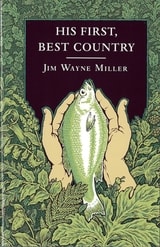
His First, Best Country
Jim Wayne Miller
Ohio University Press, 1993
Published in 1993 by Gnomon Press
In His First, Best Country, the sequel to his earlier book Newfound, Jim Wayne Miller delivers an unforgettable Appalachian novel. His lyrical prose captures the pull of home as he explores our ties to land, neighbors, and self, exploring what’s most painful and sustaining about belonging.
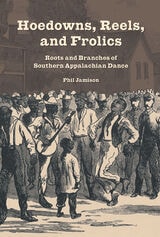
Hoedowns, Reels, and Frolics
Roots and Branches of Southern Appalachian DancePhil Jamison
University of Illinois Press, 2015
These distinctive folk dances, Jamison argues, are not the unaltered jigs and reels brought by early British settlers, but hybrids that developed over time by adopting and incorporating elements from other popular forms. He traces the forms from their European, African American, and Native American roots to the modern day. On the way he explores the powerful influence of black culture, showing how practices such as calling dances as well as specific kinds of steps combined with white European forms to create distinctly "American" dances.
From cakewalks to clogging, and from the Shoo-fly Swing to the Virginia Reel, Hoedowns, Reels, and Frolics reinterprets an essential aspect of Appalachian culture.
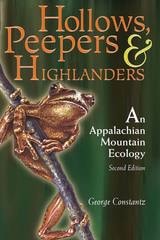
Hollows, Peepers, and Highlanders
An Appalachian Mountain EcologyGeorge Constantz
West Virginia University Press, 2004
In this revised and expanded edition of Hollows, Peepers, and Highlanders, author George Constantz, a biologist and naturalist, writes about the beauty and nature of the Appalachian landscape. While the information is scientific in nature, Constantz's accessible descriptions of the adaptation of various organisms to their environment enable the reader to enjoy learning about the Appalachian ecosystem. The book is divided into three sections: "Stage and Theater," "The Players," and "Seasonal Act." Each section sets the scene and describes the events occurring in nature. "Stage and Theatre" is comprised of chapters that describe the origins of the Appalachia region. "The Players" is an interesting and in-depth look into the ecology of animals, such as the mating rituals of different species, and the evolutionary explanation for the adaptation of Appalachian wildlife. The last section, "Seasonal Act," makes note of the changes in Appalachian weather each season and its effect on the inhabitants.
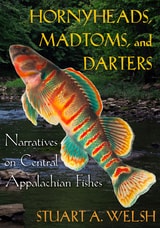
Hornyheads, Madtoms, and Darters
Narratives on Central Appalachian FishesStuart A. Welsh
Ohio University Press, 2023