Results by title
67 books match the query 'Austria' and 5 start with h
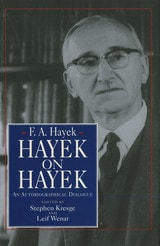
Hayek on Hayek
An Autobiographical DialogueF. A. Hayek
University of Chicago Press, 1994
The crumbling of the Berlin Wall, the fall of the iron curtain, and the Reagan and Thatcher "revolutions" all owe a tremendous debt to F. A. Hayek. Economist, social and political theorist, and intellectual historian, Hayek passionately championed individual liberty and condemned the dangers of state control. Now Hayek at last tells the story of his long and controversial career, during which his fortunes rose, fell, and finally rose again.
Through a complete collection of previously unpublished autobiographical sketches and a wide selection of interviews, Hayek on Hayek provides the first detailed chronology of Hayek's early life and education, his intellectual progress, and the academic and public reception of his ideas. His discussions range from economic methodology and the question of religious faith to the atmosphere of post-World War I Vienna and the British character.
Born in 1899 into a Viennese family of academics and civil servants, Hayek was educated at the University of Vienna, fought in the Great War, and later moved to London, where, as he watched liberty vanish under fascism and communism across Europe, he wrote The Road to Serfdom. Although this book attracted great public attention, Hayek was ignored by other economists for thirty years after World War II, when European social democracies boomed and Keynesianism became the dominant intellectual force. However, the award of the Nobel Prize in economics for 1974 signaled a reversal in Hayek's fortunes, and before his death in 1992 he saw his life's work vindicated in the collapse of the planned economies of Eastern Europe.
Hayek on Hayek is as close to an autobiography of Hayek as we will ever have. In his own eloquent words, Hayek reveals the remarkable life of a revolutionary thinker in revolutionary times.
"One of the great thinkers of our age who explored the promise and contours of liberty....[Hayek] revolutionized the world's intellectual and political life"—President George Bush, on awarding F. A. Hayek the Medal of Freedom
F. A. Hayek, recipient of the Medal of Freedom 1991 and the Nobel Memorial Prize in Economics in 1974, was a pioneer in monetary theory and the principal proponent of the libertarian philosophy. Hayek is the author of numerous books in economics, as well as books in political philosophy and psychology.
[more]
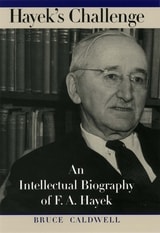
Hayek's Challenge
An Intellectual Biography of F.A. HayekBruce Caldwell
University of Chicago Press, 2005
Friedrich A. Hayek is regarded as one of the preeminent economic theorists of the twentieth century, as much for his work outside of economics as for his work within it. During a career spanning several decades, he made contributions in fields as diverse as psychology, political philosophy, the history of ideas, and the methodology of the social sciences. Bruce Caldwell—editor of The Collected Works of F. A. Hayek—understands Hayek's thought like few others, and with this book he offers us the first full intellectual biography of this pivotal social theorist.
Caldwell begins by providing the necessary background for understanding Hayek's thought, tracing the emergence, in fin-de-siècle Vienna, of the Austrian school of economics—a distinctive analysis forged in the midst of contending schools of thought. In the second part of the book, Caldwell follows the path by which Hayek, beginning from the standard Austrian assumptions, gradually developed his unique perspective on not only economics but a broad range of social phenomena. In the third part, Caldwell offers both an assessment of Hayek's arguments and, in an epilogue, an insightful estimation of how Hayek's insights can help us to clarify and reexamine changes in the field of economics during the twentieth century.
As Hayek's ideas matured, he became increasingly critical of developments within mainstream economics: his works grew increasingly contrarian and evolved in striking—and sometimes seemingly contradictory—ways. Caldwell is ideally suited to explain the complex evolution of Hayek's thought, and his analysis here is nothing short of brilliant, impressively situating Hayek in a broader intellectual context, unpacking the often difficult turns in his thinking, and showing how his economic ideas came to inform his ideas on the other social sciences.
Hayek's Challenge will be received as one of the most important works published on this thinker in recent decades.
[more]
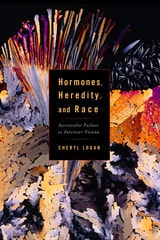
Hormones, Heredity, and Race
Spectacular Failure in Interwar ViennaCheryl A. Logan
Rutgers University Press, 2013
Early in the twentieth century, arguments about “nature” and “nurture” pitted a rigid genetic determinism against the idea that genes were flexible and open to environmental change. This book tells the story of three Viennese biologists—Paul Kammerer, Julius Tandler, and Eugen Steinach—who sought to show how the environment could shape heredity through the impact of hormones. It also explores the dynamic of failure through both scientific and social lenses. During World War I, the three men were well respected scientists; by 1934, one was dead by his own hand, another was in exile, and the third was subject to ridicule.
Paul Kammerer had spent years gathering zoological evidence on whether environmental change could alter heredity, using his research as the scientific foundation for a new kind of eugenics—one that challenged the racism growing in mainstream eugenics. By 1918, he drew on the pioneering research of two colleagues who studied how secretions shaped sexual attributes to argue that hormones could alter genes. After 1920, Julius Tandler employed a similar concept to restore the health and well-being of Vienna's war-weary citizens. Both men rejected the rigidly acting genes of the new genetics and instead crafted a biology of flexible heredity to justify eugenic reforms that respected human rights. But the interplay of science and personality with the social and political rise of fascism and with antisemitism undermined their ideas, leading to their spectacular failure.
Paul Kammerer had spent years gathering zoological evidence on whether environmental change could alter heredity, using his research as the scientific foundation for a new kind of eugenics—one that challenged the racism growing in mainstream eugenics. By 1918, he drew on the pioneering research of two colleagues who studied how secretions shaped sexual attributes to argue that hormones could alter genes. After 1920, Julius Tandler employed a similar concept to restore the health and well-being of Vienna's war-weary citizens. Both men rejected the rigidly acting genes of the new genetics and instead crafted a biology of flexible heredity to justify eugenic reforms that respected human rights. But the interplay of science and personality with the social and political rise of fascism and with antisemitism undermined their ideas, leading to their spectacular failure.
[more]
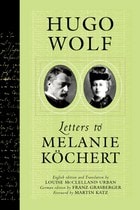
Hugo Wolf
Letters To Melanie KochertHugo Wolf
University of Wisconsin Press, 2003
This is a love story. It tells of an extraordinary epistolary relationship between Hugo Wolf, one of the greatest masters of the German art song, whose dedication to the poetic spirit of his music was equaled only by Franz Schubert and Robert Schumann, and Melanie Köchert, the wife of a prominent Viennese jeweler with whom Wolf shared a lifelong emotional, spiritual, and artistic bond.
Wolf’s letters to Köchert—he wrote 245 between 1887 and 1899—were composed during a period of almost unprecedented cultural upheaval in Europe, in the shadow of Vienna during the era of Freud, Mahler, and Klimt. They reveal Wolf at his most optimistic, celebrating his concert successes and the solitude he believed was so precious to his ability to compose. They follow Wolf through times of overwhelming despair, when his musical failures left him profoundly alienated, overcome, as he revealed to Köchert, "by a feeling of unspeakable emptiness and desolation." And they follow Wolf as he struggled to compose the 250 astounding art songs that are his creative legacy, and his almost simultaneous descent into madness.
Hugo Wolf: Letters to Melanie Köchert, sensitively translated by Wolf scholar and interpreter Louise McClelland Urban, is a literary and musical even of the highest order
[more]
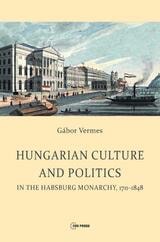
Hungarian Culture and Politics in the Habsburg Monarchy 1711-1848
Gábor Vermes
Central European University Press, 2014
This book describes and analyzes the critical period of 1711-1848 within Hungary from novel points of view, including close analyses of the proceedings of Hungarian diets. Contrary to conventional interpretations, the study, stressing the strong continuity of traditionalism in Hungarian thought, society, and politics, argues that Hungarian liberalism did not begin to flower in any substantial way until the 1830s and 1840s. Hungarian Culture and Politics in the Habsburg Monarchy also traces and evaluates the complex relationship between Austria and Hungary over this span of time. Past interpretations have, with only a few exceptions, tilted heavily towards the Austrian role within the Monarchy, both because its center was in Vienna and because few non-Hungarian scholars can read Hungarian. This analysis redresses this balance through the use of both Austrian and Hungarian sources, demonstrating the deep cultural differences between the two halves of the Monarchy, which were nevertheless closely linked by economic and administrative ties and by a mutual recognition that co-existence was preferable to any major rupture.
[more]