Results by title
82 books match the query 'Birdwatching Guides' and 3 start with h
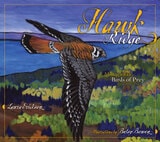
Hawk Ridge
Minnesota's Birds of PreyLaura Erickson
University of Minnesota Press, 2012
Was Caesar like the eagle because of his aquiline (from aquila, for “eagle” in Latin) nose, or does the eagle seem imperial because of his Caesar-like beak? Does the sharp vision of a “hawk-eyed” observer have any basis in nature? And what the heck is “kettling” to a bird-watcher, or, for that matter, a bird? Raptors have captured the imagination from time immemorial and have an especially rich history in Minnesota. The ancient peoples whose pictographs adorn the rock faces of Lake Superior’s North Shore may well have witnessed the first hawk movements along Lake Superior—the same annual migration that today draws as many as twenty thousand people to Duluth’s Hawk Ridge. These birds, passing through in astounding numbers, are among the hawks and accipiters, buteos and harriers, eagles and ospreys pictured and profiled in detail in this book.
Written by one of Minnesota’s best-known bird authorities, with images by one of the state’s favorite illustrators, Hawk Ridge is as fun as it is informative. It introduces the state’s raptors, from the rare visitor to the most familiar hawk, noting each species’ signature traits—osprey wings, for instance, are crooked to help them catch fish; vultures urinate on their legs to cool themselves—and their nesting, breeding, and migrating habits. Did you know that Sharp-shinned Hawks banded at Hawk Ridge have been found throughout Central America and even into South America, and also, in midwinter, in Wisconsin? Laura Erickson offers a broad perspective (a bird’s-eye view!), making sense of the raptor’s role in the larger ornithological scheme.
With descriptions of various species—and helpful distinctions between species, families, and orders—the book gives readers a clear idea of which raptors might be seen in Minnesota, when, where, and how often. It also includes a hawk migration primer that explains the movements that bring these birds in such awe-inspiring numbers to places like Hawk Ridge. Filled with curious facts and practical information for expert and amateur bird-watcher alike, the book is at once a guide to the hawks of Minnesota and a beautifully illustrated album of the most regal members of the avian kingdom.
Helpers At Birds Nests
Cooperative Breeding & Related BehaviorAlexander F. Skutch
University of Iowa Press, 1999
In Helpers at Birds' Nests, renowned naturalist and ornithologist Alexander Skutch provides vivid, detailed accounts of a remarkable aspect of bird behavior—he aid that one bird gives another who is neither its mate nor its dependent young and who may even belong to a different species.
In graceful, clear prose, Skutch makes accessible to amateur bird-watchers examples of cooperation in species as far-flung as the little rifleman of New Zealand, the Laysan albatross in the mid Pacific, and the neotropical birds of Skutch's own Valley of El General in Costa Rica.
Skutch describes the cooperative behavior of more than fifty families of birds. Each family is introduced by a brief sketch of its distribution and outstanding features, followed by intimate, nontechnical accounts of the helpful behaviors that have been most carefully studied. Skutch considers the significance of helpful birds and discusses the theoretical aspects of cooperative breeding, its evolution, kin selection, altruism, and demography.
First discovered by the author more than half a century ago, cooperative breeding has become increasingly studied by professional ornithologists. In this expanded edition, noted behaviorist Stephen Emlen credits Skutch's passionate observations of birds with promoting scientific interest in avian behavior. Emlen offers readers a summary of the advances made in the field during the past ten years and places Skutch's work in the context of contemporary ornithological research.
How Fast Can A Falcon Dive?
Fascinating Answers to Questions about Birds of PreyCapainolo, Peter
Rutgers University Press, 2010
From stories of red-tailed hawks making their homes on the ledges of Manhattan skyscrapers to their role in protecting California's vineyards from flocks of grape-loving starlings, How Fast Can a Falcon Dive? explores how these avian predators interact with people and with their environment.