Results by title
128 books match the query 'Buildings, structures, etc' and 7 start with h
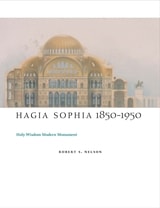
Hagia Sophia, 1850-1950
Holy Wisdom Modern MonumentRobert S. Nelson
University of Chicago Press, 2004
Built from 532 to 537 as the Cathedral of Constantinople, Hagia Sophia was little studied and seldom recognized as a great monument of world art until the nineteenth century, and Nelson examines the causes and consequences of the building's newly elevated status during that time. He chronicles the grand dome's modern history through a vibrant cast of characters—emperors, sultans, critics, poets, archaeologists, architects, philanthropists, and religious congregations—some of whom spent years studying it, others never visiting the building. But as Nelson shows, they all had a hand in the recreation of Hagia Sophia as a modern architectural icon. By many means and for its own purposes, the West has conceptually transformed Hagia Sophia into the international symbol that it is today.
While other books have covered the architectural history of the structure, this is the first study to address its status as a modern monument. With his narrative of the building's rebirth, Nelson captures its importance for the diverse communities that shape and find meaning in Hagia Sophia. His book will resonate with cultural, architectural, and art historians as well as with those seeking to acquaint themselves with the modern life of an inspired and inspiring building.
Haifa
City of StepsNili Scharf Gold
Brandeis University Press, 2017
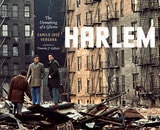
Harlem
The Unmaking of a GhettoCamilo José Vergara
University of Chicago Press, 2013
Photographer Camilo José Vergara has been chronicling the neighborhood for forty-three years, and Harlem: The Unmaking of a Ghetto is an unprecedented record of urban change. Vergara began his documentation of Harlem in the tradition of such masters as Helen Levitt and Aaron Siskind, and he later turned his focus on the neighborhood’s urban fabric, both the buildings that compose it and the life and culture embedded in them. By repeatedly returning to the same locations over the course of decades, Vergara is able to show us a community that is constantly changing—some areas declining, as longtime businesses give way to empty storefronts, graffiti, and garbage, while other areas gentrify, with corporate chain stores coming in to compete with the mom-and-pops. He also captures the ever-present street life of this densely populated neighborhood, from stoop gatherings to graffiti murals memorializing dead rappers to impersonators honoring Michael Jackson in front of the Apollo, as well as the growth of tourism and racial integration.
Woven throughout the images is Vergara’s own account of his project and his experience of living and working in Harlem. Taken together, his unforgettable words and images tell the story of how Harlem and its residents navigated the segregation, dereliction and slow recovery of the closing years of the twentieth century and the boom and racial integration of the twenty-first century. A deeply personal investigation, Harlem will take its place with the best portrayals of urban life.
Hawksmoor's London Churches
Architecture and TheologyPierre de la Ruffinière du Prey
University of Chicago Press, 2000
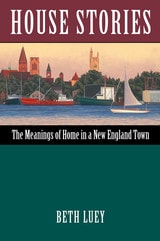
House Stories
The Meanings of Home in a New England TownBeth Luey
University of Massachusetts Press, 2017
Historic houses adorned with plaques populate New England like nowhere else in the country. These plaques note the construction year and original owner of the house, but they tell nothing about the rich lives of the people who lived there. In House Stories, Beth Luey takes readers on a virtual walking tour of several historic houses in Fairhaven, Massachusetts, a small New England coastal town, inviting us in to learn each house's secrets.
Through letters and diaries, church and business records, newspaper accounts, legal documents, and the recollections of neighbors who knew them, Luey introduces the diverse cast of historical characters who lived in these houses at various times from 1800 to the 2000s, including a Japanese castaway and his rescuer, a self-made millionaire, a seagoing adventurer, a religious pioneer, and an entrepreneurial immigrant. All of the houses are still standing and all but a lighthouse are still called home. In House Stories, Luey asks readers to join her as she considers the multiple meanings of “home” for these people and their families.

Housing Design and Society in Amsterdam
Reconfiguring Urban Order and Identity, 1900-1920Nancy Stieber
University of Chicago Press, 1998
Historians.
During the early 1900s, Amsterdam developed an international reputation as an urban mecca when invigorating reforms gave rise to new residential neighborhoods encircling the city's dispirited nineteenth-century districts. This new housing, built primarily with government subsidy, not only was affordable but also met rigorous standards of urban planning and architectural design. Nancy Stieber explores the social and political developments that fostered this innovation in public housing.
Drawing on government records, professional journals, and polemical writings, Stieber examines how government supported large-scale housing projects, how architects like Berlage redefined their role as architects in service to society, and how the housing occupants were affected by public debates about working-class life, the cultural value of housing, and the role of art in society.
Stieber emphasizes the tensions involved in making architectural design a social practice while she demonstrates the success of this collective enterprise in bringing about effective social policy and aesthetic progress.
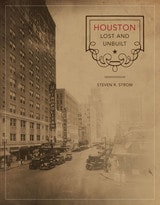
Houston Lost and Unbuilt
By Steven R. Strom
University of Texas Press, 2010
Winner, San Antonio Conservation Society Citation, 2011
Good Brick Award, Greater Houston Preservation Alliance, 2011
Julia Ideson Award, Friends of the Texas Room, 2011
Driven by an almost fanatical desire for whatever is new, "modern," and likely to make money, Houston is constantly in the process of remaking itself. Few structures remain from the nineteenth century, and even much of the twentieth-century built environment has fallen before the wrecking ball of "progress." Indeed, the demolition of older buildings in Houston can be compared to the destruction of cityscapes such as Berlin, Warsaw, and Tokyo in World War II. But because this wholesale restructuring of Houston's built environment has happened in peacetime, historically minded people have only recently sounded an alarm over what is being lost and the toll this destruction is taking on Houstonians' sense of place.
Houston Lost and Unbuilt presents an extensive catalogue of twentieth-century public and commercial buildings that have been lost forever, as well as an intriguing selection of buildings that never made it off the drawing board. The lost buildings (or lost interiors of buildings) span a wide range, from civic gathering places such as the Houston Municipal Auditorium and the Astrodome to commercial enterprises such as the Foley Brothers, Sears Roebuck, and Sakowitz department stores to "Theatre Row" downtown to neighborhoods such as Fourth Ward/Freedmen's Town. Steven Strom's introductions and photo captions describe each significant building's contribution to the civic life of Houston. The "unbuilt" section of the book includes numerous previously unpublished architectural renderings of proposed projects such as a multi-building city center, monorail, and people mover system, all which reflect Houston's fascination with the future and optimism that technology will solve all of the city's problems.