Results by title
3071 books match the query 'Business & Economics' and 83 start with h
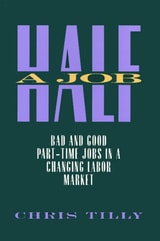
Half A Job
Bad and Good Part-Time Jobs in a Changing Labor MarketChris Tilly
Temple University Press, 1996
Over 20 million people are working part-time in the United States, more than six million of them involuntarily. Both Time and Fortune magazines have run recent cover stories about this constrained faction of the workforce, who tend to earn on average 40 percent less than full-time workers. Addressing this disturbing trend, Chris Tilly presents a current, in-depth analysis of how U.S. businesses use part-time employment, and why they are using it more and more.
Worker demand for part-time jobs peaked more than twenty years ago, but employers' desires for cheap labor and schedule flexibility have continued to drive the long-term growth of part-time jobs. Tilly argues that this growth is a reaction to the expanding trade and service industries, which, by their nature, depend on part-time workers. Examining the nature and purposes of the different types of part-time employment, he explores the roots of part-time jobs in the organization of work, and the inadequacies of existing public policies on part-time employment.
Using not only statistical analysis but over eighty interviews with employers in the retail and insurance industries, Tilly suggests new approaches to providing flexibility without insecurity.
Handbook for International Management Research
Betty Jane Punnett and Oded Shenkar, Editors
University of Michigan Press, 2004
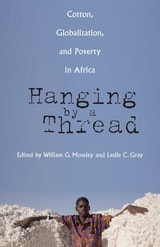
Hanging by a Thread
Cotton, Globalization, and Poverty in AfricaWilliam G. Moseley
Ohio University Press, 2008
The textile industry was one of the first manufacturing activities to become organized globally, as mechanized production in Europe used cotton from the various colonies. Africa, the least developed of the world’s major regions, is now increasingly engaged in the production of this crop for the global market, and debates about the pros and cons of this trend have intensified.
Hanging by a Thread: Cotton, Globalization, and Poverty in Africa illuminates the connections between Africa and the global economy. The editors offer a compelling set of linked studies that detail one aspect of the globalization process in Africa, the cotton commodity chain.
From global policy debates, to impacts on the natural environment, to the economic and social implications of this process, Hanging by a Thread explores cotton production in the postcolonial period from different disciplinary perspectives and in a range of national contexts. This approach makes the globalization process palpable by detailing how changes at the macroeconomic level play out on the ground in the world’s poorest region. Hanging by a Thread offers new insights on the region in a global context and provides a critical perspective on current and future development policy for Africa.
Contributors: Thomas J. Bassett, Jim Bingen, Duncan Boughton, Brian M. Dowd, Marnus Gouse, Leslie C. Gray, Dolores Koenig, Scott M. Lacy, William G. Moseley, Colin Poulton, Bhavani Shankar, Corinne Siaens, Colin Thirtle, David Tschirley, and Quentin Wodon.
Happiness and the Law
John Bronsteen, Christopher Buccafusco, and Jonathan S. Masur
University of Chicago Press, 2014
Drawing on new research in psychology, neuroscience, and economics, the authors of Happiness and the Law assess how the law affects people’s quality of life—and how it can do so in a better way. Taking readers through some of the common questions about and objections to the use of happiness research in law and policy, they consider two areas in depth: criminal punishment and civil lawsuits. More broadly, the book proposes a comprehensive approach to assessing human welfare—well-being analysis—that is a valuable alternative to the strictly economically based cost-benefit analyses currently dominating how we evaluate public policy. The study of happiness is the next step in the evolution from traditional economic analysis of the law to a behavioral approach. Happiness and the Law will serve as the definitive, yet accessible, guide to understanding this new paradigm.

Happiness in the Nordic World
Christian Bjørnskov
University of Wisconsin Press, 2021
Many experts attribute the region's high levels of happiness to factors such as greater relative national wealth and well-functioning institutions. Yet, a number of other countries in Europe and parts of Asia share those qualities and rank far lower in life satisfaction. Others credit the region's high levels of happiness to its welfare state model, but these have changed considerably over time—and Iceland does not share this feature.
Instead, economist Christian Bjørnskov argues that the most important factor to come out of international comparisons is the importance of social trust—the ability to trust other people one does not know personally. The populations in three of the five countries are also characterized by a very strong sense of personal freedom. These two key factors contribute to a fuller and richer life. Bjørnskov ends by discussing to what extent these factors can be exported to other parts of the world.
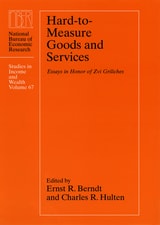
Hard-to-Measure Goods and Services
Essays in Honor of Zvi GrilichesEdited by Ernst E. Berndt and Charles R. Hulten
University of Chicago Press, 2007
The celebrated economist Zvi Griliches’s entire career can be viewed as an attempt to advance the cause of accuracy in economic measurement. His interest in the causes and consequences of technical progress led to his pathbreaking work on price hedonics, now the principal analytical technique available to account for changes in product quality.
Hard-to-Measure Goods and Services, a collection of papers from an NBER conference held in Griliches’s honor, is a tribute to his many contributions to current economic thought. Here, leading scholars of economic measurement address issues in the areas of productivity, price hedonics, capital measurement, diffusion of new technologies, and output and price measurement in “hard-to-measure” sectors of the economy. Furthering Griliches’s vital work that changed the way economists think about the U.S. National Income and Product Accounts, this volume is essential for all those interested in the labor market, economic growth, production, and real output.

Harmony and the Balance
An Intellectual History of Seventeenth-Century English Economic ThoughtAndrea Finkelstein
University of Michigan Press, 2000
Andrea Finkelstein is Assistant Professor of History, City University of New York.
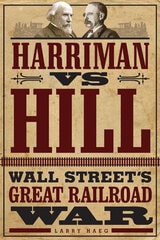
Harriman vs. Hill
Wall Street’s Great Railroad WarLarry Haeg
University of Minnesota Press, 2013
In 1901, the Northern Pacific was an unlikely prize: a twice-bankrupt construction of the federal government, it was a two-bit railroad (literally—five years back, its stock traded for twenty-five cents a share). But it was also a key to connecting eastern markets through Chicago to the rising West. Two titans of American railroads set their sights on it: James J. Hill, head of the Great Northern and largest individual shareholder of the Northern Pacific, and Edward Harriman, head of the Union Pacific and the Southern Pacific. The subsequent contest was unprecedented in the history of American enterprise, pitting not only Hill against Harriman but also Big Oil against Big Steel and J. P. Morgan against the Rockefellers, with a supporting cast of enough wealthy investors to fill the ballroom of the Waldorf Astoria.
The story, told here in full for the first time, transports us to the New York Stock Exchange during the unfolding of the earliest modern-day stock market panic. Harriman vs. Hill re-creates the drama of four tumultuous days in May 1901, when the common stock of the Northern Pacific rocketed from one hundred ten dollars a share to one thousand in a mere seventeen hours of trading—the result of an inadvertent “corner” caused by the opposing forces. Panic followed and then, in short order, a calamity for the “shorts,” a compromise, the near-collapse of Wall Street brokerages and banks, the most precipitous decline ever in American stock values, and the fastest recovery. Larry Haeg brings to life the ensuing stalemate and truce, which led to the forming of a holding company, briefly the biggest railroad combine in American history, and the U.S. Supreme Court ruling against the deal, launching the reputation of Justice Oliver Wendell Holmes as the “great dissenter” and President Theodore Roosevelt as the “trust buster.”
The forces of competition and combination, unfettered growth, government regulation, and corporate ambition—all the elements of American business at its best and worst—come into play in the account of this epic battle, whose effects echo through our economy to this day.

Harry Bridges
Labor Radical, Labor LegendRobert W. Cherny
University of Illinois Press, 2023
- Winner of a Silver Medal from the Independent Publisher Book Awards
- Won Honorable Mention for 2023 ILHA Book of the Year (International Labor History Association)
The iconic leader of one of America’s most powerful unions, Harry Bridges put an indelible stamp on the twentieth century labor movement. Robert Cherny’s monumental biography tells the life story of the figure who built the International Longshore and Warehouse Union (ILWU) into a labor powerhouse that still represents almost 30,000 workers.
An Australian immigrant, Bridges worked the Pacific Coast docks. His militant unionism placed him at the center of the 1934 West Coast Waterfront Strike and spurred him to expand his organizing activities to warehouse laborers and Hawaiian sugar and pineapple workers. Cherny examines the overall effectiveness of Bridges as a union leader and the decisions and traits that made him effective. Cherny also details the price paid by Bridges as the US government repeatedly prosecuted him for his left-wing politics.
Drawing on personal interviews with Bridges and years of exhaustive research, Harry Bridges places an extraordinary individual and the ILWU within the epic history of twentieth-century labor radicalism.
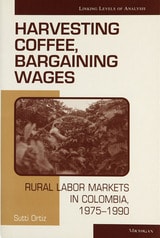
Harvesting Coffee, Bargaining Wages
Rural Labor Markets in Colombia, 1975-1990Sutti Ortiz
University of Michigan Press, 1999
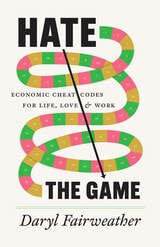
Hate the Game
Economic Cheat Codes for Life, Love, and WorkDaryl Fairweather
University of Chicago Press, 2025
Should I buy or rent? Do I ask for a promotion? Should I tell people I’m pregnant? What salary do I deserve? Should I just quit this job? Common anxieties about life are often grounded in economics. In an increasingly win-lose society, these economic decisions—where to work, where to live, even how to live—have a way of feeling fixed and mistakes terminal.
Daryl Fairweather is no stranger to these dynamics. As the first Black woman to receive an economics PhD from the famed University of Chicago, she saw firsthand how concepts of behavioral economics and game theory were deployed in the real world—and in her own life—to great effect. Hate the Game combines Fairweather’s elite knowledge of these principles with her singular voice in describing how they can be harnessed. Her great talent, unique among economists, is her ability to articulate economic trends in a way that is not just informative, but also accounts for life’s other anxieties.
In Hate the Game, Fairweather fixes her expertise and service on navigating the earliest economic inflection points of adult life: whether to go to college and for how long; partnering, having kids, both, or neither; getting, keeping, and changing jobs; and where to live and how to pay for it. She speaks in actionable terms about what the economy means for individual people, especially those who have the sneaking suspicion they’re losing out. Set against her own experiences and enriched with lessons from history, science, and pop culture, Fairweather instructs readers on how to use game theory and behavioral science to map out options and choose directions while offering readers a sense of control and agency in an economy where those things are increasingly rare.
Hate the Game
Economic Cheat Codes for Life, Love, and WorkDaryl Fairweather
University of Chicago Press, 2025
The secret insights of economics, translated for the rest of us.
Should I buy or rent? Do I ask for a promotion? Should I tell people I’m pregnant? What salary do I deserve? Should I just quit this job? Common anxieties about life are often grounded in economics. In an increasingly win-lose society, these economic decisions—where to work, where to live, even how to live—have a way of feeling fixed and mistakes terminal.
Daryl Fairweather is no stranger to these dynamics. As the first Black woman to receive an economics PhD from the famed University of Chicago, she saw firsthand how concepts of behavioral economics and game theory were deployed in the real world—and in her own life—to great effect. Hate the Game combines Fairweather’s elite knowledge of these principles with her singular voice in describing how they can be harnessed. Her great talent, unique among economists, is her ability to articulate economic trends in a way that is not just informative, but also accounts for life’s other anxieties.
In Hate the Game, Fairweather fixes her expertise and service on navigating the earliest economic inflection points of adult life: whether to go to college and for how long; partnering, having kids, both, or neither; getting, keeping, and changing jobs; and where to live and how to pay for it. She speaks in actionable terms about what the economy means for individual people, especially those who have the sneaking suspicion they’re losing out. Set against her own experiences and enriched with lessons from history, science, and pop culture, Fairweather instructs readers on how to use game theory and behavioral science to map out options and choose directions while offering readers a sense of control and agency in an economy where those things are increasingly rare.

Having People, Having Heart
Charity, Sustainable Development, and Problems of Dependence in Central UgandaChina Scherz
University of Chicago Press, 2014
Through detailed studies of two different orphan support organizations in Uganda, Scherz shows how many Ugandans view material forms of Catholic charity as deeply intertwined with their own ethics of care and exchange. With a detailed examination of this overlooked relationship in hand, she reassesses the generally assumed paradox of material aid as both promising independence and preventing it. The result is a sophisticated demonstration of the powerful role that anthropological concepts of exchange, value, personhood, and religion play in the politics of international aid and development.
Hawai'i
Eight Hundred Years of Political and Economic ChangeSumner La Croix
University of Chicago Press, 2019
Building on new archaeological and historical research, Sumner La Croix assembles here the economic history of Hawai‘i from the first Polynesian settlements in 1200 through US colonization, the formation of statehood, and to the present day. He shows how the political and economic institutions that emerged and evolved in Hawai‘i during its three centuries of global isolation allowed an economically and culturally rich society to emerge, flourish, and ultimately survive annexation and colonization by the United States. The story of a small, open economy struggling to adapt its institutions to changes in the global economy, Hawai‘i offers broadly instructive conclusions about economic evolution and development, political institutions, and native Hawaiian rights.
Hayek and the Evolution of Capitalism
Naomi Beck
University of Chicago Press, 2018
Yet even among those who study his work in depth, few have looked closely at his use of ideas from evolutionary science to advance his vision of markets and society. With this book Naomi Beck offers the first full-length engagement with Hayek’s thought from this perspective. Hayek argued that the capitalism we see in advanced civilizations is an unintended consequence of group selection—groups that adopted free market behavior expanded more successfully than others. But this attempt at a scientific grounding for Hayek’s principles, Beck shows, fails to hold water, plagued by incoherencies, misinterpretations of the underlying science, and lack of evidence. As crises around the globe lead to reconsiderations of the place of capitalism, Beck’s excavation of this little-known strand of Hayek’s thought—and its failure—is timely and instructive.

Hayek on Hayek
An Autobiographical DialogueF. A. Hayek
University of Chicago Press, 1994
Through a complete collection of previously unpublished autobiographical sketches and a wide selection of interviews, Hayek on Hayek provides the first detailed chronology of Hayek's early life and education, his intellectual progress, and the academic and public reception of his ideas. His discussions range from economic methodology and the question of religious faith to the atmosphere of post-World War I Vienna and the British character.
Born in 1899 into a Viennese family of academics and civil servants, Hayek was educated at the University of Vienna, fought in the Great War, and later moved to London, where, as he watched liberty vanish under fascism and communism across Europe, he wrote The Road to Serfdom. Although this book attracted great public attention, Hayek was ignored by other economists for thirty years after World War II, when European social democracies boomed and Keynesianism became the dominant intellectual force. However, the award of the Nobel Prize in economics for 1974 signaled a reversal in Hayek's fortunes, and before his death in 1992 he saw his life's work vindicated in the collapse of the planned economies of Eastern Europe.
Hayek on Hayek is as close to an autobiography of Hayek as we will ever have. In his own eloquent words, Hayek reveals the remarkable life of a revolutionary thinker in revolutionary times.
"One of the great thinkers of our age who explored the promise and contours of liberty....[Hayek] revolutionized the world's intellectual and political life"—President George Bush, on awarding F. A. Hayek the Medal of Freedom
F. A. Hayek, recipient of the Medal of Freedom 1991 and the Nobel Memorial Prize in Economics in 1974, was a pioneer in monetary theory and the principal proponent of the libertarian philosophy. Hayek is the author of numerous books in economics, as well as books in political philosophy and psychology.

Hayek on Mill
The Mill-Taylor Friendship and Related WritingsF. A. Hayek
University of Chicago Press, 2015
This latest addition to the University of Chicago Press’s Collected Works of F. A. Hayek series showcases the fascinating intersections between two of the most prominent thinkers from two successive centuries. Hayek situates Mill within the complex social and intellectual milieu of nineteenth-century Europe—as well as within twentieth-century debates on socialism and planning—and uncovers the influence of Taylor-Mill on Mill’s political economy. The volume features the Mill-Taylor correspondence and brings together for the first time Hayek’s related writings, which were widely credited with beginning a new era of Mill scholarship.

Hayek's Challenge
An Intellectual Biography of F.A. HayekBruce Caldwell
University of Chicago Press, 2005
Caldwell begins by providing the necessary background for understanding Hayek's thought, tracing the emergence, in fin-de-siècle Vienna, of the Austrian school of economics—a distinctive analysis forged in the midst of contending schools of thought. In the second part of the book, Caldwell follows the path by which Hayek, beginning from the standard Austrian assumptions, gradually developed his unique perspective on not only economics but a broad range of social phenomena. In the third part, Caldwell offers both an assessment of Hayek's arguments and, in an epilogue, an insightful estimation of how Hayek's insights can help us to clarify and reexamine changes in the field of economics during the twentieth century.
As Hayek's ideas matured, he became increasingly critical of developments within mainstream economics: his works grew increasingly contrarian and evolved in striking—and sometimes seemingly contradictory—ways. Caldwell is ideally suited to explain the complex evolution of Hayek's thought, and his analysis here is nothing short of brilliant, impressively situating Hayek in a broader intellectual context, unpacking the often difficult turns in his thinking, and showing how his economic ideas came to inform his ideas on the other social sciences.
Hayek's Challenge will be received as one of the most important works published on this thinker in recent decades.
Hayek's The Road to Serfdom
A Brief IntroductionBruce Caldwell
University of Chicago Press, 2013

Hayek
A Life, 1899–1950Bruce Caldwell and Hansjoerg Klausinger
University of Chicago Press, 2022
The definitive account of the distinguished economist’s formative years.
Few twentieth-century figures have been lionized and vilified in such equal measure as Friedrich Hayek—economist, social theorist, leader of the Austrian school of economics, and champion of classical liberalism. Hayek’s erudite arguments in support of individualism and the market economy have attracted a devout following, including many at the levers of power in business and government. Critics, meanwhile, cast Hayek as the intellectual forefather of “neoliberalism” and of all the evils they associate with that pernicious doctrine.
In Hayek: A Life, historians of economics Bruce Caldwell and Hansjörg Klausinger draw on never-before-seen archival and family material to produce an authoritative account of the influential economist’s first five decades. This includes portrayals of his early career in Vienna; his relationships in London and Cambridge; his family disputes; and definitive accounts of the creation of The Road to Serfdom and of the founding meeting of the Mont Pèlerin Society.
A landmark work of history and biography, Hayek: A Life is a major contribution both to our cultural accounting of a towering figure and to intellectual history itself.
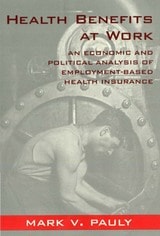
Health Benefits at Work
An Economic and Political Analysis of Employment-Based Health InsuranceMark V. Pauly
University of Michigan Press, 1999

Health Care Issues in the United States and Japan
Edited by David A. Wise and Naohiro Yashiro
University of Chicago Press, 2006
Recent data show wide disparity between Japan and the United States in the effectiveness of their health care systems. Japan spends close to the lowest percentage of its gross domestic product on health care among OECD countries, the United States spends the highest, yet life expectancies in Japan are among the world’s longest. Clearly, a great deal can be learned from a comprehensive comparative analysis of health care issues in these two countries.
In Health Care Issues in the United States and Japan, contributors explore the structural characteristics of the health care systems in both nations, the economic incentives underlying the systems, and how they operate in practice. Japan’s system, they show, is characterized by generous insurance schemes, a lack of gatekeepers, and fee-for-service mechanisms. The United States’ structure, on the other hand, is distinguished by for-profit hospitals, privatized health insurance, and managed care. But despite its relative success, an aging population and a general shift from infectious diseases to more chronic maladies are forcing the Japanese to consider a model more closely resembling that of the United States.
In an age when rising health care costs and aging populations are motivating reforms throughout the world, this timely study will prove invaluable.

Health Networks
Can They Be the Solution?Thomas P. Weil
University of Michigan Press, 2001
Unfortunately, most hospitals that have formed alliances with a previous competitor or nearby teaching facility have found that they are not yet achieving the savings originally forecast. Weil finds that these shortcomings often have been caused by the difficulties in achieving a strategic fit between two partners, in finding a middle ground when differences in culture and values surface, and in implementing operational efficiencies. The book concludes with a discussion of a number of ways in which networks might cut costs in the future.
Health Networks will be of interest to medical practitioners and administrators, as well as to students in health services management programs.
Thomas P. Weil is President, Bedford Health Associates, Inc., management consultants for health and hospital services.
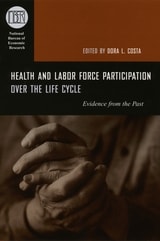
Health and Labor Force Participation over the Life Cycle
Evidence from the PastEdited by Dora L. Costa
University of Chicago Press, 2003
To that end, this book draws on new data-an extensive longitudinal survey of Union Army veterans born between 1820 and 1850-to examine the factors that affected health and labor force participation in nineteenth-century America. Contributors consider the impacts of a variety of conditions-including social class, wealth, occupation, family, and community-on the morbidity and mortality of the group. The papers investigate and address a number of special topics, including the influence of previous exposure to infectious disease, migration, and community factors such as lead in water mains. They also analyze the roles of income, health, and social class in retirement decisions, paying particular attention to the social context of disability.
Economists and historians who specialize in demography or labor, as well as those who study public health, will welcome the unique contributions offered by this book, which offers a clearer view than ever before of the workings and complexities of life, death, and labor during the nineteenth century.
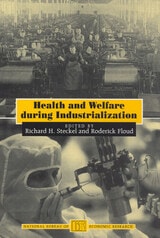
Health and Welfare during Industrialization
Edited by Richard H. Steckel and Roderick Floud
University of Chicago Press, 1997
The essays incorporate several indicators of quality of life, especially real per capita income and health, but also real wages, education, and inequality. And while the authors use traditional measures of health such as life expectancy and mortality rates, this volume stands alone in its extensive use of new "anthropometric" data—information about height, weight and body mass index that indicates changes in nations' well-being. Consequently, Health and Welfare during Industrialization signals a new direction in economic history, a broader and more thorough understanding of what constitutes standard of living.
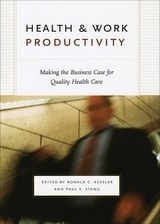
Health and Work Productivity
Making the Business Case for Quality Health CareEdited by Ronald C. Kessler and Paul E. Stang
University of Chicago Press, 2006
Health and Work Productivity presents state-of-the-art health and productivity research that suggests interventions aimed at prevention, early detection, and best-practice treatment of workers along with an informed allocation strategy can produce significant cost-benefits for employers. Contributors cover all the major aspects of this new area of research: approaches to studying the effects of health on productivity, ways for employers to estimate the costs of productivity loss, concrete suggestions for future research developments in the area, and the implications of this research for public policy.
Health at Older Ages
The Causes and Consequences of Declining Disability Among the ElderlyEdited by David M. Cutler and David A. Wise
University of Chicago Press, 2009
This breakthrough volume argues that educational attainment, high socioeconomic status, an older retirement age, and accessible medical care have improved the health and quality of life of seniors. Along the way, it outlines the economic benefits of disability decline, such as an increased rate of seniors in the workplace, relief for the healthcare system and care-giving families, and reduced medical expenses for the elderly themselves. Health at Older Ages will be an essential contribution to the debate about meeting the medical needs of an aging nation.
Hedged
How Private Investment Funds Helped Destroy American Newspapers and Undermine DemocracyMargot Susca
University of Illinois Press, 2024
The ultrawealthy largely own and guide the newspaper system in the United States. Through entities like hedge funds and private equity firms, this investor class continues to dismantle the one institution meant to give voice to average citizens in a democracy.
Margot Susca reveals the little-known history of how private investment took over the newspaper industry. Drawing on a political economy of media, Susca’s analysis uses in-depth interviews and documentary evidence to examine issues surrounding ownership and power. Susca also traces the scorched-earth policies of layoffs, debt, cash-outs, and wholesale newspaper closings left behind by private investors and the effects of the devastation on the future of news and information. Throughout, Susca reveals an industry rocked less by external forces like lost ad revenue and more by ownership and management obsessed with profit and beholden to private fund interests that feel no responsibility toward journalism or the public it is meant to serve.
Helping Out
Miri Song
Temple University Press, 1999
Helping Out addresses the centrality of children's labor participation in such family enterprises. Discussing the case of Chinese families running take-out food shops in Britain, Miri Song examines the ways in which children contribute their labor and the context in which children come to understand and believe in "helping out" as part of a "family work contract." Song explores the implications of these children's labor participation for family relationships, cultural identity, and the future of the Chinese community in Britain. While doing so, she argues that the practical importance and the broader meanings of children's work must be understood in the context of immigrant families' experiences of migration and ethnic minority status in Western, white-majority societies.
Helping People Help Themselves
From the World Bank to an Alternative Philosophy of Development AssistanceDavid Ellerman
University of Michigan Press, 2006
David Ellerman relates a deep theoretical groundwork for a philosophy of development, while offering a descriptive, practical suggestion of how goals of development can be better set and met. Beginning with the assertion that development assistance agencies are inherently structured to provide help that is ultimately unhelpful by overriding or undercutting the capacity of people to help themselves, David Ellerman argues that the best strategy for development is a drastic reduction in development assistance. The locus of initiative can then shift from the would-be helpers to the doers (recipients) of development. Ellerman presents various methods for shifting initiative that are indirect, enabling and autonomy-respecting. Eight representative figures in the fields of education, community organization, economic development, psychotherapy and management theory including: Albert Hirschman, Paulo Freire, John Dewey, and Søren Kierkegaard demonstrate how the major themes of assisting autonomy among people are essentially the same.
David Ellerman is currently a Visiting Scholar in the Economics Department at the University of California at Riverside.
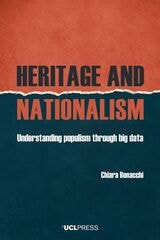
Heritage and Nationalism
Understanding Populism through Big DataChiara Bonacchi
University College London, 2021
How was the Roman Empire invoked in Brexit Britain and in the United States during Donald Trump’s presidency, and to what purpose? And why is it critical to answer these kinds of questions? Heritage and Nationalism explores how people’s perceptions and experiences of the ancient past shape political identities in the digital age. It examines the multiple ways in which politicians, parties, and private citizens mobilize aspects of the Iron Age, Roman, and Medieval past of Britain and Europe to include or exclude others based on culture, religion, class, race, and ethnicity.
The book uses quantitative and qualitative methods to investigate how premodern periods are leveraged to support or oppose populist-nationalist arguments as part of social media discussions concerning Brexit, the Italian Election of 2018, and the US-Mexican border debate in the United States. Analyzing millions of tweets and Facebook posts, comments, and replies, this book is the first to use big data to answer questions about public engagement with the past and identity politics. The findings and conclusions revise and reframe the meaning of populist nationalism today and help to build a shared basis for the democratic engagement of citizens in public life in the future. The book offers a fascinating and unmissable read for anyone interested in how the past and its contemporary legacy, or heritage, influence our political thinking and feeling in a time of hyper-connectivity.
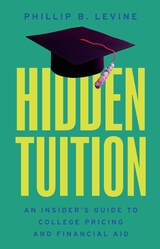
Hidden Tuition
An Insider's Guide to College Pricing and Financial AidPhillip B. Levine
University of Chicago Press, 2026
The secret economics of maximizing college financial aid (and why it’s not as miserable as you think).
In the college admissions process, a terrifying unknown looms large: How much is this really going to cost? For prospective students and their families, there’s no easy answer. While college prices continue to rise, so do their promises of financial aid for qualified students. But who qualifies? And for how much? How can this monumental life decision be so utterly impossible to understand?
Hidden Tuition is an insider’s guide for navigating college financial aid to maximum effect and with (relatively) minimal pain. Economist and financial-aid expert Phillip B. Levine draws on his unique experience—including years of research in higher-education finance and work alongside admissions and financial-aid departments—to help readers first identify, then minimize, what they’ll actually pay for different types of colleges based on their circumstances. With expertise, clarity, and the warmth of someone who’s been through it, Levine details how students can find the hidden tuition costs in the opaque landscape of college pricing and financial aid. He explores topics that include:
- Why college’s “sticker prices” are rarely what students pay—and how some actual prices are even going down
- The best, worst, and most surprising deals for students with different financial resources
- How to navigate financial aid for divorced and multi-residence households
- Who really benefits from early decision
- How the nature of scholarships and merit-based aid is often framed in misleading ways
- The pros and cons of college savings accounts
- When and how to get started on college financing
- Why all student loans aren't the same (or aren't all that bad)
Debunking common myths and offering practical guidance for both families and individual students, Hidden Tuition makes a maddeningly imperfect process more manageable—and gives students a clearer path through one of life’s biggest financial decisions towards collegiate success.

Higgling
Transactors and Their Markets in the History of EconomicsNeil De Marchi
Duke University Press, 1994
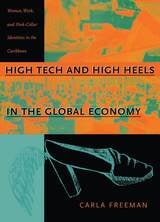
High Tech and High Heels in the Global Economy
Women, Work, and Pink-Collar Identities in the CaribbeanCarla Freeman
Duke University Press, 2000
Freeman examines the expansion of the global assembly line into the realm of computer-based work, and focuses specifically on the incorporation of young Barbadian women into these high-tech informatics jobs. As such, Caribbean women are seen as integral not simply to the workings of globalization but as helping to shape its very form. Through the enactment of “professionalism” in both appearances and labor practices, and by insisting that motherhood and work go hand in hand, they re-define the companies’ profile of “ideal” workers and create their own “pink-collar” identities. Through new modes of dress and imagemaking, the informatics workers seek to distinguish themselves from factory workers, and to achieve these new modes of consumption, they engage in a wide array of extra income earning activities. Freeman argues that for the new Barbadian pink-collar workers, the globalization of production cannot be viewed apart from the globalization of consumption. In doing so, she shows the connections between formal and informal economies, and challenges long-standing oppositions between first world consumers and third world producers, as well as white-collar and blue-collar labor.
Written in a style that allows the voices of the pink-collar workers to demonstrate the simultaneous burdens and pleasures of their work, High Tech and High Heels in the Global Economy will appeal to scholars and students in a wide range of disciplines, including anthropology, cultural studies, sociology, women’s studies, political economy, and Caribbean studies, as well as labor and postcolonial studies.
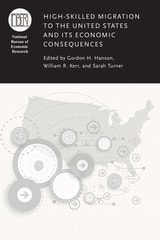
High-Skilled Migration to the United States and Its Economic Consequences
Edited by Gordon H. Hanson, William R. Kerr, and Sarah Turner
University of Chicago Press, 2018

Higher Education amid the COVID-19 Pandemic
Supporting Teaching and Learning through Turbulent TimesJessica Ostrow Michel
Rutgers University Press, 2024
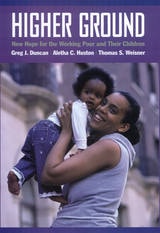
Higher Ground
New Hope for the Working Poor and Their ChildrenGreg J. Duncan
Russell Sage Foundation, 2007
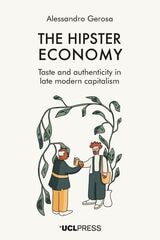
Hipster Economy
Taste and Authenticity in Late Modern CapitalismAlessandro Gerosa
University College London, 2024
The Hipster Economy gives hipsterism the serious analysis it deserves, through which he reveals the importance of hipster aesthetics, based on authenticity, for today’s consumption-based economy.
Since being authentic has become an aspiration and an imperative, the notion of authenticity shapes the consumption habits of individuals in the most diverse contexts such as food and drinks, clothing, music, tourism, and the digital sphere. It even transforms urban areas and their local economies. In this book, Alessandro Gerosa analyzes this complex set of related phenomena to argue that the quest for authenticity has been a driver of Western societies from the emersion of capitalism and industrial society to today.
The Hipster Economy provides a historically and sociologically grounded explanation of the value of authenticity in the contemporary economy and society, through which it shows why and how authenticity has become a fundamental value orienting consumers' taste in late modern capitalism. In clear and convincing writing, Gerosa proposes a novel conceptualization of the aesthetic regime of consumption and an analysis of how the hipster economy impacts the urban space.
Histories on Econometrics, Volume 43
Marcel Boumans, Ariane Dupont-Kieffer, Dou Qin, editors
Duke University Press, 0
Contributors: John Aldrich, Jeff E. Biddle, Olav Bjerkholt, Marcel Boumans, Chao-Hsi Huang, Robert W. Dimand, Duo Qin, Ariane Dupont-Kieffer, Hsiang-Ke Chao, Aiko Ikeo, Francisco Louçã, Mary S. Morgan, Daniela Parisi, Alain Pirotte, Charles G. Renfro, Thomas Stapleford, Sofia Terlica
Marcel Boumans is Associate Professor of Economics at the University of Amsterdam. Ariane Dupont-Kieffer is a Researcher at the French National Institute of Research on Transport and Safety. Duo Qin is Reader of Economics at the University of London.

History of Economic Thought
Isaac Ilyich Rubin
Pluto Press, 1987

History of Metals in Colonial America
James A. Mulholland
University of Alabama Press, 1981
History of Pedlars in Europe
Laurence Fontaine
Duke University Press, 1996
Focusing primarily on the fifteenth through eighteenth centuries, Fontaine traces the origins and development of peddling and the establishment of trading networks. She analyzes the changing social construction of the practice and the effect of encounters between traders of different regions. Following the pedlars’ trade routes across Europe from Spain to Sweden and Scotland to the upper Rhine, she examines their importance as channels of communication as well as of goods and raises such issues as the impact of pedlars on the values and cultural practices of the communities they visited and the ways in which being merchants changed the lives of these migrants.
History of Pedlars in Europe separates the mythology that surrounds peddling from the historically reliable and integrates existing studies with new archival research to illuminate one of the most remote areas of the social and economic history of early modern Europe. A means of trade based on mobility, uncertainty, and interdependence, peddling is rediscovered as a dynamic force involved in nothing less than the creation of a modern consumer society.
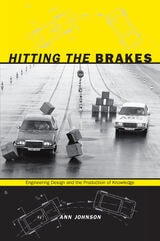
Hitting the Brakes
Engineering Design and the Production of KnowledgeAnn Johnson
Duke University Press, 2009
The development of antilock braking systems (ABS) provides an ideal case study for examining the process of engineering design because it presented an array of common difficulties faced by engineers in research and development. ABS did not develop predictably. Research and development took place in both the public and private sectors and involved individuals working in different disciplines, languages, institutions, and corporations. Johnson traces ABS development from its first patents in the 1930s to the successful 1978 market introduction of integrated ABS by Daimler and Bosch. She examines how a knowledge community first formed around understanding the phenomenon of skidding, before it turned its attention to building instruments to measure, model, and prevent cars’ wheels from locking up. While corporations’ accounts of ABS development often present a simple linear story, Hitting the Brakes describes the full social and cognitive complexity and context of engineering design.
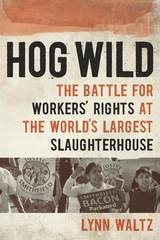
Hog Wild
The Battle for Workers' Rights at the World's Largest SlaughterhouseLynn Waltz
University of Iowa Press, 2018
Author and journalist Lynn Waltz reveals how these aggressive tactics went unchecked for years until Sherri Buffkin, a higher-up manager at Smithfield, blew the lid off the company’s corrupt practices. Through meticulous reporting, in-depth interviews with key players, and a mind for labor and environmental histories, Waltz weaves a fascinating tale of the nearly two-decade struggle that eventually brought justice to the workers and accountability to the food giant, pitting the world’s largest slaughterhouse against the world’s largest meatpacking union.
Following in a long tradition of books that expose the horrors of the meatpacking industry—from Upton Sinclair’s The Jungle to Eric Schlosser’s Fast Food Nation—Hog Wild uncovers rampant corporate environmental hooliganism, labor exploitation, and union-busting by one of the nation’s largest meat producers. Waltz’s eye-opening examination sheds new light on the challenges workers face not just in meatpacking, but everywhere workers have lost their power to collectively bargain with powerful corporations.
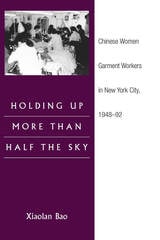
Holding Up More Than Half the Sky
Chinese Women Garment Workers in New York City, 1948-92Xiaolan Bao
University of Illinois Press, 2001
In 1982, 20,000 Chinese-American garment workers—most of them women—went on strike in New York City. Every Chinese garment industry employer in the city soon signed a union contract. The successful action reflected the ways women's changing positions within their families and within the workplace galvanized them to stand up for themselves.
Xiaolan Bao's now-classic study penetrates to the heart of Chinese American society to explain how this militancy and organized protest, seemingly so at odds with traditional Chinese female behavior, came about. Drawing on more than one hundred interviews, Bao blends the poignant personal stories of Chinese immigrant workers with the interwoven history of the garment industry and the city's Chinese community. Bao shows how the high rate of married women employed outside the home profoundly transformed family culture and with it the image and empowerment of Chinese American women. At the same time, she offers a complex and subtle discussion of the interplay of ethnic and class factors within New York's garment industry.
Passionately told and prodigiously documented, Holding Up More Than Half the Sky examines the journey of a community's women through an era of change in the home, on the shop floor, and walking the picket line.
Hollywood Diplomacy
Film Regulation, Foreign Relations, and East Asian RepresentationsHye Seung Chung
Rutgers University Press, 2020
Hollywood Unions
Kate Fortmueller
Rutgers University Press, 2025

Hollywood and Broadcasting
From Radio to CableMichelle Hilmes
University of Illinois Press, 1990
an excellent introduction to a most important subject. This is an invaluable
work for both scholars and students that places film, radio, and television
within the context of the national culture experience."
--- American Historical Review
"Hilmes is one of the few historians
of broadcasting to move beyond a political economy of the media. . . . Her work
should serve as a model for future histories of broadcasting."
--- Journal of Communication
"All media historians will
find this work a critical addition to their bookshelves."
--- American Journalism
"A major addition to media
history literature."
--- Journalism History
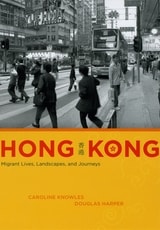
Hong Kong
Migrant Lives, Landscapes, and JourneysCaroline Knowles and Douglas Harper
University of Chicago Press, 2009
In 1997 the United Kingdom returned control of Hong Kong to China, ending the city’s status as one of the last remnants of the British Empire and initiating a new phase for it as both a modern city and a hub for global migrations. Hong Kong is a tour of the city’s postcolonial urban landscape, innovatively told through fieldwork and photography.
Caroline Knowles and Douglas Harper’s point of entry into Hong Kong is the unusual position of the British expatriates who chose to remain in the city after the transition. Now a relatively insignificant presence, British migrants in Hong Kong have become intimately connected with another small minority group there: immigrants from Southeast Asia. The lives, journeys, and stories of these two groups bring to life a place where the past continues to resonate for all its residents, even as the city hurtles forward into a future marked by transience and transition. By skillfully blending ethnographic and visual approaches, Hong Kong offers a fascinating guide to a city that is at once unique in its recent history and exemplary of our globalized present.
Horizontal Equity, Uncertainty, and Economic Well-being
Edited by Martin David and Timothy Smeeding
University of Chicago Press, 1985