99 books match the query 'Censorship' and 4 start with h
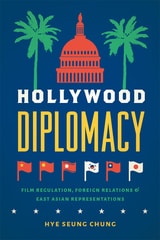
cover of Hollywood Diplomacy: Film Regulation, Foreign Relations, and East Asian Representations

Hollywood Diplomacy

Film Regulation, Foreign Relations, and East Asian Representations

Hye Seung Chung

Rutgers University Press, 2020
Hollywood Diplomacy contends that, rather than simply reflect the West’s cultural fantasies of an imagined “Orient,” images of Chinese, Japanese, and Korean ethnicities have long been contested sites where the commercial interests of Hollywood studios and the political mandates of U.S. foreign policy collide, compete against one another, and often become compromised in the process. While tracing both Hollywood’s internal foreign relations protocols—from the “Open Door” policy of the silent era to the “National Feelings” provision of the Production Code—and external regulatory interventions by the Chinese government, the U.S. State Department, the Office of War Information, and the Department of Defense, Hye Seung Chung reevaluates such American classics as Shanghai Express and The Great Dictator and applies historical insights to the controversies surrounding contemporary productions including Die Another Day and The Interview. This richly detailed book redefines the concept of “creative freedom” in the context of commerce: shifting focus away from the artistic entitlement to offend foreign audiences toward the opportunity to build new, better relationships with partners around the world through diplomatic representations of race, ethnicity, and nationality.
[more]
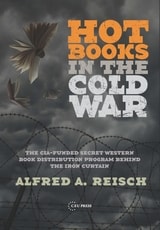
cover of Hot Books in the Cold War: The CIA-Funded Secret Western Book Distribution Program Behind the Iron Curtain

Hot Books in the Cold War

The CIA-Funded Secret Western Book Distribution Program Behind the Iron Curtain

Alfred A. Reisch

Central European University Press, 2013

This study reveals the hidden story of the secret book distribution program to Eastern Europe financed by the CIA during the Cold War. At its height between 1957 and 1970, the book program was one of the least known but most effective methods of penetrating the Iron Curtain, reaching thousands of intellectuals and professionals in the Soviet Bloc. Reisch conducted thorough research on the key personalities involved in the book program, especially the two key figures: S. S. Walker, who initiated the idea of a “mailing project,” and G. C. Minden, who developed it into one of the most effective political and psychological tools of the Cold War. The book includes excellent chapters on the vagaries of censorship and interception of books by communist authorities based on personal letters and accounts from recipients of Western material. It will stand as a testimony in honor of the handful of imaginative, determined, and hard-working individuals who helped to free half of Europe from mental bondage and planted many of the seeds that germinated when communism collapsed and the Soviet bloc disintegrated.
[more]
cover of How to Look Good in a War: Justifying and Challenging State Violence

How to Look Good in a War

Justifying and Challenging State Violence

Brian Rappert

Pluto Press, 2012

How to Look Good in A War examines the methods used to depict, defend and justify the use of state violence. Many books have shown how 'truth is the first casualty of war' but this is the first to analyse exactly how pro-war narratives are constructed and normalised.

Brian Rappert details the 'upside-down' world of war in which revelation conceals, knowledge fosters uncertainty, and transparency obscures. He looks at government spin during recent wars in Iraq, Afghanistan and Libya where officials manoeuvre between circulating and withholding information.

Examining how organised violence is justified, How to Look Good in A War draws on experiences from recent controversy to consider how ignorance about the operation of war is produced and how concerned individuals and groups can intervene to make a difference.
[more]
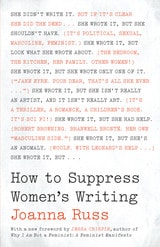
cover of How to Suppress Women's Writing

How to Suppress Women's Writing

By Joanna Russ; foreword by Jessa Crispin

University of Texas Press, 2018

Are women able to achieve anything they set their minds to? In How to Suppress Women’s Writing, award-winning novelist and scholar Joanna Russ lays bare the subtle—and not so subtle—strategies that society uses to ignore, condemn, or belittle women who produce literature. As relevant today as when it was first published in 1983, this book has motivated generations of readers with its powerful feminist critique.

“What is it going to take to break apart these rigidities? Russ’s book is a formidable attempt. It is angry without being self-righteous, it is thorough without being exhausting, and it is serious without being devoid of a sense of humor. But it was published over thirty years ago, in 1983, and there’s not an enormous difference between the world she describes and the world we inhabit.”
—Jessa Crispin, from the foreword

“A book of the most profound and original clarity. Like all clear-sighted people who look and see what has been much mystified and much lied about, Russ is quite excitingly subversive. The study of literature should never be the same again.”
—Marge Piercy

“Joanna Russ is a brilliant writer, a writer of real moral passion and high wit.”
—Adrienne Rich

[more]