Results by title
153 books match the query 'Cities and towns' and 7 start with h

HISTORY IN URBAN PLACES
THE HISTORIC DISTRICTS OF THE UNITED STADAVID HAMER
The Ohio State University Press, 1998
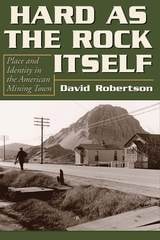
Hard as the Rock Itself
Place and Identity in the American Mining TownDavid Robertson
University Press of Colorado, 2006
Robertson documents the history of Toluca, Illinois; Cokedale, Colorado; and Picher, Oklahoma, from the mineral discovery phase through mine closure, telling for the first time how these century-old mining towns have survived and how sense of place has played a vital role.
Acknowledging the hardships that mining's social, environmental, and economic legacies have created for current residents, Robertson argues that the industry's influences also have contributed to the creation of strong, cohesive communities in which residents have always identified with the severe landscape and challenging, but rewarding way of life.
Robertson contends that the tough, unpretentious appearance of mining landscapes mirrors qualities that residents value in themselves, confirming that a strong sense of place in mining regions, as elsewhere, is not necessarily wedded to an attractive aesthetic or even to a thriving economy.
Mining historians, geographers, and other students of place in the American landscape will find fascinating material in Hard As the Rock Itself.
Hidden Empire of Finance
How Wall Street Profits from Our Cities and Fuels Global InequalityMichael Goldman
Duke University Press, 2026
Hot Springs
Past and PresentRay Hanley
University of Arkansas Press, 2014

Hot Towns
The Future of the Fastest Growing Communities in AmericaWolf, Peter
Rutgers University Press, 1999
Hot Towns is about the vast, current national relocation of one million Americans a year. Successful, accomplished, and well-financed people of all ages are moving to communities they view as choice—places distinguished by fine climate, physical beauty, abundant natural recreation resources, and minimal social problems and low crime. Towns in this elite roster include Santa Fe, Aspen, Boulder, Bozeman, Chapel Hill, East Hampton, and many others.
These American boom towns, Peter Wolf writes, have grown in jobs and population at two to three times the national average. But warning signs of deterioration are already evident: overbuilding, failing natural resources, rising taxes, and traffic congestion are all taking a toll on these communities. Rapid migration can enhance or swamp America’s fastest growing and most desirable communities
Wolf examines the choices that people in these areas can make to both effectively accommodate growth and yet ensure their economic futures. A wise town undergoing growth will realize that what must be preserved is not the growth in-and-for itself, but the qualities which attract people in the first place. Wolf demonstrates how it is possible—even during a town’s rapid expansion—to enhance the quality of residents’ lives, to incorporate aesthetics and design into town evolution, to protect what is precious in nature, and to preserve the best that has already been built.
Wolf concludes with a practical checklist for the residents of hot towns, allowing them to evaluate how their communities are coping with growth.
How Cities Work
Suburbs, Sprawl, and the Roads Not TakenBy Alex Marshall
University of Texas Press, 2001
Do cities work anymore? How did they get to be such sprawling conglomerations of lookalike subdivisions, megafreeways, and "big box" superstores surrounded by acres of parking lots? And why, most of all, don't they feel like real communities? These are the questions that Alex Marshall tackles in this hard-hitting, highly readable look at what makes cities work.
Marshall argues that urban life has broken down because of our basic ignorance of the real forces that shape cities—transportation systems, industry and business, and political decision making. He explores how these forces have built four very different urban environments—the decentralized sprawl of California's Silicon Valley, the crowded streets of New York City's Jackson Heights neighborhood, the controlled growth of Portland, Oregon, and the stage-set facades of Disney's planned community, Celebration, Florida.
To build better cities, Marshall asserts, we must understand and intelligently direct the forces that shape them. Without prescribing any one solution, he defines the key issues facing all concerned citizens who are trying to control urban sprawl and build real communities. His timely book will be important reading for a wide public and professional audience.
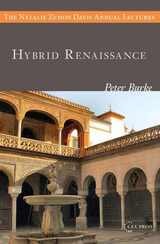
Hybrid Renaissance
Culture, Language, ArchitecturePeter Burke
Central European University Press, 2016
Hybrid Renaissance introduces the idea that the Renaissance in Italy, elsewhere in Europe, and in the world beyond Europe is an example of cultural hybridization.
The two key concepts used in this book are “hybridization” and “Renaissance”. Roughly speaking, hybridity refers to something new that emerges from the combination of diverse older elements. (The term “hybridization” is preferable to “hybridity” because it refers to a process rather than to a state, and also because it encourages the writer and the readers alike to think in terms of degree: where there is more or less, rather than presence versus absence.)
The book begins with a discussion of the concept of cultural hybridization and a cluster of other concepts related to it. Then comes a geography of cultural hybridization focusing on three locales: courts, major cities (whether ports or capitals) and frontiers. The following seven chapters describe the hybridity of the Renaissance in different fields: architecture, painting and sculpture, languages, literature, music, philosophy and law and finally religion. The essay concludes with a brief account of attempts to resist hybridization or to purify cultures or domains from what was already hybridized.