Results by title
205 books match the query 'City' and 3 start with h
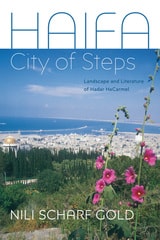
Haifa
City of StepsNili Scharf Gold
Brandeis University Press, 2017
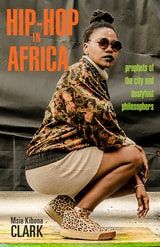
Hip-Hop in Africa
Prophets of the City and Dustyfoot PhilosophersMsia Kibona Clark
Ohio University Press, 2018
Throughout Africa, artists use hip-hop both to describe their lives and to create shared spaces for uncensored social commentary, feminist challenges to patriarchy, and resistance against state institutions, while at the same time engaging with the global hip-hop community. In Hip-Hop in Africa, Msia Kibona Clark examines some of Africa’s biggest hip-hop scenes and shows how hip-hop helps us understand specifically African narratives of social, political, and economic realities.
Clark looks at the use of hip-hop in protest, both as a means of articulating social problems and as a tool for mobilizing listeners around those problems. She also details the spread of hip-hop culture in Africa following its emergence in the United States, assessing the impact of urbanization and demographics on the spread of hip-hop culture.
Hip-Hop in Africa is a tribute to a genre and its artists as well as a timely examination that pushes the study of music and diaspora in critical new directions. Accessibly written by one of the foremost experts on African hip-hop, this book will easily find its place in the classroom.
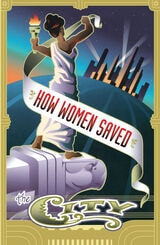
How Women Saved The City
Daphne Spain
University of Minnesota Press, 2001
Reclaims the lost history of women’s contributions to the development of American cities
In the days between the Civil War and World War I, women rarely worked outside the home, rarely went to college, and, if our histories are to be believed, rarely put their mark on the urban spaces unfolding around them. And yet, as this book clearly demonstrates, women did play a key role in shaping the American urban landscape.
To uncover the contribution of women to urban development during this period, Daphne Spain looks at the places where women participated most actively in public life—voluntary organizations like the Young Women’s Christian Association, the Salvation Army, the College Settlements Association, and the National Association of Colored Women. In the extensive building projects of these associations—boarding houses, vocational schools, settlement houses, public baths, and playgrounds—she finds clear evidence of a built environment created by women. Exploring this environment, Spain reconstructs the story of the "redemptive places" that addressed the real needs of city dwellers—especially single women, African-Americans, immigrants, and the poor—and established an environment in which newcomers could learn to become urban Americans.