155 books match the query 'Civil rights movements' and 4 start with h
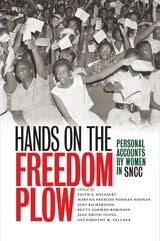
cover of Hands on the Freedom Plow: Personal Accounts by Women in SNCC

Hands on the Freedom Plow

Personal Accounts by Women in SNCC

Faith S. Holsaert

University of Illinois Press, 2012
In Hands on the Freedom Plow, fifty-two women--northern and southern, young and old, urban and rural, black, white, and Latina--share their courageous personal stories of working for the Student Nonviolent Coordinating Committee (SNCC) on the front lines of the Civil Rights Movement.
 
The testimonies gathered here present a sweeping personal history of SNCC: early sit-ins, voter registration campaigns, and freedom rides; the 1963 March on Washington, the Mississippi Freedom Summer, and the movements in Alabama and Maryland; and Black Power and antiwar activism. Since the women spent time in the Deep South, many also describe risking their lives through beatings and arrests and witnessing unspeakable violence. These intense stories depict women, many very young, dealing with extreme fear and finding the remarkable strength to survive.
 
The women in SNCC acquired new skills, experienced personal growth, sustained one another, and even had fun in the midst of serious struggle. Readers are privy to their analyses of the Movement, its tactics, strategies, and underlying philosophies. The contributors revisit central debates of the struggle including the role of nonviolence and self-defense, the role of white people in a black-led movement, and the role of women within the Movement and the society at large.  
 
Each story reveals how the struggle for social change was formed, supported, and maintained by the women who kept their "hands on the freedom plow." As the editors write in the introduction, "Though the voices are different, they all tell the same story--of women bursting out of constraints, leaving school, leaving their hometowns, meeting new people, talking into the night, laughing, going to jail, being afraid, teaching in Freedom Schools, working in the field, dancing at the Elks Hall, working the WATS line to relay horror story after horror story, telling the press, telling the story, telling the word. And making a difference in this world."
[more]
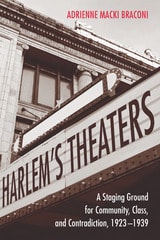
cover of Harlem's Theaters: A Staging Ground for Community, Class, and Contradiction, 1923-1939

Harlem's Theaters

A Staging Ground for Community, Class, and Contradiction, 1923-1939

Adrienne Macki Braconi

Northwestern University Press, 2015

Honorable Mention, 2016 Errol Hill Book Award for Outstanding Scholarship in African American Theater, Drama and/or Performance

Based on a vast amount of archival research, Adrienne Macki Braconi’s illuminating study of three important community-based theaters in Harlem shows how their work was essential to the formation of a public identity for African Americans and the articulation of their goals, laying the groundwork for the emergence of the Civil Rights movement. Macki Braconi uses textual analysis, performance reconstruction, and audience reception to examine the complex dynamics of productions by the Krigwa Players, the Harlem Experimental Theatre, and the Negro Theatre of the Federal Theatre Project. Even as these theaters demonstrated the extraordinary power of activist art, they also revealed its limits. The stage was a site in which ideological and class differences played out, theater being both a force for change and a collision of contradictory agendas. Macki Braconi’s book alters our understanding of the Harlem Renaissance, the roots of the Civil Rights movement, and the history of community theater in America.
[more]
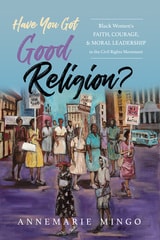
cover of Have You Got Good Religion?: Black Women's Faith, Courage, and Moral Leadership in the Civil Rights Movement

Have You Got Good Religion?

Black Women's Faith, Courage, and Moral Leadership in the Civil Rights Movement

AnneMarie Mingo

University of Illinois Press, 2024

What compels a person to risk her life to change deeply rooted systems of injustice in ways that may not benefit her? The thousands of Black Churchwomen who took part in civil rights protests drew on faith, courage, and moral imagination to acquire the lived experiences at the heart of the answers to that question. AnneMarie Mingo brings these forgotten witnesses into the historical narrative to explore the moral and ethical world of a generation of Black Churchwomen and the extraordinary liberation theology they created. These women acted out of belief that what they did was bigger than themselves. Taking as their goal nothing less than the moral transformation of American society, they joined the movement because it was something they had to do. Their personal accounts of a lived religion enacted in the world provide powerful insights into how faith steels human beings to face threats, jail, violence, and seemingly implacable hatred. Throughout, Mingo draws on their experiences to construct an ethical model meant to guide contemporary activists in the ongoing pursuit of justice.

A depiction of moral imagination that resonates today, Have You Got Good Religion? reveals how Black Churchwomen’s understanding of God became action and transformed a nation.
[more]
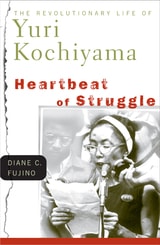
cover of Heartbeat of Struggle: The Revolutionary Life of Yuri Kochiyama

Heartbeat of Struggle

The Revolutionary Life of Yuri Kochiyama

Diane C. Fujino

University of Minnesota Press, 2005

On February 12, 1965, in the Audubon Ballroom, Yuri Kochiyama cradled Malcolm X in her arms as he died, but her role as a public servant and activist began much earlier than this pivotal public moment. Heartbeat of Struggle is the first biography of this courageous woman, the most prominent Asian American activist to emerge during the 1960s. Based on extensive archival research and interviews with Kochiyama's family, friends, and the subject herself, Diane C. Fujino traces Kochiyama's life from an "all-American" childhood to her achievements as a tireless defender of - and fighter for - human rights. Raised by a Japanese immigrant family in California during the 1920s and 1930s, Kochiyama was active in sports, school, and church. She was both unquestioningly patriotic and largely unconscious of race and racism in the United States. After Pearl Harbor, however, Kochiyama's family was among the thousands of Japanese Americans forcibly removed to internment camps for the duration of the war, a traumatic experience that opened her eyes to the existence of social injustice. After the war, Kochiyama moved to New York. It was in the context of the vibrant Black movement in Harlem in the 1960s that she began her activist career. There, she met Malcolm X, who inspired her radical political development and the ensuing four decades of incessant work for Black liberation, Asian American equality, Puerto Rican independence, and political prisoner defense. Kochiyama is widely respected for her work in forging unity among diverse communities, especially between Asian and African Americans. Fujino, a scholar and activist, offers an in-depth examination of Kochiyama's political awakening, rich life, and impressive achievements with particular attention to how her public role so often defied gender, racial, and cultural norms. Heartbeat of Struggle is a source of inspiration and guidance for anyone committed to social change.
[more]