Results by title
173 books match the query 'Collective Memory' and 7 start with h
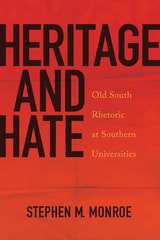
Heritage and Hate
Old South Rhetoric at Southern UniversitiesStephen M. Monroe
University of Alabama Press, 2021
How southern universities continue to wrestle with the words and symbols that embody and perpetuate Old South traditions
The US South is a rhetorical landscape that pulsates with division, a place where words and symbols rooted in a deeply problematic past litter the ground and contaminate the soil. Stephen M. Monroe’s provocative study focuses on predominantly white southern universities where Old South rhetoric still reverberates, where rebel flags cast a shadow over attempts at racial harmony, school cheers to reinforce racial barriers, and student yearbooks to create and protect an oppressive culture of exclusion. Across the region, in college towns like Oxford, Mississippi; Athens, Georgia; and Tuscaloosa, Alabama—communities remain locked in a difficult, recursive, and inherently rhetorical struggle that wrestles with this troubling legacy.
Words, images, and symbols are not merely passive artifacts of southern history, Monroe argues, but formative agents that influence human behavior and shape historical events. Drawing on research from many disciplines, including rhetoric, southern studies, history, sociology, and African American studies, Monroe develops the concept of confederate rhetoric: the collection of Old South words and symbols that have been and remain central to the identity conflicts of the South. He charts examples of such rhetoric at work in southern universities from Reconstruction to the present day.
Tracing the long life and legacy of Old South words and symbols at southern universities, this book provides close and nuanced analysis of the rhetorical conflicts that have resulted at places like the University of Mississippi and the University of Missouri. Some conflicts erupted during the civil rights movement, when the first African American students sought admission to all-white southern universities and colleges, and others are brewing now, as African Americans (and their progressive white peers) begin to cement genuine agency and voice in these communities. Tensions have been, and remain, high.
Ultimately, Monroe offers hope and optimism, contending that if words and symbols can be used to damage and divide, then words and symbols can also be used to heal and unify. Racist rhetoric can be replaced by antiracist rhetoric. The old South can become new. While resisting naïve or facile arguments, Heritage and Hate ultimately finds the promise of progress within the tremendous power of language.

Heroes and Villains
Creating National History in Contemporary UkraineDavid R. Marples
Central European University Press, 2007
Historic Preservation
Collective Memory and Historic IdentityBarthel, Diane
Rutgers University Press, 1996
Historical Justice and Memory
Edited by Klaus Neumann and Janna Thompson
University of Wisconsin Press, 2015
The historical justice movement has inspired the spread of truth and reconciliation processes around the world and has pushed governments to make reparations and apologies for past wrongs. It has changed the public understanding of justice and the role of memory. In this book, leading scholars in philosophy, history, political science, and semiotics offer new essays that discuss and assess these momentous global developments. They evaluate the strength and weaknesses of the movement, its accomplishments and failings, its philosophical assumptions and social preconditions, and its prospects for the future.
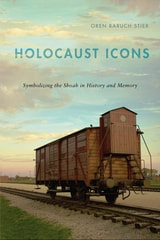
Holocaust Icons
Symbolizing the Shoah in History and MemoryOren Baruch Stier
Rutgers University Press, 2015
Jewish studies scholar Oren Stier offers in this volume new insight into symbols and the symbol-making process, as he traces the lives and afterlives of certain remnants of the Holocaust and their ongoing impact. Stier focuses in particular on four icons: the railway cars that carried Jews to their deaths, symbolizing the mechanics of murder; the Arbeit Macht Frei (“work makes you free”) sign over the entrance to Auschwitz, pointing to the insidious logic of the camp system; the number six million that represents an approximation of the number of Jews killed as well as mass murder more generally; and the persona of Anne Frank, associated with victimization. Stier shows how and why these icons—an object, a phrase, a number, and a person—have come to stand in for the Holocaust: where they came from and how they have been used and reproduced; how they are presently at risk from a variety of threats such as commodification; and what the future holds for the memory of the Shoah.
In illuminating these icons of the Holocaust, Stier offers valuable new perspective on one of the defining events of the twentieth century. He helps readers understand not only the Holocaust but also the profound nature of historical memory itself.
How the Military Remembers
Human Rights and Countermemories in Latin AmericaEdited by Cynthia E. Milton and Michael J. Lazzara
University of Wisconsin Press, 2025
With attention to the distinct cultural, political, and historical contexts across Latin America, the essays reveal how military figures and institutions appropriate mechanisms of truth-telling and accountability to reframe the past, blur the lines between perpetrator and victim, and weaponize memory itself.
Contributors: Mariana Achugar, Gabriela Fried Amilivia, Rebecca Atencio, Jo-Marie Burt, Rachel Hatcher, Nicolás Rodríguez Idárraga, Michael J. Lazzara, Cynthia E. Milton, Carla Granados Moya, María Emma Wills Obregón, Leith Passmore, Valentina Salvi, Gladys Vásquez Zevallos

Human Rights Counterpublics in Perú
Sylvanna M. Falcón
University of Illinois Press, 2024
Engaging and intimate, Human Rights Counterpublics in Perú illuminates the power of human rights and memory work.