50 books match the query 'Colonialism' and 2 start with h
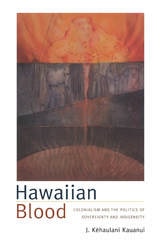
cover of Hawaiian Blood: Colonialism and the Politics of Sovereignty and Indigeneity

Hawaiian Blood

Colonialism and the Politics of Sovereignty and Indigeneity

J. Kauanui Kahaulani

Duke University Press, 2008

In the Hawaiian Homes Commission Act (HHCA) of 1921, the U.S. Congress defined “native Hawaiians” as those people “with at least one-half blood quantum of individuals inhabiting the Hawaiian Islands prior to 1778.” This “blood logic” has since become an entrenched part of the legal system in Hawai‘i. Hawaiian Blood is the first comprehensive history and analysis of this federal law that equates Hawaiian cultural identity with a quantifiable amount of blood. J. Kēhaulani Kauanui explains how blood quantum classification emerged as a way to undermine Native Hawaiian (Kanaka Maoli) sovereignty. Within the framework of the 50-percent rule, intermarriage “dilutes” the number of state-recognized Native Hawaiians. Thus, rather than support Native claims to the Hawaiian islands, blood quantum reduces Hawaiians to a racial minority, reinforcing a system of white racial privilege bound to property ownership.

Kauanui provides an impassioned assessment of how the arbitrary correlation of ancestry and race imposed by the U.S. government on the indigenous people of Hawai‘i has had far-reaching legal and cultural effects. With the HHCA, the federal government explicitly limited the number of Hawaiians included in land provisions, and it recast Hawaiians’ land claims in terms of colonial welfare rather than collective entitlement. Moreover, the exclusionary logic of blood quantum has profoundly affected cultural definitions of indigeneity by undermining more inclusive Kanaka Maoli notions of kinship and belonging. Kauanui also addresses the ongoing significance of the 50-percent rule: Its criteria underlie recent court decisions that have subverted the Hawaiian sovereignty movement and brought to the fore charged questions about who counts as Hawaiian.
[more]
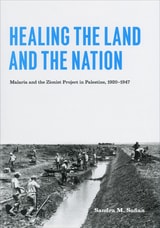
cover of Healing the Land and the Nation: Malaria and the Zionist Project in Palestine, 1920-1947

Healing the Land and the Nation

Malaria and the Zionist Project in Palestine, 1920-1947

Sandra M. Sufian

University of Chicago Press, 2007

A novel inquiry into the sociopolitical dimensions of public medicine, Healing the Land and the Nation traces the relationships between disease, hygiene, politics, geography, and nationalism in British Mandatory Palestine between the world wars. Taking up the case of malaria control in Jewish-held lands, Sandra Sufian illustrates how efforts to thwart the disease were intimately tied to the project of Zionist nation-building, especially the movement’s efforts to repurpose and improve its lands. The project of eradicating malaria also took on a metaphorical dimension—erasing anti-Semitic stereotypes of the “parasitic” Diaspora Jew and creating strong, healthy Jews in Palestine. Sufian shows that, in reclaiming the land and the health of its people in Palestine, Zionists expressed key ideological and political elements of their nation-building project.

Taking its title from a Jewish public health mantra, Healing the Land and the Nation situates antimalarial medicine and politics within larger colonial histories. By analyzing the science alongside the politics of Jewish settlement, Sufian addresses contested questions of social organization and the effects of land reclamation upon the indigenous Palestinian population in a decidedly innovative way. The book will be of great interest to scholars of the Middle East, Jewish studies, and environmental history, as well as to those studying colonialism, nationalism, and public health and medicine.
[more]