Results by title
121 books match the query 'Comic books, strips, etc' and 5 start with h
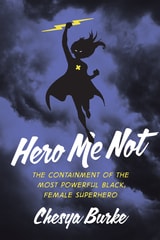
Hero Me Not
The Containment of the Most Powerful Black, Female SuperheroChesya Burke
Rutgers University Press, 2023
First introduced in the pages of X-Men, Storm is probably the most recognized Black female superhero. She is also one of the most powerful characters in the Marvel Universe, with abilities that allow her to control the weather itself. Yet that power is almost always deployed in the service of White characters, and Storm is rarely treated as an authority figure.
Hero Me Not offers an in-depth look at this fascinating yet often frustrating character through all her manifestations in comics, animation, and films. Chesya Burke examines the coding of Storm as racially “exotic,” an African woman who nonetheless has bright white hair and blue eyes and was portrayed onscreen by biracial actresses Halle Berry and Alexandra Shipp. She shows how Storm, created by White writers and artists, was an amalgam of various Black stereotypes, from the Mammy and the Jezebel to the Magical Negro, resulting in a new stereotype she terms the Negro Spiritual Woman.
With chapters focusing on the history, transmedia representation, and racial politics of Storm, Burke offers a very personal account of what it means to be a Black female comics fan searching popular culture for positive images of powerful women who look like you.
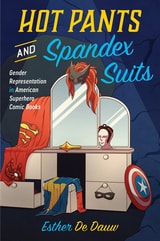
Hot Pants and Spandex Suits
Gender Representation in American Superhero Comic BooksEsther De Dauw
Rutgers University Press, 2021
Hot Pants and Spandex Suits offers a far-reaching look at how masculinity and femininity have been represented in American superhero comics, from the Golden and Silver Ages to the Modern Age. Scholar Esther De Dauw contrasts the bulletproof and musclebound phallic bodies of classic male heroes like Superman, Captain America, and Iron Man with the figures of female counterparts like Wonder Woman and Supergirl, who are drawn as superhumanly flexible and plastic. It also examines the genre’s ambivalent treatment of LGBTQ representation, from the presentation of gay male heroes Wiccan and Hulkling as a model minority couple to the troubling association of Batwoman’s lesbianism with monstrosity. Finally, it explores the intersection between gender and race through case studies of heroes like Luke Cage, Storm, and Ms. Marvel.
Hot Pants and Spandex Suits is a fascinating and thought-provoking consideration of what superhero comics teach us about identity, embodiment, and sexuality.
How Comics Travel
Publication, Translation, Radical LiteraciesKatherine Kelp-Stebbins
The Ohio State University Press, 2022
Honorable Mention, 2023 CSS Charles Hatfield Book Prize
In How Comics Travel: Publication, Translation, Radical Literacies, Katherine Kelp-Stebbins challenges the clichéd understanding of comics as a “universal” language, circulating without regard for cultures or borders. Instead, she develops a new methodology of reading for difference. Kelp-Stebbins’s anticolonial, feminist, and antiracist analytical framework engages with comics as sites of struggle over representation in a diverse world. Through comparative case studies of Metro, Tintin, Persepolis, and more, she explores the ways in which graphic narratives locate and dislocate readers in every phase of a transnational comic’s life cycle according to distinct visual, linguistic, and print cultures. How Comics Travel disengages from the constrictive pressures of nationalism and imperialism, both in comics studies and world literature studies more broadly, to offer a new vision of how comics depict and enact the world as a transcultural space.

How to Read Donald Duck
Imperialist Ideology in the Disney ComicAriel Dorfman
Pluto Press, 2020
First published in 1971, How to Read Donald Duck shocked readers by revealing how capitalist ideology operates in our most beloved cartoons. Having survived bonfires, impounding and being dumped into the ocean by the Chilean army, this controversial book is once again back on our shelves.
Written and published during the blossoming of Salvador Allende's revolutionary socialism in Chile, the book examines how Disney products reflect capitalist ideology, and are active agents working in this ideology’s favor. Focusing on the hapless mice and ducks of Disney, curiously parentless, marginalized and always short of cash, Ariel Dorfman and Armand Mattelart expose how these characters established hegemonic ideas about capital, race, gender and the relationship between developed countries and the Third World.
A devastating indictment of a media giant, a document of twentieth-century political upheaval, and a reminder of the dark undercurrent of pop culture, How to Read Donald Duck is once again available, together with a new introduction by Ariel Dorfman in which he writes.
"It is that joy in liberation, that alegria, that spirit of resistance, that I wish to share with America, as the book that Pinochet’s soldiers could not liquidate or Disney’s lawyers stop from entering the United States finally finds its way to its new home, deep into the land that invented Donald Duck and Donald Trump. Is the same country that gave me such a warm welcome as a child, and perhaps may now equally greet with open arms this critique of oppression and it certainty that we don’t have to leave the world as it was when we first encountered it."

How to Read Donald Duck
Imperialist Ideology in the Disney ComicPluto Press, 2019