Results by title
324 books match the query 'Comparative literature' and 8 start with h
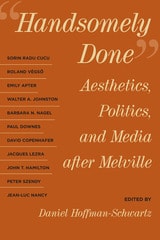
Handsomely Done
Aesthetics, Politics, and Media after MelvilleEdited by Daniel Hoffman-Schwartz
Northwestern University Press, 2019
The volume thus engages not only Melville reception across media (Jorge Luis Borges, John Huston, Jean-Luc Godard, Led Zeppelin, Claire Denis) but also the Melvillean resonances and echoes of various political events and movements, such as the Attica uprising, the Red Army Faction, Occupy Wall Street, and Black Lives Matter. This consideration of Melville’s afterlife opens onto theorizations of intermediality, un/translatability, and material intensity even as it also continually faces the most concrete and pressing questions of history and politics.

Hemispheric Imaginations
North American Fictions of Latin AmericaHelmbrecht Breinig
Dartmouth College Press, 2016
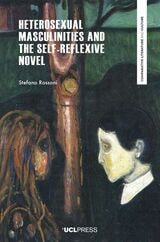
Heterosexual Masculinities and the Self-Reflexive Novel
Stefano Rossoni
University College London, 2025
Rossoni brings the work of four renowned contemporary authors—J.M. Coetzee, Milan Kundera, Philip Roth, and Mario Vargas Llosa—into an unexpected dialogue to address the inscription of heterosexual masculinity into the Western literary legacy and how masculinity is refashioned in contemporary self-reflexive novels. Their oeuvres are considered together for the first time, while also being positioned within the European literary tradition inaugurated by Don Quixote and continued by authors like Gustave Flaubert, Franz Kafka, and Ezra Pound. Heterosexual Masculinities evaluates Coetzee, Kundera, Roth, and Vargas Llosa’s novels in light of critical contributions in literary masculinity studies that highlight men’s emotional illiteracy and struggle to develop a language for self-reflection.
History and Memory in the Two Souths
Recent Southern and Spanish American FictionDeborah Cohn
Vanderbilt University Press, 1999
First, Cohn proposes that Faulkner's appeal derives from Spanish American authors' perception of similarities between the South's history and the experiences of their own respective nations. She delineates historical experiences common to the South and Spanish America, including civil wars, defeat and dispossession, regional marginalization, and socio-economic hardship. She also suggests that Spanish American authors found in Faulkner a set of concerns with which they could identify and that, as a result, they were inspired to take up the stylistic innovations characteristic of his writing. The resulting assimilation and adaptation of Euro-American modernism through Faulkner has been an indispensable part of what is known as la nueva narrativa, "the new narrative," as well as of successive movements in Spanish American literature.
From another perspective, Cohn's book shows points of contact between works by other southern and Spanish American novelists without positing relations of influence. Specifically, after identifying common, recurrent themes in modern southern and Spanish American literature in general, Cohn reveals levels of a shared understanding of regional history in Faulkner and Mario Vargas Llosa, in Ralph Ellison and Isabel Allende, as well as in Katherine Anne Porter and Juan Rulfo. Her analyses compare and contrast these authors' shared attempts to provide correctives to official, mainstream historical discourse through alternate, parallel strategies for reconstructing, recording, and reclaiming the past.
In yoking together the South and Spanish America as neighboring spaces with similar personalities, Cohn advances a daring and controversial thesis that both narrows and enhances the frame of comparison between the literatures of the South and Spanish America.

Hosts, Hospitals and Hospitalities
Narratives of (in)hospitality in literature, culture and the artsEdited by Susana Araújo, Catarina Nunes de Almeida, and Santiago Pérez Isasi
University College London, 2026
This book analyzes narratives of hospitality (and inhospitality) through recent crises like climate change and mass displacement.
Current historical and political issues, such as the refugee crisis and climate emergency, are deeply intertwined with notions, images, and narratives of (in)hospitality. Departing from seminal works, such as those by Kant and Derrida, on this topic, the chapters in this volume examine how new postcolonial, gender, environmental, and medical perspectives reshape current approaches to hospitality in literature, culture, and the arts.
Through a comparison of case studies in multiple national settings, Hosts, Hospitals and Hospitalities shows how the concept of hospitality shapes the way in which we relate with “the Other” in diverse—and ever-evolving—cultural, political, social, and environmental contexts. By examining the issue of hospitality from a post-pandemic standpoint, which revised the roles of our private and public spaces in the aftermath of COVID-19, by dwelling on novel issues of climate emergency, and by focusing on current developments in terms of migration and displacement, this book adds new light and significant theoretical and methodological perspectives to previous debates about hospitality.

Hot Pants and Spandex Suits
Gender Representation in American Superhero Comic BooksEsther De Dauw
Rutgers University Press, 2021
Hot Pants and Spandex Suits offers a far-reaching look at how masculinity and femininity have been represented in American superhero comics, from the Golden and Silver Ages to the Modern Age. Scholar Esther De Dauw contrasts the bulletproof and musclebound phallic bodies of classic male heroes like Superman, Captain America, and Iron Man with the figures of female counterparts like Wonder Woman and Supergirl, who are drawn as superhumanly flexible and plastic. It also examines the genre’s ambivalent treatment of LGBTQ representation, from the presentation of gay male heroes Wiccan and Hulkling as a model minority couple to the troubling association of Batwoman’s lesbianism with monstrosity. Finally, it explores the intersection between gender and race through case studies of heroes like Luke Cage, Storm, and Ms. Marvel.
Hot Pants and Spandex Suits is a fascinating and thought-provoking consideration of what superhero comics teach us about identity, embodiment, and sexuality.

How Comics Travel
Publication, Translation, Radical LiteraciesKatherine Kelp-Stebbins
The Ohio State University Press, 2022
Honorable Mention, 2023 CSS Charles Hatfield Book Prize
In How Comics Travel: Publication, Translation, Radical Literacies, Katherine Kelp-Stebbins challenges the clichéd understanding of comics as a “universal” language, circulating without regard for cultures or borders. Instead, she develops a new methodology of reading for difference. Kelp-Stebbins’s anticolonial, feminist, and antiracist analytical framework engages with comics as sites of struggle over representation in a diverse world. Through comparative case studies of Metro, Tintin, Persepolis, and more, she explores the ways in which graphic narratives locate and dislocate readers in every phase of a transnational comic’s life cycle according to distinct visual, linguistic, and print cultures. How Comics Travel disengages from the constrictive pressures of nationalism and imperialism, both in comics studies and world literature studies more broadly, to offer a new vision of how comics depict and enact the world as a transcultural space.

How to Read a Moment
The American Novel and the Crisis of the PresentMathias Nilges
Northwestern University Press, 2021
“Time is a thing that grows scarcer every day,” observes one of Don DeLillo’s characters. “The future is gone,” The Baffler argues. “Where’s my hoverboard!?” a meme demands. Contemporary capitalism, a system that insists that everything happen at once, creates problems for social thought and narrative alike. After all, how does one tell the time of instantaneity? In this moment of on-demand service and instant trading, it has become difficult to imagine the future.
The novel emerged as the art form of a rapidly changing modern world, a way of telling time in its progress. Nilges argues that this historical mission is renewed today through works that understand contemporaneity as a form of time shaping that props up our material world and cultural imagination. But the contemporary American novel does not simply associate our present with a crisis of futurity. Through analyses of works by authors such as DeLillo, Jennifer Egan, Charles Yu, and Colson Whitehead, Nilges illustrates that the novel presents ways to make sense of the temporality that controls our purportedly fully contemporary world. In so doing, the novel recovers a sense of possibility and hope, forwarding a dazzling argument for its own importance today.