Results by title
62 books match the query 'Consumption (Economics)' and 2 start with h
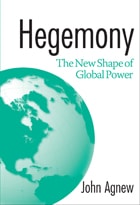
Hegemony
The New Shape Of Global PowerJohn Agnew
Temple University Press, 2005
Hegemony tells the story of the drive to create consumer capitalism abroad through political pressure and the promise of goods for mass consumption. In contrast to the recent literature on America as empire, it explains that the primary goal of the foreign and economic policies of the United States is a world which increasingly reflects the American way of doing business, not the formation or management of an empire. Contextualizing both the Iraq war and recent plant closings in the U.S., noted author John Agnew shows how American hegemony has created a world in which power is no longer only shaped territorially. He argues in a sobering conclusion that we are consequently entering a new era of global power, one in which the world the US has made no longer works to its singular advantage.
[more]
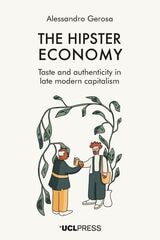
Hipster Economy
Taste and Authenticity in Late Modern CapitalismAlessandro Gerosa
University College London, 2024
The Hipster Economy analyzes the impact of pursuing authenticity on consumption, urban spaces, and late modern capitalism, to offer a fresh perspective on hipsterism and aesthetic consumption.
The Hipster Economy gives hipsterism the serious analysis it deserves, through which he reveals the importance of hipster aesthetics, based on authenticity, for today’s consumption-based economy.
Since being authentic has become an aspiration and an imperative, the notion of authenticity shapes the consumption habits of individuals in the most diverse contexts such as food and drinks, clothing, music, tourism, and the digital sphere. It even transforms urban areas and their local economies. In this book, Alessandro Gerosa analyzes this complex set of related phenomena to argue that the quest for authenticity has been a driver of Western societies from the emersion of capitalism and industrial society to today.
The Hipster Economy provides a historically and sociologically grounded explanation of the value of authenticity in the contemporary economy and society, through which it shows why and how authenticity has become a fundamental value orienting consumers' taste in late modern capitalism. In clear and convincing writing, Gerosa proposes a novel conceptualization of the aesthetic regime of consumption and an analysis of how the hipster economy impacts the urban space.
[more]