Results by title
193 books match the query 'Cultural & Regional' and 8 start with h

Hanif Kureishi
Postcolonial StorytellerBy Kenneth C. Kaleta
University of Texas Press, 1997
"Hanif Kureishi is a proper Englishman. Almost." So observes biographer Kenneth Kaleta. Well known for his films My Beautiful Laundrette and Sammy and Rosie Get Laid, the Anglo-Asian screenwriter, essayist, and novelist has become one of the leading portrayers of Britain's multicultural society. His work raises important questions of personal and national identity as it probes the experience of growing up in one culture with roots in another, very different one.
This book is the first critical biography of Hanif Kureishi. Kenneth Kaleta interviewed Kureishi over several years and enjoyed unlimited access to all of his working papers, journals, and personal files. From this rich cache of material, he opens a fascinating window onto Kureishi's creative process, tracing such works as My Beautiful Laundrette, Sammy and Rosie Get Laid, The Buddha of Suburbia, London Kills Me, The Black Album, and Love in a Blue Time from their genesis to their public reception. Writing for Kureishi fans as well as film and cultural studies scholars, Kaleta pieces together a vivid mosaic of the postcolonial, hybrid British culture that has nourished Kureishi and his work.
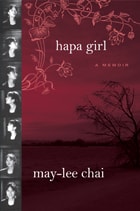
Hapa Girl
A MemoirMay-lee Chai
Temple University Press, 2008
In the mid-1960s, Winberg Chai, a young academic and the son of Chinese immigrants, married an Irish-American artist. In Hapa Girl ("hapa" is Hawaiian for "mixed") their daughter tells the story of this loving family as they moved from Southern California to New York to a South Dakota farm by the 1980s. In their new Midwestern home, the family finds itself the object of unwelcome attention, which swiftly escalates to violence. The Chais are suddenly socially isolated and barely able to cope with the tension that arises from daily incidents of racial animosity, including random acts of cruelty.
May-lee Chai's memoir ends in China, where she arrives just in time to witness a riot and demonstrations. Here she realizes that the rural Americans' "fears of change, of economic uncertainty, of racial anxiety, of the unknowable future compared to the known past were the same as China's. And I realized finally that it had not been my fault."
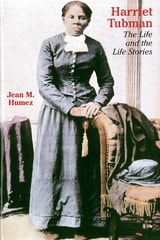
Harriet Tubman
The Life and the Life StoriesJean M. Humez
University of Wisconsin Press, 2005
Harriet Tubman’s name is known world-wide and her exploits as a self-liberated Underground Railroad heroine are celebrated in children’s literature, film, and history books, yet no major biography of Tubman has appeared since 1943. Jean M. Humez’s comprehensive Harriet Tubman is both an important biographical overview based on extensive new research and a complete collection of the stories Tubman told about her life—a virtual autobiography culled by Humez from rare early publications and manuscript sources. This book will become a landmark resource for scholars, historians, and general readers interested in slavery, the Underground Railroad, the Civil War, and African American women.
Born in slavery in Maryland in or around 1820, Tubman drew upon deep spiritual resources and covert antislavery networks when she escaped to the north in 1849. Vowing to liberate her entire family, she made repeated trips south during the 1850s and successfully guided dozens of fugitives to freedom. During the Civil War she was recruited to act as spy and scout with the Union Army. After the war she settled in Auburn, New York, where she worked to support an extended family and in her later years founded a home for the indigent aged. Celebrated by her primarily white antislavery associates in a variety of private and public documents from the 1850s through the 1870s, she was rediscovered as a race heroine by woman suffragists and the African American women’s club movement in the early twentieth century. Her story was used as a key symbolic resource in education, institutional fundraising, and debates about the meaning of "race" throughout the twentieth century.
Humez includes an extended discussion of Tubman’s work as a public performer of her own life history during the nearly sixty years she lived in the north. Drawing upon historiographical and literary discussion of the complex hybrid authorship of slave narrative literature, Humez analyzes the interactive dynamic between Tubman and her interviewers. Humez illustrates how Tubman, though unable to write, made major unrecognized contributions to the shaping of her own heroic myth by early biographers like Sarah Bradford. Selections of key documents illustrate how Tubman appeared to her contemporaries, and a comprehensive list of primary sources represents an important resource for scholars.
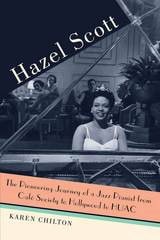
Hazel Scott
The Pioneering Journey of a Jazz Pianist, from Café Society to Hollywood to HUACKaren Chilton
University of Michigan Press, 2010
"Hazel Scott was an important figure in the later part of the Black renaissance onward. Even in an era where there was limited mainstream recognition of Black Stars, Hazel Scott's talent stood out and she is still fondly remembered by a large segment of the community. I am pleased to see her legend honored."
---Melvin Van Peebles, filmmaker and director
"This book is really, really important. It comprises a lot of history---of culture, race, gender, and America. In many ways, Hazel's story is the story of the twentieth century."
---Murray Horwitz, NPR commentator and coauthor of Ain't Misbehavin'
"Karen Chilton has deftly woven three narrative threads---Adam Clayton Powell, Jr., Harlem, and Hazel Scott---into a marvelous tapestry of black life, particularly from the Depression to the Civil Rights era. Of course, Hazel Scott's magnificent career is the brightest thread, and Chilton handles it with the same finesse and brilliance as her subject brought to the piano."
---Herb Boyd, author of Baldwin's Harlem: A Biography of James Baldwin
"A wonderful book about an extraordinary woman: Hazel Scott was a glamorous, gifted musician and fierce freedom fighter. Thank you Karen Chilton for reintroducing her. May she never be forgotten."
---Farah Griffin, Institute for Research in African-American Studies, Columbia University
In this fascinating biography, Karen Chilton traces the brilliant arc of the gifted and audacious pianist Hazel Scott, from international stardom to ultimate obscurity.
A child prodigy, born in Trinidad and raised in Harlem in the 1920s, Scott's musical talent was cultivated by her musician mother, Alma Long Scott as well as several great jazz luminaries of the period, namely, Art Tatum, Fats Waller, Billie Holiday and Lester Young. Career success was swift for the young pianist---she auditioned at the prestigious Juilliard School when she was only eight years old, hosted her own radio show, and shared the bill at Roseland Ballroom with the Count Basie Orchestra at fifteen. After several stand-out performances on Broadway, it was the opening of New York's first integrated nightclub, Café Society, that made Hazel Scott a star. Still a teenager, the "Darling of Café Society" wowed audiences with her swing renditions of classical masterpieces by Chopin, Bach, and Rachmaninoff. By the time Hollywood came calling, Scott had achieved such stature that she could successfully challenge the studios' deplorable treatment of black actors. She would later become one of the first black women to host her own television show. During the 1940s and 50s, her sexy and vivacious presence captivated fans worldwide, while her marriage to the controversial black Congressman from Harlem, Adam Clayton Powell, Jr., kept her constantly in the headlines.
In a career spanning over four decades, Hazel Scott became known not only for her accomplishments on stage and screen, but for her outspoken advocacy of civil rights and her refusal to play before segregated audiences. Her relentless crusade on behalf of African Americans, women, and artists made her the target of the House Un-American Activities Committee (HUAC) during the McCarthy Era, eventually forcing her to join the black expatriate community in Paris. By age twenty-five, Hazel Scott was an international star. Before reaching thirty-five, however, she considered herself a failure. Plagued by insecurity and depression, she twice tried to take her own life. Though she was once one of the most sought-after talents in show business, Scott would return to America, after years of living abroad, to a music world that no longer valued what she had to offer. In this first biography of an important but overlooked African American pianist, singer, actor and activist, Hazel Scott's contributions are finally recognized.
Karen Chilton is a New York-based writer and actor, and the coauthor of I Wish You Love, the memoir of legendary jazz vocalist Gloria Lynne.

Here I Stand
The Life and Legacy of John BeecherAngela J. Smith
University of Alabama Press, 2017
Biography of a forgotten poet who used his name and influence to speak up for those on the margins of society.
Few surnames resonate in American history more than Beecher. The family’s abolitionist ministers, educators, and writers are central figures in the historical narrative of the United States. The Beechers’ influence was greatest in the nineteenth century, but the family story continued—albeit with less public attention—with a descendant who grew up in Birmingham, Alabama, during the early twentieth century.
John Beecher (1904–1980) never had the public prominence of his famous ancestors, but as a poet, professor, sociologist, New Deal administrator, journalist, and civil rights activist, he spent his life fighting for the voiceless and oppressed with a distinct moral sensibility that reflected his self-identification as the twentieth-century torchbearer for his famous family. While John Beecher had many vocations in his lifetime, he always considered himself a poet and a teacher. Some critics have compared the populist elements of Beecher’s poetry to the work of Walt Whitman and Carl Sandburg, but his writing never gained a broad audience or critical acclaim during his lifetime.
In Here I Stand: The Life and Legacy of John Beecher, Angela J. Smith examines Beecher’s writing and activism and places them in the broader context of American culture at pivotal points in the twentieth century. Employing his extensive letters, articles, unpublished poetry and prose, and audio interviews in addition to his numerous published books, Smith uncovers a record of public concerns in American history ranging from the plight of workers in 1920s steel mills to sharecroppers’ struggles during the Depression to the civil rights movement of the 1960s.
Hoodlums
Black Villains and Social Bandits in American LifeWilliam L. Van Deburg
University of Chicago Press, 2004
Ranging from black slaveholders and frontier outlaws to serial killers and gangsta rappers, Hoodlums examines the pivotal role of black villains in American society and popular culture. Here, William L. Van Deburg offers the most extensive treatment to date of the black badman and the challenges that this figure has posed for race relations in America. He first explores the evolution of this problematic racial stereotype in the literature of the early Republic—documents in which the enslavement of African Americans was justified through exegetical claims. Van Deburg then probes antebellum slave laws, minstrel shows, and the works of proslavery polemicists to consider how whites conceptualized blacks as members of an inferior and dangerous race. Turning to key works by blacks themselves, from the writings of Frederick Douglass and W. E. B. Du Bois to classic blaxploitation films like Black Caesar and The Mack, Van Deburg demonstrates how African Americans have combated such negative stereotypes and reconceptualized the idea of the badman through stories of social bandits—controversial individuals vilified by whites for their proclivity toward evil, but revered in the black community as necessarily insurgent and revolutionary.
Ultimately, Van Deburg brings his story up-to-date with discussions of prison and hip-hop culture, urban rioting, gang warfare, and black-on-black crime. What results is a work of remarkable virtuosity—a nuanced history that calls for both whites and blacks to rethink received wisdom on the nature and prevalence of black villainy.

Horse Girl
How Velma Bronn Johnston Became Wild Horse Annie and Outsmarted the Mustang Killers of the WestTerri Farley
University of Nevada Press, 2026
The American mustang—wild, wind-tossed, and thundering across the open West—might have vanished into myth if not for Velma Bronn Johnston. A shy woman who was left with physical effects from a childhood battle with polio, Johnston was living a quiet life on a struggling ranch near Reno, Nevada, when she discovered wild horses being brutally transported to slaughter. Outraged, she reported it—only to be offered a permit allowing her to do the same horrific deed. But instead of backing down, Johnston took a stand.
Her refusal to profit from cruelty launched her into a firestorm of activism, upending her life. Laughed at, threatened, and dismissed, she pressed on. When a rival mocked her as “Wild Horse Annie,” she seized the name as a badge of honor and purpose. Embracing her new identity, she began to raid illegal holding pens under the cover of darkness, captivated the media, and became the voice of a movement. Her biggest allies? Schoolchildren across America, whose letter-writing campaign swept the country.
Johnston’s commitment to these majestic animals was finally recognized in 1971 when Congress unanimously passed legislation to protect the nation’s wild horses—an enduring victory for one determined woman and the animals she refused to abandon.
Award-winning author Terri Farley presents the captivating story of Horse Girl, revealing Velma Bronn Johnston in a new light through family photos and journal entries never before published. Farley’s storytelling brings Johnston’s unwavering courage into the spotlight, revealing a woman determined to protect the wild mustang—no matter the cost.
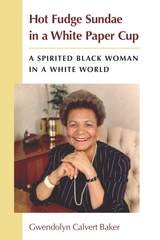
Hot Fudge Sundae in a White Paper Cup
A Spirited Black Woman in a White WorldGwendolyn Calvert Baker
University of Michigan Press, 2014