Results by title
59 books match the query 'Detective and mystery stories, American' and 5 start with h
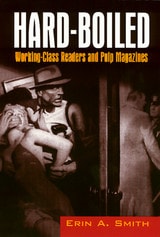
Hard-Boiled
Erin A. Smith
Temple University Press, 2000
In the 1920s a distinctively American detective fiction emerged from the pages of pulp magazines. The “hard-boiled” stories published in Black Mask, Dime Detective, Detective Fiction Weekly, and Clues featured a new kind of hero and soon challenged the popularity of the British mysteries that held readers in thrall on both sides of the Atlantic. In Hard-Boiled Erin A. Smith examines the culture that produced and supported this form of detective story through the 1940s.
Relying on pulp magazine advertising, the memoirs of writers and publishers, Depression-era studies of adult reading habits, social and labor history, Smith offers an innovative account of how these popular stories were generated and read. She shows that although the work of pulp fiction authors like Dashiell Hammett, Raymond Chandler, and Erle Stanley Gardner have become “classics” of popular culture, the hard-boiled genre was dominated by hack writers paid by the word, not self-styled artists. Pulp magazine editors and writers emphasized a gritty realism in the new genre. Unlike the highly rational and respectable British protagonists (Miss Marple and Hercule Poirot, for instance), tough-talking American private eyes relied as much on their fists as their brains as they made their way through tangled plotlines.
Casting working-class readers of pulp fiction as “poachers,” Smith argues that they understood these stories as parables about Taylorism, work, and manhood; as guides to navigating consumer culture; as sites for managing anxieties about working women. Engaged in re-creating white, male privilege for the modern, heterosocial world, pulp detective fiction shaped readers into consumers by selling them what they wanted to hear – stories about manly artisan-heroes who resisted encroaching commodity culture and the female consumers who came with it. Commenting on the genre’s staying power, Smith considers contemporary detective fiction by women, minority, and gay and lesbian writers.
[more]
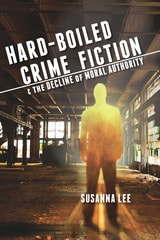
Hard-Boiled Crime Fiction and the Decline of Moral Authority
Susanna Lee
The Ohio State University Press, 2016
The cynical but kind-hearted detective is the soul of the classic hard-boiled story, that chronicle of world-weary urban pessimism. In Hard-Boiled Crime Fiction and the Decline of Moral Authority, Susanna Lee argues that this fiction functions as a measure for individual responsibility in the modern world and that it demonstrates the enduring status of individual conscience across a variety of cultural crises. In this major rethinking of the hard-boiled genre, Lee suggests that, whether in Los Angeles, New York, or Paris, the hard-boiled detective is the guardian of individual moral authority and the embodiment of ideals in a corrupt environment.
Lee traces the history of the hard-boiled detective through the twentieth century and on both sides of the Atlantic (France and the United States), tying the idea of morality to the character model in nuanced, multifaceted ways. When the heroic model devolves, the very conceptual validity of individual moral authority can seem to devolve as well. Hard-Boiled Crime Fiction and the Decline of Moral Authority charts the evolution of that character model of the hard-boiled hero, the mid-century deterioration of his exemplarity, and twenty-first-century endeavors to resuscitate the accountable hero. The history of hard-boiled crime fiction tells nothing less than the story of individual autonomy and accountability in modern Western culture.
Lee traces the history of the hard-boiled detective through the twentieth century and on both sides of the Atlantic (France and the United States), tying the idea of morality to the character model in nuanced, multifaceted ways. When the heroic model devolves, the very conceptual validity of individual moral authority can seem to devolve as well. Hard-Boiled Crime Fiction and the Decline of Moral Authority charts the evolution of that character model of the hard-boiled hero, the mid-century deterioration of his exemplarity, and twenty-first-century endeavors to resuscitate the accountable hero. The history of hard-boiled crime fiction tells nothing less than the story of individual autonomy and accountability in modern Western culture.
[more]
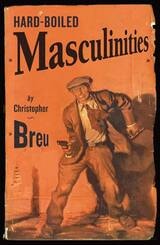
Hard-Boiled Masculinities
Christopher Breu
University of Minnesota Press, 2005
The persona of the American male in the period between the two world wars was characterized by physical strength, emotional detachment, aggressive behavior, and an amoral worldview. This ideal of a hard-boiled masculinity can be seen in the pages and, even more vividly, on the covers of magazines such as Black Mask, which shifted from Victorian-influenced depictions of men in top hats and mustaches in the early 1920s to the portrayal of much more overtly violent and muscular men.
Looking closely at this transformation, Christopher Breu offers a complex account of how and why hard-boiled masculinity emerged during an unsettled time of increased urbanization and tenuous peace and traces the changes in its cultural conception as it moved back and forth across the divide between high and low culture as well as the color line that bifurcated American society.
Examining the work of Ernest Hemingway, Dashiell Hammett, Chester Himes, and William Faulkner, as well as many lesser-known writers for the hypermasculine pulp magazines of the 1920s and 1930s, Breu illustrates how the tough male was a product of cultural fantasy, one that shored up gender and racial stereotypes as a way of lashing out at the destabilizing effects of capitalism and social transformation.
Christopher Breu is assistant professor of English at Illinois State University.
[more]

Heroes and Humanities
Detective Fiction and CultureRay B. Browne
University of Wisconsin Press, 1986
Mystery fiction, although essentially the same in all its national varieties, nevertheless comes in several types and several wrappings.
The present study of American, Australian, and Canadian detective fiction concerns literature which speaks in the ways of heroes and humanities about the human condition. All authors studied here, to one degree or another, demonstrate their concern with human society, some more strongly than others, but all with their eyes on the human situation and human existence. At times these studies lean toward the tragic in their outlook and development. In all instances they center on the humanistic.
The present study of American, Australian, and Canadian detective fiction concerns literature which speaks in the ways of heroes and humanities about the human condition. All authors studied here, to one degree or another, demonstrate their concern with human society, some more strongly than others, but all with their eyes on the human situation and human existence. At times these studies lean toward the tragic in their outlook and development. In all instances they center on the humanistic.
[more]
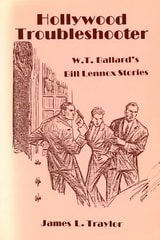
Hollywood Troubleshooter
W. T. Ballard's Bill Lennox StoriesJames L. Traylor
University of Wisconsin Press, 1985
This is the first collection of short stories by W.T. Ballard. This volume is just a sampling of Ballard's most famous character Bill Lennox, a selection for both the connoisseur of crime and the lover of good, fast-moving crime/adventure stories.
[more]