Results by title
138 books match the query 'Discovery and exploration' and 4 start with h
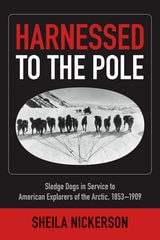
Harnessed to the Pole
Sledge Dogs in Service to American Explorers of the Arctic 1853-1909Sheila Nickerson
University of Alaska Press, 2014
Harnessed to the Pole follows the adventures of eight American explorers and their dog teams, starting with Elisha Kent Kane and ending with Robert Peary, controversial claimant of the title of first to reach the North Pole. While history has long forgotten these “little camels of the north,” Sheila Nickerson reveals how critical dogs were to the Arctic conquest. Besides providing transportation in extreme conditions, sledge dogs protected against wolves and polar bears, helped in hunting, found their way through storms, and provided warmth in extreme cold. They also faced rough handling, starvation, and the possibility of being left behind as expeditions plunged ahead. Harnessed to the Pole is an extraordinary—and unflinching—look at the dogs that raced to the top of the world.
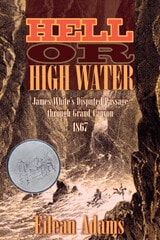
Hell Or High Water
James White's Disputed Passage through Grand Canyon, 1867Eilean Adams
Utah State University Press, 2001
Although John Wesley Powell and party are usually given credit for the first river descent through the Grand Canyon, the ghost of James White has haunted those claims. White was a Colorado prospector, who, almost two years before Powell's journey, washed up on a makeshift raft at Callville, Nevada. His claim to have entered the Colorado above the San Juan River with another man (soon drowned) as they fled from Indians was widely disseminated and believed for a time, but Powell and his successors on the river publically discounted it. Colorado River runners and historians have since debated whether White's passage through Grand Canyon even could have happened.
Hell or High Water is the first full account of White's story and how it became distorted and he disparaged over time. It is also a fascinating detective story, recounting how White's granddaughter, Eilean Adams, over decades and with the assistance of a couple of notable Colorado River historians who believed he could have done what he claimed, gradually uncovered the record of James White's adventure and put together a plausible narrative of how and why he ended up floating helplessly down a turbulent river, entrenched in massive cliffs, with nothing but a driftwood raft to carry him through.
Historical Metaphors and Mythical Realities
Structure in the Early History of the Sandwich Islands KingdomMarshall D. Sahlins
University of Michigan Press, 1981
Hawaiian culture as it met foreign traders and settlers is the context for Sahlins's structuralist methodology of historical interpretation
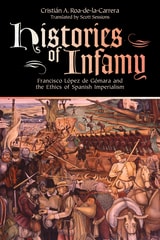
Histories of Infamy
Francisco López de Gómara and the Ethics of Spanish ImperialismCristián A. Roa-de-la-Carrera
University Press of Colorado, 2005
- Luis Fernando Restrepo, University of Arkansas
“In an eloquent and thorough exegesis, Roa-de-la-Carrera reveals how and why López de Gómara, having written the best of all possible books in exultation of Spanish imperialism, nevertheless failed to convince the readers of his time."
- Susan Schroeder, Tulane University
In Histories of Infamy, Cristián Roa-de-la-Carrera explores Francisco López de Gómara's (1511-ca.1559) attempt to ethically reconcile Spain's civilizing mission with the conquistadors' abuse and exploitation of Native peoples.
The most widely read account of the conquest in its time, Gómara's Historia general de las Indias y Conquista de México rationalized the conquistadors' crimes as unavoidable evils in the task of bringing "civilization" to the New World. Through an elaborate defense of Spanish imperialism, Gómara aimed to convince his readers of the merits of the conquest, regardless of the devastation it had wrought upon Spain's new subjects. Despite his efforts, Gómara's apologist text quickly fell into disrepute and became ammunition for Spain's critics. Evaluating the effectiveness of ideologies of colonization, Roa-de-la-Carrera's analysis will appeal to scholars in colonial studies and readers interested in the history of the Americas.