Results by title
78 books match the query 'Diseases' and 3 start with h
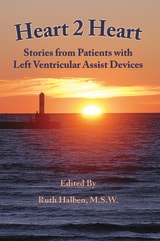
Heart 2 Heart
Stories from Patients with Left Ventricular Assist DevicesEdited by Ruth Halben, M.S.W.
Michigan Publishing Services, 2016
Heart 2 Heart brings together stories of patients who suffered from a serious heart condition and therefore received an LVAD (Left Ventricular Assist Device). The patients describe the various
hardships they and their families endured as well as how many found hope after receiving an LVAD.
Each chapter is written by a different patient or a patient’s family member, creating a unique
collection of stories that reveals the realities of living life with an implanted heart pump. Heart 2 Heart is composed of seventeen patient voices, where fourteen males and three females of different ethnicities and ages share with the reader their tale--from their initial diagnosis, to their eventual LVAD procedure performed at the University of Michigan Hospital.
The editor, Ruth Halben, M.S.W., is a clinical social worker in the University of Michigan Health System who works with LVAD patients and their families. Ruth is one of the first LVAD social workers in the nation, and she draws both from her expertise and her heartfelt relationships with her patients to bring together this wonderful resource for current and future LVAD patients.
[more]
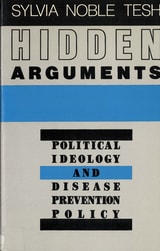
Hidden Arguments
Political Ideology and Disease Prevention PolicySylvia Noble Tesh
Rutgers University Press, 1988
In this provocative book, Sylvia Tesh shows how "politics masquerades as science" in the debates over the causes and prevention of disease. Tesh argues that ideas about the causes of disease which dominate policy at any given time or place are rarely determined by scientific criteria alone. The more critical factors are beliefs about how much government can control industry, who should take risks when scientists are uncertain, and whether the individual or society has the ultimate responsibility for health. Tesh argues that instead of lamenting the presence of this extra-scientific reasoning, it should be brought out of hiding and welcomed. She illustrates her position by analyzing five different theories of disease causality that have vied for dominance during the nineteenth and twentieth centuries, and discusses in detail the political implications of each theory. Tesh also devotes specific chapters to the multicausal theory of disease, to health education policy in Cuba, to the 1981 air traffic controller's strike, to the debate over Agent Orange, and to an analysis of science as a belief system.
Along the way she makes these principal points: She criticizes as politically conservative the idea that diseases result from a multifactorial web of causes. Placing responsibility for disease prevention on "society" is ideological, she argues. In connection with the air traffic controllers she questions whether it is in a union's best interests to claim that workers' jobs are stressful. She shows why there are no entirely neutral answers to questions about the toxicity of environmental pollutants. In a final chapter, Tesh urges scientists to incorporate egalitarian values into their search for the truth, rather than pretending science can be divorced from that political ideology.
Along the way she makes these principal points: She criticizes as politically conservative the idea that diseases result from a multifactorial web of causes. Placing responsibility for disease prevention on "society" is ideological, she argues. In connection with the air traffic controllers she questions whether it is in a union's best interests to claim that workers' jobs are stressful. She shows why there are no entirely neutral answers to questions about the toxicity of environmental pollutants. In a final chapter, Tesh urges scientists to incorporate egalitarian values into their search for the truth, rather than pretending science can be divorced from that political ideology.
[more]
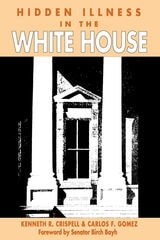
Hidden Illness in the White House
Kenneth R. Crispell and Carlos Gomez
Duke University Press, 1988
The serious illness of three presidents—Woodrow Wilson, Franklin Delano Roosevelt, and John F. Kennedy—as well as the injury Ronald Reagan received in the assassination attempt upon him have revealed our woefully inadequate system for handling presidential incapacity. The authors believe that this flawed system poses a major threat to the nation, and they provide sobering reports on how the government functioned (or failed to function) during times of presidential impairment. The public was kept in the dark regarding the gravity of the presidential condition, often unaware that critical decisions were being made while the president was suffering from a severe illness.
Hidden Illness in the White House contains startling new information on the severity of Roosevelt’s illness during the crucial Yalta negotiations and the fact that Kennedy suffered from Addison’s disease, a life-threatening illness, long before he was elected to the presidency. In each case the authors demonstrate that a largely successful effort was made to conceal the president’s true medical condition from the public.
Hidden Illness in the White House contains startling new information on the severity of Roosevelt’s illness during the crucial Yalta negotiations and the fact that Kennedy suffered from Addison’s disease, a life-threatening illness, long before he was elected to the presidency. In each case the authors demonstrate that a largely successful effort was made to conceal the president’s true medical condition from the public.
[more]