Results by title
61 books match the query 'East Asia' and 4 start with h
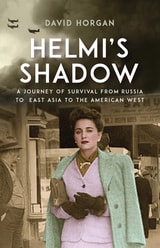
Helmi's Shadow
A Journey of Survival From Russia to East Asia to the American WestDavid Horgan
University of Nevada Press, 2021
Rachel Koskin was a middle-class Russian Jew born in Odessa, Ukraine, in 1896. Ten years later, her family fled from the murderous pogroms against Jews in the Russian Empire eastward to Harbin, a Russian-controlled city within China’s borders on the harsh plain of Manchuria. Full of lively detail and the struggles of being stateless in a time of war, the narrative follows Rachel through her life in Harbin, which became a center of Russian culture in the Far East; the birth of her daughter, Helmi, in Kobe, Japan; their life together in the slums of Shanghai and back in Japan during World War II, where they endured many more hardships; and their subsequent immigration to the United States.
This remarkable account uncovers a history of refugees living in war-torn China and Japan, a history that to this day remains largely unknown. It is also a story of survival during a long period of upheaval and war—from the Russian Revolution to the Holocaust—and an intimate portrait of an American immigrant family. David reveals both the joys and tragedies he experienced growing up in a multicultural household in post\-Second World War America with a Jewish mother, a live-in Russian grandmother, and a devout Irish Catholic American father.
As David develops a clearer awareness of the mysterious past lives of his mother and grandmother—and the impact of these events on his own understanding of the long-term effects of fear, trauma, and loss—he shows us that, even in times of peace and security, we are all shadows of our past, marked by our experiences, whether we choose to reveal them to others or not.
Helmi's Shadow
A Journey of Survival From Russia to East Asia to the American WestDavid Horgan
University of Nevada Press, 2021
Rachel Koskin was a middle-class Russian Jew born in Odessa, Ukraine, in 1896. Ten years later, her family fled from the murderous pogroms against Jews in the Russian Empire eastward to Harbin, a Russian-controlled city within China’s borders on the harsh plain of Manchuria. Full of lively detail and the struggles of being stateless in a time of war, the narrative follows Rachel through her life in Harbin, which became a center of Russian culture in the Far East; the birth of her daughter, Helmi, in Kobe, Japan; their life together in the slums of Shanghai and back in Japan during World War II, where they endured many more hardships; and their subsequent immigration to the United States.
This remarkable account uncovers a history of refugees living in war-torn China and Japan, a history that to this day remains largely unknown. It is also a story of survival during a long period of upheaval and war—from the Russian Revolution to the Holocaust—and an intimate portrait of an American immigrant family. David reveals both the joys and tragedies he experienced growing up in a multicultural household in post\-Second World War America with a Jewish mother, a live-in Russian grandmother, and a devout Irish Catholic American father.
As David develops a clearer awareness of the mysterious past lives of his mother and grandmother—and the impact of these events on his own understanding of the long-term effects of fear, trauma, and loss—he shows us that, even in times of peace and security, we are all shadows of our past, marked by our experiences, whether we choose to reveal them to others or not.
Hollywood Diplomacy
Film Regulation, Foreign Relations, and East Asian RepresentationsHye Seung Chung
Rutgers University Press, 2020
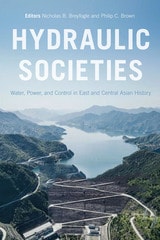
Hydraulic Societies
Water, Power, and Control in East and Central Asian HistoryNicholas B. Breyfogle
Oregon State University Press, 2023
Hydraulic Societies explores the linked themes of water, power, state-building, and hydraulic control. Bringing together a range of ecological, geographical, chronological, and methodological perspectives, the essays in this book address the how humans have long harnessed water and sought to contain its destructive power for political, economic and social ends. Water defines every aspect of life and remains at the center of human activity: in irrigation and agriculture; waste and sanitation; drinking and disease; floods and droughts; religious beliefs and practices; fishing and aquaculture; travel and discovery; scientific study; water pollution and conservation; multi-purpose dam building; boundaries and borders; politics and economic life; and wars and diplomacy.
From the earliest large irrigation works thousands of years ago, control over water has involved control over people, as the essays in this volume reflect. The intersections of water and political, economic, and social power historically span international as well as domestic politics and operate at scales ranging from the local to the global. The authors consider the role of water in national development schemes, water distribution as a tool of political power, international disputes over waterways and water supplies, and the place of water in armed conflicts. They explore the ways in which political power and social hierarchies have themselves been defined and redefined by water and its control, how state leaders legitimized their rule both culturally and economically through the control of water, and how water management schemes were a means to impose and refine colonial power.