Results by title
130 books match the query 'Educators' and 5 start with h
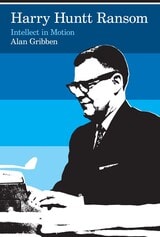
Harry Huntt Ransom
Intellect in MotionBy Alan Gribben
University of Texas Press, 2008
Both a life story and a portrait of public higher education during the twentieth century, Harry Huntt Ransom captures the spirit of a dynamic individual who dedicated his talents to nurturing intellectual life in Texas and beyond. Tracing the details of Ransom's youth in Galveston and Tennessee and his education at Yale, where he earned a doctorate, Alan Gribben provides new insight into the factors that shaped Ransom's future as a renowned administrator and defender of the humanities.
Ransom's career at the University of Texas began in 1935, when he was hired as an instructor of English. He rose through the ranks to become chancellor, stepping down in 1971 during a volatile period when debates about the University's central mission raged—particularly over the question of commercializing higher education. The development of Ransom's lasting legacy, the Humanities Research Center bearing his name, is explored in depth as well. Bringing to life a legendary figure, Harry Huntt Ransom is a colorful testament to a singular man of letters who had the audacity to propose "that there be established somewhere in Texas—let's say in the capital city—a center of our cultural compass, a research center to be the Bibliothèque Nationale of the only state that started out as an independent nation."

Hermon Carey Bumpus, Yankee Naturalist
Hermon C. Bumpus, Jr.
University of Minnesota Press, 1947
Hermon Carey Bumpus, Yankee Naturalist was first published in 1947. Minnesota Archive Editions uses digital technology to make long-unavailable books once again accessible, and are published unaltered from the original University of Minnesota Press editions.
In this small volume, Dr. Bumpus' son has outlined the personal history and professional career of his distinguished father, who will be known to countless associates through his work with American museums, and his outstanding career as educator and administrator: as director of the Marine Biological Laboratory at Woods Hole, Massachusetts; as professor of biology at Brown University; as the first director of the American Museum of Natural History; as business manager of the University of Wisconsin; as president of Tufts College; and as chairman of the advisory board of the National Park Service.
The trailside museums and natural history shrines that have taught thousands of Americans the story behind the scenic and natural wonders of our national parks are an enduring memorial to this man of enthusiasm and unceasing energy.
The habitat exhibits in our museums of natural history bear further witness to the imagination and practical originality of this distinguished American naturalist, who was the first president of the American Association of Museums and who contributed so much to the change of attitude and policy at a time when museums of every type were just thawing out of their ice age.
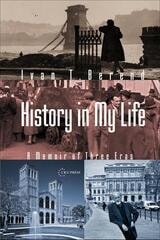
History in My Life
A Memoir of Three ErasIvan T. Berend is Distinguished Research Professor at the History Department of the University of California Los Angeles.
Central European University Press, 2009
Ivan T. Berend is Distinguished Professor at the University of California Los Angeles, Director of the European Studies Program. He was one of the masterminds of regime change in Hungary. He made a career in Hungary as a university professor, Rector of the University of Economics (1973–79), and President of the Hungarian Academy of Sciences (1985–90). He was President of the International Committee of Historical Sciences (1995–2000), and Vice-President of the International Economic History Association (1986–1994). His research interests are the complex economic, social, ideological, and cultural history of Central and Eastern Europe in the 19th–20th century; economic modernization; problems of European backwardness; transition from state socialism to capitalism. He published and 26 books and more than 120 studies.
Before he became a professor at UCLA, Ivan Berend had survived five regime changes and two revolutions in Hungary, had been in prison and German concentration camp in 1944–45.
His memoir offers an interesting case study, a subjective addition to the “objective” historical works on Central and Eastern European state socialism. It describes the hard choices of intellectuals in a dictatorial state: 1. remain in isolation, concentrate on scholarly works, and exclude politics in your personal life; 2. be in opposition, criticize and unveil the regime, accept discrimination and exclusion; 3. remain within the establishment and work for reforming the country using legal possibilities to criticize the regime and to achieve changes from within.
Berend’s book raises basic historical questions and debates, compares East European and American higher education systems, and presents an eyewitness’ insights on life in the United States.
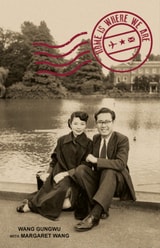
Home Is Where We Are
Wang Gungwu and Margaret Wang
National University of Singapore Press, 2020
Wang Gungwu’s account of his university education in Singapore and the UK, and the early years of his career as an academic in Malaysia captures the excitement, the ambition, and the choices of a generation that saw it their responsibility to build the new nations of Southeast Asia.
The exploration of the emotional and intellectual journey towards the formation of an identity, treasured by readers of Wang's Home Is Not Here, extends in this volume into an appreciation of love, family life, and the life of the mind. We also see these years from Margaret’s perspective, her own fascinating family story, and her early impressions of this young bearded poet. Wise and moving, this is a fascinating reflection on identity and belonging, and on the ability of the individual to find a place amidst the historical currents that have shaped Asia.
How We Came to Be
An Intellectual Genealogy of Chicano ScholarsEdited by Teresa Córdova, Aída Hurtado, Francisco J. Hernández, Avelardo Valdez; Foreword by Juan González
University of Arizona Press, 2026
This work chronicles the lives and legacies of Chicana and Chicano scholars whose formative experiences in the Chicano Movement shaped the development of Chicano studies and transformed higher education. Originating from the Reuniónes de Colegas—gatherings of veteran scholars reflecting on their shared histories—the volume features sixteen essays organized into five thematic sections that explore the intersections of activism, scholarship, and institutional change.
The contributors document how grassroots organizing evolved into academic inquiry, leading to the creation of departments, student support systems, and policy reforms that advanced equity and representation in universities. Essays address how community-engaged research influenced urban planning, health advocacy, and cultural production, while also highlighting Indigenous and transnational epistemologies that redefined theoretical frameworks in Chicano studies. The volume concludes with reflections on academic leadership and the breaking of barriers by Chicana scholars in higher education administration.
Together, these essays offer a powerful intellectual history and a testament to a generation’s enduring commitment to social justice. How We Came to Be is both a scholarly archive and a call to action, preserving the legacy of those who built Chicano studies and inspiring future generations to continue the work of transformation within and beyond the academy.
Contributors
José Calderón
Gilberto Cárdenas
Teresa Carrillo
Teresa Córdova
Estevan Flores
Yvette G. Flores
Felipe Gonzales
Deena J. González
Francisco J. Hernández
Inés Hernández-Ávila
Francisco Hernández Vázquez
Aída Hurtado
Larry Trujillo
Avelardo Valdez
Carlos G. Vélez-Ibáñez
James Diego Vigil