Results by title
304 books match the query 'Entertainment & Performing Arts' and 14 start with h
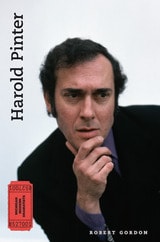
Harold Pinter
The Theatre of PowerRobert Gordon
University of Michigan Press, 2013
The latest volume in the Michigan Modern Dramatists series offers an authoritative but accessible look at Harold Pinter, one of the greatest and most influential postwar British playwrights and author of classic works such as The Birthday Party and The Homecoming. Pinter was awarded the Nobel Prize for Literature in 2005 for his remarkable body of work and plays that "uncover the precipice under everyday prattle and force entry into oppression's closed rooms."
Harold Pinter: The Theatre of Power focuses on the playwright's continuously innovative experiments in theatrical form while tracing the recurrence of a consistent set of ethical and epistemological concerns. Exploring important plays from across this prolific writer’s career, author Robert Gordon argues that the motivating force in almost all of Pinter's drama is the ceaseless desire for power, represented in his work as a compulsive drive to achieve or maintain dominance—whether it be the struggle to defend one's own territory from intruders, the father's battle with his sons to assert his patriarchal position in the family, the manipulation of erotic feelings in the gender warfare that motivates sexual relationships, the abuse of brute force by dictatorships and democracies, or simply the masculine obsession to dominate. Gordon demonstrates the adventurousness of Pinter's experimentation with form while at the same time exposing the ethical, epistemological, and aesthetic preoccupations that have persisted with remarkable consistency throughout his career.
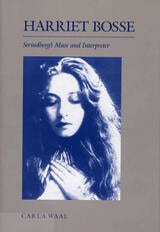
Harriet Bosse
Strindberg's Muse and InterpreterCarla Waal
Southern Illinois University Press, 1990
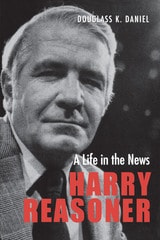
Harry Reasoner
A Life in the NewsBy Douglass K. Daniel
University of Texas Press, 2007
Harry Reasoner was one of the most trusted and well-liked journalists of the golden age of network television news. Whether anchoring the evening newscast on CBS in the 1960s or on ABC in the 1970s, providing in-depth reporting on 60 Minutes, or hosting numerous special programs covering civil rights struggles, the Vietnam War, and Watergate, Reasoner had "that almost mystical quality it seems to take for good television reporting, exuding this atmosphere of truth and believability," in the words of Walter Cronkite. Yet his reassuring manner and urbane, often witty, on-air persona masked a man who was far more complex and contradictory. Though gifted with the intelligence and drive to rise to the top of his profession, Reasoner was regarded by many colleagues as lazy and self-indulgent, a man who never achieved his full potential despite his many accomplishments.
Harry Reasoner: A Life in the News covers the entire sweep of this enigmatic journalist's life and career. Douglass K. Daniel opens with Reasoner's Depression-era Midwestern upbringing and follows him through his early work in newspapers and radio before he joined CBS in 1956. Focusing on Reasoner's thirty-five-year tenure in television news, Daniel presents fascinating, behind-the-scenes accounts of Reasoner's key role in founding the top-rated newsmagazine 60 Minutes. He also explores Reasoner's highly publicized move to ABC in 1970, where he anchored the nightly newscast, first with Howard K. Smith and later with Barbara Walters—a disastrous pairing from which Reasoner's career never fully recovered.
Based on scores of interviews and unpublished letters, memos, and other primary sources, this first biography of the man once rated second in credibility only to Walter Cronkite illuminates an entire era in broadcast journalism, as well as many of the unique personalities, from Andy Rooney to Mike Wallace, who made that era distinctive.
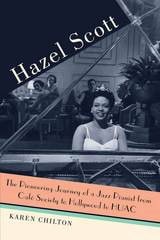
Hazel Scott
The Pioneering Journey of a Jazz Pianist, from Café Society to Hollywood to HUACKaren Chilton
University of Michigan Press, 2010
"Hazel Scott was an important figure in the later part of the Black renaissance onward. Even in an era where there was limited mainstream recognition of Black Stars, Hazel Scott's talent stood out and she is still fondly remembered by a large segment of the community. I am pleased to see her legend honored."
---Melvin Van Peebles, filmmaker and director
"This book is really, really important. It comprises a lot of history---of culture, race, gender, and America. In many ways, Hazel's story is the story of the twentieth century."
---Murray Horwitz, NPR commentator and coauthor of Ain't Misbehavin'
"Karen Chilton has deftly woven three narrative threads---Adam Clayton Powell, Jr., Harlem, and Hazel Scott---into a marvelous tapestry of black life, particularly from the Depression to the Civil Rights era. Of course, Hazel Scott's magnificent career is the brightest thread, and Chilton handles it with the same finesse and brilliance as her subject brought to the piano."
---Herb Boyd, author of Baldwin's Harlem: A Biography of James Baldwin
"A wonderful book about an extraordinary woman: Hazel Scott was a glamorous, gifted musician and fierce freedom fighter. Thank you Karen Chilton for reintroducing her. May she never be forgotten."
---Farah Griffin, Institute for Research in African-American Studies, Columbia University
In this fascinating biography, Karen Chilton traces the brilliant arc of the gifted and audacious pianist Hazel Scott, from international stardom to ultimate obscurity.
A child prodigy, born in Trinidad and raised in Harlem in the 1920s, Scott's musical talent was cultivated by her musician mother, Alma Long Scott as well as several great jazz luminaries of the period, namely, Art Tatum, Fats Waller, Billie Holiday and Lester Young. Career success was swift for the young pianist---she auditioned at the prestigious Juilliard School when she was only eight years old, hosted her own radio show, and shared the bill at Roseland Ballroom with the Count Basie Orchestra at fifteen. After several stand-out performances on Broadway, it was the opening of New York's first integrated nightclub, Café Society, that made Hazel Scott a star. Still a teenager, the "Darling of Café Society" wowed audiences with her swing renditions of classical masterpieces by Chopin, Bach, and Rachmaninoff. By the time Hollywood came calling, Scott had achieved such stature that she could successfully challenge the studios' deplorable treatment of black actors. She would later become one of the first black women to host her own television show. During the 1940s and 50s, her sexy and vivacious presence captivated fans worldwide, while her marriage to the controversial black Congressman from Harlem, Adam Clayton Powell, Jr., kept her constantly in the headlines.
In a career spanning over four decades, Hazel Scott became known not only for her accomplishments on stage and screen, but for her outspoken advocacy of civil rights and her refusal to play before segregated audiences. Her relentless crusade on behalf of African Americans, women, and artists made her the target of the House Un-American Activities Committee (HUAC) during the McCarthy Era, eventually forcing her to join the black expatriate community in Paris. By age twenty-five, Hazel Scott was an international star. Before reaching thirty-five, however, she considered herself a failure. Plagued by insecurity and depression, she twice tried to take her own life. Though she was once one of the most sought-after talents in show business, Scott would return to America, after years of living abroad, to a music world that no longer valued what she had to offer. In this first biography of an important but overlooked African American pianist, singer, actor and activist, Hazel Scott's contributions are finally recognized.
Karen Chilton is a New York-based writer and actor, and the coauthor of I Wish You Love, the memoir of legendary jazz vocalist Gloria Lynne.

Heaven Is Near
The Lives of Two Artists and Their Daughter’s Quest to UnderstandLo Dagerman
University of Minnesota Press, 2027
Lo Dagerman reconstructs the love, trauma, and creative journeys of her parents—Swedish writer Stig Dagerman and actress Anita Björk
In 1953, Swedish writer Stig Dagerman, one of Europe’s greatest postwar writers, married Anita Björk, an acclaimed actress famous for the Cannes Grand Prix award-winning film Miss Julie. Inscribed into her wedding ring were his words “Heaven Is Near.” A year later, Stig was found dead by suicide. His death shocked Sweden and left a devastated Anita to raise their small daughter, Lo.
Heaven Is Near is Lo Dagerman’s endeavor to understand what happened. In an unconventional hybrid of biography and memoir, Lo dives deep into diaries, notebooks, letters, and other source material to bring her parents’ stories to life. Her account offers an unsparing look at her father’s creative crisis, depression, and suicide, as well as her mother’s life-long striving and sustained success in reaching the height of artistic excellence while navigating motherhood and family. Moving between Stockholm, Paris, Berlin, and Hollywood, Lo lays bare her parents’ legacy not as a tragic abstraction but as their lived experience, inserting her own memories and reflections along the way.
Through Lo’s unsentimental, psychologically rich narration, Heaven Is Near offers a quietly luminous, multigenerational account of genius, trauma, and creative regeneration.
Retail e-book files for this title are screen-reader friendly with images accompanied by short alt text and/or extended descriptions.
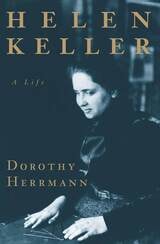
Helen Keller
A LifeDorothy Herrmann
University of Chicago Press, 1999
"Fascinating. . . . Stripping away decades of well-meaning sentimentality, Herrmann presents a pair of strong-willed women, who struggled to build their own lives while never forgetting their dependence on each other."—Ron Charles, Christian Science Monitor
"We meet an entirely unexpected Helen Keller—a woman with deep if concealed ambivalence toward her self-sacrificing teacher; a political radical; and a woman longing for romantic love and the fulfilled sexual life of a woman."—Joan Mellen, Philadelphia Inquirer
"Herrmann's portrait of Keller is both fully embodied and unflinchingly candid."—Mary Loeffelholz, Boston Sunday Globe
"This well-proportioned biography of the deaf and blind girl who became a great American crusader rescues its subject from the shackles of sainthood without destroying her as an American hero."—Dennis Drabelle, Cleveland Plain Dealer
"Herrmann's engrossing biography helps us see beyond the public's fascination with how Keller dealt with her disabilities to discover the woman Keller strived to be."—Nancy Seidman, Atlanta Journal-Constitution
"Perhaps the most intimate biography [of Helen Keller]. [Herrmann] gives her back her sexuality [and] imbues her with a true humanity. . . . Helen Keller: A Life has some of the texture and the dramatic arc of a good novel."—Dinitia Smith, New York Times
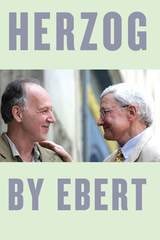
Herzog by Ebert
Roger Ebert
University of Chicago Press, 2017
Herzog by Ebert is a comprehensive collection of Ebert’s writings about the legendary director, featuring all of his reviews of individual films, as well as longer essays he wrote for his Great Movies series. The book also brings together other essays, letters, and interviews, including a letter Ebert wrote Herzog upon learning of the dedication to him of “Encounters at the End of the World;” a multifaceted profile written at the 1982 Cannes Film Festival; and an interview with Herzog at Facet’s Multimedia in 1979 that has previously been available only in a difficult-to-obtain pamphlet. Herzog himself contributes a foreword in which he discusses his relationship with Ebert.
Brimming with insights from both filmmaker and film critic, Herzog by Ebert will be essential for fans of either of their prolific bodies of work.
Hitchcock's People, Places, and Things
John Bruns
Northwestern University Press, 2019
This book offers new readings of well-known Hitchcock films, including The Lodger, Shadow of a Doubt, Psycho, The Birds, and Marnie, as well as insights into lesser-discussed films such as I Confess and Family Plot. Additional close readings of the original theatrical trailer for Psycho and a Hitchcock-directed episode of Alfred Hitchcock Presents expand the Hitchcock landscape beyond conventional critical borders. In tracing the network of relations in Hitchcock’s work, Bruns brings new Hitchcockian tropes to light. For students, scholars, and serious fans, the author promises a thrilling critical navigation of the Hitchcock landscape, with frequent “mental shake-ups” that Hitchcock promised his audience.
Hollywood Exile, or How I Learned to Love the Blacklist
By Bernard Gordon
University of Texas Press, 2000
The Hollywood blacklist, which began in the late 1940s and ran well into the 1960s, ended or curtailed the careers of hundreds of people accused of having ties to the Communist Party. Bernard Gordon was one of them. In this highly readable memoir, he tells a engrossing insider's story of what it was like to be blacklisted and how he and others continued to work uncredited behind the scenes, writing and producing many box office hits of the era.
Gordon describes how the blacklist cut short his screenwriting career in Hollywood and forced him to work in Europe. Ironically, though, his is a success story that includes the films El Cid, 55 Days at Peking, The Thin Red Line, Krakatoa East of Java, Day of the Triffids, Earth vs. the Flying Saucers, Horror Express, and many others. He recounts the making of many movies for which he was the writer and/or producer, with wonderful anecdotes about stars such as Charlton Heston, David Niven, Sophia Loren, Ava Gardner, and James Mason; directors Nicholas Ray, Frank Capra, and Anthony Mann; and the producer-studio head team of Philip Yordan and Samuel Bronston.
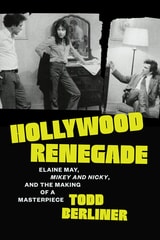
Hollywood Renegade
Elaine May, Mikey and Nicky, and the Making of a MasterpieceTodd Berliner
University of Texas Press, 2026
Examines the career and unorthodox filmmaking practices of director Elaine May, whose Mikey and Nicky, over a span of fifty years, transformed from a fiasco to a masterpiece of seventies cinema.
Elaine May’s Mikey and Nicky stands out in the history of Hollywood. After a troubled production, massive cost overruns, and lawsuits between May and the studio, the film received scathing reviews and failed at the box office. But the very qualities that initially alienated viewers and reviewers led later generations to regard the film as an overlooked masterpiece.
Written and directed by the period’s only female New Hollywood filmmaker, Mikey and Nicky has not received the attention given to other unconventional films of the 1970s. But May worked for years to give each moment of the movie multiple areas of interest. She made every character, even peripheral ones, nuanced and memorable. And she designed every scene, even minor ones, as a performance event. Her lead actors, Peter Falk and John Cassavetes, thrived under her unorthodox directing style, earning acclaim even from reviewers who hated the movie. Decades in the making—years of scriptwriting, a shoot that spanned ten months, and three years spent editing—Mikey and Nicky shows us what Hollywood cinema can accomplish when talented filmmakers challenge Hollywood’s limited notion of professionalism, rejecting the harsh time pressures of commercial filmmaking in order to get the most out of every scene.
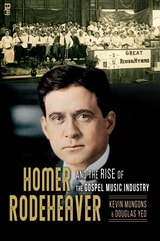
Homer Rodeheaver and the Rise of the Gospel Music Industry
Kevin Mungons and Douglas Yeo
University of Illinois Press, 2021
Homer Rodeheaver merged evangelical hymns and African American spirituals with popular music to create a potent gospel style. Kevin Mungons and Douglas Yeo examine his enormous influence on gospel music against the backdrop of Christian music history and Rodeheaver's impact as a cultural and business figure. Rodeheaver rose to fame as the trombone-playing song leader for evangelist Billy Sunday. As revivalism declined after World War I, Rodeheaver leveraged his place in America's newborn celebrity culture to start the first gospel record label and launch a nationwide radio program. His groundbreaking combination of hymnal publishing and recording technology helped define the early Christian music industry. In his later years, he influenced figures like Billy Graham and witnessed the music's split into southern gospel and black gospel.
Clear-eyed and revealing, Homer Rodeheaver and the Rise of the Gospel Music Industry is an overdue consideration of a pioneering figure in American music.
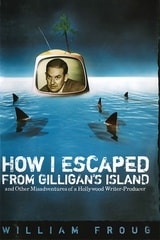
How I Escaped from Gilligan's Island
And Other Misadventures of a Hollywood Writer-ProducerWilliam Froug
University of Wisconsin Press, 2005
In the early 1950s writers were leaving radio en masse to try their hand at another promising medium—television. William Froug was in the thick of that exodus, a young man full of ideas in a Hollywood bursting with opportunities. In his forty-year career Froug would write and/or produce many of the shows that America has grown up with. From the drama of Playhouse 90 and the mind-bending premises of The Twilight Zone to the escapist scenarios of Adventures in Paradise, Gilligan’s Island, Bewitched, and Charlie’s Angels, Froug played a role in shaping his trade. He crossed paths with some of the memorable personalities in the industry, including Jack Benny, Lucille Ball, Agnes Moorehead, Elizabeth Montgomery, Robert Blake, Rod Serling, Gene Roddenberry, Aaron Spelling, and Sherwood Schwartz.
Froug reveals a post-WWII America giddy with the success of its newest medium—yet sobered at moments by strikes and union politics, McCarthyism and anti-Semitism. It was a world of hastily written scripts, sudden firings, thwarted creativity, and fickle tastes. And yet, while clearly exasperated with many aspects of Hollywood, Froug was a man utterly in his element, his frustration with the industry ultimately eclipsed by his dedication to his craft.

Howard Barker Interviews 1980-2010
Conversations in CatastropheEdited and Introduced by Mark Brown
Intellect Books, 2011
British playwright Howard Barker coined the term “theatre of catastrophe” to describe his unique brand of complex, ambiguous, and often unsettling drama. Revered in continental Europe, North America, and Australia as one of the greatest living dramatists working in the English language, Barker is also a celebrated poet, theater theorist, and painter. The first collection of interviews conducted with Barker, Howard Barker Interviews 1980–2010 covers his entire career and gives a strong sense of the life and work of this innovative dramatist.
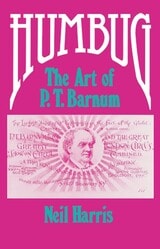
Humbug
The Art of P. T. BarnumNeil Harris
University of Chicago Press, 1981