Results by title
2706 books match the query 'European' and 63 start with h
H. G. Adler
Life, Literature, LegacyEdited by Julia Creet, Sara R. Horowitz, and Amira Bojadzija-Dan
Northwestern University Press, 2016
H. G. Adler: Life, Literature, Legacy is the first collection of essays in English dedicated to the life and work of German-language author H. G. Adler. Among the international scholars of German, Jewish, and Holocaust literature and history who reveal the range of Adler’s legacy across genres are Adler’s son, Jeremy Adler, and Peter Filkins, translator of Adler’s trilogy, Panorama, (The Journey). Together, the essays examine Adler’s writing in relation to his life, especially his memory as a survivor of the Nazi death camps and his posthumous recognition for having produced a Gesamtkunstwerk, an aesthetic synthesis of the Shoah. The book carries the moral charge of Adler’s work, moving beyond testimony to a complex dialectic between fact and fiction, exploring Adler’s experiments with voice and the ethical work of literary engagement with the Shoah.
HAVING A GOOD CRY
Effeminate Feelings and Pop-Culture FormsRobyn R. Warhol
The Ohio State University Press, 2003
Robyn R. Warhol’s goal is to investigate the effects of readers’ emotional responses to formulaic fiction of the nineteenth and twentieth centuries on gendered subjectivity. She argues that modern literary and cultural studies have ignored nonsexual affectivity in their inquiries. The book elaborates on Warhol’s theory of affect and then focuses on sentimental stories, marriage plots, serialized novels, and soap operas as distinct genres producing specific feelings among fans.
Popular narrative forms use formulas to bring up familiar patterns of feelings in the audiences who love them. This book looks at the patterns of feelings that some nineteenth- and twentieth-century popular genres evoke, and asks how those patterns are related to gender. Soap operas and sentimentalism are generally derided as “effeminate” forms because their emotional range is seen as hyperfeminine. Having a Good Cry presents a celebration of effeminate feelings and works toward promoting more flexible, less pejorative concepts of gender. Using a psychophysiological rather than a psychoanalytic approach to reading and emotion, Warhol seeks to make readers more conscious of what is happening to the gendered body when we read.
Hacked Transmissions
Technology and Connective Activism in ItalyAlessandra Renzi
University of Minnesota Press, 2020
Mapping the transformation of media activism from the seventies to the present day
Hacked Transmissions is a pioneering exploration of how social movements change across cycles of struggle and alongside technology. Weaving a rich fabric of local and international social movements and media practices, politicized hacking, and independent cultural production, it takes as its entry point a multiyear ethnography of Telestreet, a network of pirate television channels in Italy that combined emerging technologies with the medium of television to challenge the media monopoly of tycoon-turned-prime minister Silvio Berlusconi.
Street televisions in Italy represented a unique experiment in combining old and new media to forge grassroots alliances, fight social isolation, and build more resilient communities. Alessandra Renzi digs for the roots of Telestreet in movements of the 1970s and the global activism of the 1990s to trace its transformations in the present work of one of the network’s more active nodes, insu^tv, in Naples. In so doing, she offers a comprehensive account of transnational media activism, with particular attention to the relations among groups and projects, their modes of social reproduction, the contexts giving rise to them, and the technology they adopt—from zines and radios to social media. Hacked Transmissions is also a study in method, providing examples of co-research between activist researchers and social movements, and a theoretical framework that captures the complexities of grassroots politics and the agency of technology.
Providing a rare and timely glimpse into a key activist/media project of the twenty-first century, Hacked Transmissions marks a vital contribution to debates in a range of fields, including media and communication studies, anthropology, science and technology studies, social movements studies, sociology, and cultural theory.
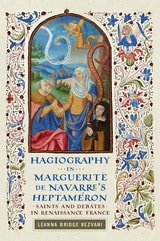
Hagiography in Marguerite de Navarre’s Heptaméron
Saints and Debates in Renaissance FranceLeanna Bridge Rezvani
University of Delaware Press, 2026
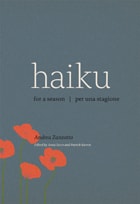
Haiku for a Season / Haiku per una stagione
Andrea Zanzotto
University of Chicago Press, 2012
Andrea Zanzotto is one of the most important and acclaimed poets of postwar Italy. This collection of ninety-one pseudo-haiku in English and Italian—written over several months during 1984 and then revised slowly over the years—confirms his commitment to experimentation throughout his life. Haiku for a Season represents a multilevel experiment for Zanzotto: first, to compose poetry bilingually; and second, to write in a form foreign to Western poetry. The volume traces the life of a woman from youth to adulthood, using the seasons and the varying landscape as a mirror to reflect her growth and changing attitudes and perceptions. With a lifelong interest in the intersections of nature and culture, Zanzotto displays here his usual precise and surprising sense of the living world. These never-before-published original poems in English appear alongside their Italian versions—not strict translations but parallel texts that can be read separately or in conjunction with the originals. As a sequence of interlinked poems, Haiku for a Season reveals Zanzotto also as a master poet of minimalism. Zanzotto’s recent death is a blow to world poetry, and the publication of this book, the last that he approved in manuscript, will be an event in both the United States and in Italy.
Half-Truths and One-and-a-Half Truths
Selected AphorismsKarl Kraus
University of Chicago Press, 1990
"Kraus is a superb aphorist."—D. J. Enright, New York Review of Books
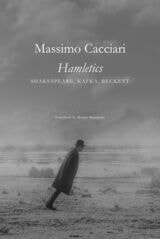
Hamletics
Shakespeare, Kafka, BeckettMassimo Cacciari
Seagull Books, 2023
During the dramatic course of the twentieth century, amid the clash of the titans which marked that era, humanity could still think in terms of partisan struggles in which large masses took sides against one another. The new millennium, by contrast, appears to have opened under the guise of generalized insecurity, which pertains not only to the historical and social situation, or to one’s personal psychological predicament, but to our very being. The Earth’s current faltering and the twilight of every convention that might govern it—where roles, images, and languages become confused by a lack of direction and distance—were already powerfully prophesied in Shakespeare’s Hamlet, and later in the works of Kafka and Beckett. In Hamletics, Massimo Cacciari, one of Italy’s foremost philosophers and leftist political figures, establishes a dialogue between these fateful authors, exploring the relationship between European nihilism and the aporias of action in the present.
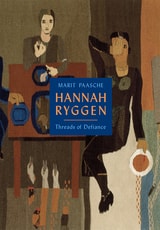
Hannah Ryggen
Threads of DefianceMarit Paasche
University of Chicago Press, 2019
A widely recognized authority on Ryggen, Marit Paasche brings this important Scandinavian artist to the foreground in this biography, the first published on Ryggen in English. Paasche looks at Ryggen within the social, political, and cultural contexts of her time and explores how these issues informed her work, from her anti-fascist tapestry that depicted a spear piercing Mussolini’s head to one protesting the war in Vietnam. Published to correspond with a major retrospective in Frankfurt, of which Paasche is one of the curators, Hannah Ryggen is a foundational book that will provide a crucial introduction of this artist to a broader audience.
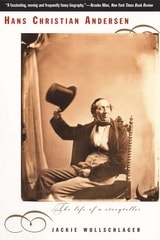
Hans Christian Andersen
The Life of a StorytellerJackie Wullschlager
University of Chicago Press, 2002
Drawing on letters, diaries, and other original sources (many never before translated from the Danish), Wullschlager shows in this compelling, extensively researched biography how Andersen's writings—darker and more diverse than previously recognized—reflected the complexities of his life, a far cry from the "happily ever after" of a fairy tale. As we follow in his footsteps from Golden Age Copenhagen to the princely courts of Germany and the villas of southern Italy, Andersen becomes a figure every bit as fascinating as a character from one of his stories—a gawky, self-pitying, and desperate man, but also one of the most gifted storytellers the world has ever known.
Haphazard Families
Romanticism, Nation, and the Prehistory of Modern AdoptionEric C. Walker
The Ohio State University Press, 2024
There are no provisions for adoption in English common law, and adoption wasn't legally formalized in England and Wales until 1926. But a century earlier, untimely adoptions navigated the new exceptionalism of childhood in Romanticism. In Haphazard Families, Eric C. Walker explores the history of the adopted child in Romantic-era England. Taking up the stories of both fictional and historical adoptees, he demonstrates how these children, diminished to nonpersons, shouldered the burden of social constructs of nation, family, gender, and class. Walker further demonstrates how Rousseau’s infamous failure to follow his own ideals of parenthood shaped British reactions in famous texts such as Frankenstein and Emma. Incorporating perspectives from Romantic scholarship and critical adoption studies and examining the stories of adopted children associated with Queen Caroline, Anna Letitia Barbauld, Jane Austen, the Wordsworth siblings, Mary Shelley, Charles and Mary Lamb, Letitia Landon, and others, Haphazard Families considers how Romantic constructions of childhood supply foundational structures of modern adoptee subjectivity.
Hard-Boiled Crime Fiction and the Decline of Moral Authority
Susanna Lee
The Ohio State University Press, 2016
Lee traces the history of the hard-boiled detective through the twentieth century and on both sides of the Atlantic (France and the United States), tying the idea of morality to the character model in nuanced, multifaceted ways. When the heroic model devolves, the very conceptual validity of individual moral authority can seem to devolve as well. Hard-Boiled Crime Fiction and the Decline of Moral Authority charts the evolution of that character model of the hard-boiled hero, the mid-century deterioration of his exemplarity, and twenty-first-century endeavors to resuscitate the accountable hero. The history of hard-boiled crime fiction tells nothing less than the story of individual autonomy and accountability in modern Western culture.
Harmful Eloquence
Ovid's Amores from Antiquity to ShakespeareM. L. Stapleton
University of Michigan Press, 1996
Harvest of Blossoms
Poems from a Life Cut ShortSelma Meerbaum-Eisinger
Northwestern University Press, 2008
Hawking Women
Falconry, Gender, and Control in Medieval Literary CultureSara Petrosillo
The Ohio State University Press, 2023
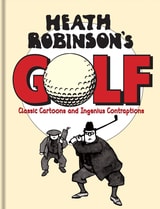
Heath Robinson's Golf
Classic Cartoons and Ingenious ContraptionsW. Heath Robinson
Bodleian Library Publishing, 2015
Heath Robinson’s Golf establishes Robinson as one of the great humorists of the “gentleman’s game.” From the origin of those peculiar shortened pants called “plus-fours” to the multiple meanings of an “awkward lie,” Robinson pokes fun at this popular sport. Among the cartoons in Golf are mechanisms like a machine for testing golf drivers or the “waterproof mashie” for keeping one’s clothes dry. And, while Robinson primarily focuses on the antics of a portly golfer and his long-suffering caddie, few will avoid the feeling that Robinson is at times speaking directly to them with contraptions like a putter fitted with a patented ball guide or a “movable bunker” to block an opponent’s progress down the fairway.
A side-splittingly funny collection from the man whose “absurd, beautiful drawings” H. G. Wells claimed “give me a peculiar pleasure of the mind like nothing else in the world,” this book make a perfect gift for anyone looking to have a laugh at our complicated and increasingly mechanical modern life.
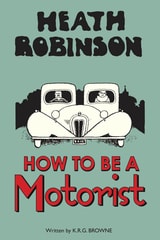
Heath Robinson
How to Be a MotoristW. Heath Robinson
Bodleian Library Publishing, 2015
For the car enthusiast, How to Be a Motorist offers a compendium of Robinson’s wonderfully inventive car-based contraptions, with innovations like a handy “zip-opening bonnet,” a rear wheel to turn the car around with one movement, and a fork attachment to help rural motorists to avoid the occasional chicken on the roadway. The days of unsolicited driving advice could be over with the realization of Robinson’s “duo car for the incompatible,” and the book also includes a parody of a production line demonstrating how cars are made.
A side-splittingly funny collection from the man whose “absurd, beautiful drawings” H. G. Wells claimed “give me a peculiar pleasure of the mind like nothing else in the world,” this book make a perfect gift for anyone looking to have a laugh at our complicated and increasingly mechanical modern life.
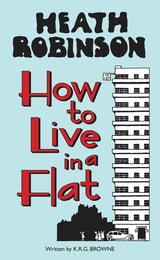
Heath Robinson
How to Live in a FlatW. Heath Robinson
Bodleian Library Publishing, 2015
How to Live in a Flat brings together a series of patently Robinsonesque space-saving solutions for city dwellers looking to make the most of modest square footage. Some of the solutions involve furniture made to serve multiple—and often opposing—purposes, like a combination bath-and-writing desk for businessmen. Others reimagine the workings of entire apartment complexes, including one cutaway explaining the use of the communal bath.
A side-splittingly funny collection from the man whose “absurd, beautiful drawings” H. G. Wells claimed “give me a peculiar pleasure of the mind like nothing else in the world,” this book make a perfect gift for anyone looking to have a laugh at our complicated and increasingly mechanical modern life.
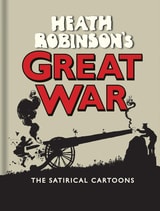
Heath Robinson’s Great War
The Satirical CartoonsW. Heath Robinson
Bodleian Library Publishing, 2015
With Heath Robinson’s Great War, the cartoonist lampoons the German army and the hardships of war. What better antidote to the threat of popular German propaganda than drawings of the “Huns” disabling the British army not with mustard gas but laughing gas? In high demand among British civilians, Robinson’s WWI panels also provided respite to thousands of troops—many of whom sent the cartoonist letters suggesting future subjects or simply expressing their appreciation.
A side-splittingly funny collection from the man whose “absurd, beautiful drawings” H. G. Wells claimed “give me a peculiar pleasure of the mind like nothing else in the world,” this book make a perfect gift for anyone looking to have a laugh at our complicated and increasingly mechanical modern life.
Hebrew and Hellene in Victorian England
Newman, Arnold, and PaterBy David DeLaura
University of Texas Press, 1969
Hebrew and Hellene explores the intellectual and personal relations among John Henry Newman, Matthew Arnold, and Walter Pater, three figures important in the development of nineteenth-century English thought and culture. Fundamentally concerned with the humanistic vision of Arnold and Pater, especially as they adapted the traditional religious culture to the needs of their generation, David DeLaura also recognizes Newman's central role. To a far greater degree than has been realized, Newman assumed a commanding position in the thought of the two younger men.
DeLaura seeks to define the mechanics of the process by which the conservative religious humanism of Newman could be exploited in the fluid, relativistic, and "aesthetic" humanism of Pater. The careers of Arnold and Pater are viewed as a continuing effort to reconcile the opposing forces of one of the central modern myths, the great cultural struggle between religious and secular values—Arnold's Hebraism and Hellenism.
DeLaura traces this important movement in nineteenth-century culture by studying the development of key phrases and ideas in the writings of the three men: the secularization of Newman's ideal of "inwardness" in Arnold's "criticism" and "culture" and in Pater's "impassioned contemplation"; the shared emphasis on an elite culture; the growing tendency to identify culture with the functions of traditional religion.
Newman, as the supreme apologist of both religious orthodoxy and the older Oxonian tradition, offered a rich arsenal to the defenders of a literary culture increasingly threatened by the utilitarian spirit (!nd by a rising scientific naturalism. Moreover, with the appearance of his Apologia in 1864, the "mystery" and the "miracle" of Newman's personality intrigued a new literary generation.
In Hebrew and Hellene DeLaura looks beyond the debates of the Late Victorians, the immediate inheritors of this legacy, to the continuing twentieth-century discussion of the nature of literature, its place in the humanizing process, and its role in a science-dominated civilization. He finds the problems faced by Pater, Arnold, and Newman—and some of their solutions—surprisingly relevant to unfinished contemporary debate.
Heimskringla
History of the Kings of NorwayBy Snorri Sturluson
University of Texas Press, 1964
Beginning with the dim prehistory of the mythical gods and their descendants, Heimskringla recounts the history of the kings of Norway through the reign of Olaf Haraldsson, who became Norway's patron saint. Once found in most homes and schools and still regarded as a national treasure, Heimskringla influenced the thinking and literary style of Scandinavia over several centuries.

Here There Was Once a Country
Vénus Khoury-Ghata
Oberlin College Press, 2001
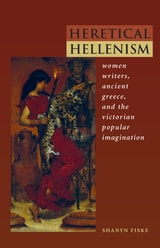
Heretical Hellenism
Women Writers, Ancient Greece, and the Victorian Popular ImaginationShanyn Fiske
Ohio University Press, 2008
The prevailing assumption regarding the Victorians’ relationship to ancient Greece is that Greek knowledge constituted an exclusive discourse within elite male domains. Heretical Hellenism: Women Writers, Ancient Greece, and the Victorian Popular Imagination challenges that theory and argues that while the information women received from popular sources was fragmentary and often fostered intellectual insecurities, it was precisely the ineffability of the Greek world refracted through popular sources and reconceived through new fields of study that appealed to women writers’ imaginations.
Examining underconsidered sources such as theater history and popular journals, Shanyn Fiske uncovers the many ways that women acquired knowledge of Greek literature, history, and philosophy without formal classical training. Through discussions of women writers such as Charlotte Brontë, George Eliot, and Jane Harrison, Heretical Hellenism demonstrates that women established the foundations of a heretical challenge to traditional humanist assumptions about the uniformity of classical knowledge and about women’s place in literary history.
Heretical Hellenism provides a historical rationale for a more expansive definition of classical knowledge and offers an interdisciplinary method for understanding the place of classics both in the nineteenth century and in our own time.
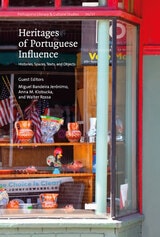
Heritages of Portuguese Influence
Histories, Spaces, Texts, and ObjectsGuest edited by Miguel Bandeira Jerónimo, Anna M. Klobucka, and Walter Rossa
Tagus Press, 2022

Heroic Knowledge
An Interpretation of Paradise Regained and Samson AgonistesArnold Stein
University of Minnesota Press, 1957
Heroic Knowledge was first published in 1957. Minnesota Archive Editions uses digital technology to make long-unavailable books once again accessible, and are published unaltered from the original University of Minnesota Press editions.
Professor Stein's critical work on Milton which was launched in his earlier book, Answerable Style: Essays on Paradise Lost, is completed in this volume. He devotes eight essays to Paradise Regained and five to Samson Agonistes. In addition, a preface explains his assumptions and a postscript connects and extends the implications of his work. The author's purpose and method are, perhaps, best described in his own words: "For the most part I have tried to demonstrate rather than to argue, and have (except in some notes) avoided engaging the established critical problems separately; but have instead trusted that a fresh critical interpretation of the poems would come to terms with the major problems while in motion, as part of a developing grasp of the integrated working of the poems."
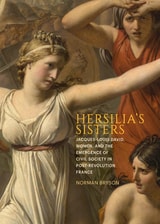
Hersilia's Sisters
Jacques-Louis David, Women, and the Emergence of Civil Society in Post-Revolution FranceNorman Bryson
J. Paul Getty Trust, The, 0
In 1799, when the French artist Jacques-Louis David (1748–1825) exhibited his Intervention of the Sabines, a history painting featuring the ancient heroine Hersilia, he added portraits of two contemporary women on either side of her—Henriette de Verninac, daughter of Charles-François Delacroix, minister of foreign affairs, and Juliette Récamier, a well-known and admired socialite. Drawing on many disciplines, Norman Bryson explains how such a combination of paintings could reveal the underlying nature of the Directoire, the period between the vicious and near-dictatorial Reign of Terror (1793–94) and the coup in 1799 that brought Napoleon to power.
Hersilia’s Sisters illuminates ways that cultural life and civil society were rebuilt during these years through an extraordinary efflorescence of women pioneers in every cultural domain—literature, the stage, opera, moral philosophy, political theory, painting, popular journalism, and fashion. Through a close examination of David’s work between The Intervention of the Sabines (begun in 1796) and Bonaparte Crossing the Alps (begun in 1800), Bryson explores how the flowering of women’s culture under the Directoire became a decisive influence on David’s art. With more than 150 illustrations, this book provides new and brilliant insight into this period that will captivate readers.
Hey Presto!
Swift and the QuacksHugh Ormsby-Lennon
University of Delaware Press, 2011
Published by University of Delaware Press. Distributed worldwide by Rutgers University Press.
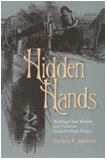
Hidden Hands
Working-Class Women and Victorian Social-Problem FictionPatricia E. Johnson
Ohio University Press, 2001
Tracing the Victorian crisis over the representation of working-class women to the 1842 Parliamentary bluebook on mines, with its controversial images of women at work, Hidden Hands argues that the female industrial worker became even more dangerous to represent than the prostitute or the male radical because she exposed crucial contradictions between the class and gender ideologies of the period and its economic realities.
Drawing on the recent work of feminist historians, Patricia Johnson lays the groundwork for a reinterpretation of Victorian social-problem fiction that highlights its treatment of issues that particularly affected working-class women: sexual harassment; the interconnections between domestic ideology and domestic violence; their relationships to male-dominated working-class movements such as Luddism, Chartism, and unionism; and their troubled connection to middle-class feminism.
Uncovering a series of images in Victorian fiction ranging from hot-tempered servants and sexually harassed factory girls to working-class homemakers pictured as beaten dogs, Hidden Hands demonstrates that representations of working-class women, however marginalized or incoherent, reveal the very contradictions they are constructed to hide and that the dynamics of these representations have broad implications both for other groups, such as middle-class women, and for the emergence of working-class women as writers themselves.
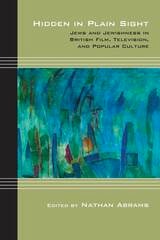
Hidden in Plain Sight
Jews and Jewishness in British Film, Television, and Popular CultureEdited by Nathan Abrams
Northwestern University Press, 2016
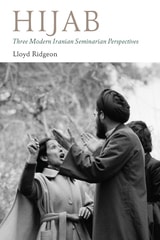
Hijab
Three Modern Iranian Seminarian PerspectivesLloyd Ridgeon
Gingko, 2021
Ḥijāb addresses the differences of opinion among seminarians on the hijab in the Islamic Republic of Iran, focusing on three representative thinkers: Murtaza Mutahhari who held veiling to be compulsory, Ahmad Qabil who argued for the desirability of the hijab, and Muhsin Kadivar who considers it neither necessary nor desirable. In the first chapter, the views of these three scholars are contextualized within the framework known as ‘new religious thinking’ among the seminarians. Comprehending the hermeneutics of this new religious thinking is key to appreciating how and why the younger generation of scholars have offered divergent judgements about the hijab. Following the first chapter, the book is divided into three parallel sections, each devoted to one of the three seminarians. These present a chronological approach, and each scholar’s position on the hijab is assessed with reference to historical specificity and their own general jurisprudential perspective. Extensive examples of the writings of the three scholars on the hijab are also provided.
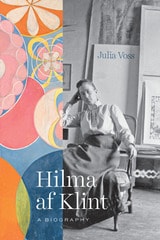
Hilma af Klint
A BiographyJulia Voss
University of Chicago Press, 2022
The Swedish painter Hilma af Klint (1862–1944) was forty-four years old when she broke with the academic tradition in which she had been trained to produce a body of radical, abstract works the likes of which had never been seen before. Today, it is widely accepted that af Klint was one of the earliest abstract academic painters in Europe.
But this is only part of her story. Not only was she a working female artist, she was also an avowed clairvoyant and mystic. Like many of the artists at the turn of the twentieth century who developed some version of abstract painting, af Klint studied Theosophy, which holds that science, art, and religion are all reflections of an underlying life-form that can be harnessed through meditation, study, and experimentation. Well before Kandinsky, Mondrian, and Malevich declared themselves the inventors of abstraction, af Klint was working in a nonrepresentational mode, producing a powerful visual language that continues to speak to audiences today. The exhibition of her work in 2018 at the Guggenheim Museum in New York City attracted more than 600,000 visitors, making it the most-attended show in the history of the institution.
Despite her enormous popularity, there has not yet been a biography of af Klint—until now. Inspired by her first encounter with the artist’s work in 2008, Julia Voss set out to learn Swedish and research af Klint’s life—not only who the artist was but what drove and inspired her. The result is a fascinating biography of an artist who is as great as she is enigmatic.
His Current Woman
Jerzy Pilch
Northwestern University Press, 2002
Hispanic Baroques
Reading Cultures in ContextNicholas Spadaccini
Vanderbilt University Press, 2005
Historicizing the Enlightenment, Volume 2
Literature, the Arts, and the Aesthetic in BritainMichael McKeon
Bucknell University Press, 2023
Published by Bucknell University Press. Distributed worldwide by Rutgers University Press.
History and Poetics in the Early Writings of William Morris, 1855–1870
Florence S. Boos
The Ohio State University Press, 2015
Boos’s study is the first to utilize surviving original manuscripts, periodical publications, and poems unpublished during Morris’s lifetime. History and Poetics in the Early Writings of William Morris, 1855–1870traces Morris’s literary evolution through his juvenile poems; the essays, poems, and prose romances of the Oxford and CambridgeMagazine; the startlingly original verses of The Defence of Guenevere; and the ten years of experimentation that preceded his two best-known epics, The Life and Deathof Jason and The Earthly Paradise. This book explores the young poet’s successive efforts to find a balancing ethical framework through poetry—a framework that was at once a motivation for action and a template for authentic, shared popular art, one that reemerges forcefully in his later work.
History as a Kind of Writing
Textual Strategies in Contemporary French HistoriographyPhilippe Carrard
University of Chicago Press, 2017
Carrard’s work here is expansive—examining the conventions historians draw on to produce their texts and casting light on views put forward by literary theorists, theorists of history, and historians themselves. Ranging from discussions of lengthy dissertations on 1960s social and economic history to a more contemporary focus on events, actors, memory, and culture, the book digs deep into the how of history. How do historians arrange their data into narratives? What strategies do they employ to justify the validity of their descriptions? Are actors given their own voice? Along the way, Carrard also readdresses questions fundamental to the field, including its necessary membership in the narrative genre, the presumed objectivity of historiographic writing, and the place of history as a science, distinct from the natural and theoretical sciences.
History in My Life
A Memoir of Three ErasIvan T. Berend is Distinguished Research Professor at the History Department of the University of California Los Angeles.
Central European University Press, 2009
Ivan T. Berend is Distinguished Professor at the University of California Los Angeles, Director of the European Studies Program. He was one of the masterminds of regime change in Hungary. He made a career in Hungary as a university professor, Rector of the University of Economics (1973–79), and President of the Hungarian Academy of Sciences (1985–90). He was President of the International Committee of Historical Sciences (1995–2000), and Vice-President of the International Economic History Association (1986–1994). His research interests are the complex economic, social, ideological, and cultural history of Central and Eastern Europe in the 19th–20th century; economic modernization; problems of European backwardness; transition from state socialism to capitalism. He published and 26 books and more than 120 studies.
Before he became a professor at UCLA, Ivan Berend had survived five regime changes and two revolutions in Hungary, had been in prison and German concentration camp in 1944–45.
His memoir offers an interesting case study, a subjective addition to the “objective” historical works on Central and Eastern European state socialism. It describes the hard choices of intellectuals in a dictatorial state: 1. remain in isolation, concentrate on scholarly works, and exclude politics in your personal life; 2. be in opposition, criticize and unveil the regime, accept discrimination and exclusion; 3. remain within the establishment and work for reforming the country using legal possibilities to criticize the regime and to achieve changes from within.
Berend’s book raises basic historical questions and debates, compares East European and American higher education systems, and presents an eyewitness’ insights on life in the United States.
Histrionics
Three PlaysThomas Bernhard
University of Chicago Press, 1990
Hogarth’s Literary Relationships
Robert Etheridge Moore
University of Minnesota Press, 1948
Hogarth's Literary Relationships was first published in 1948. Minnesota Archive Editions uses digital technology to make long-unavailable books once again accessible, and are published unaltered from the original University of Minnesota Press editions.
Hogarth's narrative drawings—A Harlot's Progress, A Rake's Progress, Marriage a la Mode — have long been the delight of devotees of the eighteenth century. Although the relationship between Hogarth and the writers of the period has not passed unnoticed, it has never been analyzed in detail before.
In this engaging book Mr. Moore points out specific instances of the "manifest obligations" owed by Fielding and Smollett (and several minor contemporary novelists and dramatists) to Hogarth. He amply proves his two theses: that Hogarth was a fountain of literary inspiration and that appreciation of the artist as a satirist is essential to an understanding of eighteenth-century literature.
From the beginning of his career Hogarth was constantly imitated and plagiarized, and the illustrations in this volume include some of the more famous plagiaries. Hogarth's own work is too little known to present generation—no complete collection has been available for some hundred years — and the drawings reproduced in this book add greatly to its value.

Holistic Shakespeare
An Experiential Learning ApproachDebra Charlton
Intellect Books, 2012
Holy Week
A Novel of the Warsaw Ghetto UprisingJerzy Andrzejewski
Ohio University Press, 2006
At the height of the Nazi extermination campaign in the Warsaw Ghetto, a young Jewish woman, Irena, seeks the protection of her former lover, a young architect, Jan Malecki. By taking her in, he puts his own life and the safety of his family at risk. Over a four-day period, Tuesday through Friday of Holy Week 1943, as Irena becomes increasingly traumatized by her situation, Malecki questions his decision to shelter Irena in the apartment where Malecki, his pregnant wife, and his younger brother reside. Added to his dilemma is the broader context of Poles’ attitudes toward the “Jewish question” and the plight of the Jews locked in the ghetto during the final moments of its existence.
Few fictional works dealing with the war have been written so close in time to the events that inspired them. No other Polish novel treats the range of Polish attitudes toward the Jews with such unflinching honesty.
Jerzy Andrzejewski’s Holy Week (Wielki Tydzien, 1945), one of the significant literary works to be published immediately following the Second World War, now appears in English for the first time.
This translation of Andrzejewski’s Holy Week began as a group project in an advanced Polish language course at the University of Pittsburgh. Class members Daniel M. Pennell, Anna M. Poukish, and Matthew J. Russin contributed to the translation; the instructor, Oscar E. Swan, was responsible for the overall accuracy and stylistic unity of the translation as well as for the biographical and critical notes and essays.
Home Bodies
Tactile Experience in Domestic SpaceJames Krasner
The Ohio State University Press, 2010
Home Economics
Domestic Fraud in Victorian EnglandRebecca Stern
The Ohio State University Press, 2008
In Home Economics: Domestic Fraud in Victorian England, Rebecca Stern establishes fraud as a basic component of the Victorian popular imagination, key to its intimate, as well as corporate, systems of exchange. Although Victorian England is famous for revering the domestic realm as a sphere separate from the market and its concerns, actual households were hardly isolated havens of fiscal safety and innocence. Rather, the Victorian home was inevitably a marketplace, a site of purchase, exchange, and employment in which men and women hired or worked as servants, contracted marriages, managed children, and obtained furniture, clothing, food, and labor. Alongside the multiplication of joint-stock corporations and the rise of a credit-based economy, which dramatically increased fraud in the Victorian money market, the threat of swindling affected both actual household commerce and popular conceptions of ostensibly private, more emotive forms of exchange. Working with diverse primary material, including literature, legal cases, newspaper columns, illustrations, ballads, and pamphlets, Stern argues that the climate of fraud permeated Victorian popular ideologies about social transactions. Beyond providing a history of cases and categories of domestic deceit, Home Economics illustrates the diverse means by which Victorian culture engaged with, refuted, celebrated, represented, and consumed swindling in familial and other household relationships.
Home and Harem
Nation, Gender, Empire and the Cultures of TravelInderpal Grewal
Duke University Press, 1996
In her look at England, Grewal draws on nineteenth-century aesthetics, landscape art, and debates about women’s suffrage and working-class education to show how all social classes, not only the privileged, were educated and influenced by imperialist travel narratives. By examining diverse forms of Indian travel to the West and its colonies and focusing on forms of modernity offered by colonial notions of travel, she explores how Indian men and women adopted and appropriated aspects of European travel discourse, particularly the set of oppositions between self and other, East and West, home and abroad.
Rather than being simply comparative, Home and Harem is a transnational cultural study of the interaction of ideas between two cultures. Addressing theoretical and methodological developments across a wide range of fields, this highly interdisciplinary work will interest scholars in the fields of postcolonial and cultural studies, feminist studies, English literature, South Asian studies, and comparative literature.
Homer's Text and Language
Gregory Nagy
University of Illinois Press, 2004
In Homeric studies, there has been an ongoing debate centering on different ways to establish the text of Homer and the different ways to appreciate the poetry created in the language of Homer. Gregory Nagy, a lifelong Homer scholar, takes a stand in the midst of this debate. He presents an overview of millennia of scholarly engagement with Homer's poetry, shows the different editorial principles that have been applied to the texts, and evaluates their impact.
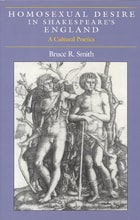
Homosexual Desire in Shakespeare's England
A Cultural PoeticsBruce R. Smith
University of Chicago Press, 1994
"The best single analysis of the homoerotic element in Renaissance English literature."—Keith Thomas, New York Review of Books
"Smith's lucid and subtle book offer[s] a poetics of homosexual desire. . . . Its scholarship, impressively broad and deftly deployed, aims to further a serious social purpose: the redemptive location of homosexual desire in history and the recuperation for our own time, through an understanding of its discursive embodiments, of that desire's changing imperatives and parameters."—Terence Hawkes, Times Literary Supplement
"The great strength of Bruce Smith's book is that it does not sidestep the complex challenge of engaging in the sexual politics of the present while attending to the resistant discourses and practices of Renaissance England. Homosexual Desire in Shakespeare's England demonstrates how a commitment to the present opens up our understanding of the past."—Peter Stallybrass, Shakespeare Quarterly
"A major contribution to the understanding of homosexuality in Renaissance England and by far the best and most comprehensive account yet offered of the homoeroticism that suffuses Renaissance literature."—Claude J. Summers, Journal of Homosexuality
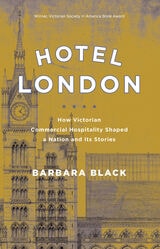
Hotel London
How Victorian Commercial Hospitality Shaped a Nation and Its StoriesBarbara Black
The Ohio State University Press, 2019
Incorporating the works of Oscar Wilde, Henry James, Wilkie Collins, Arnold Bennett, Florence Marryat, and Marie Belloc Lowndes, as well as contemporary depictions of the hotels in Mad Men,American Horror Story, and The Grand Budapest Hotel, Black examines how the hotel supported a corporate identity that would ultimately assist in the rise of modern capitalist structures and the middle class. In this way, Hotel London exposes the aggravations of class stratifications through the operations of status inside hotel life, giving a unique perspective on Victorian London that could only come from the stories of a hotel.
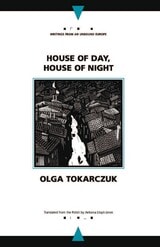
House of Day, House of Night
Olga Tokarczuk
Northwestern University Press, 2003
Winner of the Gunter Grass Prize
Nowa Ruda is a small town in Silesia, an area that has been a part of Poland, Germany, and the former Czechoslovakia in the past. When the narrator moves into the area, she and discovers everyone-and everything-has its own story. With the help of Marta, her enigmatic neighbor, the narrator accumulates these stories, tracing the history of Nowa Ruda from the founding of the town to the lives of its saints, from the caller who wins the radio quiz every day to the tale of the man who causes international tension when he dies on the border, one leg on the Polish side, the other on the Czech side. Each of the stories represents a brick and they interlock to reveal the immense monument that is the town. What emerges is the message that the history of any place--no matter how humble--is limitless, that by describing or digging at the roots of a life, a house, or a neighborhood, one can see all the connections, not only with one's self and one's dreams but also with all of the universe.
Richly imagined, weaving in anecdote with recipes and gossip, Tokarczuk's novel is an epic of a small place. Since its original publication in 1998 it has remained a bestseller in Poland. House of Day, House of Night is the English-language debut of one of Europe's best young writers.

How Corrupt Is Britain?
Edited by David Whyte
Pluto Press, 2015
David Whyte brings together a wide range of leading commentators and campaigners, offering a series of troubling answers. Unflinchingly facing the corruption in British public life, they show that it is no longer tenable to assume that corruption is something that happens elsewhere; corrupt practices are revealed across a wide range of venerated institutions, from local government to big business. These powerful, punchy essays aim to shine a light on the corruption fundamentally embedded in UK politics, police, and finance.
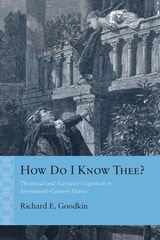
How Do I Know Thee?
Theatrical and Narrative Cognition in Seventeenth-Century FranceRichard E. Goodkin
Northwestern University Press, 2015
The classical period in France presents a particularly lively battleground for the transition between oral-visual culture, on the one hand, and print culture on the other. The former depended on learning from sources of knowledge directly, in their presence, in a manner analogous to theatrical experience. The latter became characterized by the distance and abstraction of reading. How Do I Know Thee? explores the ways in which literature, philosophy, and psychology approach social cognition, or how we come to know others. Richard E. Goodkin describes a central opposition between what he calls “theatrical cognition” and “narrative cognition,” drawing both on scholarship on literary genre and mode, and also on the work of a number of philosophers and psychologists, in particular Descartes’s theory of cognition, Freudian psychoanalysis, mid‑twentieth‑century behaviorism, and the field of cognitive science. The result is a study that will be of interest not only to students of the classical period but also to those in the corresponding disciplines.
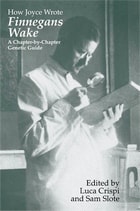
How Joyce Wrote Finnegans Wake
A Chapter-by-Chapter Genetic GuideEdited by Luca Crispi and Sarn Slote
University of Wisconsin Press, 2008
The introduction by Luca Crispi, Sam Slote, and Dirk Van Hulle offers a chronology of the composition of Finnegans Wake, an archival survey of the manuscripts, and an introduction to genetic criticism. Then, the volume provides a chapter-by-chapter interpretation of Finnegans Wake from a variety of perspectives, probing the book as a work in progress. The fruit of more than two decades’ worth of Wakean genetic studies, this book is the essential starting point for all future studies of Joyce’s most complex and fascinating work.