Results by title
81 books match the query 'Handbook' and 42 start with h

Handbook Of Academic Writing For Librarians
Assoc of College & Research Libraries, 2013
Handbook of Academic Writing for Librarians
Christopher Hollister
Assoc of College & Research Libraries, 2014
This primary reference tool for the library and information science (LIS) community supports those who either desire or are required to publish in the professional literature. LIS students at the masters and doctoral levels can also benefit from this comprehensive volume.
Handbook of Academic Writing for Librarians - Revised Edition
Christopher V. Hollister
Assoc of College & Research Libraries, 2014

Handbook of Antenna Design, Volume 1
A.W. Rudge
The Institution of Engineering and Technology, 1982
- Authored by a multi-national group of antenna experts of international standing.
- Presents the principles and applications of antenna design, with emphasis upon key developments in the last 15 years.
- Fundamental background theory and analytical techniques explained in detail where appropriate.
- Includes extensive design data and numerous examples of practical application.
- Deals with a very wide range of antenna types, operating from very low frequencies to millimetre waves.
- New measurement techniques described in detail.
- Covers associated topics such as radomes, array signal processing and coaxial components.
- Includes design data for antennas for satellite and terrestrial communications, radar, mobile communications and broadcasting.
Handbook of Antenna Design, Volume 2
A.W. Rudge
The Institution of Engineering and Technology, 1983
- Authored by a multi-national group of antenna experts of international standing.
- Presents the principles and applications of antenna design, with emphasis upon key developments in the last 15 years.
- Fundamental background theory and analytical techniques explained in detail where appropriate.
- Includes extensive design data and numerous examples of practical application.
- Deals with a very wide range of antenna types, operating from very low frequencies to millimetre waves.
- New measurement techniques described in detail.
- Covers associated topics such as radomes, array signal processing and coaxial components.
- Includes design data for antennas for satellite and terrestrial communications, radar, mobile communications and broadcasting.

Handbook of Big Data Analytics
Applications in ICT, security and business analytics, Volume 2Vadlamani Ravi
The Institution of Engineering and Technology, 2021

Handbook of Big Data Analytics
Methodologies, Volume 1Vadlamani Ravi
The Institution of Engineering and Technology, 2021

Handbook of Catholic Social Teaching
A Guide for Christians in the World TodayMartin Schlag
Catholic University of America Press, 2017
Handbook of Cybersecurity for e-Health
Bill Buchanan
The Institution of Engineering and Technology, 2026
Handbook of Engaged Scholarship
Contemporary Landscapes, Future Directions: Volume 1: Institutional ChangeHiram E. Fitzgerald
Michigan State University Press, 2010
In the preface to the Handbook of Engaged Scholarship, Hiram Fitzgerald observes that the Kellogg Commission's challenge to higher education to engage with communities was a significant catalyst for action. At Michigan State University, the response was the development of "engaged scholarship," a distinctive, scholarly approach to campus-community partnerships.
Engaged scholars recognize that community based scholarship is founded on an underpinning of mutual respect and recognition that community knowledge is valid and that sustainability is an integral part of the partnership agenda.
In this two-volume collection, contributors capture the rich diversity of institutions and partnerships that characterize the contemporary landscape and the future of engaged scholarship. Volume One addresses such issues as the application of engaged scholarship across types of colleges and universities and the current state of the movement. Volume Two contains essays on such topics as current typologies, measuring effectiveness and accreditation, community-campus partnership development, national organizational models, and the future landscape.

Handbook of Engaged Scholarship
Contemporary Landscapes, Future Directions: Volume 2: Community-Campus PartnershipsHiram E. Fitzgerald
Michigan State University Press, 2010
In the preface to the Handbook of Engaged Scholarship, Hiram Fitzgerald observes that the Kellogg Commission's challenge to higher education to engage with communities was a significant catalyst for action. At Michigan State University, the response was the development of "engaged scholarship," a distinctive, scholarly approach to campus-community partnerships.
Engaged scholars recognize that community based scholarship is founded on an underpinning of mutual respect and recognition that community knowledge is valid and that sustainability is an integral part of the partnership agenda.
In this two-volume collection, contributors capture the rich diversity of institutions and partnerships that characterize the contemporary landscape and the future of engaged scholarship. Volume One addresses such issues as the application of engaged scholarship across types of colleges and universities and the current state of the movement. Volume Two contains essays on such topics as current typologies, measuring effectiveness and accreditation, community-campus partnership development, national organizational models, and the future landscape.

Handbook of French Semantics
Edited by Francis Corblin and Henriëtte de Swart
CSLI, 2003

Handbook of Latin American Studies, Vol. 73
Social SciencesKatherine D. McCann, Humanities Editor; Tracy North, Social Sciences Editor
University of Texas Press, 2019
"The one source that sets reference collections on Latin American studies apart from all other geographic areas of the world. . . . The Handbook has provided scholars interested in Latin America with a bibliographical source of a quality unavailable to scholars in most other branches of area studies." —Latin American Research Review
Beginning with Number 41 (1979), the University of Texas Press became the publisher of the most comprehensive annual bibliography in the field. Compiled by the Hispanic Division of the Library of Congress and annotated by a corps of more than 140 specialists in various disciplines, the Handbook alternates from year to year between social sciences and humanities.
The Handbook annotates works on Mexico, Central America, the Caribbean and the Guianas, Spanish South America, and Brazil, as well as materials covering Latin America as a whole. Most of the subsections are preceded by introductory essays that serve as biannual evaluations of the literature and research under way in specialized areas.
Handbook of Latin American Studies, Vol. 75
Social SciencesKatherine D. McCann
University of Texas Press, 2021
Beginning with Number 41 (1979), the University of Texas Press became the publisher of the most comprehensive annual bibliography in the field. Compiled by the Hispanic Division of the Library of Congress and annotated by a corps of more than 140 specialists in various disciplines, the Handbook alternates from year to year between social sciences and humanities.
The Handbook annotates works on Mexico, Central America, the Caribbean and the Guianas, Spanish South America, and Brazil, as well as materials covering Latin America as a whole. Most of the subsections are preceded by introductory essays that serve as biannual evaluations of the literature and research under way in specialized areas.

Handbook of Latin American Studies, Vol. 76
HumanitiesKatherine D. McCann, Volume Editor
University of Texas Press, 2023
Beginning with Number 41 (1979), the University of Texas Press became the publisher of the Handbook of Latin American Studies, the most comprehensive annual bibliography in the field. Compiled by the Hispanic Division of the Library of Congress and annotated by a corps of specialists in various disciplines, the Handbook alternates from year to year between social sciences and humanities.
The Handbook annotates works on Mexico, Central America, the Caribbean and the Guianas, Spanish South America, and Brazil, as well as materials covering Latin America as a whole. Most of the subsections are preceded by introductory essays that serve as biannual evaluations of the literature and research underway in specialized areas.

Handbook of Latin American Studies, Vol. 77
Social SciencesKatherine D. McCann
University of Texas Press, 2024
The Handbook annotates works on Mexico, Central America, the Caribbean and the Guianas, Spanish South America, and Brazil, as well as materials covering Latin America as a whole. Most of the subsections are preceded by introductory essays that serve as biannual evaluations of the literature and research underway in specialized areas. Subject categories for the Social Sciences editions include anthropology; geography; government and politics; international relations; political economy; and sociology.

Handbook of Mathematical Models for Languages and Computation
Alexander Meduna
The Institution of Engineering and Technology, 2020

Handbook of Mechanical Wear
Wear, Frettage, Pitting, Cavitation, CorrosionEdited by Charles Lipson and L.V. Colwell
University of Michigan Press, 1961

Handbook of Medical Sociology, Sixth Edition
Chloe E. Bird
Vanderbilt University Press, 2010
• social networks, neighborhoods, and social capital
• disability
• dying and "the right to die"
• health disparities
• the growing influence of the pharmaceutical industry
• the Internet
• evidence-based medicine and quality of care
• health social movements
• genetics
• religion, spirituality, and health
Handbook of Microstrip Antennas, Volume 1
J.R. James
The Institution of Engineering and Technology, 1989
Handbook of Microstrip Antennas, Volume 2
J.R. James
The Institution of Engineering and Technology, 1989
Handbook of Middle American Indians, Volume 12
Guide to Ethnohistorical Sources, Part OneRobert Wauchope, series editor; Howard F. Cline, volume editor
University of Texas Press, 1972
Guide to Ethnohistorical Sources comprises Volumes 12 through 15 of the Handbook of Middle American Indians, published in cooperation with the Middle American Research Institute of Tulane University under the general editorship of Robert Wauchope (1909–1979). The Guide has been assembled under the volume editorship of the late Howard F. Cline, Director of the Hispanic Foundation in the Library of Congress, with Charles Gibson, John B. Glass, and H. B. Nicholson as associate volume editors. It covers geography and ethnogeography, especially the Relaciones Geográficas (Volume 12); sources in the European tradition: printed collections, secular and religious chroniclers, biobibliographies (Volume 13); sources in the native tradition: prose and pictorial materials, checklist of repositories, title and synonymy index, and annotated bibliography on native sources (Volumes 14 and 15).
Volume 12, which is Part One of the Guide, contains the following: “Introduction: Reflections on Ethnohistory,” “Introductory Notes on Territorial Divisions of Middle America,” “Viceroyalty to Republics, 1786–1952: Historical Notes on the Evolution of Middle American Political Units,” “Ethnohistorical Regions of Middle America,” “The Relaciones Geográficas of the Spanish Indies, 1577–1648,” “A Census of the Relaciones Geográficas of New Spain, 1579–1616,” and “The Relaciones Geográficas of Spain, New Spain, and the Spanish Indies: An Annotated Bibliography,” all the foregoing by Howard F. Cline. In addition it includes: “Colonial New Spain, 1519–1786: Historical Notes on the Evolution of Minor Political Jurisdictions” by Peter Gerhard; “The Pinturas (Maps) of the Relaciones Geográficas, with a Catalog” by Donald Robertson; “The Relaciones Geográficas, 1579–1586: Native Languages” by H. R. Harvey; and “The Relaciones Geográficas of Mexico and Central America, 1740–1792” by Robert C. West.
The Handbook of Middle American Indians was assembled and edited at the Middle American Research Institute of Tulane University with the assistance of grants from the National Science Foundation and under the sponsorship of the National Research Council Committee on Latin American Anthropology.
Handbook of Middle American Indians, Volume 13
Guide to Ethnohistorical Sources, Part TwoRobert Wauchope, series editor; Howard F. Cline, volume editor,; John B. Glass, assoc vol. ed.
University of Texas Press, 1973
Volume 13 of the Handbook of Middle American Indians, published in cooperation with the Middle American Research Institute of Tulane University under the general editorship of Robert Wauchope (1909–1979), constitutes Part 2 of the Guide to Ethnohistorical Sources. The Guide has been assembled under the volume editorship of the late Howard F. Cline, Director of the Hispanic Foundation in the Library of Congress, with Charles Gibson, John B. Glass, and H. B. Nicholson as associate volume editors. It covers geography and ethnogeography (Volume 12); sources in the European tradition (Volume 13); and sources in the native tradition (Volumes 14 and 15).
The present volume contains the following studies on sources in the European tradition:
- “Published Collections of Documents Relating
- to Middle American Ethnohistory,” by Charles Gibson
- “An Introductory Survey of Secular Writings in the European Tradition on Colonial Middle America, 1503–1818,” by J. Benedict Warren
- “Religious Chroniclers and Historians: A Summary with Annotated Bibliography,” by Ernest J.
- Burrus, S.J.
- “Bernardino de Sahagún,” by Luis Nicolau d’Olwer, Howard F. Cline, and H. B. Nicholson
- “Antonio de Herrera,” by Manuel Ballesteros Gaibrois
- “Juan de Torquemada,” by José Alcina Franch
- “Francisco Javier Clavigero,” by Charles E. Ronan, S.J.
- “Charles Etienne Brasseur de Bourbourg,” by Carroll Edward Mace
- “Hubert Howe Bancroft,” by Howard F. Cline
- “Eduard Georg Seler,” by H. B. Nicholson
- “Selected
The Handbook of Middle American Indians was assembled and edited at the Middle American Research Institute of Tulane University with the assistance of grants from the National Science Foundation and under the sponsorship of the National Research Council Committee on Latin American Anthropology.
Handbook of Middle American Indians, Volume 16
Sources Cited and Artifacts IllustratedRobert Wauchope, series editor; Margaret A.L. Harrison, volume editor
University of Texas Press, 1976
The publication of Volume 16 of this distinguished series brings to a close one of the largest research and documentation projects ever undertaken on the Middle American Indians.
Since the publication of Volume 1 in 1964, the Handbook of Middle American Indians has provided the most complete information on every aspect of indigenous culture, including natural environment, archaeology, linguistics, social anthropology, physical anthropology, ethnology, and ethnohistory.
Culminating this massive project is Volume 16, divided into two parts. Part I, Sources Cited, by Margaret A. L. Harrison, is a listing in alphabetical order of all the bibliographical entries cited in Volumes 1-11. (Volumes 12-15, comprising the Guide to Ethnohistorical Sources, have not been included, because they stand apart in subject matter and contain or constitute independent bibliographical material.) Part II, Location of Artifacts Illustrated, by Marjorie S. Zengel, details the location (at the time of original publication) of the owner of each pre-Columbian American artifact illustrated in Volumes 1-11 of the Handbook, as well as the size and the catalog, accession, and/or inventory number that the owner assigns to the object. The two parts of Volume 16 provide a convenient and useful reference to material found in the earlier volumes.
The Handbook of Middle American Indians was assembled and edited at the Middle American Research Institute of Tulane University with the assistance of grants from the National Science Foundation and under the sponsorship of the National Research Council Committee on Latin American Anthropology.
Handbook of Middle American Indians, Volume 1
Natural Environment and Early CulturesRobert Wauchope, series editor; Robert C. West, volume editor
University of Texas Press, 1964
This is the first volume of the monumental Handbook of Middle American Indians, a definitive encyclopaedia of the environment, archaeology, ethnology, social anthropology, ethnohistory, linguistics, and physical anthropology of the native peoples of Mexico and Central America. The Handbook was published in cooperation with the Middle American Research Institute of Tulane University under the general editorship of Robert Wauchope (1909–1979). This volume of the Handbook was edited by Dr. Robert C. West (1913–2001), Boyd Professor of Geography at Louisiana State University, an outstanding authority on Latin America. He was formerly cultural geographer for the Smithsonian Institution.
Included in this first volume are chapters written by leading authorities in various fields of the natural and social sciences that are concerned with the natural environment of Middle America, its role in the shaping of Indian cultures, the earliest primitive hunters of this area, the beginnings of agriculture, and the broad patterns of prehistoric civilizations there.
There are articles on the geohistory and paleogeography of Middle America, its surface configuration and associated geology, hydrography, the American Mediterranean, oceanography and marine life along the Pacific coast, weather and climate, natural vegetation, the soils and their relation to the Indian peoples and cultures, fauna , the natural regions of Middle America, the primitive hunters, the food-gathering and incipient agricultural stage of prehistoric Middle America, origins of agriculture there, and the patterns of farming life and civilization.
The Handbook of Middle American Indians was assembled and edited at the Middle American Research Institute of Tulane University with the assistance of grants from the National Science Foundation and under the sponsorship of the National Research Council Committee on Latin American Anthropology.
Handbook of Middle American Indians, Volume 4
Archaeological Frontiers and External ConnectionsRobert Wauchope, series editor; Gordon F. Ekholm and Gordon R. Willey, volume editors
University of Texas Press, 1966
Archaeological Frontiers and External Connections is the fourth volume in the Handbook of Middle American Indians, published in cooperation with the Middle American Research Institute of Tulane University under the general editorship of Robert Wauchope (1909–1979). Volume editors are Gordon R. Willey (1913–2002), Bowditch Professor of Mexican and Central American Archaeology and Ethnology at Harvard University, and Gordon F. Ekholm (1909–1987), Associate Curator of Mexican Archaeology of the American Museum of Natural History in New York.
This volume presents an intensive study of matters of significance in various areas: archaeology and ethnohistory of the Northern Sierra, Sonora, Lower California, and northeastern Mexico; external relations between Mesoamerica and the southwestern United States and eastern United States; archaeology and ethnohistory of El Salvador, western Honduras, and lower Central America; external relations between Mesoamerica and the Caribbean area, Ecuador, and the Andes; and the case for and against Old World pre-Columbian contacts via the Pacific. Many photographs accompany the text.
The Handbook of Middle American Indians was assembled and edited at the Middle American Research Institute of Tulane University with the assistance of grants from the National Science Foundation and under the sponsorship of the National Research Council Committee on Latin American Anthropology.
Handbook of Middle American Indians, Volume 5
LinguisticsRobert Wauchope, series editor; Norman A. McQuown, volume editor
University of Texas Press, 1967
This volume, the fifth in the Handbook of Middle American Indians, presents a summary of work accomplished since the Spanish conquest in the contemporary description and historical reconstruction of the indigenous languages and language families of Mexico and Central America.
The essays include the following: “Inventory of Descriptive Materials” by William Bright; “Inventory of Classificatory Materials” by Maria Teresa Fernández de Miranda, “Lexicostatistic Classification” by Morris Swadesh, “Systemic Comparison and Reconstruction” by Robert Longacre, and “Environmental Correlational Studies” by Sarah C. Gudschinsky.
Sketches of Classical Nahuatl by Stanley Newman, Classical Yucatec Maya by Norman A. McQuown, and Classical Quiché by Munro S. Edmonson provide working tools for tackling the voluminous early postconquest texts in these languages of late preconquest empires (Aztec, Maya, Quiché). Further sketches of Sierra Popoluca by Benjamin F. Elson, of Isthmus Zapotec by Velma B. Pickett, of Huautla de Jiménez Mazatec by Eunice V. Pike, of Jiliapan Pame by Leonardo Manrique C., and of Huamelultec Chontal by Viola Waterhouse—together with those of Nahuatl, Maya, and Quiché—provide not only descriptive outlines of as many different linguistic structures but also linguistic representatives of seven structurally different families of Middle American languages. Miguel Léon-Portilla presents an outline of the relations between language and the culture of which it is a part and provides examples of some of these relations as revealed by contemporary research in indigenous Middle America.
The volume editor, Norman A. McQuown (1914–2005), was Professor of Anthropology at The University of Chicago. He formerly taught at Hunter College and served with the Mexican Department of Indian Affairs. He carried out fieldwork with Totonac, Huastec, Tzeltal-Tzotzil, Mame, and other tribes.
The Handbook of Middle American Indians was assembled and edited at the Middle American Research Institute of Tulane University with the assistance of grants from the National Science Foundation and under the sponsorship of the National Research Council Committee on Latin American Anthropology.
Handbook of Middle American Indians, Volume 6
Social AnthropologyRobert Wauchope, series editor; Manning Nash, volume editor
University of Texas Press, 1967
Social Anthropology is the sixth volume in the Handbook of Middle American Indians, published in cooperation with the Middle American Research Institute of Tulane University under the general editorship of Robert Wauchope (1909–1979). The volume editor is Manning Nash (1924–2001), Professor of Anthropology at the Center for Study of Economic Development and Cultural Change, University of Chicago.
This volume provides a synthetic and comparative summary of native ethnography and ethnology of Mexico and Central America, written by authorities in a number of broad fields: the native population and its identification, agricultural systems and food patterns, economies, crafts, fine arts, kinship and family, compadrinazgo, local and territorial units, political and religious organizations, levels of communal relations, annual and fiesta cycles, sickness, folklore, religion, mythology, psychological orientations, ethnic relationships, and topics of especial modern significance such as acculturation, nationalization, directed change, urbanization and industrialization.
The articles rely on the accumulated ethnography of the region, but instead of being essentially historical in treatment, they aim toward generalizations about the uniformities and varieties of culture, society, and personality found in Middle America. The collection is an invaluable reference work on Middle America and a provocative guide to scholars engaged in furthering understanding of humans and society.
The Handbook of Middle American Indians was assembled and edited at the Middle American Research Institute of Tulane University with the assistance of grants from the National Science Foundation and under the sponsorship of the National Research Council Committee on Latin American Anthropology.
Handbook of Middle American Indians, Volume 9
Physical AnthropologyRobert Wauchope, series editor; T. Dale Stewart, volume editor
University of Texas Press, 1970
Physical Anthropology is the ninth volume in the Handbook of Middle American Indians, published in cooperation with the Middle American Research Institute of Tulane University under the general editorship of Robert Wauchope (1909–1979). The volume editor is T. Dale Stewart (1901–1997), senior physical anthropologist of the United States National Museum, Smithsonian Institution, former director of its Museum of Natural History, and a past president of the American Association of Physical Anthropologists.
The articles in this volume, together with illustrations, tabular data, bibliographies, and index, constitute an invaluable reference work on the human biology of Middle America and its relationships to human society and culture.
Contents include the following articles:
- “History of Physical Anthropology,” by Juan Comas
- “Preceramic Human Remains,” by Arturo Romano
- “Anthropometry of Late Prehistoric Human Remains,” by Santiago Genovés T.
- “Dental Mutilation, Trephination, and Cranial Deformation,” by Javier Romero
- “Pre-Hispanic Osteopathology,” by Eusebio Dávalos Hurtado
- “Anthropometry of Living Indians,” by Johanna Faulhaber
- “Distribution of Blood Groups,” by G. Albin Matson
- “Physiological Studies,” by D. F. Roberts and Marshall T. Newman
- “Skin, Hair, and Eyes,” a series including “Introduction,” by T. D. Stewart; “Dermatoglyphics,” by Marshall T. Newman; “Hair,” by Mildred Trotter and Oliver H. Duggins; and “Color of Eyes and Skin,” by T. D.
- Stewart
- “Physical Plasticity and Adaptation,” by T. D. Stewart
- “Pathology of Living Indians as Seen in Guatemala,” by Nevin S. Scrimshaw and Carlos Tejada
- “Psychobiometry,” by Javier Romero
The Handbook of Middle American Indians was assembled and edited at the Middle American Research Institute of Tulane University with the assistance of grants from the National Science Foundation and under the sponsorship of the National Research Council Committee on Latin American Anthropology.
Handbook of Middle American Indians, Volumes 10 and 11
Archaeology of Northern MesoamericaRobert Wauchope, series editor; Gordon F. Ekholm and Ignacio Bernal, volume editors
University of Texas Press, 1971
Archaeology of Northern Mesoamerica comprises the tenth and eleventh volumes in the Handbook of Middle American Indians, published in cooperation with the Middle American Research Institute of Tulane University under the general editorship of Robert Wauchope (1909–1979). Volume editors of Archaeology of Northern Mesoamerica are Gordon F. Ekholm and Ignacio Bernal. Gordon F. Ekholm (1909–1987) was curator of anthropology at The American Museum of Natural History, New York, and a former president of the Society for American Archaeology. Ignacio Bernal (1910–1992), former director of the Instituto Nacional de Antropología e Historia, Mexico, was director of the Museo Nacional de Antropología in Mexico and also a past president of the Society for American Archaeology.
Volumes 10 and 11 describe the pre-Aztec and Aztec cultures of Mexico, from central Veracruz and the Gulf Coast, through the Valley of Mexico, to western Mexico and the northern frontiers of these ancient American civilizations.
The thirty-two articles, lavishly illustrated and accompanied by bibliography and index, were prepared by authorities on prehistoric settlement patterns, architecture, sculpture, mural painting, ceramics and minor arts and crafts, ancient writing and calendars, social and political organization, religion, philosophy, and literature. There are also special articles on the archaeology and ethnohistory of selected regions within northern Mesoamerica.
The Handbook of Middle American Indians was assembled and edited at the Middle American Research Institute of Tulane University with the assistance of grants from the National Science Foundation and under the sponsorship of the National Research Council Committee on Latin American Anthropology.
Handbook of Middle American Indians, Volumes 14 and 15
Guide to Ethnohistorical Sources, Parts Three and FourRobert Wauchope, series editor; Howard F. Cline, volume editor; Charles Gibson and H. B. Nicholson, volume editors
University of Texas Press, 1975
Volumes 14 and 15 of the Handbook of Middle American Indians, published in cooperation with the Middle American Research Institute of Tulane University under the general editorship of Robert Wauchope (1909–1979), constitute Parts 3 and 4 of the Guide to Ethnohistorical Sources. The Guide has been assembled under the volume editorship of the late Howard F. Cline, Director of the Hispanic Foundation in the Library of Congress, with Charles Gibson, John B. Glass, and H. B. Nicholson as associate volume editors. It covers geography and ethnogeography (Volume 12); sources in the European tradition (Volume 13); and sources in the native tradition: prose and pictorial materials, checklist of repositories, title and synonymy index, and annotated bibliography on native sources (Volumes 14 and 15).
The present volumes contain the following studies on sources in the native tradition:
“A Survey of Native Middle American Pictorial Manuscripts,” by John B. Glass
“A Census of Native Middle American Pictorial Manuscripts,” by John B. Glass in collaboration with Donald Robertson
“Techialoyan Manuscripts and Paintings, with a Catalog,” by Donald Robertson
“A Census of Middle American Testerian Manuscripts,” by John B. Glass
“A Catalog of Falsified Middle American Pictorial Manuscripts,” by John B. Glass
“Prose Sources in the Native Historical Tradition,” by Charles Gibson and John B. Glass
“A Checklist of Institutional Holdings of Middle American Manuscripts in the Native Historical Tradition,” by John B. Glass
“The Botutini Collection,” by John B. Glass
“Middle American Ethnohistory: An Overview” by H. B. Nicholson
The Handbook of Middle American Indians was assembled and edited at the Middle American Research Institute of Tulane University with the assistance of grants from the National Science Foundation and under the sponsorship of the National Research Council Committee on Latin American Anthropology.
Handbook of Middle American Indians, Volumes 2 and 3
Archaeology of Southern MesoamericaRobert Wauchope, series editor; Gordon R. Willey, volume editor
University of Texas Press, 1965
Archaeology of Southern Mesoamerica comprises the second and third volumes in the Handbook of Middle American Indians, published in cooperation with the Middle American Research Institute of Tulane University under the general editorship of Robert Wauchope (1909–1979). The volume editor is Gordon R. Willey (1913–2002), Bowditch Professor of Mexican and Central American Archaeology and Ethnology at Harvard University.
Volumes Two and Three, with more than 700 illustrations, contain archaeological syntheses, followed by special articles on settlement patterns, architecture, funerary practices, ceramics, artifacts, sculpture, painting, figurines, jades, textiles, minor arts, calendars, hieroglyphic writing, and native societies at the time of the Spanish conquest of the Guatemala highlands, the southern Maya lowlands, the Pacific coast of Guatemala, Chiapas, the upper Grijalva basin, southern Veracruz, Tabasco, and Oaxaca.
The Handbook of Middle American Indians was assembled and edited at the Middle American Research Institute of Tulane University with the assistance of grants from the National Science Foundation and under the sponsorship of the National Research Council Committee on Latin American Anthropology.
Handbook of Middle American Indians, Volumes 7 and 8
EthnologyRobert Wauchope, series editor; Evon Z. Vogt, volume editor
University of Texas Press, 1975
Ethnology comprises the seventh and eighth volumes in the Handbook of Middle American Indians, published in cooperation with the Middle American Research Institute of Tulane University under the general editorship of Robert Wauchope (1909–1979). The editor of the Ethnology volumes is Evon Z. Vogt (1918–2004), Professor of Anthropology in the Department of Social Relations, Harvard University.
These two books contain forty-three articles, all written by authorities in their field, on the ethnology of the Maya region, the southern Mexican highlands and adjacent regions, the central Mexican highlands, western Mexico, and northwest Mexico. Among the topics described for each group of Indians are the history of ethnological investigations, cultural and linguistic distributions, major postcontact events, population, subsistence systems and food patterns, settlement patterns, technology, economy, social organization, religion and world view, aesthetic and recreational patterns, life cycle and personality development, and annual cycle of life.
The volumes are illustrated with photographs and drawings of contemporary and early historical scenes of native Indian life in Mexico and Central America.
The Handbook of Middle American Indians was assembled and edited at the Middle American Research Institute of Tulane University with the assistance of grants from the National Science Foundation and under the sponsorship of the National Research Council Committee on Latin American Anthropology.
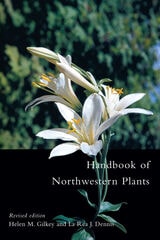
Handbook of Northwestern Plants Revised Edition
Helen Gilkey
Oregon State University Press, 2001

Handbook of Patristic Exegesis
Charles Kannengiesser
SBL Press, 2016
Now in paperback!
This essential volume presents a balanced and cohesive picture of the Early Church. It gives an overall view of the reception, transmission, and interpretation of the Bible in the life and thought of the Church during the first five centuries of Christianity, the so-called patristic era. The handbook offers the context and presuppositions necessary for understanding the development of the interpretative traditions of the Early Church, in its catechesis, its liturgy and as a foundation of its systems of theology. The handbook presents a comprehensive overview of the history of patristic exegesis.
Features:

Handbook of Quantitative Ecology
Justin Kitzes
University of Chicago Press, 2022
Quantitative research techniques have become increasingly important in ecology and conservation biology, but the sheer breadth of methods that must be understood—from population modeling and probabilistic thinking to modern statistics, simulation, and data science—and a lack of computational or mathematics training have hindered quantitative literacy in these fields. In this book, ecologist Justin Kitzes addresses those challenges for students and practicing scientists alike.
Requiring only basic algebra and the ability to use a spreadsheet, Handbook of Quantitative Ecology is designed to provide a practical, intuitive, and integrated introduction to widely used quantitative methods. Kitzes builds each chapter around a specific ecological problem and arrives, step by step, at a general principle through the process of solving that problem. Grouped into five broad categories—difference equations, probability, matrix models, likelihood statistics, and other numerical methods—the book introduces basic concepts, starting with exponential and logistic growth, and helps readers to understand the field’s more advanced subjects, such as bootstrapping, stochastic optimization, and cellular automata. Complete with online solutions to all numerical problems, Kitzes’s Handbook of Quantitative Ecology is an ideal coursebook for both undergraduate and graduate students of ecology, as well as a useful and necessary resource for mathematically out-of-practice scientists.

Handbook of Speckle Filtering and Tracking in Cardiovascular Ultrasound Imaging and Video
Christos P. Loizou
The Institution of Engineering and Technology, 2018

Handbook of Vehicle Suspension Control Systems
Honghai Liu
The Institution of Engineering and Technology, 2013

Handbook of Ventilation Technology for the Built Environment
Design, control and testingShi-Jie Cao
The Institution of Engineering and Technology, 2022

Handbook of War Studies III
The Intrastate DimensionManus I. Midlarsky, ed.
University of Michigan Press, 2009
"Midlarsky has done it again, another state-of-the art handbook on the most recent developments in the study of war. This volume is entirely new with a focus on internal war. It is a 'must-read' for scholars and students of conflict. Even the most knowledgeable will learn a great deal from the book."
---John A. Vasquez, Thomas B. Mackie Scholar in International Relations, University of
Illinois at Urbana-Champaign
"Handbook of War Studies III is a tour de force. This is a compelling and comprehensive work of scholarship. Midlarsky, as with previous volumes, has assembled an 'all star' team from the interdisciplinary field of conflict processes. In response to trends in place over the last few decades, this third volume rightly focuses on the intrastate dimension of international conflict. The volume includes lucid presentations on rational choice and political psychology as alternative visions, along with convincing treatments of civil war, ethnic conflict, genocide, and related issues. This book will be required reading for anyone with an interest in conflict processes."
---Patrick James, Director, Center for International Studies, University of Southern California
"This third volume of the Handbook is a very welcome addition with its focus on intrastate conflict. Scholarship on internal conflict has proliferated over the past decade, and therefore it is time to take stock of the work that has been done and to point out directions for future research. In this volume a team of leading scholars do just that as they provide trenchant assessments of what has been accomplished and what are the remaining big questions that require further research. This volume will be indispensable to students and scholars alike."
---Paul Huth, Editor, Journal of Conflict Resolution, and Professor of Government and Politics, University of Maryland, College Park
Handbook of War Studies III is a follow-up to Handbook of War Studies I (1993) and II (2000). This new volume collects original work from leading international relations scholars on domestic strife, ethnic conflict, genocide, and other timely topics. Special attention is given to civil war, which has become one of the dominant forms---if not the dominant form---of conflict in the world today.
Nils Petter Gleditsch, International Peace Research Institute, Oslo (PRIO), and Norwegian University of Science and Technology (NTNU), Trondheim
Håvard Hegre, University of Oslo, and International Peace Research Institute, Oslo (PRIO)
Erin K. Jenne, Central European University, Budapest
Mark Irving Lichbach, University of Maryland
Roy Licklider, Rutgers University, New Brunswick
T. David Mason, University of North Texas
Rose McDermott, Cornell University
Stephen Saideman, McGill University
Håvard Strand, International Peace Research Institute, Oslo (PRIO)
Monica Duffy Toft, Harvard University

Handbook of the Linguistic Atlas of the Middle and South Atlantic States
William A. Kretzschmar Jr., Virginia G. McDavid, Theodore K. Lerud, and Ellen Johnson
University of Chicago Press, 1993
This handbook is an essential guide to the LAMSAS project, laying out its history and describing its scope and methodology. In addition, the handbook reveals biographical information about the informants and social histories of the communities in which they lived, including primary settlement areas of the original colonies. Dialectologists will rely on it for understanding the LAMSAS, and historians will find it valuable for its original historical research.
Since much of the LAMSAS questionnaire concerns rural terms, the data collected from the interviews can pinpoint such language differences as those between areas of plantation and small-farm agriculture. For example, LAMSAS reveals that two waves of settlement through the Appalachians created two distinct speech types. Settlers coming into Georgia and other parts of the Upper South through the Shenandoah Valley and on to the western side of the mountain range had a Pennsylvania-influenced dialect, and were typically small farmers. Those who settled the Deep South in the rich lowlands and plateaus tended to be plantation farmers from Virginia and the Carolinas who retained the vocabulary and speech patterns of coastal areas.
With these revealing findings, the LAMSAS represents a benchmark study of the English language, and this handbook is an indispensable guide to its riches.
History of Western Civilization
A HandbookWilliam H. McNeill
University of Chicago Press, 1986
With this book, renowned historian William H. McNeil provides a brilliant narrative chronology of the development of Western civilization, representing its sociopolitical as well as cultural aspects. Sweeping in its coverage but careful in its attention to detail, and up to date with the latest scholarship History of Western Civlization is the perfect introduction to the subject for general readers and students alike.