64 books match the query 'Healing' and 10 start with h
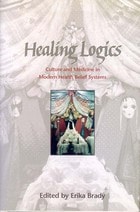
cover of Healing Logics: Culture and Medicine in Modern Health Belief Systems

Healing Logics

Culture and Medicine in Modern Health Belief Systems

Erika Brady

Utah State University Press, 2001
Scholars in folklore and anthropology are more directly involved in various aspects of medicine—such as medical education, clinical pastoral care, and negotiation of transcultural issues—than ever before. Old models of investigation that artificially isolated "folk medicine," "complementary and alternative medicine," and "biomedicine" as mutually exclusive have proven too limited in exploring the real-life complexities of health belief systems as they observably exist and are applied by contemporary Americans. Recent research strongly suggests that individuals construct their health belief systmes from diverse sources of authority, including community and ethnic tradition, education, spiritual beliefs, personal experience, the influence of popular media, and perception of the goals and means of formal medicine. Healing Logics explores the diversity of these belief systems and how they interact—in competing, conflicting, and sometimes remarkably congruent ways. This book contains essays by leading scholars in the field and a comprehensive bibliography of folklore and medicine.
[more]
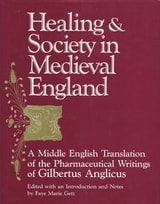
cover of Healing and Society in Medieval England: A Middle English Translation of the Pharmaceutical Writings of Gilbertus Anglicus

Healing and Society in Medieval England

A Middle English Translation of the Pharmaceutical Writings of Gilbertus Anglicus

Faye M. Getz

University of Wisconsin Press, 1991

Originally composed in Latin by Gilbertus Anglicus (Gilbert the Englishman), his Compendium of Medicine was a primary text of the medical revolution in thirteenth-century Europe. Composed mainly of medicinal recipes, it offered advice on diagnosis, medicinal preparation, and prognosis. In the fifteenth-century it was translated into Middle English to accommodate a widening audience for learning and medical “secrets.”
    Faye Marie Getz provides a critical edition of the Middle English text, with an extensive introduction to the learned, practical, and social components of medieval medicine and a summary of the text in modern English. Getz also draws on both the Latin and Middle English texts to create an extensive glossary of little-known Middle English pharmaceutical and medical vocabulary.
[more]
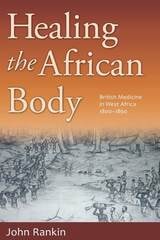
cover of Healing the African Body: British Medicine in West Africa, 1800-1860

Healing the African Body

British Medicine in West Africa, 1800-1860

John Rankin

University of Missouri Press, 2015

This timely book explores the troubled intertwining of religion, medicine, empire, and race relations in the early nineteenth century. John Rankin analyzes the British use of medicine in West Africa as a tool to usher in a “softer” form of imperialism, considers how British colonial officials, missionaries, and doctors regarded Africans, and explores the impact of race classification on colonial constructs.

Rankin goes beyond contemporary medical theory, examining the practice of medicine in colonial Africa as Britons dealt with the challenges of providing health care to their civilian employees, African soldiers, and the increasing numbers of freed slaves in the general population, even while the imperialists themselves were threatened by a lack of British doctors and western medicines. As Rankin writes, “The medical system sought to not only heal Africans but to ‘uplift’ them and make them more amenable to colonial control . . . Colonialism starts in the mind and can be pushed on the other solely through ideological pressure.”
[more]
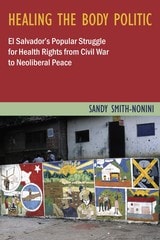
cover of Healing the Body Politic: El Salvador's Popular Struggle for Health Rights from Civil War to Neoliberal Peace

Healing the Body Politic

El Salvador's Popular Struggle for Health Rights from Civil War to Neoliberal Peace

Smith-Nonini, Sandy

Rutgers University Press, 2010
Incorporating investigative journalism and drawing on interviews with participants and leaders, Sandy Smith-Nonini examines the contested place of health and development in El Salvador over the last two decades. Healing the Body Politic recounts the dramatic story of radical health activism from its origins in liberation theology and guerrilla medicine during the third-world country's twelve-year civil war, through development of a remarkable "popular health system," administered by lay providers in a former war zone controlled by leftist rebels. This ethnography casts light on the conflicts between the conservative Ministry of Health and primary health advocates during the 1990s peace process--a time when the government sought to dismantle the effective peasant-run rural system. It offers a rare analysis of the White Marches of 2002û2003, when radicalized physicians rose to national leadership in a successful campaign against privatization of the social security health system. Healing the Body Politic contributes to the productive integration of medical and political anthropology by bringing the semiotics of health and the body to bear on cultural understandings of warfare, the state, and globalization.
[more]
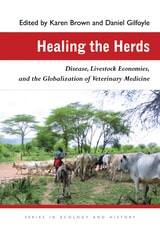
cover of Healing the Herds: Disease, Livestock Economies, and the Globalization of Veterinary Medicine

Healing the Herds

Disease, Livestock Economies, and the Globalization of Veterinary Medicine

Karen Brown

Ohio University Press, 2010

During the early 1990s, the ability of dangerous diseases to pass between animals and humans was brought once more to the public consciousness. These concerns continue to raise questions about how livestock diseases have been managed over time and in different social, economic, and political circumstances. Healing the Herds: Disease, Livestock Economies, and the Globalization of Veterinary Medicine brings together case studies from the Americas, western Europe, and the European and Japanese colonies to illustrate how the rapid growth of the international trade in animals through the nineteenth century engendered the spread of infectious diseases, sometimes with devastating consequences for indigenous pastoral societies. At different times and across much of the globe, livestock epidemics have challenged social order and provoked state interventions, often opposed by farmers and herders. The intensification of agriculture has transformed environments, with consequences for animal and human health.

But the last two centuries have also witnessed major changes in the way societies have conceptualized diseases and sought to control them. From the late nineteenth century, advances in veterinary technologies afforded veterinary scientists a new professional status and allowed them to wield greater political influence. While older methods have remained important to strategies of control and prevention, as demonstrated during the outbreak of foot-and-mouth disease in Britain in 2001, the rise of germ theories and the discovery of vaccines against some infections made it possible to move beyond the blunt tools of animal culls and restrictive quarantines of the past. Healing the Herds: Disease, Livestock Economies, and the Globalization of Veterinary Medicine offers a new and exciting comparative approach to the complex interrelationships of microbes, markets, and medicine in the global economy.
[more]
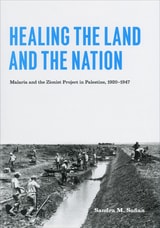
cover of Healing the Land and the Nation: Malaria and the Zionist Project in Palestine, 1920-1947

Healing the Land and the Nation

Malaria and the Zionist Project in Palestine, 1920-1947

Sandra M. Sufian

University of Chicago Press, 2007

A novel inquiry into the sociopolitical dimensions of public medicine, Healing the Land and the Nation traces the relationships between disease, hygiene, politics, geography, and nationalism in British Mandatory Palestine between the world wars. Taking up the case of malaria control in Jewish-held lands, Sandra Sufian illustrates how efforts to thwart the disease were intimately tied to the project of Zionist nation-building, especially the movement’s efforts to repurpose and improve its lands. The project of eradicating malaria also took on a metaphorical dimension—erasing anti-Semitic stereotypes of the “parasitic” Diaspora Jew and creating strong, healthy Jews in Palestine. Sufian shows that, in reclaiming the land and the health of its people in Palestine, Zionists expressed key ideological and political elements of their nation-building project.

Taking its title from a Jewish public health mantra, Healing the Land and the Nation situates antimalarial medicine and politics within larger colonial histories. By analyzing the science alongside the politics of Jewish settlement, Sufian addresses contested questions of social organization and the effects of land reclamation upon the indigenous Palestinian population in a decidedly innovative way. The book will be of great interest to scholars of the Middle East, Jewish studies, and environmental history, as well as to those studying colonialism, nationalism, and public health and medicine.
[more]
cover of Healing to All Their Flesh: Jewish and Christian Perspectives on Spirituality, Theology, and Health

Healing to All Their Flesh

Jewish and Christian Perspectives on Spirituality, Theology, and Health

Jeff Levin

Templeton Press, 2012

Healing to All Their Flesh asks us to step back and carefully rethink the relationship between religion and health. It does so by examining overlooked issues of theology and meaning that lie at the foundation of religion’s supposed beneficial function. Is a religion-health relationship consistent with understandings of faith within respective traditions? What does this actually imply? What does it not imply? How have these ideas been distorted? Why does this matter—for medicine and healthcare and also for the practice of faith? Is the ultimate relation between spirit and flesh, as mediated by the context of human belief and experience, a topic that can even be approached through empirical observation, scientific reasoning, and the logic of intellectual discourse?8 pag e photo insert


The editors of this collection, Drs. Jeff Levin and Keith G. Meador, have gathered together the writings of leading Jewish and Christian theological, pastoral, ethical, and religious scholars to answer these important questions. Contributors include Richard Address, William Cutter, Elliot N. Dorff, Dayle A. Friedman, Stanley Hauerwas, Warren Kinghorn, M. Therese Lysaught, Stephen G. Post, John Swinton, and Simkha Y. Weintraub, with a foreword by Samuel E. Karff.
[more]
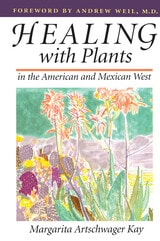
cover of Healing with Plants in the American and Mexican West

Healing with Plants in the American and Mexican West

Margarita Artschwager Kay

University of Arizona Press, 1996

Disenchanted with biomedicine and dismayed by its cost, increasing numbers of people are seeking alternative therapies such as the healing plants discussed in this book. Plant medicine is a billion-dollar business: health food stores, small yerberias, and even giant grocery store chains carry hundreds of medicinal herbs. By one estimate, up to one-third of the U.S. population uses alternative medicine—generally in addition to conventional therapy and commonly without telling their doctors. The heart of this volume is a complete description of 100 plants commonly used today, often for the same purposes reported by chroniclers of the Aztecs or eighteenth-century European explorers. Information for each plant includes botanical and common plant names, history, contemporary uses, a description of how the plant is prepared and administered, and brief phytochemical data. Discussions of folk efficacy and folk properties—beliefs in how and why the herb heals—help to explain the continued use of each plant into the present day. Are any of these plants dangerous, and do any of them really work? Where did they come from, and where are they available now? How can health-care practitioners gain the confidence of their patients to learn whether they are using alternative medicines for specific illnesses, symptoms, or injuries? Perhaps most intriguing, which of these plants might be waiting to take the place of known antibiotics as pathological organisms become increasingly resistant to modern miracle drugs? Answers to these and other questions will pique the interest of general readers and will be an invaluable resource for health-care providers—especially nurses and other primary-care providers, who often must find an interface between biomedical and more traditional therapies. For all readers, the book opens a window into many ethnic cultures of the region—Mexican American communities, desert Pima, coastal Seri, and others. Here is the fascinating saga of how their healing plants from prehistoric times melded with Old World herbs brought by the Europeans to create the unique pharmacopoeia available today here and in other parts of the world. Plants included:
Acacia (Cassie, Acacia)
Achillea (Yarrow)
Agastache (Giant Hyssop)
Agave (Century Plant)
Allium (Garlic, Onion)
Aloe (Aloe)
Ambrosia (Ragweed)
Anemopsis (Yerba Mansa)
Arctostaphylos (Bearberry, Uva Ursi)
Argemone (Prickly Poppy)
Aristolochia (Bithwort, Snakeroot)
Arracacia (Arracacha)
Artemisia (Wormwood, Mugwort, Western Mugwort, Sagebrush)
Asclepias (Milkweed)
Baccharis (Desert Broom, Seep Willow)
Bocconia (Tree Celandine)
Buddleia (Butterfly Bush)
Bursera (Elephant Tree)
Caesalpinia (Mexican Bird-of-Paradise)
Cannabis (Marijuana)
Capsicum (Chili)
Carnegiea (Saguaro)
Casimiroa (Zapote)
Cassia (Senna)
Cereus (Cactus)
Chenopodium (Goosefoot, Wormseed)
Citrus (Lemon, Lime, Orange)
Datura (Jimson Weed)
Ephedra (Mormon Tea)
Equisetum (Horsetail)
Eryngium (Eryngo, Button Snakeroot)
Eucalyptus (Eucalyptus)
Euphorbia (Spurge)
Eysenhardtia (Kidneywood)
Gnaphalium (Everlasting, Cudweed)
Guaiacum (Lignum Vitae)
Guazuma (Guazuma)
Gutierrezia (Turpentine Bush)
Haematoxylon (Logwood)
Haplopappus (Jimmyweed)
Heterotheca (Telegraph Plant, Falso Arnica)
Hintonia (Copalqu¡n)
Ibervillea (Coyote Melon)
Jacquinia (Jacquinia)
Jatropha (Limberbush)
Juniperus (Juniper)
Karwinskia (Coffeeberry)
Kohleria (Tree Gloxinia)
Krameria (Ratany)
Lantana (Lantana)
Larrea (Creosote Bush, Greasewood)
Ligusticum (Lovage)
Lippia (Oregano)
Lysiloma (Featherbush)
Malva (Mallow)
Mammillaria (Pincushion Cactus)
Mascagnia (Mascagnia)
Matricaria (Chamomile)
Mentha (Mint)
Nicotiana (Tobacco)
Ocimum (Basil)
Opuntia (Cholla, Prickly Pear)
Perezia (Perezia)
Persea (Avocado)
Phaseolus (Bean)
Phoradendron, Stru
[more]
cover of Health Care Divided: Race and Healing a Nation

Health Care Divided

Race and Healing a Nation

David Barton Smith

University of Michigan Press, 1999
David Barton Smith offers a complete chronicle of racial segregation and discrimination in health care in the United States using vivid firsthand accounts as well as a formal review of the current evidence of inequity in patterns of use and outcomes. Smith details the efforts through the courtsand federal regulation to address these disparities, discusses their persistence in more subtle forms, and offers possible strategies for ending them.Health Care Divided: Race and Healing a Nation tells the story from 1920 to the present by distilling a narrative from archival records and interviews with key participants. The book traces the decisive role race has played in shaping the development of American medicine and our system of medical care and goes on to explore the effect of this legacy on the organization of long-term care for the elderly and prenatal care for infants.Identified here are lessons largely overlooked by health services leaders, researchers, and policy analysts and examines how this divided health system persists, both exacerbating and distorting racial disparities. Smith asserts that in spite of federal efforts to end segregation, health care remains, at best, more than half the distance between a fully separate and an integrated system.This book will appeal to the general reader though will be of particular interest to those in or preparing for health related professions and to those interested in African American and recent American history, political science and organization behavior, public policy and race relations, and trends in health care in the absence of a national reform initiative."Health Care Divided is a fascinating and often distressing history of our racially divided health care system." -- Ruth Roemer, J.D., UCLA School of Public Health, and Past President, American Public Health Association The research for this book was supported by a Robert Wood Johnson Health Policy Investigator Award.
[more]
cover of Helping Groups Heal: Leading Groups in the Process of Transformation

Helping Groups Heal

Leading Groups in the Process of Transformation

Jan Paul Hook

Templeton Press, 2017

Life with others is messy. The bonds we form are often the source that drives us to helping professionals like therapists and pastors in the first place. And yet, it is from these relation­ships that our greatest moments of healing spring. Recogniz­ing the value of relationships, pastors and therapists have been leading small therapeutic groups for years. Yet few lead­ers have a specific, easy-to-follow, and researched framework to structure their groups.
Helping Groups Heal presents “The Healing Cycle,” a grace-based model that facilitates healing and growth in groups. It has been tested with a variety of settings, and can be adapted to nearly any small group, from sex addiction therapy to marriage therapy to Bible studies.
The basic components of “The Healing Cycle” are grace, safety, vulnerability, truth, ownership, and confession. Helping Groups Heal guides the reader through these elements, offering case studies and practical advice from the voices of researchers and practitioners. Each chapter shows how “The Healing Cycle” moves its members to share their truth, own it, and make positive change in their lives. Each step of the process allows participants to move past surface issues and find depth in their understanding of their pain.
Whether you have been leading small groups for years or are about to lead your first session, Helping Groups Heal is an accessible, easy-to-follow guide through “The Healing Cycle” that will give each group member what’s needed to grow, relate, and heal. 
 
[more]