Results by title
165 books match the query 'Health' and 19 start with h
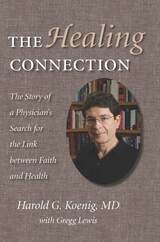
Healing Connection
Story Of Physicians Search For Link Between Faith & HeaHarold Koenig
Templeton Press, 2004
"It is inspiring to see a physician who is unafraid to stand up for his religious beliefs and who understands how those beliefs can resonate with good science." —Larry Dossey, MD, author of Reinventing Medicine and Healing Words
The name Harold G. Koenig is well known in the fast-growing field of spirituality and health. Founder and director of the widely respected Duke University Center for Theology, Spirituality, and Health, Dr. Koenig is recognized worldwide for his groundbreaking work in medical science and religious faith. In this book—now available in paperback—he shares his remarkable personal story and shows how personal trials became the catalyst for his pioneering research.
In part one, he describes his turbulent youth: growing up on a California vineyard, college days of experimentation during the 1970s, adventures as a student researcher in Africa with Jane Goodall, an emotional breakdown, expulsion from medical school for disruptive behavior, battling mental illness as a street person in San Francisco. He refers to his ongoing battle with a chronic and debilitating physical disease in terms of the insights it gives him for his work, and he recounts the striking realization of God's call, the people and events that helped him refine a vision into a mission, and the subsequent professional opposition that resided alongside his success.
Part two draws on the real-life examples of former patients and summarizes Koenig's most important findings concerning the impact of Christian faith on mental and physical health, encapsulated by the statement: religious faith and practice are connected to mental and physical health.
In part three he challenges individuals and the American church to consider the implications of the research and to develop constructive ways of implementing the healing connection that can be found in faith.
Healing to All Their Flesh
Jewish and Christian Perspectives on Spirituality, Theology, and HealthJeff Levin
Templeton Press, 2012
The editors of this collection, Drs. Jeff Levin and Keith G. Meador, have gathered together the writings of leading Jewish and Christian theological, pastoral, ethical, and religious scholars to answer these important questions. Contributors include Richard Address, William Cutter, Elliot N. Dorff, Dayle A. Friedman, Stanley Hauerwas, Warren Kinghorn, M. Therese Lysaught, Stephen G. Post, John Swinton, and Simkha Y. Weintraub, with a foreword by Samuel E. Karff.
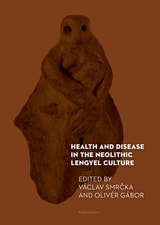
Health and Disease in the Neolithic Lengyel Culture
Edited by Václav Smrcka and Olivér Gábor
Karolinum Press, 2020
Health and Efficiency
Fatigue, the Science of Work, and the Making of the Working-Class BodySteffan Blayney
University of Massachusetts Press, 2022
A new model of health emerged in Britain between 1870 and 1939. Centered on the working body, organized around the concept of efficiency, and grounded in scientific understandings of human labor, scientists, politicians, and capitalists of the era believed that national economic productivity could be maximized by transforming the body of the worker into a machine. At the core of this approach was the conviction that worker productivity was intimately connected to worker health.
Under this new “science of work,” fatigue was seen as the ultimate pathology of the working-class body, reducing workers’ capacity to perform continued physical or mental labor. As Steffan Blayney shows, the equation between health and efficiency did not go unchallenged. While biomedical and psychological experts sought to render the body measurable, governable, and intelligible, ordinary men and women found ways to resist the logics of productivity and efficiency imposed on them, and to articulate alternative perspectives on work, health, and the body.
Health and Health Care In Developing Countries
Sociological PerspectivesPeter Conrad
Temple University Press, 1993
In this seminal collection of articles on health care in the Third World, sociological perspectives are applied to medical issues in revealing ways. Fourteen essays (all but two of which are original to this volume) examine the social production of health, disease, and systems of care throughout the developing world. The volume covers a range of areas—central Africa, Nigeria, Singapore, Taiwan, Indonesia, Nepal, China, United Arab Emirates, Oman, and Mexico—and a broad scope of topics, from emergency care, the AIDS epidemic, and women's health care, to public health programs and national health care policies.
Contributors address the central question of whether health systems in developing areas should emphasize the role of clinical medicine and individual physicians or community and preventive medical resources. The major health problems faced by these societies—inadequate sanitation, infectious disease, high infant-child mortality, and a lack of family planning—indicate the greater need for health educators and public health workers despite many poor nations' desire for Western doctors. Other topics that are examined include the process of seeking medical aid; the relationship between traditional and modern medicines; medical education, hospital care, and communication between doctors and patients in developing countries; and the relevance and application of sociology in Third World settings.
This volume seeks to draw attention to the significance of medical sociology for understanding Third World health problems and to show how examining developing societies may necessitate reframing or modifying some Western sociological notions. In addition, these essays stretch the boundaries of medical sociology to include Third World issues.
Health and Hygiene in Chinese East Asia
Policies and Publics in the Long Twentieth CenturyAngela Ki Che Leung and Charlotte Furth, eds.
Duke University Press, 2010
Contributors. Warwick Anderson, Charlotte Furth, Marta E. Hanson, Sean Hsiang-lin Lei, Angela Ki Che Leung, Shang-Jen Li, Yushang Li, Yi-Ping Lin, Shiyung Liu, Ruth Rogaski, Yen-Fen Tseng, Chia-ling Wu, Xinzhong Yu
Health and Labor Force Participation over the Life Cycle
Evidence from the PastEdited by Dora L. Costa
University of Chicago Press, 2003
To that end, this book draws on new data-an extensive longitudinal survey of Union Army veterans born between 1820 and 1850-to examine the factors that affected health and labor force participation in nineteenth-century America. Contributors consider the impacts of a variety of conditions-including social class, wealth, occupation, family, and community-on the morbidity and mortality of the group. The papers investigate and address a number of special topics, including the influence of previous exposure to infectious disease, migration, and community factors such as lead in water mains. They also analyze the roles of income, health, and social class in retirement decisions, paying particular attention to the social context of disability.
Economists and historians who specialize in demography or labor, as well as those who study public health, will welcome the unique contributions offered by this book, which offers a clearer view than ever before of the workings and complexities of life, death, and labor during the nineteenth century.
Health and Welfare during Industrialization
Edited by Richard H. Steckel and Roderick Floud
University of Chicago Press, 1997
The essays incorporate several indicators of quality of life, especially real per capita income and health, but also real wages, education, and inequality. And while the authors use traditional measures of health such as life expectancy and mortality rates, this volume stands alone in its extensive use of new "anthropometric" data—information about height, weight and body mass index that indicates changes in nations' well-being. Consequently, Health and Welfare during Industrialization signals a new direction in economic history, a broader and more thorough understanding of what constitutes standard of living.
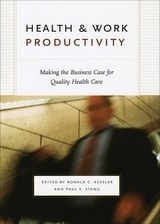
Health and Work Productivity
Making the Business Case for Quality Health CareEdited by Ronald C. Kessler and Paul E. Stang
University of Chicago Press, 2006
Health and Work Productivity presents state-of-the-art health and productivity research that suggests interventions aimed at prevention, early detection, and best-practice treatment of workers along with an informed allocation strategy can produce significant cost-benefits for employers. Contributors cover all the major aspects of this new area of research: approaches to studying the effects of health on productivity, ways for employers to estimate the costs of productivity loss, concrete suggestions for future research developments in the area, and the implications of this research for public policy.
Health and the Rhetoric of Medicine
Judy Z. Segal
Southern Illinois University Press, 2005
Assessing rhetorical principles of contemporary health issues
Hypochondriacs are vulnerable to media hype, anorexics are susceptible to public scrutiny, and migraine sufferers are tainted with the history of the “migraine personality,” maintains rhetorical theorist Judy Z. Segal. All are influenced by the power of persuasion.
Health and the Rhetoric of Medicine explores persistent health conditions that resist conventional medical solutions. Using a range of rhetorical principles, Segal analyzes how patients and their illnesses are formed within the physician/patient relationship. The intractable problem of a patient’s rejection of a doctor’s advice, says Segal, can be considered a rhetorical failure—a failure of persuasion.
Examining the discourse of medicine through case studies, applications, and analyses, Segal illustrates how illnesses are described in ways that limit
patients’ choices and satisfaction. She also illuminates psychiatric conditions, infectious diseases, genetic testing, and cosmetic surgeries through the lens of rhetorical theory.
Health and the Rhetoric of Medicine bridges critical analysis for scholarly, professional, and lay audiences. Segal highlights the persuasive element in diagnosis, health policy, illness experience, and illness narratives. She also addresses questions of direct-to-consumer advertising of prescription drugs, the role of health information in creating the “worried well” and problems of trust and expertise in physician/patient relationships. A useful resource for critical common sense in everyday life, the text provides an effective examination of a society increasingly influenced by the rhetoric of health and medicine.
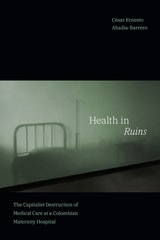
Health in Ruins
The Capitalist Destruction of Medical Care at a Colombian Maternity HospitalCésar Ernesto Abadía-Barrero
Duke University Press, 2022
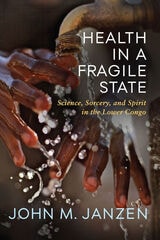
Health in a Fragile State
Science, Sorcery, and Spirit in the Lower CongoJohn M. Janzen
University of Wisconsin Press, 2019
Janzen explores the manner in which power and information, including science, are legitimized in the preservation and improvement of health. Institutional validity and knowledge empower citizens and health practitioners to gain the upper hand over the region's principal diseases, including malaria, tuberculosis, typhoid, and HIV/AIDS.
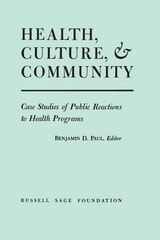
Health, Culture, and Community
Benjamin D. Paul
Russell Sage Foundation, 1955
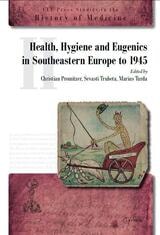
Health, Hygiene and Eugenics in Southeastern Europe to 1945
Christian Promitzer
Central European University Press, 2011
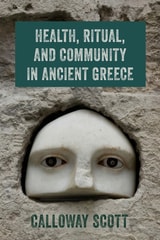
Health, Ritual, and Community in Ancient Greece
Calloway Scott
University of Wisconsin Press, 2027
At the heart of this book is a deceptively simple question: What does “health” mean? The answer, historian Calloway B. Scott shows, is culturally contingent, and in ancient Greece the concept went well beyond the proper functioning of an individual’s body. Rather, “health” (Greek hygieia) furnished a key discursive and ritual tool for civic cohesion, religious praxis, and even cultural identity. The all-important polis, central to ancient Greek social and political life, fundamentally depended on this conception of good health as a communal and religious phenomenon, and its ritualization informed relationships not just between individuals but also between communities of humans and between the human and divine realms.
Scott employs an impressive array of sources, from technical medical treatises to poetry to material remains and sanctuary sites, to explore the “body politic” of the ancient Greek world—and to query exactly what keeping that body healthy meant. Health, political identity, social relationships, and religious praxis were all deeply entwined; thus rites, rituals, and healing spaces were public, bringing people together in cohesive, coherent, and, ideally, healthy communities.

Hearing Beethoven
A Story of Musical Loss and DiscoveryRobin Wallace
University of Chicago Press, 2018
We’re all familiar with the image of a fierce and scowling Beethoven, struggling doggedly to overcome his rapidly progressing deafness. That Beethoven continued to play and compose for more than a decade after he lost his hearing is often seen as an act of superhuman heroism. But the truth is that Beethoven’s response to his deafness was entirely human. And by demystifying what he did, we can learn a great deal about Beethoven’s music. Perhaps no one is better positioned to help us do so than Robin Wallace, who not only has dedicated his life to the music of Beethoven but also has close personal experience with deafness. One day, Wallace’s late wife, Barbara, found she couldn’t hear out of her right ear—the result of radiation administered to treat a brain tumor early in life. Three years later, she lost hearing in her left ear as well. Over the eight and a half years that remained of her life, despite receiving a cochlear implant, Barbara didn’t overcome her deafness or ever function again like a hearing person.
Wallace shows here that Beethoven didn’t do those things, either. Rather than heroically overcoming his deafness, Beethoven accomplished something even more challenging: he adapted to his hearing loss and changed the way he interacted with music, revealing important aspects of its very nature in the process. Wallace tells the story of Beethoven’s creative life, interweaving it with his and Barbara’s experience to reveal aspects that only living with deafness could open up. The resulting insights make Beethoven and his music more accessible and help us see how a disability can enhance human wholeness and flourishing.

Home Bound
Growing Up With A DisabilityCass Irvin
Temple University Press, 2003
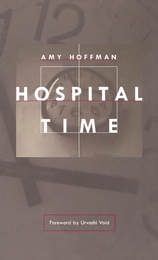
Hospital Time
Amy Hoffman
Duke University Press, 1997
Hoffman became central to Riegle’s caregiving when he asked her to be his health-care proxy, and although she willingly chose to do this, she explores her conflicting feelings about herself in this role and about her involvement with Riegle and his grueling struggle with hospitalization, illness, and, finally, death. She tells of the waves of grief that echoed throughout her life, awakening memories of other losses, entering her dreams and fantasies, and altering her relationships with friends, family, and even total strangers.
Hoffman’s memoir gives voice to the psychological and emotional havoc AIDS creates for those in the difficult role of caring for the terminally ill and it gives recognition to the role that lesbians continue to play in the AIDS emergency. A foreword by Urvashi Vaid, former executive director of the National Gay and Lesbian Task Force, offers a meditation on the politics of AIDS and the role of family in the lives of lesbians and gay men.
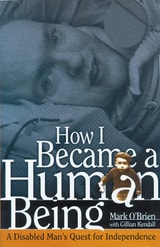
How I Became a Human Being
A Disabled Man’s Quest for IndependenceMark O’Brien, with Gillian Kendall
University of Wisconsin Press, 2003
For the first time in paperback, How I Became a Human Being is O’Brien’s account of his struggles to lead an independent life despite a lifelong disability. In 1955 he contracted polio and became permanently paralyzed from the neck down. O’Brien describes growing up without the use of his limbs, his adolescence struggling with physical rehabilitation and suffering the bureaucracy of hospitals and institutions, and his adult life as an independent student and writer. Despite his physical limitations, O’Brien crafts a narrative that is as rich and vivid as the life he led.