Results by title
124 books match the query 'Health and hygiene' and 9 start with h
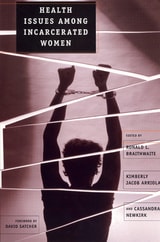
Health Issues Among Incarcerated Women
Edited by Ronald L. Braithwaite, Kimberly Jacob Arriola, and Cassandra Newkirk
Rutgers University Press, 2006
The female inmate population in the United States has exploded in the past two decades, increasing nearly six-fold. The U.S. correctional system, however, has not expanded its health care to provide for this growing population of women. This comprehensive reader addresses the physical and mental needs of women inmates and suggests that they cannot be properly treated unless their lifestyles before, during, and after incarceration are considered.
This book abounds with statistics that outline the unique needs of the female inmate population. For instance, a significant proportion of female inmates suffer physical and sexual violence before serving time. Incarcerated teenagers are more likely than others from their age group to have engaged in behaviors that increased their risk for contracting sexually transmitted diseases like HIV. Because African American women are more likely than their counterparts to encounter prison time, their needs warrant specific attention.
Bringing together twenty original essays, this volume will be invaluable for lobbyists and policy makers as well as for graduate students and faculty in the fields of criminal justice and public health.
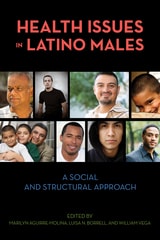
Health Issues in Latino Males
A Social and Structural ApproachAguirre-Molina, Marilyn
Rutgers University Press, 2010

Health Policy and the Disadvantaged
Lawrence D. Brown, ed.
Duke University Press, 1991
Focusing on the particular needs of disadvantaged groups—the elderly, children, people with AIDS, the mentally ill, the chemically dependent, the homeless, the hungry, the medically uninsured—these essays develop strong policy statements. The authors describe the growth in U.S. health care programs, from Kerr-Mills to Medicare, Medicaid, and subsequent revisions, and stress the serious omissions resulting from incremental policy expansion, both in identifying disadvantaged groups and in implementing programs. They report the weakness of the U.S. health care system compared to systems of other technologically developed countries.
Contributors. Deborah A. Stone and Theodore R. Marmor, Judith Feder, Alice Sardell, Bruce C. Vladeck, Michael Lipsky and Marc A. Thibodeau, Daniel M. Fox, William E. McAuliffe, M. Gregg Bloche and Francine Cournos, Lawrence D. Brown, James A. Morrone
Health Work with the Poor
A Practical GuideKiefer, Christie W
Rutgers University Press, 2000
Christie Kiefer vividly brings home the meaning of poverty in peoples’ lives as he examines both their access to—and their lack of—health care.
Aimed at both students and professionals in the field, this book argues that individuals serving the poor have the means and obligation to address the root causes of ill health of the poor, not just the symptoms. These causes, Kiefer argues, are overwhelmingly social and political. In a ringing indictment of the factors that perpetuate poverty, he declares that the work of healing at its best must include advocacy.
Health Work with the Poor offers to both health workers and activists a wealth of practical information. Kiefer’s trenchant analysis of the factors that help cause and perpetuate poverty offers students the needed intellectual framework not only to accomplish short-term change but also to strive toward long-term social advocacy. Each chapter ends with a set of discussion questions—a real boon for instructors. Appendices on Internet resources for the study of poverty and on a proposed program detailing how to teach health workers in a way that promotes social awareness make this book a valuable resource for courses on poverty and health. It will also be an indispensable manual for all those who work with the poor.
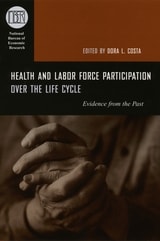
Health and Labor Force Participation over the Life Cycle
Evidence from the PastEdited by Dora L. Costa
University of Chicago Press, 2003
To that end, this book draws on new data-an extensive longitudinal survey of Union Army veterans born between 1820 and 1850-to examine the factors that affected health and labor force participation in nineteenth-century America. Contributors consider the impacts of a variety of conditions-including social class, wealth, occupation, family, and community-on the morbidity and mortality of the group. The papers investigate and address a number of special topics, including the influence of previous exposure to infectious disease, migration, and community factors such as lead in water mains. They also analyze the roles of income, health, and social class in retirement decisions, paying particular attention to the social context of disability.
Economists and historians who specialize in demography or labor, as well as those who study public health, will welcome the unique contributions offered by this book, which offers a clearer view than ever before of the workings and complexities of life, death, and labor during the nineteenth century.
Health at Older Ages
The Causes and Consequences of Declining Disability Among the ElderlyEdited by David M. Cutler and David A. Wise
University of Chicago Press, 2009
This breakthrough volume argues that educational attainment, high socioeconomic status, an older retirement age, and accessible medical care have improved the health and quality of life of seniors. Along the way, it outlines the economic benefits of disability decline, such as an increased rate of seniors in the workplace, relief for the healthcare system and care-giving families, and reduced medical expenses for the elderly themselves. Health at Older Ages will be an essential contribution to the debate about meeting the medical needs of an aging nation.
Heritage in the Body
Sensory Ecologies of Health Practice in Times of ChangeKristina Baines
University of Arizona Press, 2024
Employing an embodied ecological heritage (EEH) framework, Baines explores the links between health and heritage as a fluid series of ecological practices. Health and wellness are holistically defined and approached from a phenomenological perspective. Baines focuses on how sensory experiences change the body through practice and provides insights into community-driven alternatives as a means to maintain and support happy, healthy lives.

Homeboys Forever
The Lifetime Consequences of Gang MembershipAvelardo Valdez
University of Chicago Press, 2026
Violence, addiction, imprisonment . . . we don’t have to look hard to see the negative consequences of gang involvement. But what does it look like to spend a life—from adolescence to adulthood—in gangs? Sociologist Avelardo Valdez and his research team have been following the lives of Mexican American men in San Antonio, Texas, over a remarkable twenty years, watching and listening as they navigate adolescent delinquency and gang involvement, advance into a life of crime, and—sometimes—attempt to break from gang life and build lives in conventional society.
When gang affiliation exploded in the 1990s, adolescent street gang membership surged in the Mexican American community of Westside San Antonio. Valdez was quick to begin investigating how young men embedded in a system with little support for lasting change turned to gang violence, drug use, and other risky behaviors. The honesty of these men’s accounts draws our attention to the economic, political, and sociocultural context of impoverished communities in San Antonio. Being constantly written off as troublemakers and criminals eroded the self-respect that these young men once had. They were once lithe, active, and full of self-confidence, but after a lifetime of constant harassment and entanglements with the legal system, they now have a perpetual look of exhaustion and defeat.
Encouraging readers to question who is at fault when young men become involved in gangs and other delinquent behaviors, Homeboys Forever is a humanizing account of marginalized youth who struggle to overcome the systemic inequities that have led to a lifetime of heartbreaking consequences.
How Healthy Are We?
A National Study of Well-Being at MidlifeEdited by Orville Gilbert Brim, Carol D. Ryff, and Ronald C. Kessler
University of Chicago Press, 2003
The MacArthur Foundation addressed these questions head-on by funding a landmark study known as "Midlife in the U.S.," or MIDUS. For the first time in a single study, researchers were able to integrate epidemiological, sociological, and psychological assessments, as well as innovative new measures to evaluate how work and family life influence each other.
How Healthy Are We? presents the key findings from the survey in three sections: physical health, quality of life and psychological well-being, and the contexts (family, work) of the midlife. The topics covered by almost forty scholars in a wide variety of fields are vast, including everything from how health and well-being vary with socioeconomic standing, gender, race, or region of the country to how middle-aged people differ from younger or older adults in their emotional experience and quality of life. This health—the study measures not only health-the absence of illness—but also reports on the presence of wellness in middle-aged Americans.
The culmination of a decade and a half of research by leading scholars, How Healthy Are We? will dramatically alter the way we think about health in middle age and the factors that influence it. Researchers, policymakers, and others concerned about the quality of midlife in contemporary America will welcome its insights.
* Having a good life means having good relationships with others to almost 70% of those surveyed. Less than 40% mentioned their careers.
* Reports of disruptive daily stressors vary by age, with young adults and those in midlife experiencing more than those in later adulthood.
* Men have higher assessments of their physical and mental health than woman until the age of 60.