Results by title
89 books match the query 'Historic sites' and 9 start with h
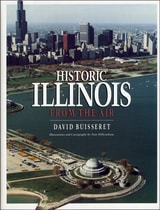
Historic Illinois from the Air
David Buisseret
University of Chicago Press, 1990
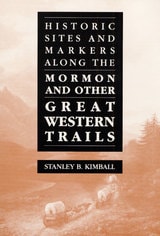
Historic Sites and Markers along the Mormon and Other Great Western Trails
Stanley B. Kimball
University of Illinois Press, 1988
is an indispensable guide for travelers who wish to retrace the various frontier
routes taken by the Mormons and other pioneers in their treks westward. Traversing
fifteen states from New York to California, Stanley Kimball presents some of
America's most famous trails--the Mormon, the Oregon-California, the Santa Fe,
the Overland, and many others--and describes important points of interest, including
forts, trail centers, and museums.
"An important contribution
to the history of the West and perhaps the most comprehensive mile-by-mile guide
to trail markers and historical sites ever prepared."
-- Brigham D. Madsen, author of The Shoshoni Frontier and the Bear
River Massacre
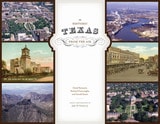
Historic Texas from the Air
By David Buisseret, Richard Francaviglia, Gerald Saxon, and Jack Graves
University of Texas Press, 2009
The extremely varied geography of Texas, ranging from lush piney woods to arid, mountainous deserts, has played a major role in the settlement and development of the state. To gain full perspective on the influence of the land on the people of Texas, you really have to take to the air—and the authors of Historic Texas from the Air have done just that. In this beautiful book, dramatic aerial photography provides a complete panorama of seventy-three historic sites from around the state, showing them in extensive geographic context and revealing details unavailable to a ground-based observer.
Each site in Historic Texas from the Air appears in a full-page color photograph, accompanied by a concise description of the site's history and importance. Contemporary and historical photographs, vintage postcard images, and maps offer further visual information about the sites. The book opens with images of significant natural landforms, such as the Chisos Mountains and the Big Thicket, then shows the development of Texas history through Indian spiritual sites (including Caddo Mounds and Enchanted Rock), relics from the French and Spanish occupation (such as the wreck of the Belle and the Alamo), Anglo forts and methods of communication (including Fort Davis and Salado's Stagecoach Inn), nineteenth-century settlements and industries (such as Granbury's courthouse square and Kreische Brewery in La Grange), and significant twentieth-century locales, (including Spindletop, the LBJ Ranch, and the Dallas–Fort Worth International Airport).
For anyone seeking a visual, vital overview of Texas history, Historic Texas from the Air is the perfect place to begin.
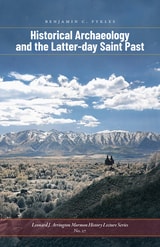
Historical Archaeology and the Latter-day Saint Past
Benjamin C. Pykles
Utah State University Press, 2025
The Arrington Lecture series, established in honor of one of the twentieth-century American West’s most distinguished historians, Leonard Arrington, has become a leading forum for prominent scholars to address topics related to Latter-day Saint history. Utah State University hosts the Leonard J. Arrington Mormon History Lecture Series through the Merrill-Cazier Library’s Special Collections and Archives.
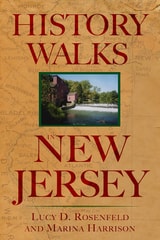
History Walks in New Jersey
Rosenfeld, Lucy D
Rutgers University Press, 2006
Whether you are an amateur historian, a weekend walker, or a teacher planning a class trip, this book will be an essential resource for ideas and information. Walks include the Kingston Loop, a long canal where George Washington, pen in hand, composed his post-Revolutionary War speech, "Farewell Orders to the Armies of the United States." Also included is a mountain walk that traces Native American Leni-Lenape history and one that wends its way into an old Moravian village in the town of Hope. A pirate cove, stops on the Underground Railroad, a Civil War cemetery, and the sites of duels, mines, canals, architectural innovations, estates and resorts, centuries-old agricultural and fishing settlements, and the Hindenburg crash are all here.
Each walk includes directions, information on tours, a brief history, and suggestions for additional places to visit in the area. Whether a New Jersey native or a visitor to the Garden State, readers will enjoy going beyond the highways and suburban towns to learn about history while discovering the state's natural beauty.
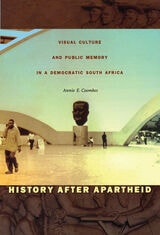
History after Apartheid
Visual Culture and Public Memory in a Democratic South AfricaAnnie E. Coombes
Duke University Press, 2003
History after Apartheid explores the dilemmas posed by a wide range of visual and material culture including key South African heritage sites. How prominent should Nelson Mandela and the African National Congress be in the museum at the infamous political prison on Robben Island? How should the postapartheid government deal with the Voortrekker Monument mythologizing the Boer Trek of 1838? Coombes highlights the contradictory investment in these sites among competing constituencies and the tensions involved in the rush to produce new histories for the “new” South Africa.
She reveals how artists and museum officials struggled to adequately represent painful and difficult histories ignored or disavowed under apartheid, including slavery, homelessness, and the attempted destruction of KhoiSan hunter-gatherers. Describing how contemporary South African artists address historical memory and the ambiguities uncovered by the Truth and Reconciliation Commission, Coombes illuminates a body of work dedicated to the struggle to simultaneously remember the past and move forward into the future.
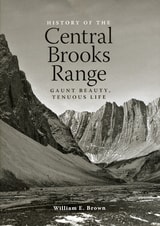
History of the Central Brooks Range
Gaunt Beauty, Tenuous LifeWilliam E. Brown
University of Alaska Press, 2007
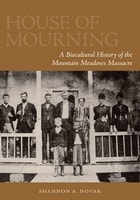
House of Mourning
A Biocultural History of the Mountain Meadows MassacreShannon A Novak
University of Utah Press, 2008
On September 11, 1857, some 120 men, women, and children from the Arkansas hills were murdered in the remote desert valley of Mountain Meadows, Utah. This notorious massacre was, in fact, a mass execution: having surrendered their weapons, the victims were bludgeoned to death or shot at point-blank range. The perpetrators were local Mormon militiamen whose motives have been fiercely debated for 150 years.
In House of Mourning, Shannon A. Novak goes beyond the question of motive to the question of loss. Who were the victims at Mountain Meadows? How had they settled and raised their families in the American South, and why were they moving west once again? What were they hoping to find or make for themselves at the end of the trail? By integrating archival records and oral histories with the first analysis of skeletal remains from the massacre site, Novak offers a detailed and sensitive portrait of the victims as individuals, family members, cultural beings, and living bodies.
The history of the massacre has often been treated as a morality tale whose chief purpose was to vilify (or to glorify) some collective body. Resisting this tendency to oversimplify the past, Novak explores Mountain Meadows as a busy and dangerous intersection of cultural and material forces in antebellum America. House of Mourning is a bold experiment in a new kind of history, the biocultural analysis of complex events.
Winner of the Society for Historical Archaeology James Deetz Book Award.
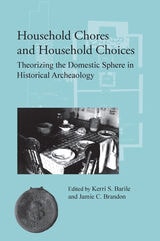
Household Chores and Household Choices
Theorizing the Domestic Sphere in Historical ArchaeologyEdited by Kerri S. Barile and James C. Brandon
University of Alabama Press, 2004
Discusses the concepts of “home,” “house,” and “household” in past societies
Because archaeology seeks to understand past societies, the concepts of "home," "house," and "household" are important. Yet they can be the most elusive of ideas. Are they the space occupied by a nuclear family or by an extended one? Is it a built structure or the sum of its contents? Is it a shelter against the elements, a gendered space, or an ephemeral place tied to emotion? We somehow believe that the household is a basic unit of culture but have failed to develop a theory for understanding the diversity of households in the historic (and prehistoric) periods.
In an effort to clarify these questions, this volume examines a broad range of households—a Spanish colonial rancho along the Rio Grande, Andrew Jackson's Hermitage in Tennessee, plantations in South Carolina and the Bahamas, a Colorado coal camp, a frontier Arkansas farm, a Freedman's Town eventually swallowed by Dallas, and plantations across the South—to define and theorize domestic space. The essays devolve from many disciplines, but all approach households from an archaeological perspective, looking at landscape analysis, excavations, reanalyzed collections, or archival records. Together, the essays present a body of knowledge that takes the identification, analysis, and interpretation of households far beyond current conceptions.