Results by title
71 books match the query 'Historical Events' and 2 start with h
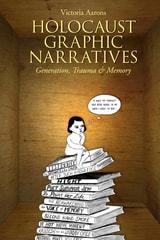
Holocaust Graphic Narratives
Generation, Trauma, and MemoryVictoria Aarons
Rutgers University Press, 2020
In Holocaust Graphic Narratives, Victoria Aarons demonstrates the range and fluidity of this richly figured genre. Employing memory as her controlling trope, Aarons analyzes the work of the graphic novelists and illustrators, making clear how they extend the traumatic narrative of the Holocaust into the present and, in doing so, give voice to survival in the wake of unrecoverable loss. In recreating moments of traumatic rupture, dislocation, and disequilibrium, these graphic narratives contribute to the evolving field of Holocaust representation and establish a new canon of visual memory. The intergenerational dialogue established by Aarons’ reading of these narratives speaks to the on-going obligation to bear witness to the Holocaust. Examined together, these intergenerational works bridge the erosions created by time and distance. As a genre of witnessing, these graphic stories, in retracing the traumatic tracks of memory, inscribe the weight of history on generations that follow.
[more]
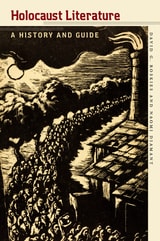
Holocaust Literature
A History and GuideDavid G. Roskies and Naomi Diamant
Brandeis University Press, 2013
What is Holocaust literature? When does it begin and how is it changing? Is there an essential core that consists of diaries, eyewitness accounts of the concentration camps, and tales of individual survival? Is it the same everywhere: West and East, in Australia as in the Americas, in poetry as in prose? Is this literature sacred and separate, or can it be studied alongside other responses to catastrophe? What works of Holocaust literature will be read a hundred years from now—and why? Here, for the first time, is a historical survey of Holocaust literature in all genres, countries, and major languages. Beginning in wartime, it proceeds from the literature of mobilization and mourning in the Free World to the vast literature produced in Nazi-occupied ghettos, bunkers and places of hiding, transit and concentration camps. No less remarkable is the new memorial literature that begins to take shape within weeks and months of the liberation. Moving from Europe to Israel, the United States, and beyond, the authors situate the writings by real and proxy witnesses within three distinct postwar periods: “communal memory,” still internal and internecine; “provisional memory” in the 1960s and 1970s, when a self-conscious Holocaust genre is born; and “authorized memory,” in which we live today. Twenty book covers—first editions in their original languages—and a guide to the “first hundred books” show the multilingual scope, historical depth, and artistic range of this extraordinary body of writing.
[more]