Results by title
405 books match the query 'Human Geography' and 21 start with h

Hallyu 2.0
The Korean Wave in the Age of Social MediaSangjoon Lee and Abé Mark Nornes, editors
University of Michigan Press, 2015
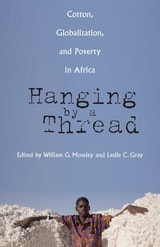
Hanging by a Thread
Cotton, Globalization, and Poverty in AfricaWilliam G. Moseley
Ohio University Press, 2008
The textile industry was one of the first manufacturing activities to become organized globally, as mechanized production in Europe used cotton from the various colonies. Africa, the least developed of the world’s major regions, is now increasingly engaged in the production of this crop for the global market, and debates about the pros and cons of this trend have intensified.
Hanging by a Thread: Cotton, Globalization, and Poverty in Africa illuminates the connections between Africa and the global economy. The editors offer a compelling set of linked studies that detail one aspect of the globalization process in Africa, the cotton commodity chain.
From global policy debates, to impacts on the natural environment, to the economic and social implications of this process, Hanging by a Thread explores cotton production in the postcolonial period from different disciplinary perspectives and in a range of national contexts. This approach makes the globalization process palpable by detailing how changes at the macroeconomic level play out on the ground in the world’s poorest region. Hanging by a Thread offers new insights on the region in a global context and provides a critical perspective on current and future development policy for Africa.
Contributors: Thomas J. Bassett, Jim Bingen, Duncan Boughton, Brian M. Dowd, Marnus Gouse, Leslie C. Gray, Dolores Koenig, Scott M. Lacy, William G. Moseley, Colin Poulton, Bhavani Shankar, Corinne Siaens, Colin Thirtle, David Tschirley, and Quentin Wodon.

Heartbreak and Other Geographies
Collected Writings of Katherine McKittrickKatherine McKittrick
University of Minnesota Press, 2026
A uniquely structured collection of essays from one of today’s most esteemed scholars of black studies
A thoughtfully curated selection of texts by preeminent black feminist scholar Katherine McKittrick, Heartbreak and Other Geographies showcases the remarkable depth of inquiry she has generated over twenty years. Edited by Brittany Meché and Camilla Hawthorne, this collection highlights McKittrick’s enduring commitment to ideas around radical placemaking and the creative articulations of and within the black diaspora.
McKittrick’s work is marked by a recurring engagement with anticolonialism, practices of liberation, and radical methodologies of black cultural production. Through discussions of figures such as Toni Morrison, Jimi Hendrix, Édouard Glissant, Paul Gilroy, Nina Simone, and Sylvia Wynter, the writing in Heartbreak and Other Geographies spans the author’s investigations into scientific method, liberal modernity, the cycles that perpetuate racial violence, and the poetics and sonics of black livingness.
Bringing together recent texts, influential pieces, and lesser-known essays, the unconventional format of Heartbreak and Other Geographies includes an introductory conversation with McKittrick as well as a series of creative interludes from the editors throughout the book. Innovative in both form and content, this wide-ranging volume invites us to rethink the boundaries between disciplines and the ways that scholarship can embody a more collaborative form of worldmaking.
Retail e-book files for this title are screen-reader friendly with images accompanied by short alt text and/or extended descriptions.
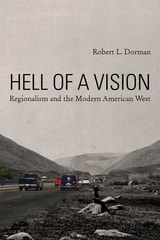
Hell of a Vision
Regionalism and the Modern American WestRobert L. Dorman
University of Arizona Press, 2012
The American West has taken on a rich and evocative array of regional identities since the late nineteenth century. Wilderness wonderland, Hispanic borderland, homesteader’s frontier, cattle kingdom, urban dynamo, Native American homeland. Hell of a Vision explores the evolution of these diverse identities during the twentieth century, revealing how Western regionalism has been defined by generations of people seeking to understand the West’s vast landscapes and varied cultures.
Focusing on the American West from the 1890s up to the present, Dorman provides us with a wide-ranging view of the impact of regionalist ideas in pop culture and diverse fields such as geography, land-use planning, anthropology, journalism, and environmental policy-making.
Going well beyond the realm of literature, Dorman broadens the discussion by examining a unique mix of texts. He looks at major novelists such as Cather, Steinbeck, and Stegner, as well as leading Native American writers. But he also analyzes a variety of nonliterary sources in his book, such as government reports, planning documents, and environmental impact studies.
Hell of a Vision is a compelling journey through the modern history of the American West—a key region in the nation of regions known as the United States.

Hemispheres and Stratospheres
The Idea and Experience of Distance in the International EnlightenmentKevin L. Cope
Bucknell University Press, 2021
Published by Bucknell University Press. Distributed worldwide by Rutgers University Press.
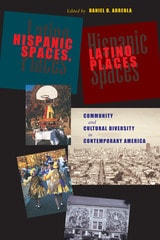
Hispanic Spaces, Latino Places
Community and Cultural Diversity in Contemporary AmericaEdited by Daniel D. Arreola
University of Texas Press, 2004
Hispanics/Latinos are the largest ethnic minority in the United States—but they are far from being a homogenous group. Mexican Americans in the Southwest have roots that extend back four centuries, while Dominicans and Salvadorans are very recent immigrants. Cuban Americans in South Florida have very different occupational achievements, employment levels, and income from immigrant Guatemalans who work in the poultry industry in Virginia. In fact, the only characteristic shared by all Hispanics/Latinos in the United States is birth or ancestry in a Spanish-speaking country.
In this book, sixteen geographers and two sociologists map the regional and cultural diversity of the Hispanic/Latino population of the United States. They report on Hispanic communities in all sections of the country, showing how factors such as people's country/culture of origin, length of time in the United States, and relations with non-Hispanic society have interacted to create a wide variety of Hispanic communities. Identifying larger trends, they also discuss the common characteristics of three types of Hispanic communities—those that have always been predominantly Hispanic, those that have become Anglo-dominated, and those in which Hispanics are just becoming a significant portion of the population.
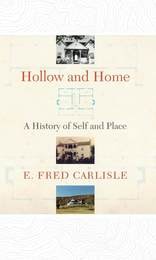
Hollow and Home
A History of Self and PlaceE. Fred Carlisle
West Virginia University Press, 2017
Carlisle incorporates perspectives from writers like Edward S. Casey, Christian Norberg-Schulz, Yi-Fu Tuan, and Witold Rybczynski, but he applies theory with a light touch. Placing this literature in dialog with personal experience, he concentrates on two places that profoundly influenced him and enabled him to overcome a lifelong sense of always leaving his pasts behind. The first is Clover Hollow in Appalachian Virginia, where the author lived for ten years among fifth-, sixth-, and seventh-generation residents. The people and places there enabled him to value his own past and primary places in a new way. The story then turns to Carlisle’s life growing up in Delaware, Ohio. He describes in rich detail the ways the town shaped him in both enabling and disabling ways. In the end, after years of moving from place to place, Carlisle’s experience in Appalachia helped him rediscover his hometown—both the Old Delaware, where he grew up, and the New Delaware, a larger, thriving small city—as his true home.
The themes of the book transcend specific localities and speak to the relationship of self and place everywhere.
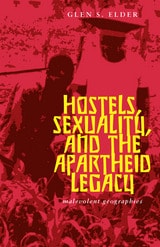
Hostels, Sexuality, and the Apartheid Legacy
Malevolent GeographiesGlen S. Elder
Ohio University Press, 2003
In the last decade, the South African state has been transformed dramatically, but the stubborn, menacing geography of apartheid still stands in the way of that country’s visions of change. Environmentally degraded old homelands still scar the rural geography of South Africa.
Formerly segregated, now gated, neighborhoods still inhibit free movement. Hostels, Sexuality, and the Apartheid Legacy is a study of another such space, the converted “male” migrant worker hostel.
Professor Glen Elder identifies hostels as sites of public and domestic violence, literal destruction and rebuilding, and as an important node in the spread of HIV/AIDS.
Hostels have also become home to increasing numbers of “invisible” female residents. Finding that one way to understand hostel space is through women’s experiences, Professor Elder turned to thirty black migrant women living in an East Rand hostel to map the everyday geographies of South Africa’s time of change.
By following the lives of these women, Elder identifies spatialized forms of marginalization, impoverishment, infection, and disempowerment. But, as he points out, the women’s survival strategies may provide signposts to the way out of apartheid’s malevolent geography.
Hostels, Sexuality, and the Apartheid Legacy argues that the gendered geography of the migrant labor system developed in South Africa was premised upon sexual assumptions about men, women, and their bodies, and that feminist and queer analyses of space can inform public policy decisions.
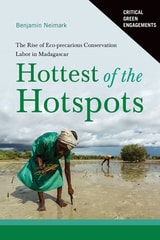
Hottest of the Hotspots
The Rise of Eco-precarious Conservation Labor in MadagascarBenjamin Neimark
University of Arizona Press, 2023
This book details the rollout of market conservation programs, including the finding of drugs from nature—or “bioprospecting”—biodiversity offsetting, and the selling of blue carbon credits from mangroves. It documents the tensions that exist at the local level, as many of these programs incorporate populations highly dependent on the same biodiversity now turned into global commodities for purposes of saving it. Proponents of market conservation mobilize groups of ecologically precarious workers, or the local “eco-precariat,” who do the hidden work of collecting and counting species, monitoring and enforcing the vital biodiversity used in everything from drug discovery to carbon sequestration and large mining company offsets.
Providing a voice for those community workers many times left out of environmental policy discussions, this volume proposes critiques that aim to build better conservation interventions with perspectives of the local eco-precariat.
Housing America in the 1980s
John S. Adams
Russell Sage Foundation, 1987
How Nature Speaks
The Dynamics of the Human Ecological ConditionYrjö Haila and Chuck Dyke, eds.
Duke University Press, 2006
Exploring ways of conceiving the complexity and multiplicity of humans’ many interactive relationships with the environment, the contributors provide in-depth case studies of the interweaving of culture and nature in socio-historical processes. The case studies focus on the origin of environmental movements, the politicization of environmental issues in city politics, the development of a local energy production system, and the convergence of forest management practices toward a dominant scheme. They are supported by explorations of big-picture issues: recurring themes in studies of social and environmental dynamics, the difficulties of deliberative democracy, and the potential gains for socio-ecological research offered by developmental systems theory and Pierre Bourdieu’s theory of intentionality.
How Nature Speaks includes a helpful primer, “On Thinking Dynamically about the Human Ecological Condition,” which explains the basic principles of complexity and nonlinear thinking.
Contributors. Chuck Dyke, Yrjö Haila, Ari Jokinen, Ville Lähde, Markus Laine, Iordanis Marcoulatos, John O’Neill, Susan Oyama, Taru Peltola, Lasse Peltonen, John Shotter, Peter Taylor
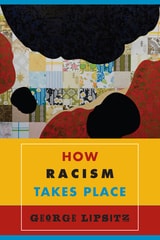
How Racism Takes Place
George Lipsitz
Temple University Press, 2011
White identity in the United States is place bound, asserts George Lipsitz in How Racism Takes Place. An influential scholar in American and racial studies, Lipsitz contends that racism persists because a network of practices skew opportunities and life chances along racial lines. That is, these practices assign people of different races to different spaces and therefore allow grossly unequal access to education, employment, transportation, and shelter.
Revealing how seemingly race-neutral urban sites contain hidden racial assumptions and imperatives, Lipsitz examines the ways in which urban space and social experience are racialized and emphasizes that aggrieved communities do not passively acquiesce to racism. He recognizes the people and communities that have reimagined segregated spaces in expressive culture as places for congregation.
How Racism Takes Place not only exposes the degree to which this white spatial imagining structures our society but also celebrates the black artists and activists who struggle to create a just and decent society.
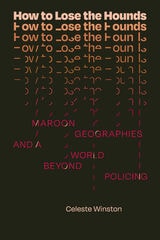
How to Lose the Hounds
Maroon Geographies and a World beyond PolicingCeleste Winston
Duke University Press, 2023

Human Adaptation and Accommodation
A. Roberto Frisancho
University of Michigan Press, 1993
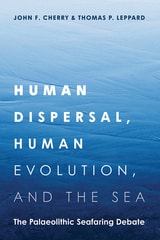
Human Dispersal, Human Evolution, and the Sea
The Palaeolithic Seafaring DebateJohn F. Cherry
University Press of Colorado, 2025
Exploring the data in detail, the authors here show how a complex series of interrelated problems has tended to be treated in reductionist or overly simplistic terms. Cherry and Leppard elucidate this complexity by bringing to bear perspectives from archaeology, ecology, and evolutionary biology. They demonstrate not only that a series of unique circumstances—evolutionary, behavioral, environmental, and economic—conspired to drive mass, ubiquitous global colonization over the last ten millennia; but also that earlier, sparser data provide real insight into key social and behavioral thresholds, even if there is little evidence to support the “oceans as highways” model for species other than our own.
A major intervention in this important debate, Human Dispersal, Human Evolution, and the Sea explains the deep significance of the problem and the profound implications for history, archaeology, and biological anthropology.
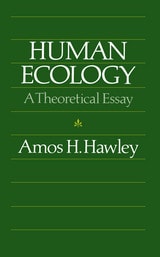
Human Ecology
A Theoretical EssayAmos H. Hawley
University of Chicago Press, 1986
Focused on the interaction between society and environment, human ecology is an attempt to deal holistically with the phenomenon of human organization. Beginning in the first quarter of the century, sociologists such as Park, Burgess, and McKenzie developed the study of human ecology to account for the dynamics of change in American cities. Over time, theorists have reached beyond the boundaries of sociology, drawing on the findings of economics, political science, anthropology, and bioecology, to understand the relationship of human beings to their environment. Hawley has successfully integrated the scattered theses of this wide-ranging discipline into a schematic whole.
The early human ecologists seized on the analogy of plant communities as a way of understanding urban communities. Hawley here maintains that the most important contribution to human ecology of the lexicons of plant and animal ecologies is the perspective of collective life as an adaptive process consisting in an interaction of environment, population, and organization. From the adaptive profess, he argues, emerges the ecosystem, a concept that serves as a common denominator for bioecology and human ecology.
Hawley has codified the theory of human ecology by a set of deductive hypotheses that establish its claims to coherence and comprehensiveness. His model charts a synthesis of ecological concepts ranging from adaptation and equilibrium through growth in temporal and spatial dimensions to convergence and openness. The essay underscores the critical importance of transportation and communication technology to the shaping of the human ecological system.
Human Ecology brings concision and elegance to this holistic perspective and will serve as a point of reference and orientation for anyone interested in the powers and scope of the ecological approach.

Human Geography
Society, Space, and Social ScienceDerek Gregory
University of Minnesota Press, 1994

Human Goodness
Tuan, Yi-Fu
University of Wisconsin Press, 2008

Human Goodness
Yi-Fu Tuan
University of Wisconsin Press, 2008
In his many best-selling books, Yi-Fu Tuan seizes big, metaphysical issues and considers them in uniquely accessible ways. Human Goodness is evidence of this talent and is both as simple, and as epic, as it sounds.
Genuinely good people and their actions, Tuan contends, are far from boring, naive, and trite; they are complex, varied, and enormously exciting. In a refreshing antidote to skeptical times, he writes of ordinary human courtesies, as simple as busing your dishes after eating, that make society functional and livable. And he writes of extraordinary courage and inventiveness under the weight of adversity and evil. He considers the impact of communal goodness over time, and his sketches of six very different individuals—Confucius, Socrates, Wolfgang Amadeus Mozart, John Keats, Dr. Albert Schweitzer, and Simone Weil—confirm that there are human lives that can encourage and lead us to our better selves.
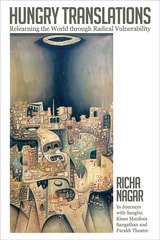
Hungry Translations
Relearning the World through Radical VulnerabilityRicha Nagar
University of Illinois Press, 2019

Hydra Rising
The Enduring Struggle for Freedom, Mobility, and the CommonsBridget Anderson, Nandita Sharma, and Cynthia Wright, editors
Duke University Press, 2027